
Skip to content
KitploitKITPLOIT
도구익스플로잇블로그
Log in
제출
도구익스플로잇블로그
제출

해킹, 침투 테스트 및 사이버 보안 도구를 당신의 보안 무기고에!

Kitploit은 해킹, 사이버 보안 및 침투 테스트 도구 디렉토리입니다. 최신 프로젝트 업데이트를 발견하여 취약점을 찾고, 시스템을 분석하고, 테스트를 자동화하고, 보안을 강화하세요.

피드문의개인정보© 2026 Kitploit

도구 디렉토리

카테고리

모든 카테고리 보기
Loading categories
CVE-2026-26211 — Public disclosure and proof-of-concept for CVE-2026-26211, a stored XSS vulnerability in Ekushey Project Manager CRM v5.0, including technical details and impact analysis. | Kitploit
도구/GitHubGitHub/lindhunt/cve-2026-26211
Vulnerability AnalysisExploitationWeb SecurityPapers & ResearchLearning & Education
GitHublindhunt/cve-2026-26211

CVE-2026-26211

Public disclosure and proof-of-concept for CVE-2026-26211, a stored XSS vulnerability in Ekushey Project Manager CRM v5.0, including technical details and impact analysis.


저장소 보기
11825일 전아직 검토되지 않음

인기

모두 보기 →

커뮤니티에서 가장 많이 사용되는 도구를 찾아보세요.

모든 도구 탐색

도구 컬렉션을 둘러보세요

모든 도구 보기 →
공유
요청한 언어로 콘텐츠를 사용할 수 없습니다. 영어 버전을 표시합니다.

CVE Badge CWE Badge Severity Status

CVE-2026-26211: Stored XSS in Ekushey Project Manager CRM

Product: Ekushey Project Manager CRM
Version: 5.0
Vulnerability: Stored Cross-Site Scripting (XSS)
CWE: CWE-79
Researcher: LINDAN TRI SAPUTRA
Initial Report: August 1, 2026


Summary

A stored Cross-Site Scripting (XSS) vulnerability was identified in Ekushey Project Manager CRM version 5.0. The issue exists in the application settings, specifically within the Name field. User-controlled HTML input is stored without proper sanitization or output encoding, leading to arbitrary JavaScript execution when the page is rendered.


Affected Component

Settings → Name

  • The configured application name is stored in the database.
  • It is subsequently displayed in the application interface without proper escaping.
  • Any authenticated user (Admin, Staff, or Client) viewing the rendered name is exposed to the vulnerability.

Proof of Concept (PoC)

  1. Log in to the application as an administrator.
  2. Navigate to Settings.
  3. Locate the system Name field.
  4. Insert the following harmless XSS test payload:
  1. Save the settings.
  2. Open any page where the configured application name is displayed (e.g., Dashboard, Header, Emails).

The JavaScript executes when the stored value is rendered.


Impact

Because the payload is stored in the application, the issue affects all users not just the administrator who initially modified the setting. Depending on where the application name is rendered and which users can access those pages, the stored payload may execute in the browser of staff, clients, or other authenticated users.

Potential Impact Includes:

  • Arbitrary JavaScript execution in affected users' browsers
  • Application UI manipulation (e.g., defacement, fake notifications)
  • Phishing or spoofing within the trusted application origin
  • Performing actions within the victim's authenticated application context (session hijacking, CSRF bypass)

Video Proof of Concept

A video demonstration of CVE-2026-26211 is available below:
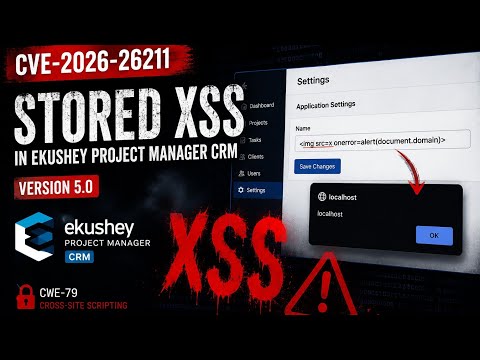
PoC Video Thumbnail
Click the image to watch the PoC on YouTube

Direct link: https://youtu.be/b8gRD9jpvak?si=otEalAgZexiENIfh


Disclosure Timeline

DateEvent
August 1, 2026Vulnerability submitted to VulnCheck
August 2026VulnCheck validated the submission and confirmed it qualifies for CVE assignment
August 2026CVE-2026-26211 assigned
August 25, 2026Public technical disclosure published per VulnCheck's request

Researcher

LINDAN TRI SAPUTRA
Independent Security Researcher
GitHub: https://github.com/LindHunt


References

  • CVE-2026-26211: https://cve.mitre.org/cgi-bin/cvename.cgi?name=CVE-2026-26211
  • CWE-79: Improper Neutralization of Input During Web Page Generation (XSS)
    https://cwe.mitre.org/data/definitions/79.html

Disclaimer

This report is provided for educational and security awareness purposes only. The identified vulnerability has been responsibly disclosed to the vendor or relevant coordinating authority (VulnCheck) prior to public release. Unauthorized exploitation of this vulnerability is illegal and unethical.


Recommendations for Developers

To remediate this vulnerability:

  • Apply context-aware output encoding when rendering user-controlled input.
  • Implement strict input validation and sanitization for all settings fields.
  • Use Content Security Policy (CSP) headers to mitigate XSS risks.
  • Consider using HTML Purifier or similar libraries to filter rich-text input.

Stay secure, stay vigilant.

도구 다운로드

