 gmh5225/ransmap-ransomware-binary-classification
Jupyter notebook analyzing the RanSMAP dataset to classify ransomware families from memory access patterns (GPA, entropy, page type) using scikit-learn ensemble models.

Author: Kevin Thomas
[1] M. Hirano and R. Kobayashi, "RanSMAP: Open Dataset of Ransomware Storage and Memory Access Patterns for Creating Deep Learning Based Ransomware Detectors." Computers & Security, 2024, 104202, ISSN 0167-4048, https://doi.org/10.1016/j.cose.2024.104202.
[2] M. Hirano and R. Kobayashi, "Machine Learning-based Ransomware Detection Using Low-level Memory Access Patterns Obtained From Live-forensic Hypervisor" In proceedings of 2022 IEEE International Conference on Cyber Security and Resilience (CSR), 2022, pp. 323-330, https://doi.org/10.1109/CSR54599.2022.9850340.
Creative Commons Attribution-NoDerivatives 4.0 International (CC BY-ND 4.0).
This comprehensive analysis of the RanSMAP ransomware behavioral features dataset demonstrates the efficacy of memory access pattern analysis for distinguishing between malicious and benign software through machine learning techniques. The study examined 1,425,904 memory operations across 12 categories (6 benign applications and 6 ransomware families) using four key features: Guest Physical Address (GPA), entropy, memory content size, and page type.
The dataset reveals distinctive memory access patterns that differentiate ransomware from legitimate software. Memory operations are predominantly metadata-focused (99.7% involve zero-byte content retrieval) with highly concentrated address distributions spanning 9,673 unique GPA values. Entropy exhibits a striking bimodal distribution with 51.0% of operations at exactly 0.0 entropy (structured data) and 48.7% at -1.0 entropy (normalized content). Memory page architecture is overwhelmingly dominated by standard 4 KiB pages (99.3%) versus 2 MiB large pages (0.7%), reflecting typical operating system memory management patterns.
The analysis identified several discriminative behavioral patterns that distinguish malware families from benign applications:
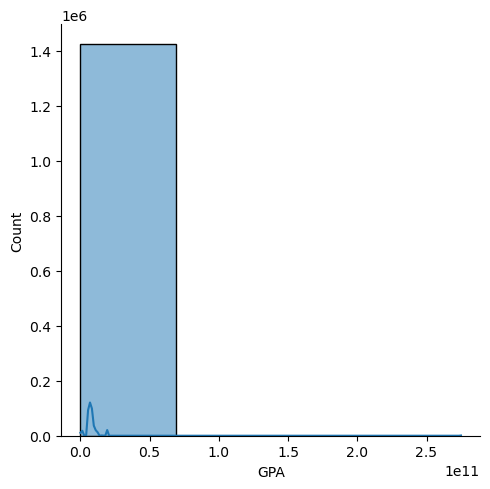
Memory Allocation Strategies: Ransomware families exhibit elevated GPA values (mean ~7.6 × 10^9) for content operations compared to metadata operations (mean ~2.75 × 10^9), indicating systematic memory allocation in higher address regions during malicious activities. Large pages (2 MiB) demonstrate concentrated allocation patterns with elevated entropy characteristics, suggesting specialized use for performance-critical encryption operations.
Content Randomness Patterns: Malware categories show distinct entropy signatures, with actual data transfer operations (4096-byte) exhibiting substantially higher entropy (mean ~0.7) compared to metadata operations (mean ~-0.5). This elevation reflects the encrypted content generation characteristic of ransomware encryption processes.
Category-Specific Signatures: Unsupervised K-means clustering successfully identified four distinct behavioral clusters, with Cluster 3 representing rare but highly discriminative memory access patterns concentrated in specific ransomware families (WannaCry, LockBit, Conti). These clusters capture specialized operational signatures that could serve as malware-specific behavioral fingerprints.
Multiple ensemble learning approaches were evaluated for ransomware detection, with similar performance across different algorithms:
The ensemble methods (Random Forest: 0.639 accuracy, AdaBoost: 0.639 accuracy, Stacking: 0.639 accuracy) showed consistent performance, with minimal improvement over single decision trees (0.638 accuracy). The bagging approach with decision trees achieved 0.639 accuracy with high recall (0.994) but lower precision (0.637), indicating challenges in distinguishing between malicious and benign memory access patterns that require more sophisticated feature engineering.
For Cybersecurity Practitioners: Deploy memory-based ransomware detection systems leveraging the identified behavioral patterns. Focus on monitoring large page operations and high-entropy content transfers in elevated memory regions as primary indicators of malicious activity.
For Research Community: Expand temporal analysis to capture ransomware evolution patterns and investigate cross-platform applicability of these memory access signatures. The demonstrated efficacy of unsupervised clustering suggests potential for zero-day ransomware detection through behavioral anomaly identification.
For System Administrators: Implement real-time monitoring of memory page allocation patterns and entropy characteristics, particularly focusing on the discriminative features identified through principal component analysis. The 63.9% classification accuracy indicates that additional feature engineering or hybrid approaches may be necessary for production deployment in enterprise environments.
This analysis establishes memory access pattern analysis as a foundation for ransomware detection, achieving 63.9% accuracy through ensemble learning techniques with notably high recall (99.4%) for identifying malicious activities. While the current classification performance indicates room for improvement, the identification of specific behavioral clusters and entropy-GPA relationship patterns provides valuable intelligence for developing enhanced cybersecurity defenses. The comprehensive feature analysis reveals that memory management behaviors contain discriminative information to distinguish between malicious encryption activities and legitimate software operations, though additional feature engineering and model optimization will be required to achieve production-ready performance for enterprise ransomware detection systems.
GPA: Guest Physical Address of an accessed memory pagesize: Size of the obtained memory contents on the accessed page, [byte]entropy: Normalized Shannon entropy of a written memory contentstype: Access type of memory page, (4 KiB page, 2 MiB page, 1 GiB page, and MMIO access)category: Ransomware or benign family classification label derived from directory structure (AESCrypt, Conti, Darkside, Firefox, Idle, LockBit, Office, REvil, Ryuk, SDelete, WannaCry, Zip)UNIX_time_sec: This timestamp value represents the exact time when memory operations occurred but may introduce temporal bias and doesn't directly characterize the malware behavior patterns we want to detect.UNIX_time_ns: Similar to seconds timestamp, the nanosecond precision adds temporal specificity that may not generalize well across different execution environments and could lead to overfitting on specific execution timings rather than behavioral patterns.