
Skip to content
KitploitKITPLOIT
उपकरणब्लॉग
जमा करें
उपकरणब्लॉग
जमा करें

हैकिंग, पेनटेस्ट और साइबर सुरक्षा उपकरण आपके सुरक्षा शस्त्रागार के लिए!

Kitploit हैकिंग, साइबर सुरक्षा और पेंटेस्टिंग टूल्स की एक निर्देशिका है। कमजोरियों को खोजने, सिस्टम का विश्लेषण करने, परीक्षण को स्वचालित करने और अपनी सुरक्षा को मजबूत करने के लिए नवीनतम प्रोजेक्ट अपडेट खोजें।

··फ़ीड·संपर्क·गोपनीयता·© 2026 Kitploit

टूल निर्देशिका

श्रेणियाँ

सभी श्रेणियाँ देखें
Loading categories
Thunderstorm — एक संग्रहकर्ता और व्युत्पत्ति इंजन। यह आपके वातावरण का मानचित्रण करता है, प्रभावी अनुमतियों और विश्वास का मूल्यांकन करता है, और एक पूर्ण आक्रमण ग्राफ़ को एक ही .rage.ndjson फ़ाइल के रूप में लिखता है। बाकी सब कुछ के लिए इनपुट। | Kitploit
उपकरण/GitHubGitHub/ustayready/thunderstorm
क्लाउड इन्फ्रास्ट्रक्चर सुरक्षाविशेषाधिकार वृद्धिभेद्यता विश्लेषणपार्श्व आंदोलनकॉन्फ़िगरेशन ऑडिटिंगजानकारी एकत्र करनापेनिट्रेशन टेस्टिंगक्लाउड सुरक्षापहचान और एक्सेस प्रबंधन (IAM)रेड टीमिंग
GitHub
24271 दिन पहलेअभी तक समीक्षित नहीं
ustayready/thunderstorm

Thunderstorm

एक संग्रहकर्ता और व्युत्पत्ति इंजन। यह आपके वातावरण का मानचित्रण करता है, प्रभावी अनुमतियों और विश्वास का मूल्यांकन करता है, और एक पूर्ण आक्रमण ग्राफ़ को एक ही .rage.ndjson फ़ाइल के रूप में लिखता है। बाकी सब कुछ के लिए इनपुट।

रिपॉजिटरी देखें

सबसे लोकप्रिय

सभी देखें →

हमारे समुदाय द्वारा सबसे अधिक उपयोग किए जाने वाले उपकरण खोजें।

सभी उपकरण खोजें

हमारे उपकरणों का संग्रह ब्राउज़ करें

सभी उपकरण देखें →
साझा करें

Thunderstorm

आपके पास 4,000 findings नहीं हैं। आपके पास अपने crown jewels तक छह रास्ते हैं।
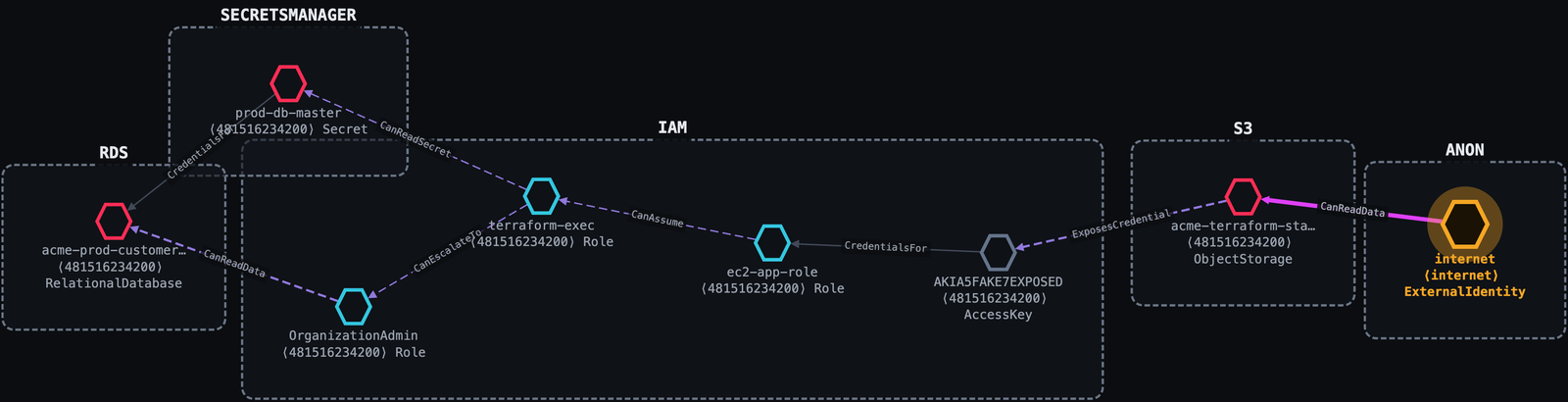
Blaze Lite में एक AWS attack path: anonymous internet से production database तक छह hops में

एक CSPM आपको misconfigurations की एक सपाट, deduplicated, severity के अनुसार क्रमबद्ध सूची थमा देता है और आपको यह अनुमान लगाने के लिए छोड़ देता है कि कौन-सी मायने रखती हैं। Thunderstorm reachability पर विचार करता है: यह आपके cloud को read-only रूप से एकत्र करता है, इसे security capabilities के graph के रूप में मॉडल करता है, और आपको बताता है कि एक GitHub Actions OIDC trust चार hops में आपके production data lake तक पहुँचता है।

ऊपर दिए गए hops में से कोई भी अपने आप में एक finding नहीं है। एक public bucket, एक state file में एक key, एक assumable role, एक over-broad IAM action। path ही finding है, और path वह है जिसकी गणना लगभग कोई और नहीं करता।

जिस platform की ओर आप इसे इंगित करते हैं, उस पर गहराई तक। इसे किसी AWS account, Azure subscription, या GCP project के विरुद्ध चलाएँ, और यह उस एक environment को provider की अपनी शर्तों में map करता है: AWS में STS assume-role और IAM privilege escalation, Azure में RBAC और managed-identity chains, GCP में service-account impersonation। एक environment, एक graph, उसी तरह मॉडल किया गया जैसे वह cloud वास्तव में काम करता है।

बहुत से tools अधिक enumerate करते हैं। यहाँ दावा यह है कि Thunderstorm वास्तविक गहराई के साथ जो enumerate करता है उस पर विचार करता है: 219 resource types, 80 edge types, 2,400+ derivation rules, और 1,049 mapped credential-leak sites, सभी RAGE से sourced।

RAGE format है, Thunderstorm इसे produce करता है, Blaze इसे explore करता है।


इसे एक वास्तविक attack chain पर चलते हुए देखें

ये वही हैं जो Thunderstorm एक single scan से produce करता है।

AWS: एक public Terraform state file से पूर्ण account takeover तक

एक misconfigured S3 bucket। Thunderstorm इसे छह hops में production customer database तक trace करता है, और एक दूसरा route सीधे database master secret तक।

root@kitploit:~
Internet ──public s3:GetObject──▶ acme-terraform-state (public bucket)
         ──ExposesCredential────▶ AKIA…            (access key leaked in tfstate)
         ──CredentialsFor───────▶ ec2-app-role
         ──CanAssume────────────▶ terraform-exec    (sts:AssumeRole)
         ──CanEscalateTo────────▶ OrganizationAdmin (iam:AttachRolePolicy)
         ──CanReadData──────────▶ acme-prod-customers (PII)

प्रत्येक hop उस permission को साथ लेकर चलता है जो इसे प्रदान करती है, वह evidence जो इसे सिद्ध करता है, और एक सरल-अंग्रेज़ी narrative। Leaked values इसके साथ बाहर आ जाती हैं:
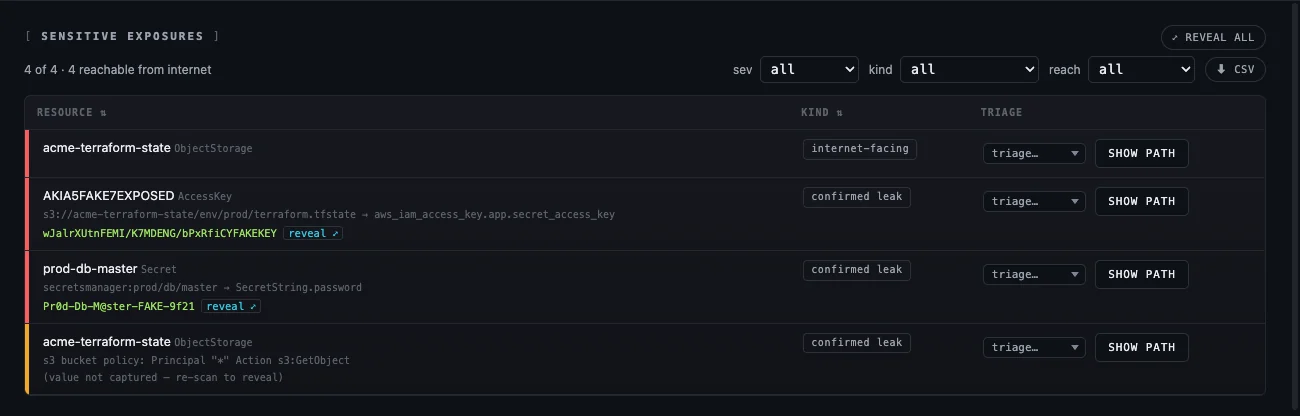
AWS sensitive exposures with revealed credential values

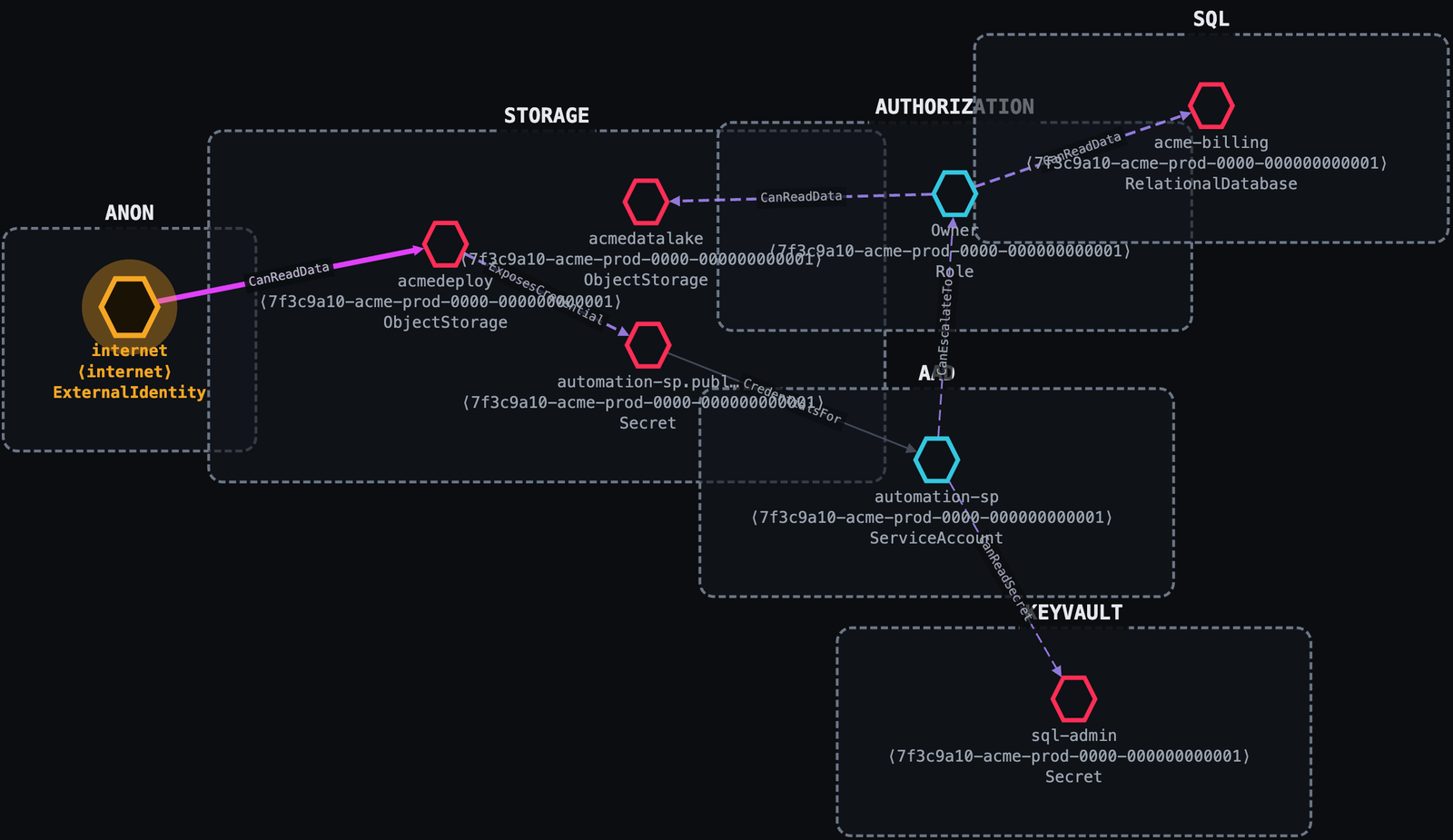
Azure: एक public storage container से subscription Owner तक

एक publicly readable blob एक service-principal secret leak करता है। एक Contributor एक अतिरिक्त permission के साथ स्वयं को subscription Owner में promote कर लेता है। कोई app exploit नहीं; बस cloud misconfiguration और IAM।
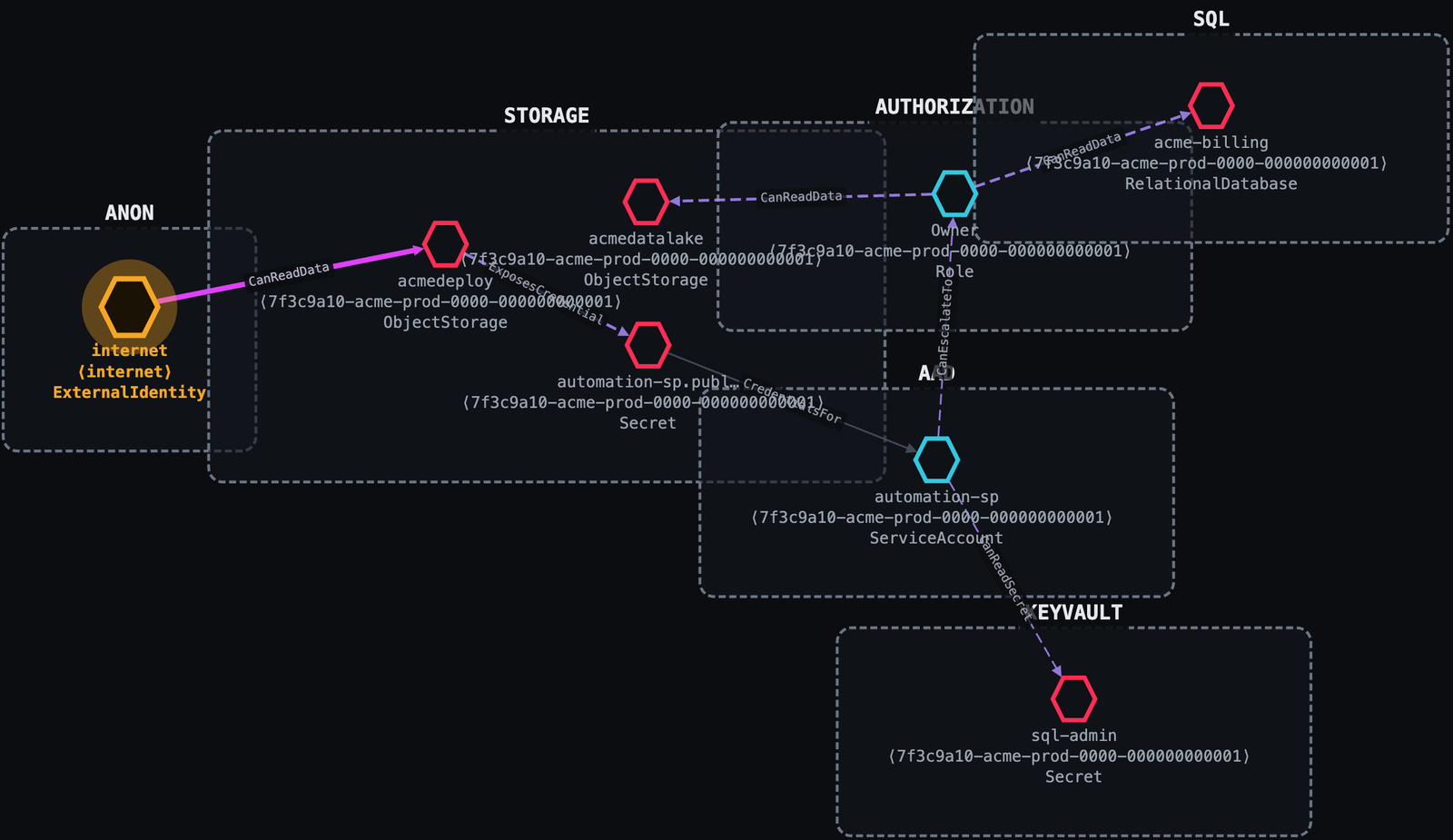
Azure attack graph

root@kitploit:~
Internet ──anonymous blob read──▶ acmedeploy (public Storage account)
         ──ExposesCredential────▶ automation-sp secret (in a deploy config blob)
         ──CredentialsFor───────▶ automation-sp (Contributor)
         ──CanEscalateTo────────▶ Owner  (Microsoft.Authorization/roleAssignments/write)
         ──CanReadData──────────▶ acmedatalake

GCP: एक committed key से दो-hop impersonation chain तक

Service-account impersonation अधिकांश tooling के लिए अदृश्य है। Thunderstorm iam.serviceAccounts.getAccessToken को उस lateral-movement edge के रूप में मानता है जो यह वास्तव में है।
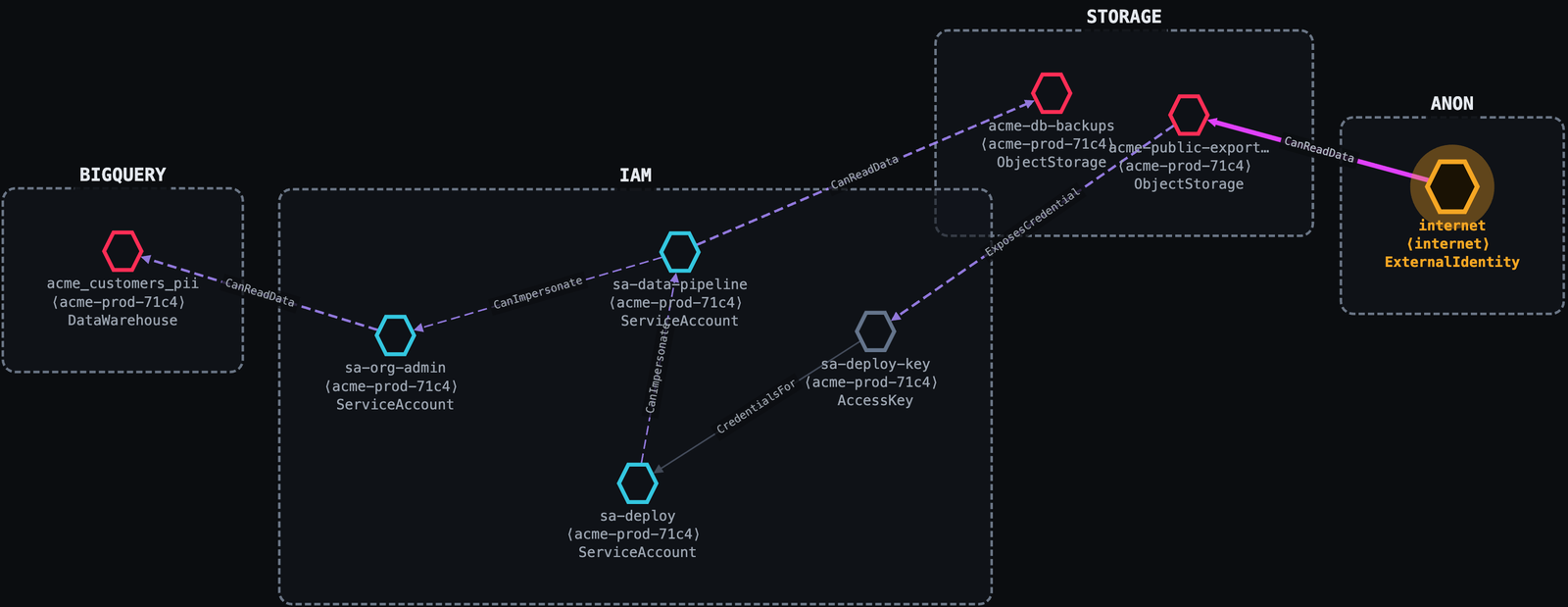
GCP attack graph

root@kitploit:~
Internet ──public allUsers───▶ acme-public-exports (GCS)
         ──ExposesCredential─▶ sa-deploy-key
         ──CredentialsFor────▶ sa-deploy
         ──CanImpersonate────▶ sa-data-pipeline
         ──CanImpersonate────▶ sa-org-admin
         ──CanReadData───────▶ acme_customers_pii (BigQuery)

आपको क्या मिलता है

  • Attack-path graphs, interactive और offline। कोई भी foothold चुनें, reachable / crown-jewels / everything से filter करें, और किसी भी target तक shortest path खोजें।
  • Sensitive exposures। Public resources, साथ ही credentials और secrets जिन्हें Thunderstorm वास्तव में उस स्थान से पढ़ता है जहाँ वे leak होते हैं, captured value और उसके सटीक location के साथ।
  • Privilege escalation और lateral movement। Assume-role, impersonation, managed identity, self-grant, और cross-account/tenant edges, प्रत्येक उस permission से जुड़ा जो इसे सक्षम बनाती है।
  • Explainable by design। प्रत्येक edge evidence, permissions, conditions, confidence, और एक narrative साथ लेकर चलता है।
  • एक print-ready report। Chain of custody, blast radius, annotated paths, confirmed leaks।
  • Blaze Lite। एक single, offline HTML viewer जो binary में embedded है। view इसे आपके browser में खोलता है; कुछ भी upload नहीं होता।

आवश्यकताएँ

  • Go 1.26+ (दो modules: collectors/, engine/)।
  • जिस target को आप scan करते हैं उसके लिए Read-only credentials (जैसे एक AWS profile, GCP ADC, या Azure login)।
  • RAGE: वह catalog जिसे Thunderstorm consume करता है। एक vendored snapshot binary में embedded है, इसलिए build या run करने के लिए अलग download की आवश्यकता नहीं है (नीचे देखें)।

RAGE सत्य का स्रोत है

Thunderstorm अपना कोई taxonomy, mappings, या rules नहीं रखता। यह RAGE standard को end-to-end consume करता है:

ConcernRAGE में स्थित
Node / edge taxonomy, conditionsvocab/{node-types,edge-types,conditions}.json
Native→generic mappings + collection recipesproviders/{aws,gcp,azure}.json
Derivation rule corpusrules/
Credential-exposure catalogexposure-db/{aws,gcp,azure}.json + vocabulary.json

Version tie: RAGE का spec_version वह एकमात्र संख्या है जो Thunderstorm को एक RAGE release से pin करती है। Collector इसे उस RAGE से live पढ़ता है जिसके विरुद्ध इसे build किया गया था (thunderstorm version RAGE <v> print करता है) और इसे हर उस graph में stamp करता है जो यह emit करता है; Blaze Lite उस stamp को पढ़ता है और चेतावनी देता है जब कोई graph ऐसे version के विरुद्ध build किया गया हो जिसे वह support नहीं करता।

RAGE कैसे resolve होता है (पहला match जीतता है):

  1. $RAGE_ROOT: एक live RAGE checkout, यदि आप इसे set करते हैं (dev override; edits बिना rebuild लागू होते हैं)।
  2. Default: collectors/rage/ पर vendored snapshot, जो binary में embedded है।

Snapshot को make RAGE_ROOT=/path/to/rage (या collectors/ में go generate ./...) से refresh करें। RAGE github.com/trustedsec/rage पर स्थित है।

Authentication

Thunderstorm आपके मौजूदा cloud credentials का उपयोग करके read-only scan करता है; यह कभी secrets manage नहीं करता और कभी target पर लिखता नहीं। Provider के सामान्य tooling से log in करें, फिर scan को account / project / subscription पर इंगित करें।

AWS मानक AWS SDK credential chain का उपयोग करता है (एक named profile, env vars, SSO, या एक instance role):

root@kitploit:~
aws configure --profile myprofile        # or: aws sso login --profile myprofile
./bin/thunderstorm scan --profile myprofile [--region us-east-1]

GCP Application Default Credentials (ADC) का उपयोग करता है। Log in करें, फिर project pass करें:

root@kitploit:~
gcloud auth application-default login
./bin/thunderstorm scan --provider gcp --project my-project-id

एक service-account key भी GOOGLE_APPLICATION_CREDENTIALS=/path/key.json के माध्यम से काम करती है।

Azure Azure CLI / DefaultAzureCredential chain का उपयोग करता है। Log in करें, फिर वैकल्पिक रूप से एक subscription तक scope करें:

root@kitploit:~
az login
./bin/thunderstorm scan --provider azure [--subscription <sub-id>]

एक service principal भी AZURE_CLIENT_ID / AZURE_CLIENT_SECRET / AZURE_TENANT_ID के माध्यम से काम करता है।

एक साथ कई accounts scan करने के लिए --aws-profiles, --gcp-projects, --azure-subscriptions, या एक --scopes file (provider:scope प्रति पंक्ति) का उपयोग करें।

उपयोग

Build करें (./bin/thunderstorm produce करता है):

root@kitploit:~
make                              # build with the embedded RAGE snapshot
make RAGE_ROOT=/path/to/RAGE      # re-vendor from a live RAGE checkout, then build

Scan करें, फिर explore करें:

root@kitploit:~
./bin/thunderstorm scan --profile <aws-profile>   # → a single .rage.ndjson attack graph
./bin/thunderstorm view --in engagement.zip       # open it offline in Blaze Lite
./bin/thunderstorm redact --in engagement.zip --out redacted.zip   # de-identify for sharing

--out के बिना, engagements ./output/ में आते हैं (git-ignored)। यही पूरा tool है: scan, redact, view, version।

Design invariants

  • Ontology RAGE के स्वामित्व में है। एक provider/service जोड़ने का अर्थ है RAGE को edit करना, कभी Thunderstorm-local schema को नहीं।
  • Capabilities, inventory नहीं। प्रत्येक walkable edge एक security capability है; inventory STRUCTURAL है और paths से बाहर रखा जाता है।
  • Explainable। प्रत्येक edge evidence, permissions, conditions, confidence, और एक human narrative साथ लेकर चलता है।
  • Conditions first-class हैं। Edge state = ACTIVE / CONDITIONAL / POTENTIAL / BLOCKED / UNKNOWN; BLOCKED edges यह समझाने के लिए रखे जाते हैं कि कोई path क्यों विफल होता है।

License

Thunderstorm GNU General Public License v3 के अंतर्गत licensed है (देखें LICENSE)। यह एक offensive security tool है जो केवल authorized security testing, education, और research के लिए प्रदान किया गया है; किसी भी ऐसे environment के विरुद्ध इसे चलाने से पहले स्पष्ट authorization प्राप्त करें जिसका आप स्वामी नहीं हैं। LICENSE के शीर्ष पर Authorized-Use notice देखें।

टूल डाउनलोड करें