
ogi v0.8.0
मुक्त स्रोत लिंक विश्लेषण और OSINT फ्रेमवर्क
OpenGraph Intel (OGI)
Open-source visual link analysis and OSINT framework. Free, self-hostable, and community-driven.




Features • Screenshots • Quick Start • Docker • Transform Hub • Architecture • Contributing
Heads up: This project is actively evolving. It has solid core capabilities and test coverage, and we continue to improve documentation, hardening, and feature depth with each release. Contributions, bug reports, and feedback are very welcome.
Features
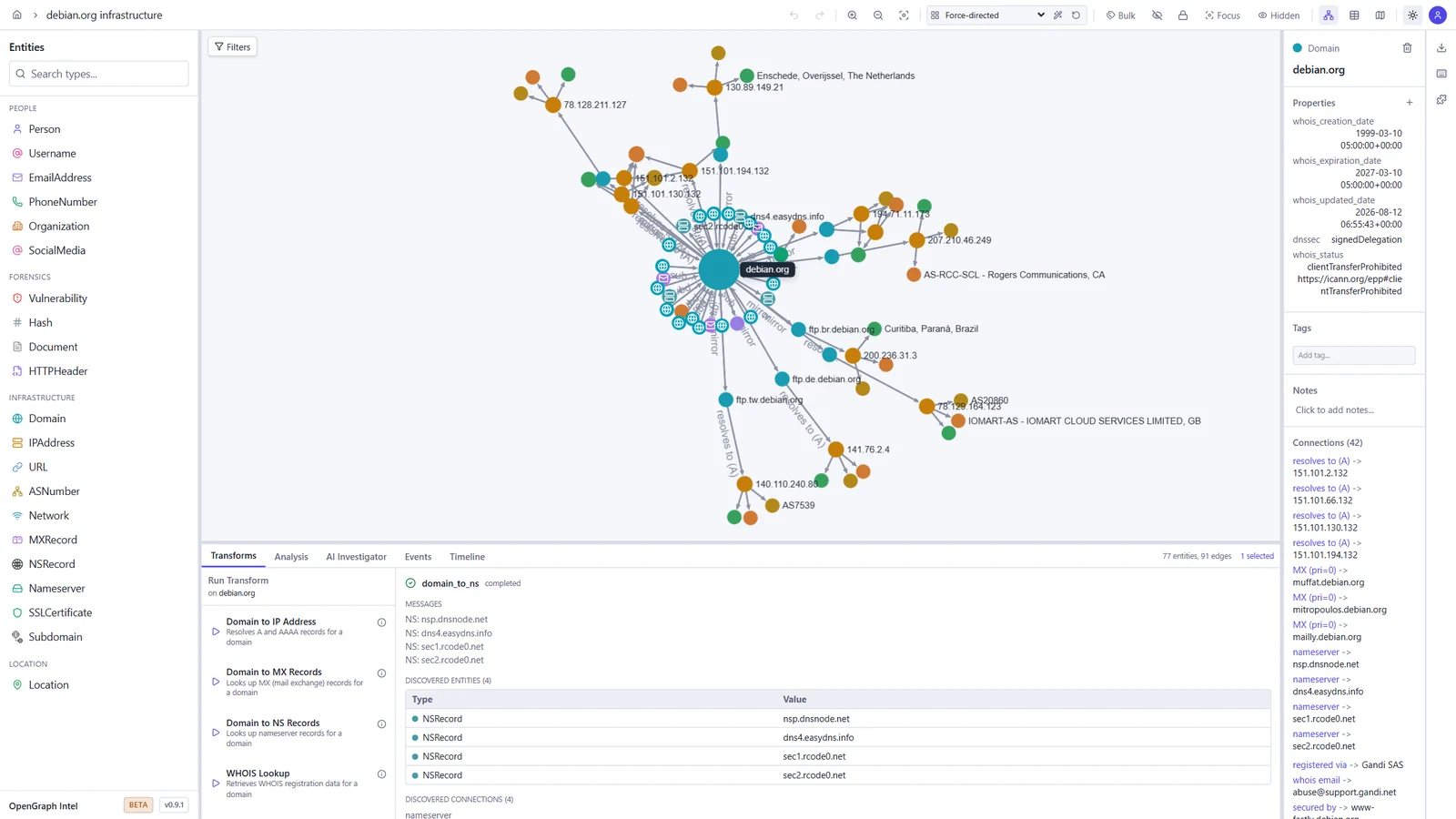
- Visual graph investigation — drag-and-drop entities, explore connections interactively, 14 layout presets
- 25+ built-in transforms — DNS, WHOIS, SSL certificates, geolocation, web, email, hash, people, and location enrichment
- Transform Hub — browse and install community transforms from the registry
- AI Investigator — prompt-driven agentic investigations that plan transform runs, stream progress live, and summarize findings with auditability
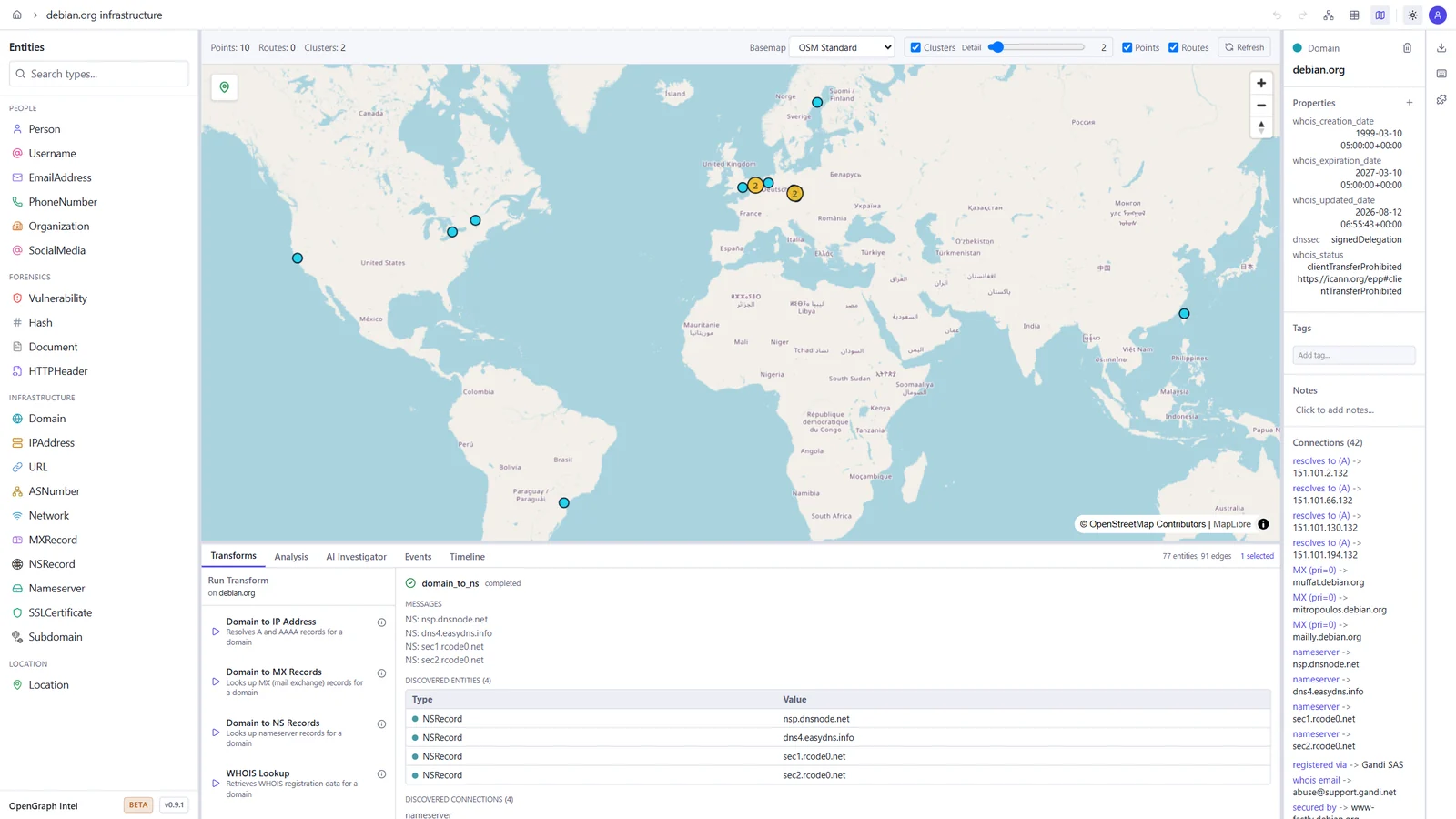
- Map view — geolocated entities on an interactive map, with clustering and routes
- Timeline and events — filter the graph by time window and review every transform run in the project's activity log
- Import / Export — import JSON, CSV, GraphML, and MTGX; export JSON, CSV, GraphML, and PNG images of the graph
- Graph analysis — degree, betweenness, and closeness centrality, PageRank, and connected components
- Light and dark themes — pick dark, light, or follow your system setting
- Real-time collaboration — projects, sharing, and live sync via Supabase Realtime
- Async transform jobs — Redis/RQ queue with WebSocket progress updates
- Plugin system — directory-based plugin discovery with YAML manifests
- CLI tool — search, install, and manage transforms from the terminal
- Runs anywhere — local SQLite mode (zero config) or PostgreSQL + Supabase for team/cloud setups
- Docker ready — one-command deployment with
docker compose up
Screenshots
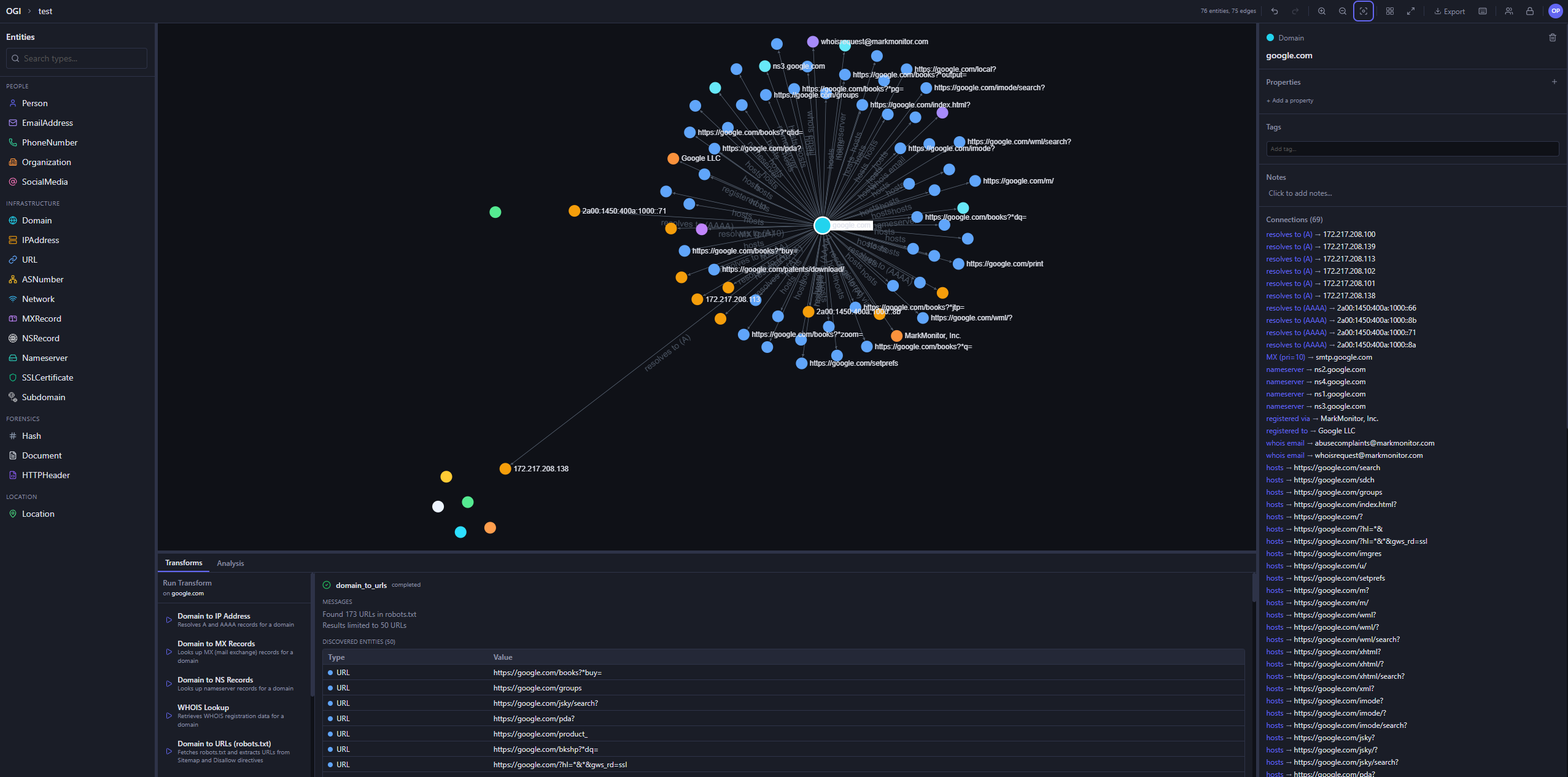
These screenshots show an investigation of the public debian.org infrastructure, built with the built-in transforms.
| Graph investigation | Map view |
|---|---|
|
|
| Transform Hub | Graph analysis |
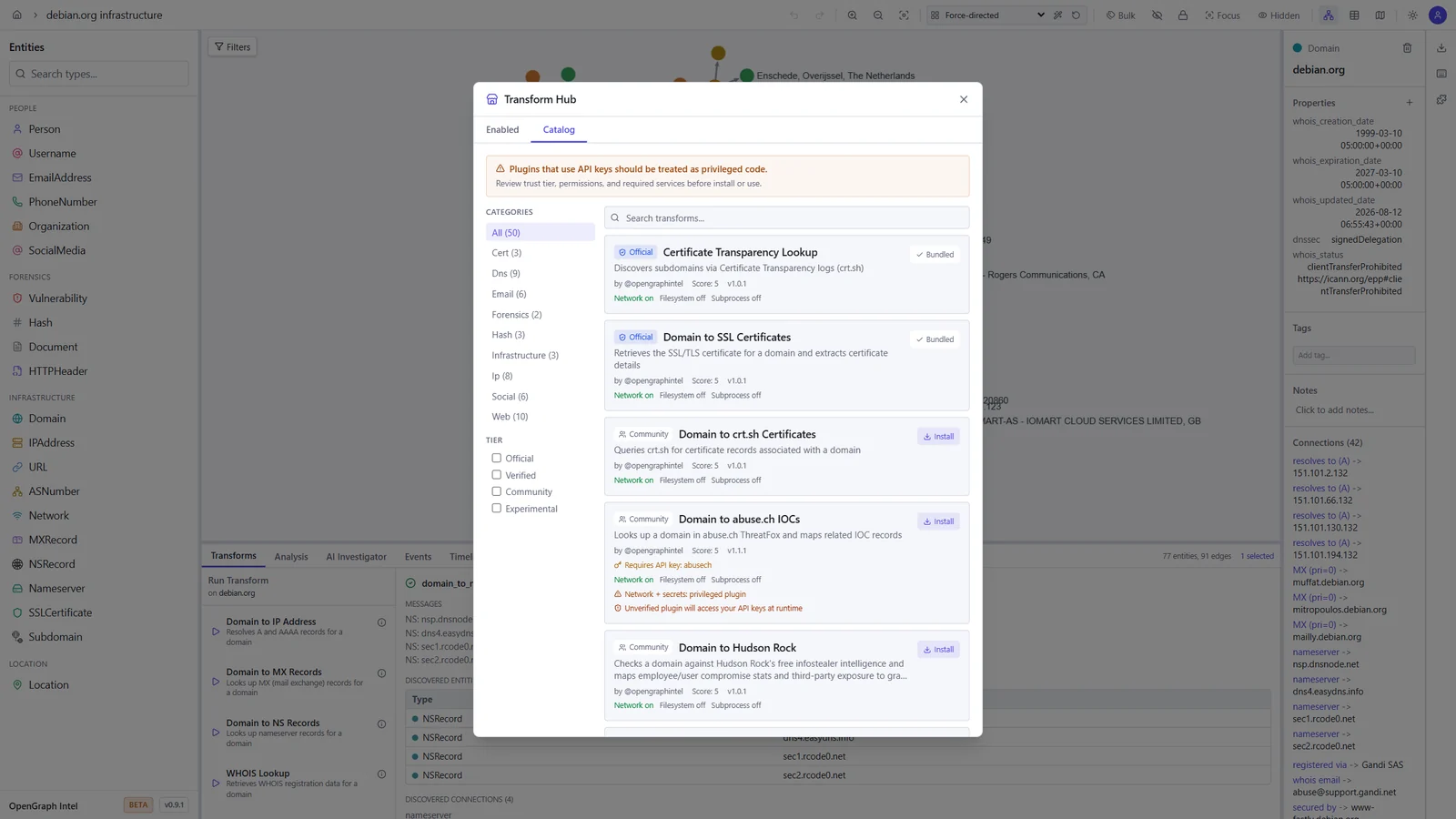
|
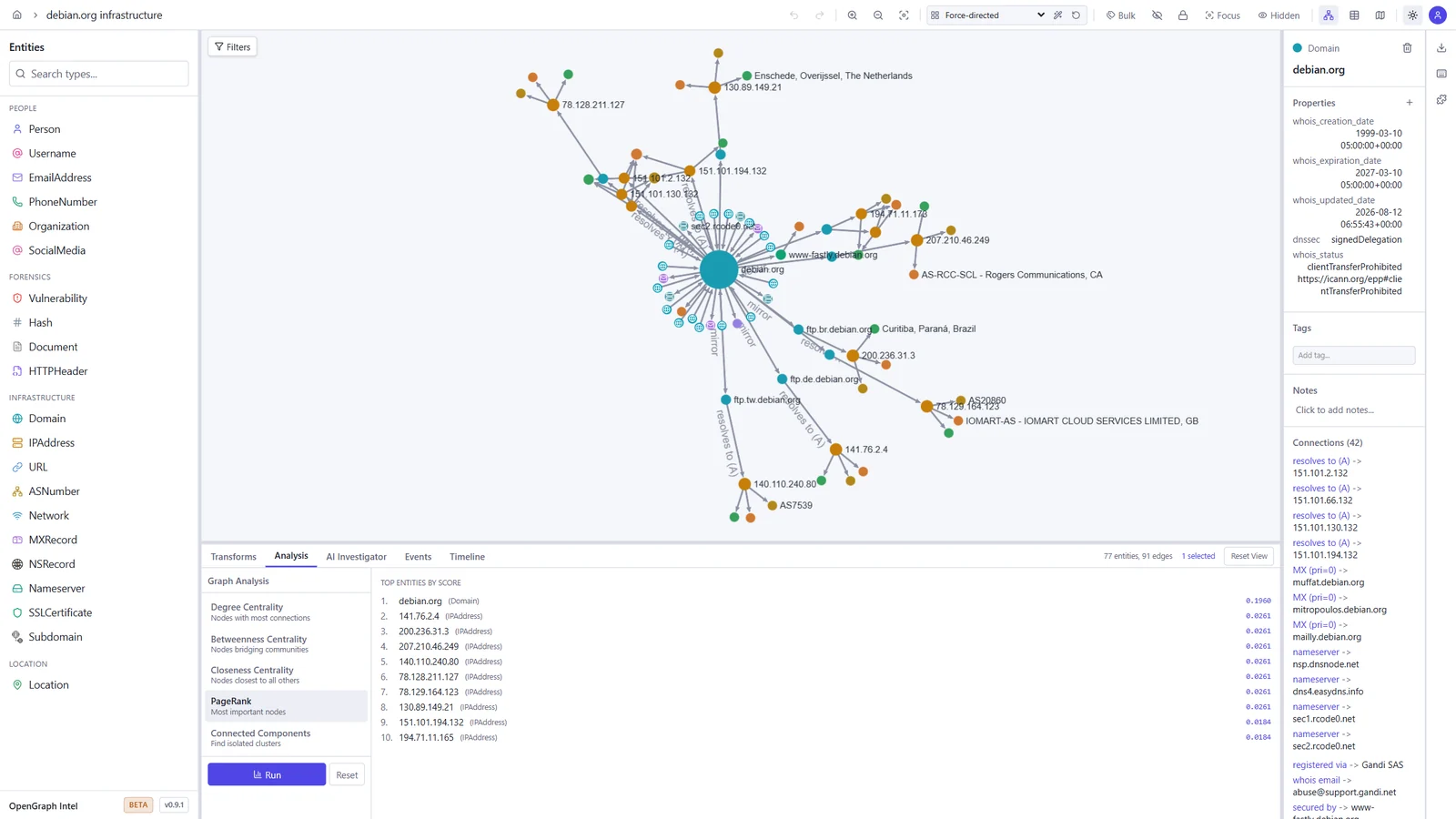
|
Light and dark themes
The toggle in the toolbar switches between dark, light, and your system setting.
| Dark | Light |
|---|---|
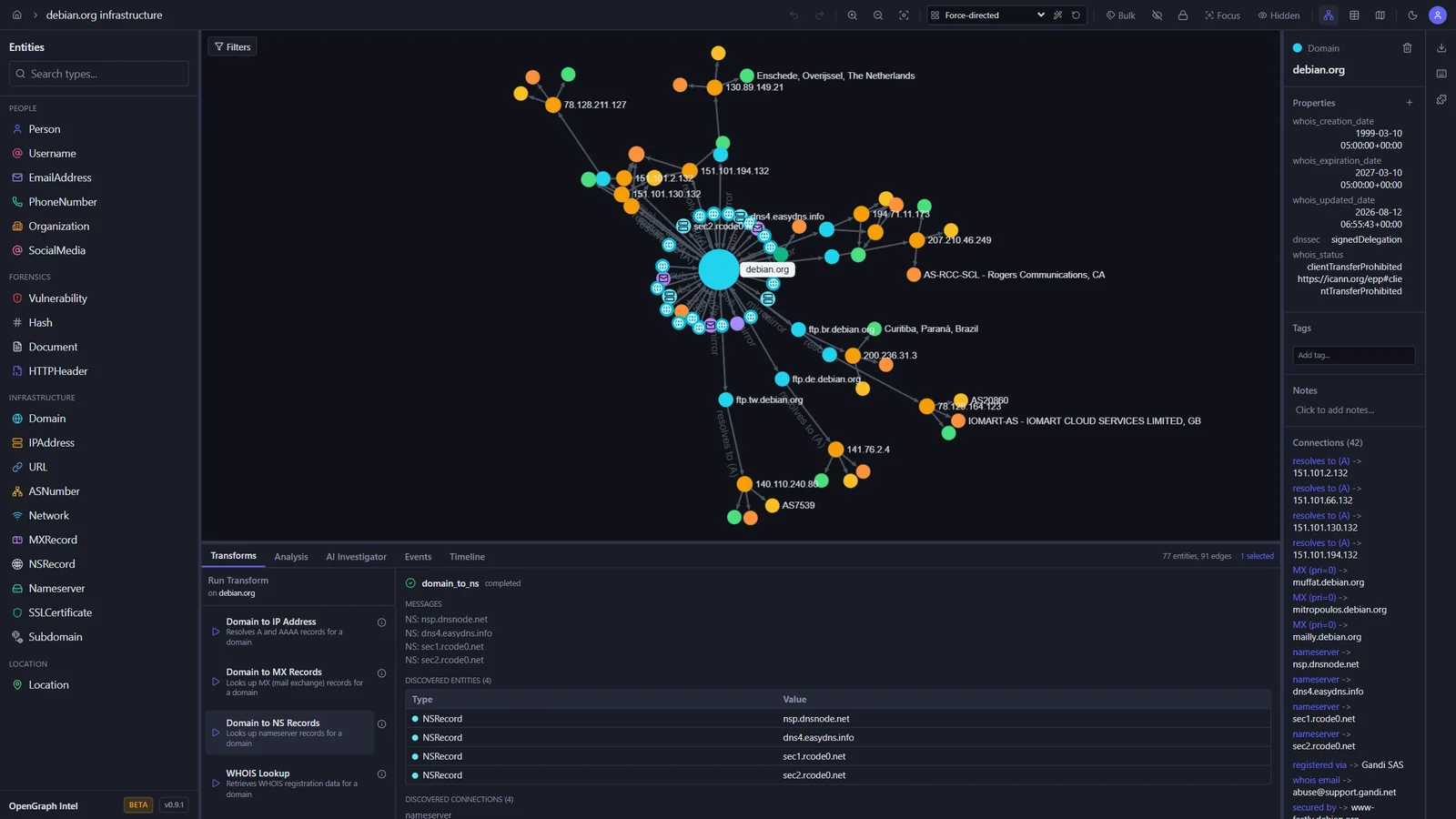 |
|
Quick Start
Prerequisites
| Tool | Version |
|---|---|
| Python | 3.14+ |
| uv | latest |
| Node.js | 24 LTS (22.22+ also works) |
| pnpm | 10.x |
Backend
cd backend
uv sync
uv run uvicorn ogi.main:app --reload
The API will be available at http://localhost:8000.
For local transform execution, Redis and the transform worker must also be running. Redis alone is not enough.
Start Redis:
docker run -d --name ogi-redis -p 6379:6379 redis:7-alpine
Start the transform worker in a second terminal:
cd backend
uv run python -m ogi.worker.run_worker
If you see Job queue not available or Redis not available, verify that:
OGI_REDIS_URLpoints toredis://localhost:6379/0for local host-based runs- the backend was restarted after Redis came up
- the separate worker process is running
- you are not using the Docker-only hostname
redisoutside Docker Compose
If you run the backend against PostgreSQL (OGI_USE_SQLITE=false), startup will automatically apply Alembic migrations before serving requests. Docker deployments do the same in the backend container entrypoint.