 wetw0rk/sickle-pdk
Sickle - Kit de développement de payloads


Sickle est un outil que j'ai développé à l'origine pour être plus efficace dans le développement et la compréhension des shellcodes. Cependant, au fil de son développement et de son utilisation, il a évolué pour devenir un kit de développement de payloads. Bien que les modules actuels soient principalement destinés à l'assembleur, cet outil n'est pas limité aux shellcodes.
Actuellement, Sickle peut aider dans les domaines suivants.
Sickle prend en charge la génération de shellcode via le Keystone Engine. Comme il s'agit d'une fonctionnalité récemment ajoutée, la prise en charge des payloads est limitée. L'objectif est cependant d'ajouter un reverse shell de base pour chaque architecture et plateforme.
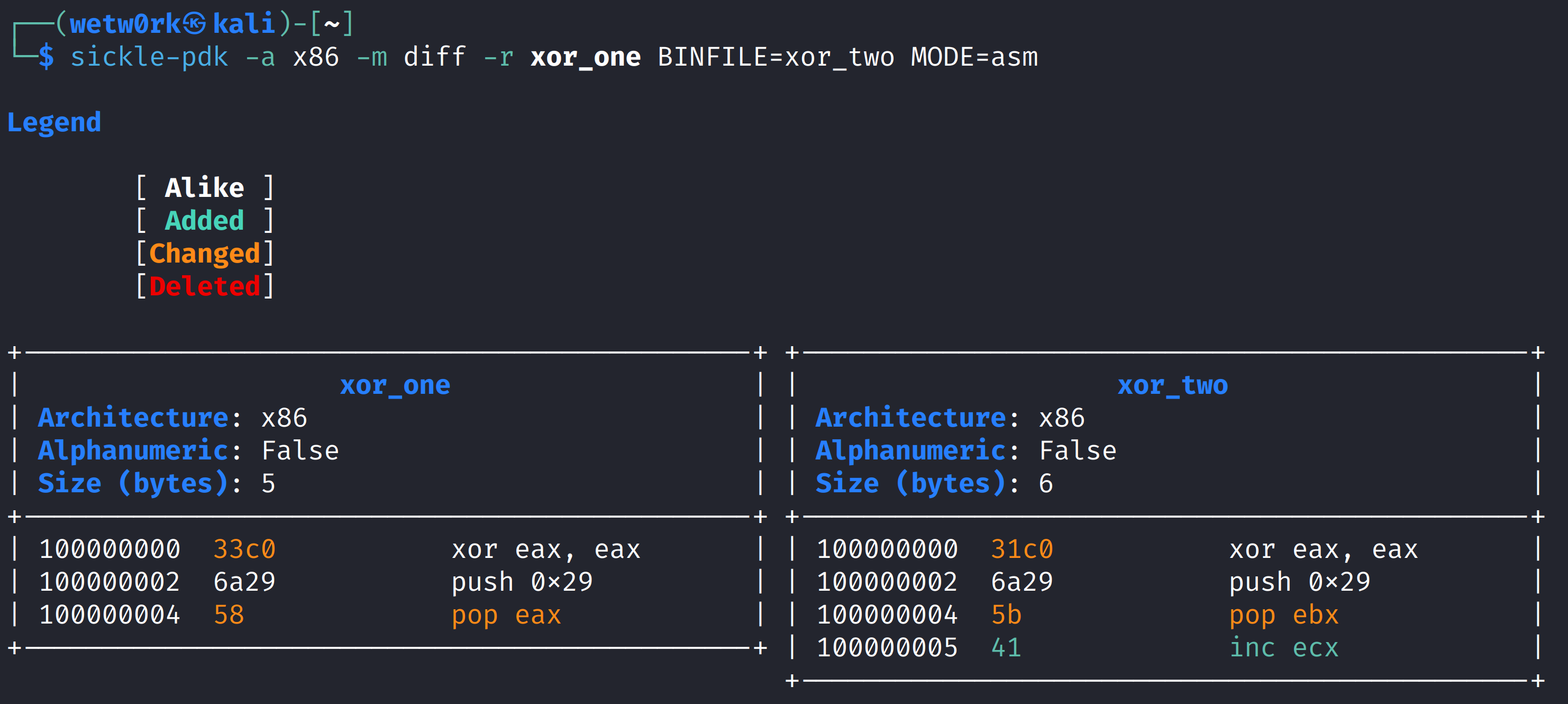
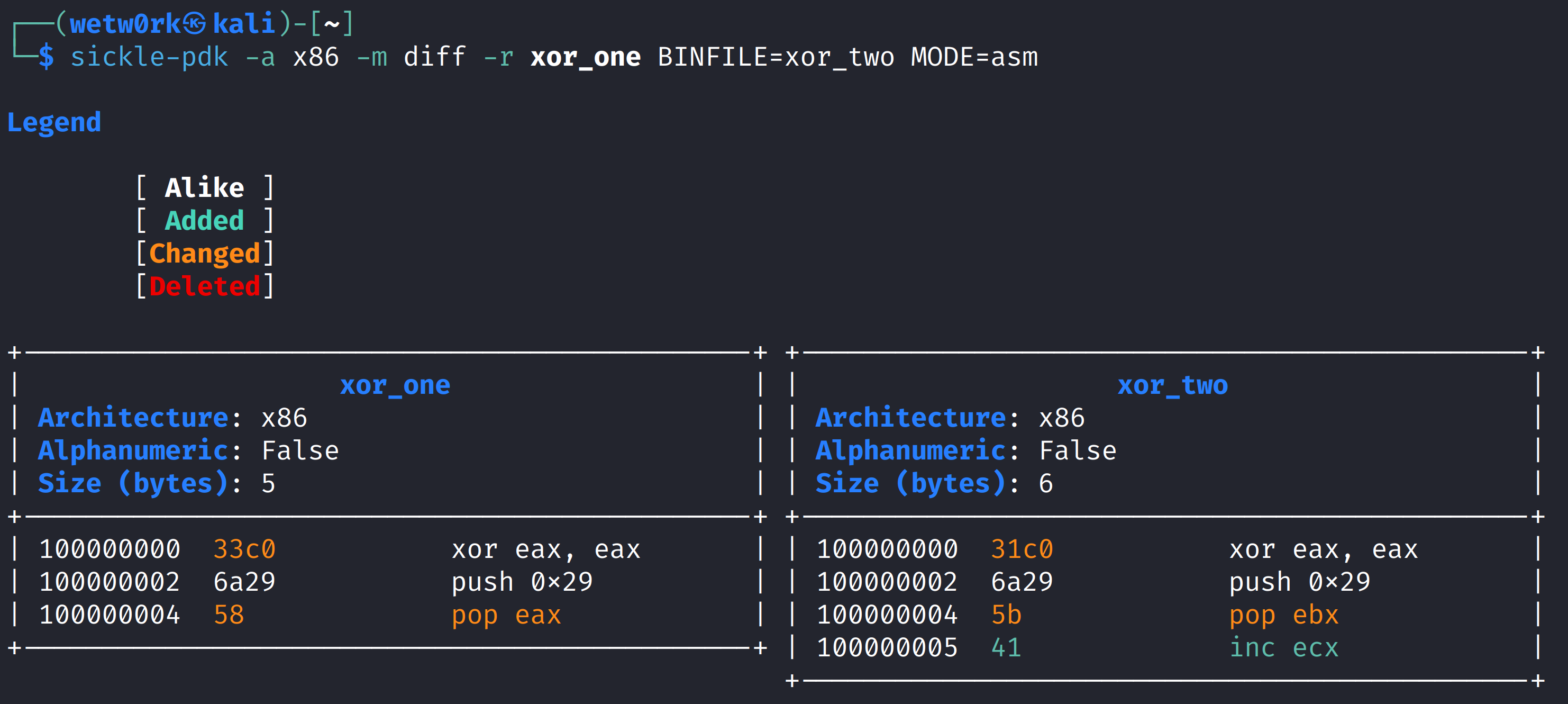
Sickle inclut un module "diff" initialement conçu pour analyser les stubs de shellcode. Le mode "asm" d'origine effectue des diff de désassemblage linéaire à la fois au niveau du langage assembleur et au niveau des opcodes, séparément.
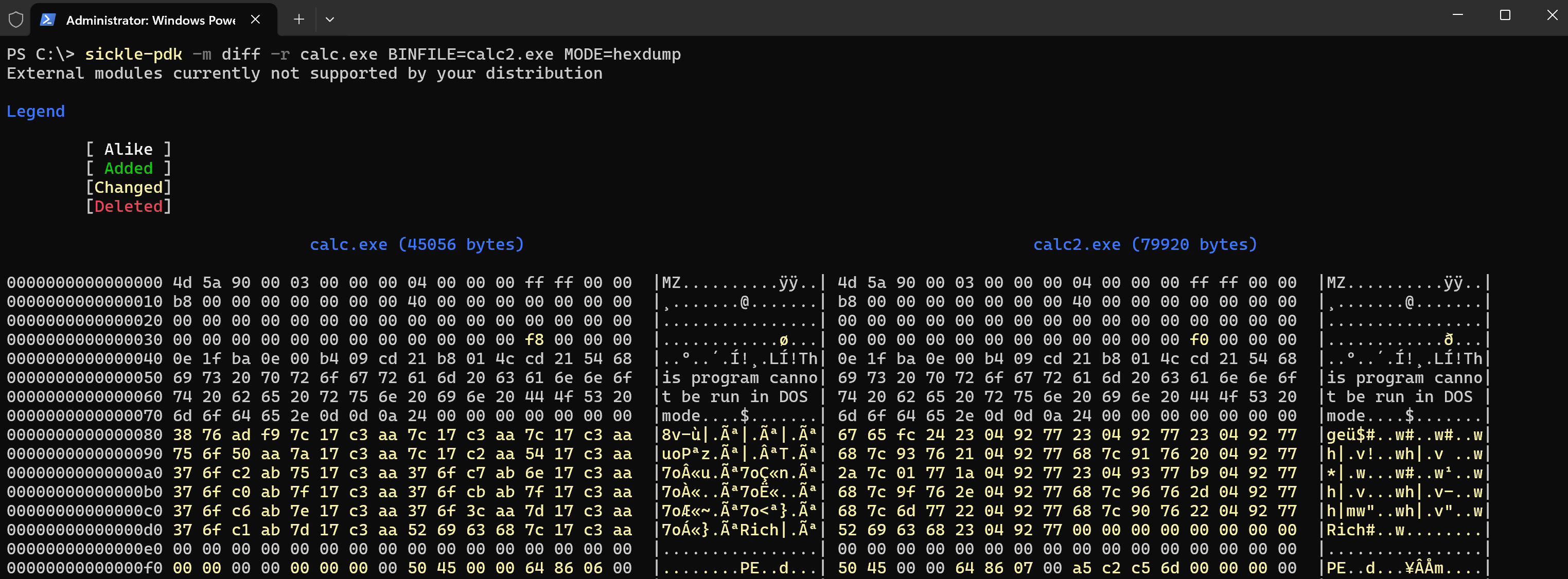
De plus, Sickle propose différents modes pour effectuer des diff, ce qui le rend utile au-delà du développement de shellcode.
Une tâche courante que vous effectuez souvent est de tester vos shellcodes. Ce processus implique généralement les étapes suivantes :
Bien que ces étapes puissent sembler mineures, elles peuvent devenir chronophages lorsqu'elles sont répétées. Sickle simplifie le processus en encapsulant automatiquement le shellcode pour un test rapide, et le module "run" prend actuellement en charge les systèmes Windows et Unix.

Sickle peut également convertir un fichier binaire en opcodes extraits (shellcode), puis traduire ceux-ci en instructions machine (assembleur). Notez que ce processus ne fonctionne qu'avec des fichiers binaires bruts et effectue actuellement un désassemblage linéaire via Capstone.
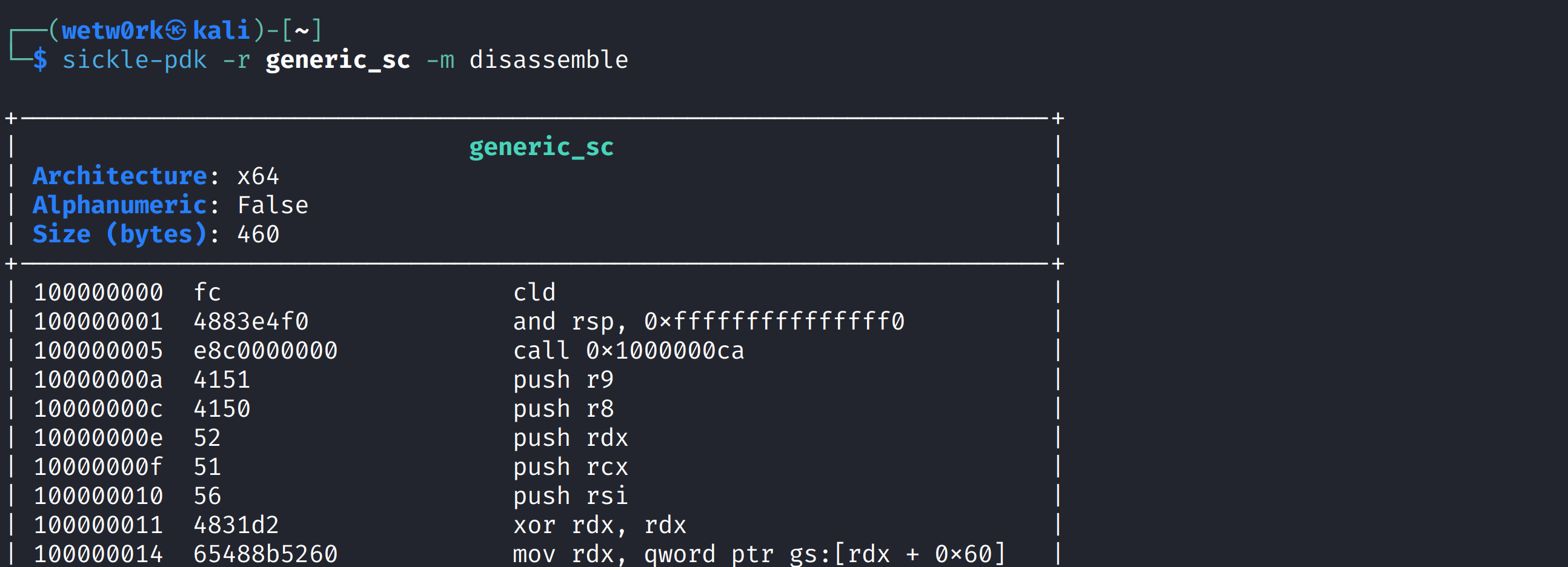
Dans l'exemple ci-dessus, le module "disassemble" désassemble un reverse shell conçu par Stephen Fewer en assembleur.
L'extraction de shellcode a été le premier module, ou plutôt la fonctionnalité principale de Sickle, car les opcodes sont interprétés différemment selon le wrapper utilisé. JavaScript, par exemple, ne stocke ni n'interprète le shellcode de la même manière qu'un programme C.

La plus grande source d'inspiration a peut-être été msfvenom.
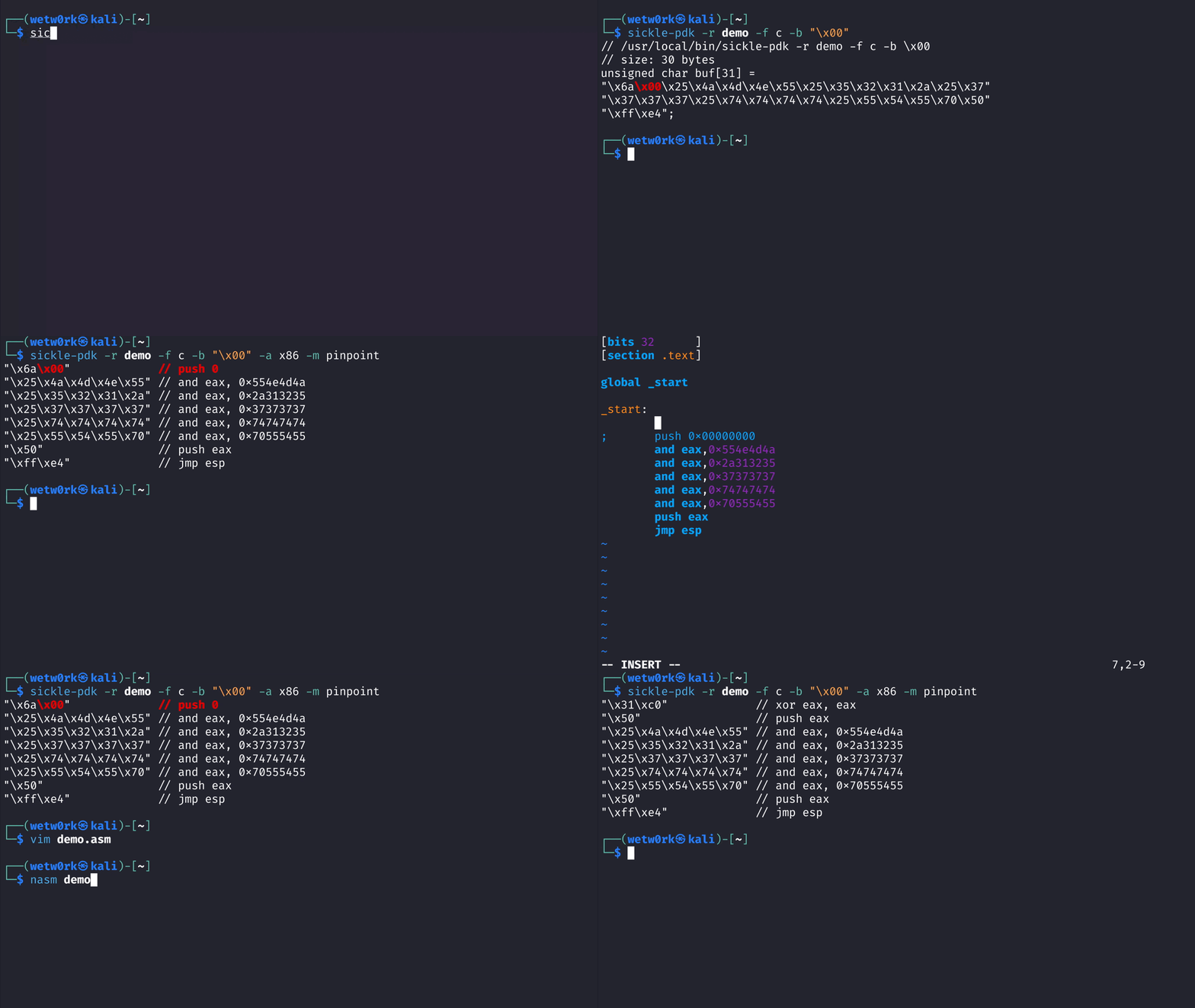
Bien que moins courant dans les exploits 64 bits, il peut arriver qu'un exploit restreigne l'utilisation de certains caractères. C'est là que le module "pinpoint" excelle, car il identifie et met directement en évidence les instructions assembleur responsables du ou des caractères interdits identifiés.
À l'origine, cet outil était un seul grand script. Cependant, au fil de son évolution, je me suis retrouvé à devoir réapprendre le code à chaque mise à jour. Pour remédier à cela, Sickle adopte désormais une approche modulaire, permettant d'ajouter de nouvelles fonctionnalités en passant un minimum de temps à réapprendre la conception de l'outil.
$ sickle-pdk -l

  Shellcode                              Ring Description
  ---------                              ---- -----------
  windows/x64/virtualalloc_exec_tcp       3   A lightweight stager that connects to a handler via TCP over IPv4 to receive and execute shellcode
  windows/x64/egghunter                   3   Egghunter based on Hell's Gate and NtProtectVirtualMemory
  windows/x64/virtualalloc_exec_https     3   A lightweight stager that connects to a handler over HTTPS to receive and execute shellcode
  windows/x64/exec                        3   Executes a command on the target host
  windows/x64/reflective_pe_loader        3   Stageless Reflective PE Loader that takes an x64 binary and executes it in memory
  windows/x64/shell_reverse_tcp           3   Reverse Shell via TCP over IPv4 that provides an interactive cmd.exe session
  windows/aarch64/shell_reverse_tcp       3   Reverse Shell via TCP over IPv4 that provides an interactive cmd.exe session
  windows/x86/shell_reverse_tcp           3   Reverse shell via TCP over IPv4 that provides an interactive cmd.exe session
  windows/x64/kernel_token_stealer        0   Token stealing shellcode for privilege escalation
  windows/x64/kernel_sysret               0   Generic method of returning from kernel space to user space
  windows/x64/kernel_ace_edit             0   SID entry modifier for process injection
  windows/x86/kernel_token_stealer        0   Token stealing shellcode for privilege escalation
  linux/x64/memfd_reflective_elf_tcp      3   Staged Reflective ELF Loader via TCP over IPV4 which executes an ELF from a remote server
  linux/aarch64/memfd_reflective_elf_tcp  3   Staged Reflective ELF Loader via TCP over IPv4 which executes an ELF from a remote server handler
  linux/aarch64/shell_reverse_tcp         3   Reverse Shell via TCP over IPv4 that provides an interactive /bin/sh session
  linux/x86/execve                        3   Executes a shell session such as /bin/sh
  linux/x86/shell_reverse_tcp             3   Reverse shell via TCP over IPV4 that provides an interactive /bin/sh session

  Architectures
  -------------
  aarch64
  x64
  x86

  Modules       Description
  -------       -----------
  disassemble   Simple linear disassembler for multiple architectures
  handler       Module for handling payload distribution and session management
  asm_shell     Interactive assembler and disassembler
  diff          Bytecode diffing module for comparing two binaries (or shellcode)
  pinpoint      Highlights opcodes within a disassembly to identify instructions responsible for bad characters
  run           Wrapper used for executing bytecode (shellcode)
  format        Converts bytecode into a respective format (activated anytime '-f' is used)
  badchar       Produces a set of all potential invalid characters for validation purposes
