 zydak/leetobfuscator
Obfuscates C/C++ through LLVM passes: string encryption, control-flow flattening, MBA rewriting, and anti-analysis to defeat reverse engineering.

██╗     ███████╗███████╗████████╗
██║     ██╔════╝██╔════╝╚══██╔══╝
██║     █████╗  █████╗     ██║
██║     ██╔══╝  ██╔══╝     ██║
███████╗███████╗███████╗   ██║
╚══════╝╚══════╝╚══════╝   ╚═╝

 ██████╗ ██████╗ ███████╗██╗   ██╗███████╗ ██████╗ █████╗ ████████╗ ██████╗ ██████╗
██╔═══██╗██╔══██╗██╔════╝██║   ██║██╔════╝██╔════╝██╔══██╗╚══██╔══╝██╔═══██╗██╔══██╗
██║   ██║██████╔╝█████╗  ██║   ██║███████╗██║     ███████║   ██║   ██║   ██║██████╔╝
██║   ██║██╔══██╗██╔══╝  ██║   ██║╚════██║██║     ██╔══██║   ██║   ██║   ██║██╔══██╗
╚██████╔╝██████╔╝██║     ╚██████╔╝███████║╚██████╗██║  ██║   ██║   ╚██████╔╝██║  ██║
 ╚═════╝ ╚═════╝ ╚═╝      ╚═════╝ ╚══════╝ ╚═════╝╚═╝  ╚═╝   ╚═╝    ╚═════╝ ╚═╝  ╚═╝

A simple obfuscator for C/C++ x64 and x86 code
This is made as an LLVM fork, so you need the actual source to obfuscate. It's not an arbitrary executable obfuscator. It's a modified version of the compiler.
If you want to check out the results, I've made and obfuscated 2 crackmes with this. You can get them in releases alongside the precompiled clang binary.
All of this was compiled with -O3 flag and all screenshots come from IDA Pro 9.4. I also tested it with Binary Ninja and Ghidra, results were either the same or worse.
Encrypts strings at compile time and inserts a decrypt function at every use of the encrypted string. This completely disables the ability to search for any strings in the binary. And every string has its own unique key hardcoded in the decrypt function which makes dumping and decrypting them a lot harder. These decrypt functions will also be inlined. (not inlined below just for showcase)
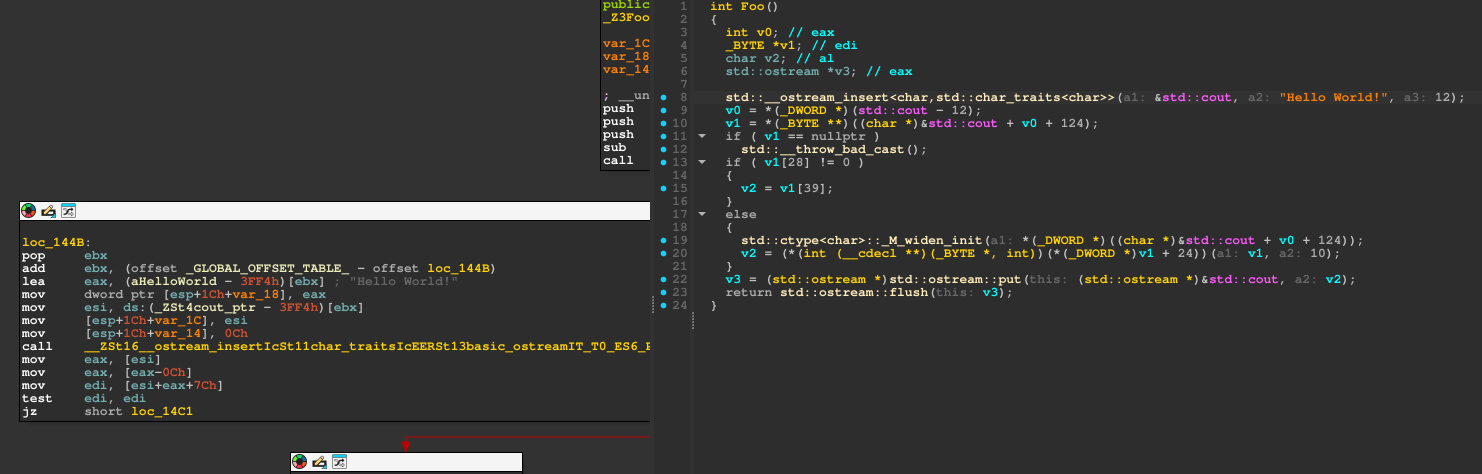 Before the pass |
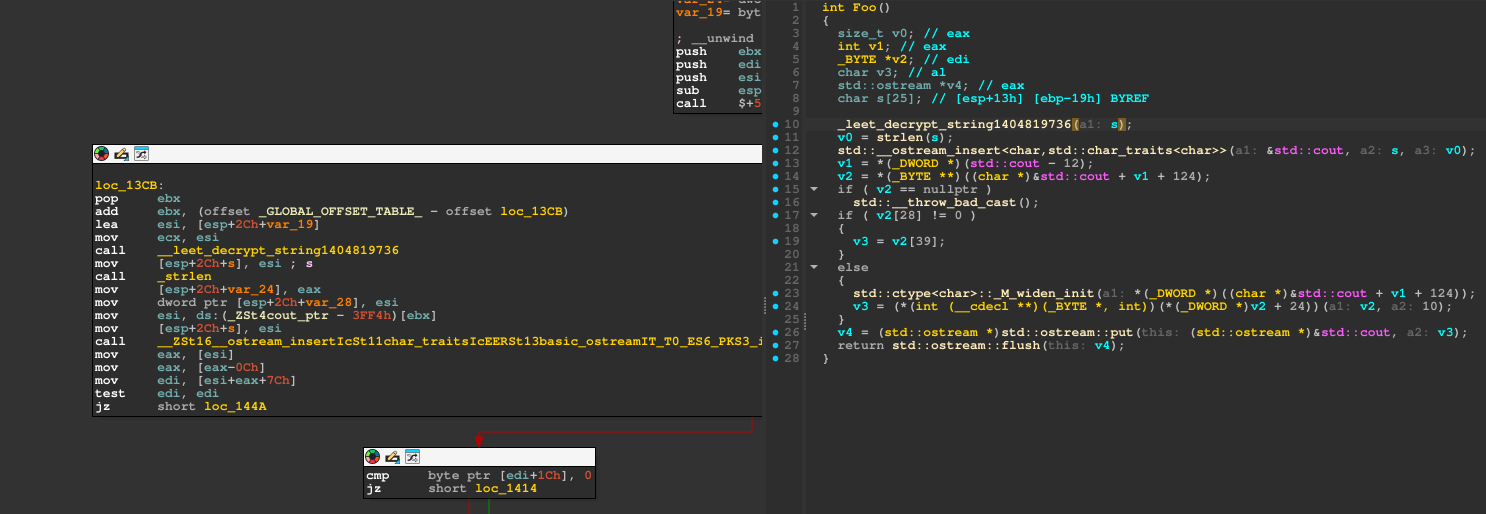 After |
Replaces arithmetic operations with their MBA equivalents. It's basically impossible to see what the original operation did unless you run it through an MBA deobfuscator first. Of course this obfuscation is kinda weak because MBA is the oldest trick in the book, so there are many tools to deal with that, for example CoBRA, it will successfully deobfuscate this into the original expression:
./cobra-cli --mba "((x^y) - (((x^y)&0xFF)&0xA) + 10) * ((x^y) - ((x^y)|0xA) + 10) + ((x^y) - (((x^y)&0xFF)|0xFFFFFFF5) - 11) * (~(x^y) - (~(x^y)|0xA) + 10)" --bitwidth 32

10 * (x ^ y)
That's why I've made the AAMBA pass.
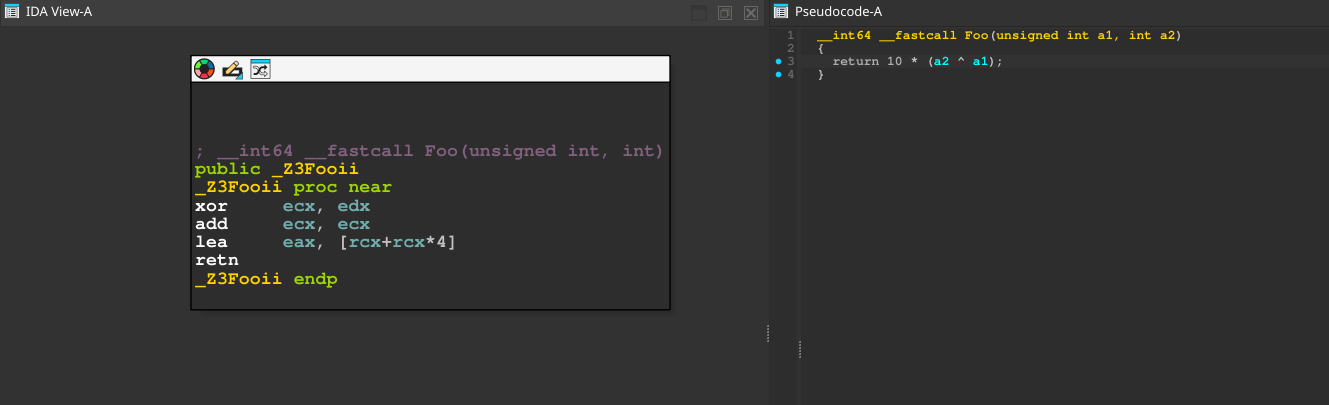 Before the pass |
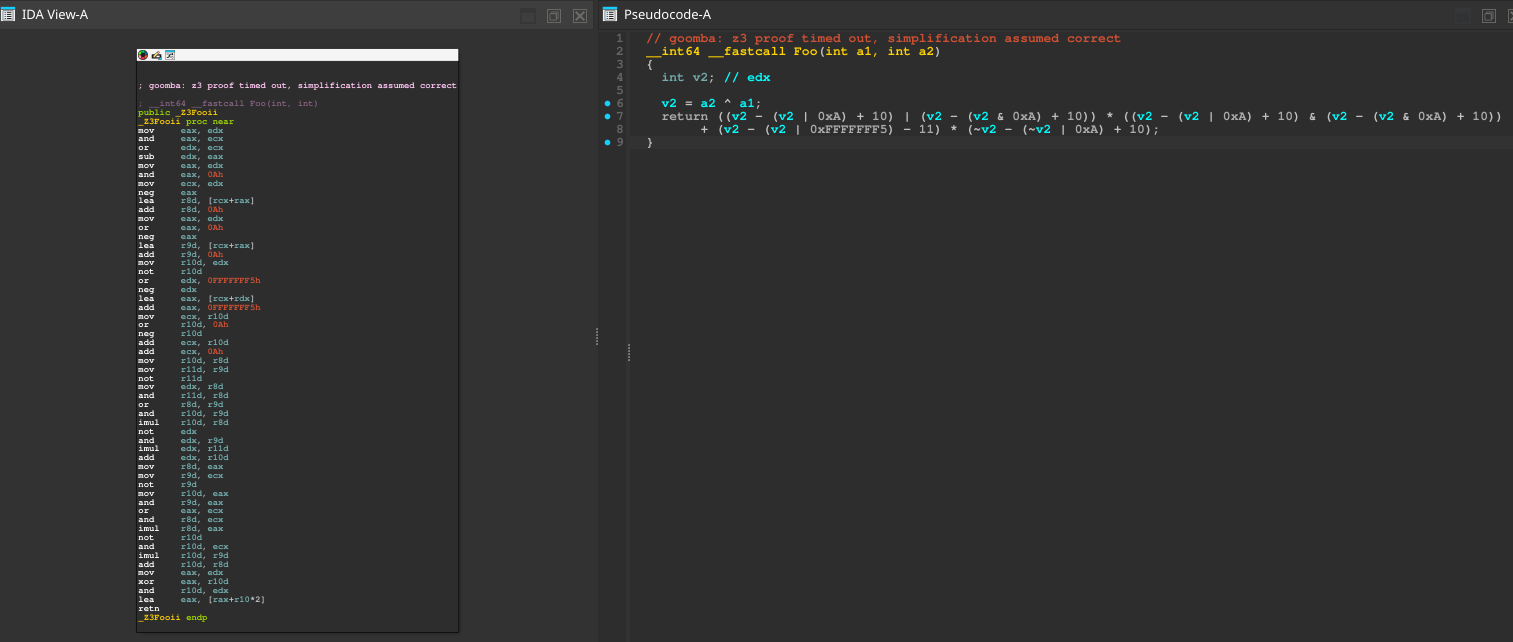 After |
Replaces operands of binary operations with ADC(X, 255) - 255 - CF and SBB(X, 255) + 255 + CF. Of course it always evaluates to X, but it makes the expression dependent on the carry flag. Unless the decompiler tracks the state of CF (which sometimes is impossible) it will get very confused and won't be able to fold these expressions. It pairs very nicely with the previous MBA pass obfuscating the arithmetic even further. As you can see below the decompiler created some additional variables and uses a lot of __PAIR64__ and __CFADD__ calls, so it becomes a lot harder (still not impossible) to paste that into tools like CoBRA, IDA's gooMBA plugin is also no help in simplifying this. Also, IDA's decompiler does track the carry flag to some degree, but combining this with control flow obfuscation makes tracking basically impossible without execution since you do not know what the previous operation was, maybe it set CF to 1, maybe it didn't, so later passes will add up even more to this one.
|
Before the pass |
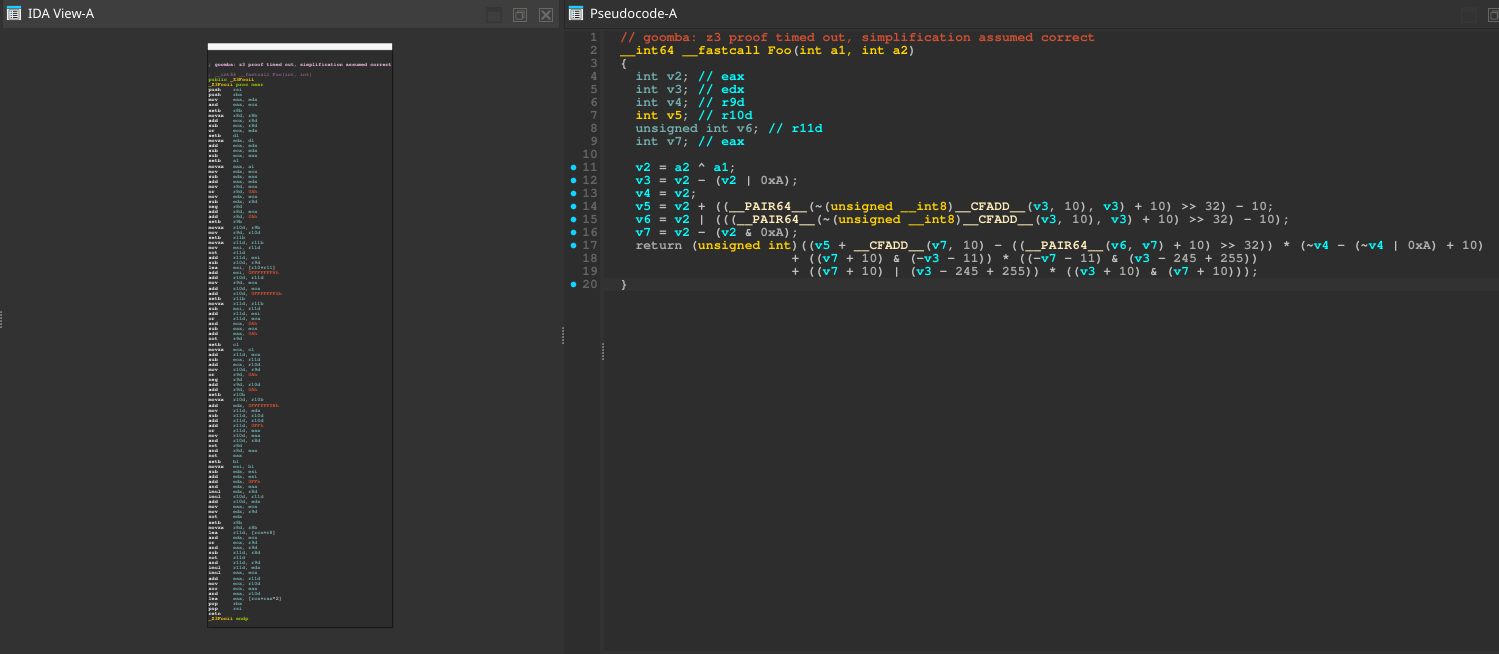 After |
Collects all the blocks inside a function and makes one giant state machine out of them, it creates a jump table at the beginning of the function and places all the block pointers inside it. Then instead of a normal jump at the end of each block everything gets routed through the dispatcher which uses indirect jumps, these are almost impossible to resolve statically without any execution. It also demotes registers to stack, so if you split a block in half, all the variables from the previous block will be on the stack, which means that there will be A LOT of variables in every expression. If you run a single block's operations through CoBRA it won't be able to deobfuscate it much since there will be too many unknown variables.
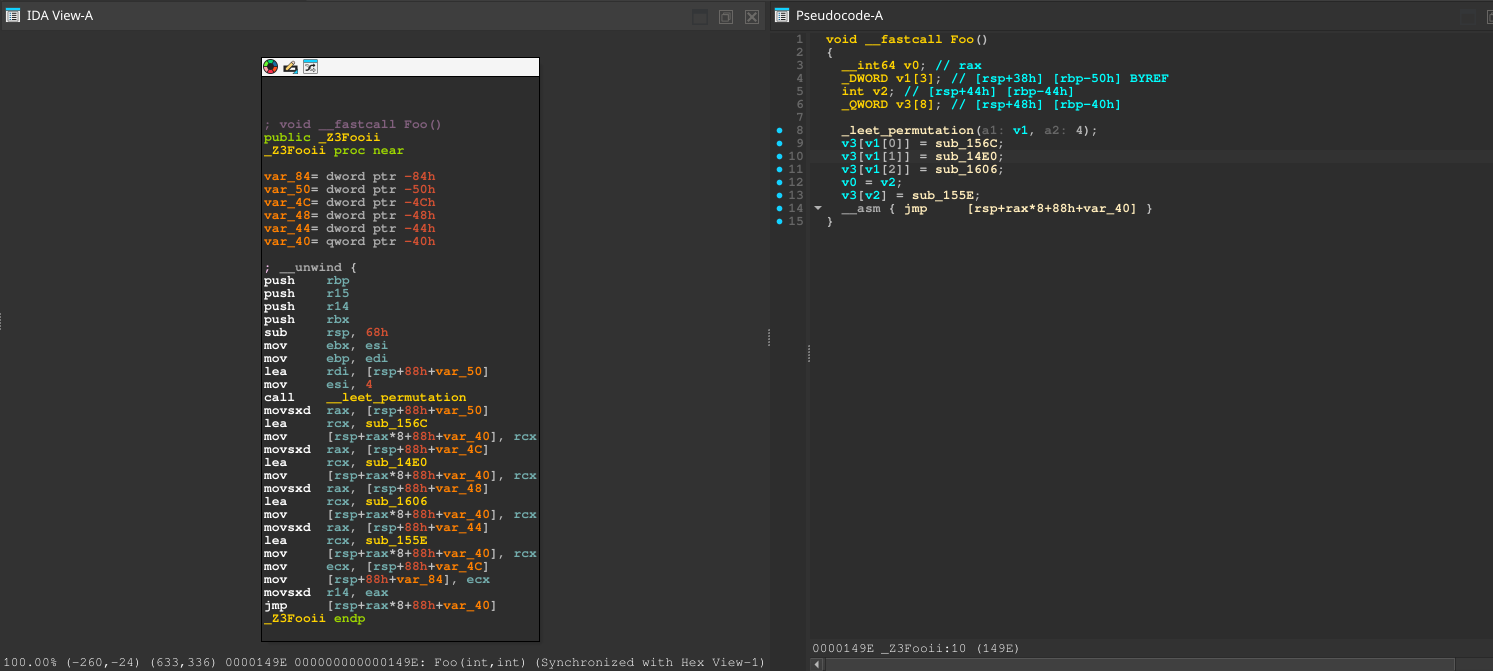
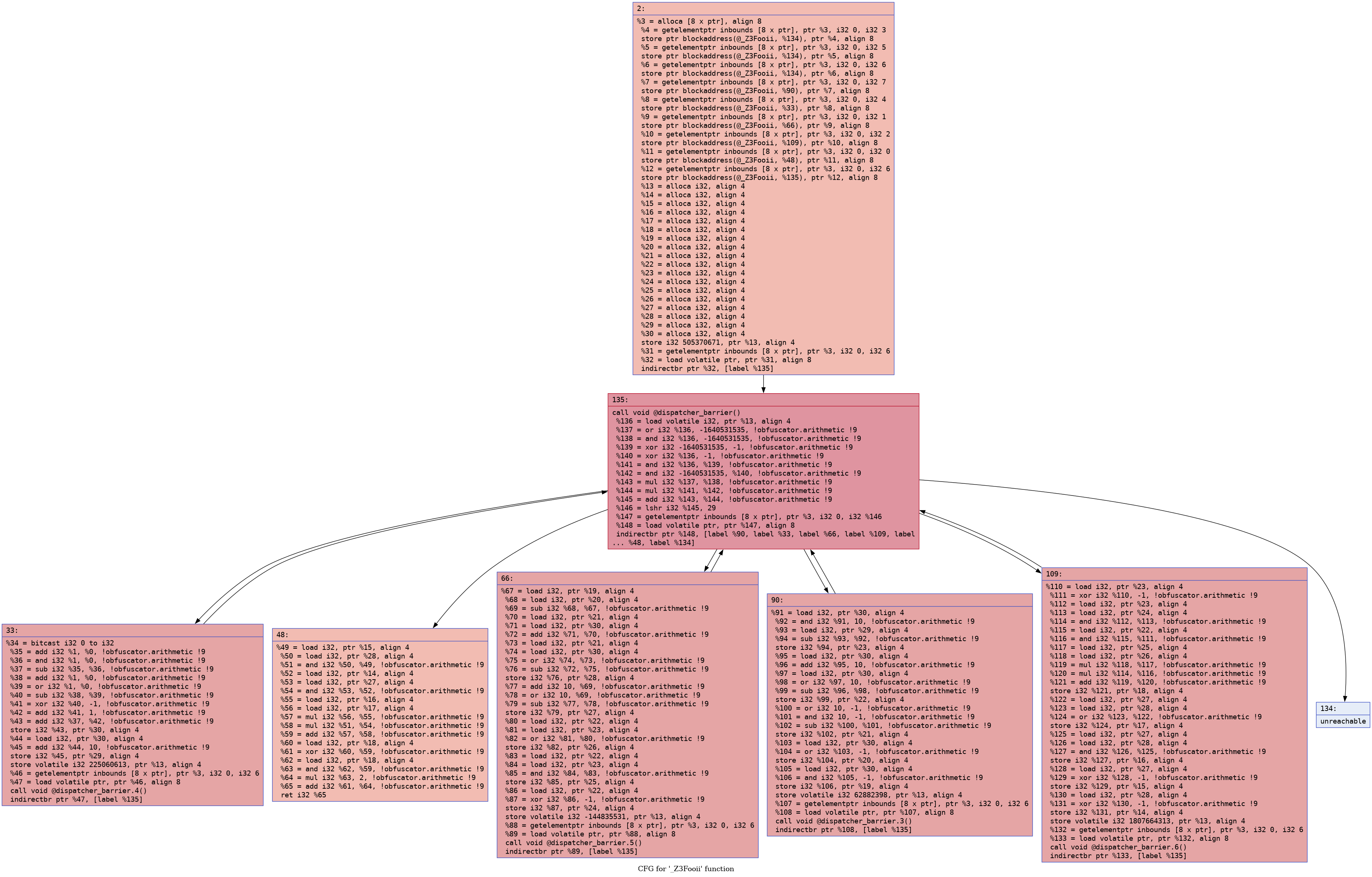
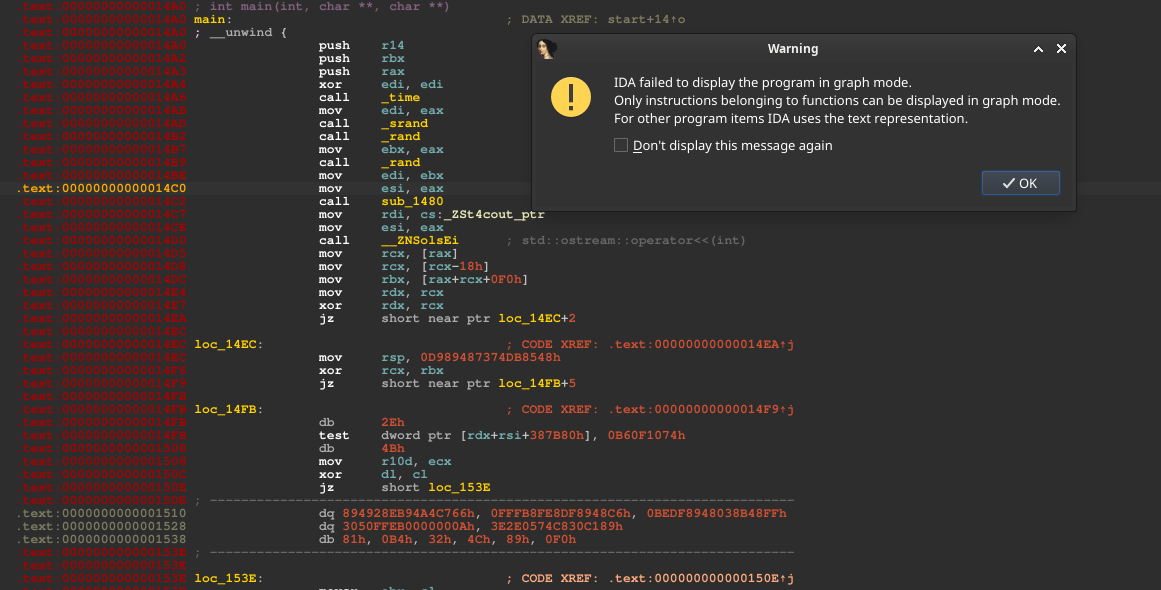
Creates a bunch of bogus blocks containing invalid assembly. This throws disassemblers off immensely because if the disassembler encounters a technically invalid byte that never gets executed, it will still try to make sense of it. So if the byte is incomplete, it will create an instruction from whatever bytes happen to be after it essentially consuming them. That creates a desynch destroying every instruction after that. On Windows binaries IDA will be able to somewhat recover from this, in rare cases it will be able to generate a graph and decompile what it can (tho it will be broken and incomplete), while on Linux binaries it completely breaks the graph view and disables decompilation. Additionaly it will insert RDTSC timer and some other anti debug checks checks, if it detects a debugger you crash.
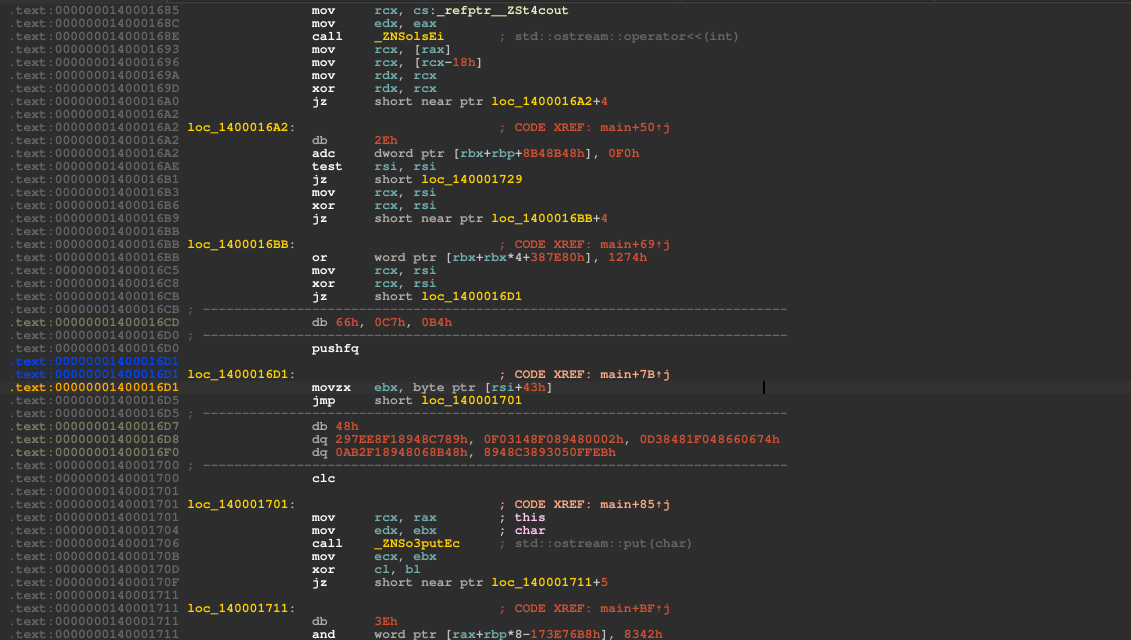 Windows |
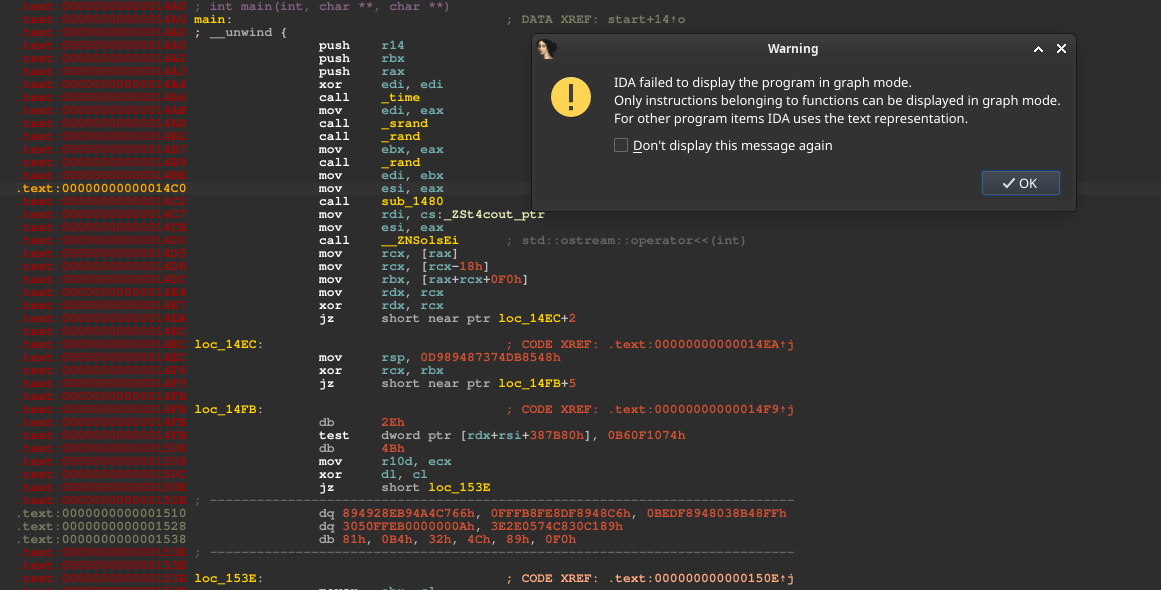 Linux |
