
AI-Infra-Guard
 tencent/ai-infra-guard
A full-stack AI Red Teaming platform securing AI ecosystems via Agent Scan, Skills Scan, MCP scan, AI Infra scan and LLM jailbreak evaluation.
ai-securitycloud-securitycontainer-security+7
7.2k
tencent/ai-infra-guardA full-stack AI Red Teaming platform securing AI ecosystems via Agent Scan, Skills Scan, MCP scan, AI Infra scan and LLM jailbreak evaluation.
 owasp/owasp-top-10-neocloud-and-ai-data-center-security-risks
OWASP framework cataloging the top 10 security risks in neocloud and AI data center infrastructure, covering hardware, networking, isolation,…
 eset/malware-research
Code written as part of our various malware investigations
 joseluispino/hardstop
Reference implementation for "Hard Stop: Kernel-Level Preemption and Containment for Rogue Agentic Execution". Out-of-band Epistemic Andon Cord,…
 cr0nx/awesome-linux-attack-forensics-purplelabs
This page is a result of the ongoing hands-on research around advanced Linux attacks, detection and forensics techniques and tools.
 trailofbits/polytracker
An LLVM-based instrumentation tool for universal taint tracking, dataflow analysis, and tracing.
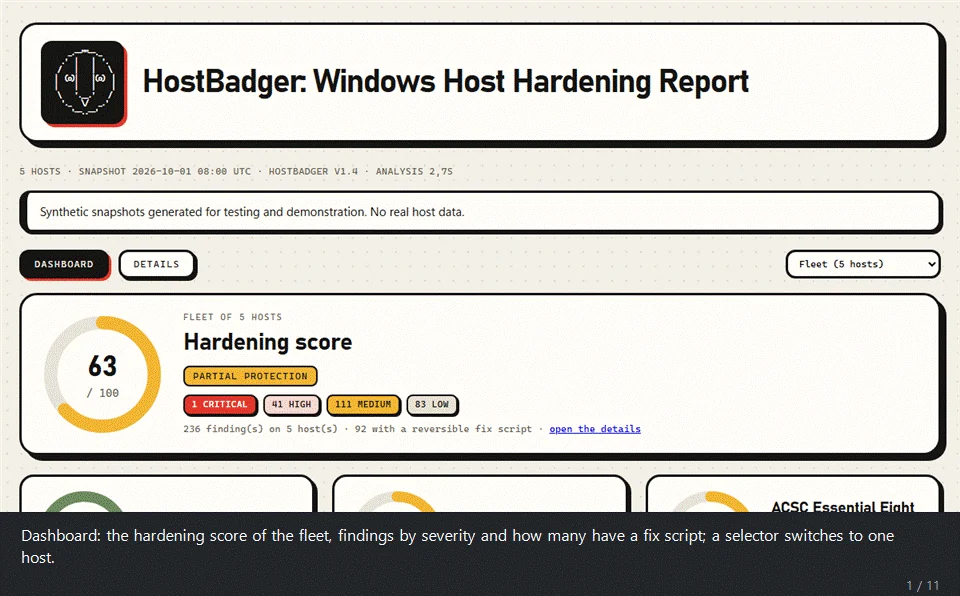 g4bri-3l3/hostbadger
Windows host hardening auditor and remediation tool in PowerShell: CIS, DISA STIG, Essential Eight checks, reversible fixes, optional AI analysis
 markakd/container_escape
Container escape proof-of-concept exploits for CVE-2026-80521 and CVE-2026-52910, with a disposable QEMU/Ubuntu VM harness for safe PoC execution.
 facebook/mcpguard-dynamic
Kernel-level eBPF sandbox for securing LLM agent tool calls made through the Model Context Protocol (MCP)
 sorami-consulting-au/ai-kubernetes-helm-chart-security
Evidence and data for the Sorami technical report on security defaults of 15 AI serving, vector database and MCP Helm charts on Kubernetes.
 owasp/secure-headers-project
OWASP knowledge base and validator for HTTP security response headers, providing recommendations, statistics, and automated configuration checks.
 selinuxproject/selinux-notebook
Comprehensive open-source book on SELinux covering kernel components, userspace libraries, policy toolchain, and policy language. Includes build…
 iaga-team/iaga-sentinel
Cryptographically signed, replay-verifiable evidence layer for AI agents. Governs actions in the loop, produces Ed25519-signed receipts linked into a…
 cookiengineer/actual-php2shell
:robot: NO, There is an easy way to exploit this vulnerability! (vibecoded to prove a point)
 bohops/ultimatewdacbypasslist
A centralized resource for previously documented WDAC bypass techniques
 alixiacf/hpim-training-lab
Trained to Escalate: Forensic Analysis and Local Replication of RLHF-Induced Privilege Escalation in AI Agents (CVE-2026-65616)
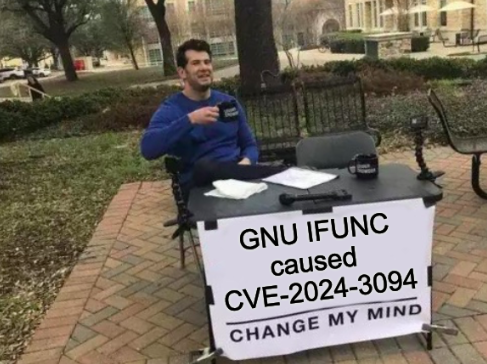 robertdfrench/ifuncd-up
GNU IFUNC is the real culprit behind CVE-2024-3094