
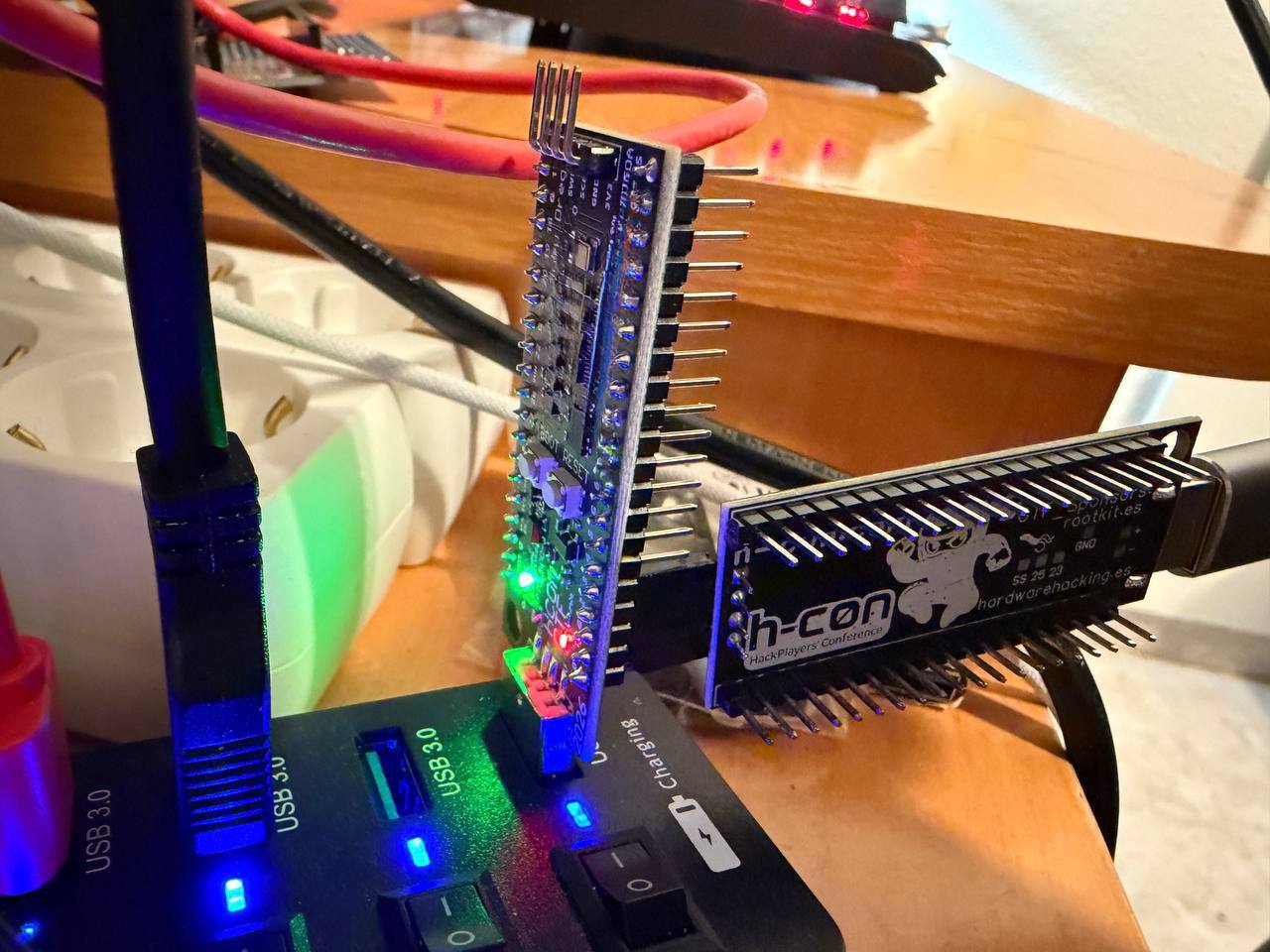
hcon2026hwctf
 therealdreg/hcon2026hwctf
Hardware Hacking CTF hcon2026hwctf - RISCV Hazard3 (@Wren6991) Exploiting by @b1n4ri0 @antoniovazquezblanco & @therealdreg
binary-exploitationctfeducation+6
25
therealdreg/hcon2026hwctfHardware Hacking CTF hcon2026hwctf - RISCV Hazard3 (@Wren6991) Exploiting by @b1n4ri0 @antoniovazquezblanco & @therealdreg
 qkaiser/broadcom-wps
Tools to fingerprint WiFi Access Points running the Broadcom SDK and a list of known affected devices.
 cmu-sei/kaiju
CERT Kaiju is a binary analysis framework extension for the Ghidra software reverse engineering suite. This repository is a "mirror" -- please file…
 vivianuba/grandstream-cve-2026-2329-analysis
Defensive vulnerability-research project comparing vulnerable and patched Grandstream GXP1600 firmware for CVE-2026-2329, using SquashFS extraction,…
 synacktiv/yealink_tools
Reverse engineering scripts designed for extracting Yealink VOIP upgrade files
 hdm/juniper-cve-2015-7755
Notes, binaries, and related information from analysis of the CVE-2015-7755 & CVE-2015-7756 issues within Juniper ScreenOS
 xairy/lights-out
Tools for controlling webcam LED on ThinkPad X230
 ozcanpng/cve-2026-73673
Non-destructive PoC and technical write-up for CVE-2026-73673, an unauthenticated firmware-update flaw in Netis NC63 router, with reproduction and…
 themalwareguardian/cve-2026-79298
Research repository documenting CVE-2026-79298, an incomplete UEFI Secure Boot bypass remediation in Howyar SysReturn's IA-32 boot path, with reverse…
 eclypsium/boothole
Detection scripts and mitigation resources for the BootHole vulnerability (CVE-2020-10713), including PowerShell and Bash tools to audit EFI System…
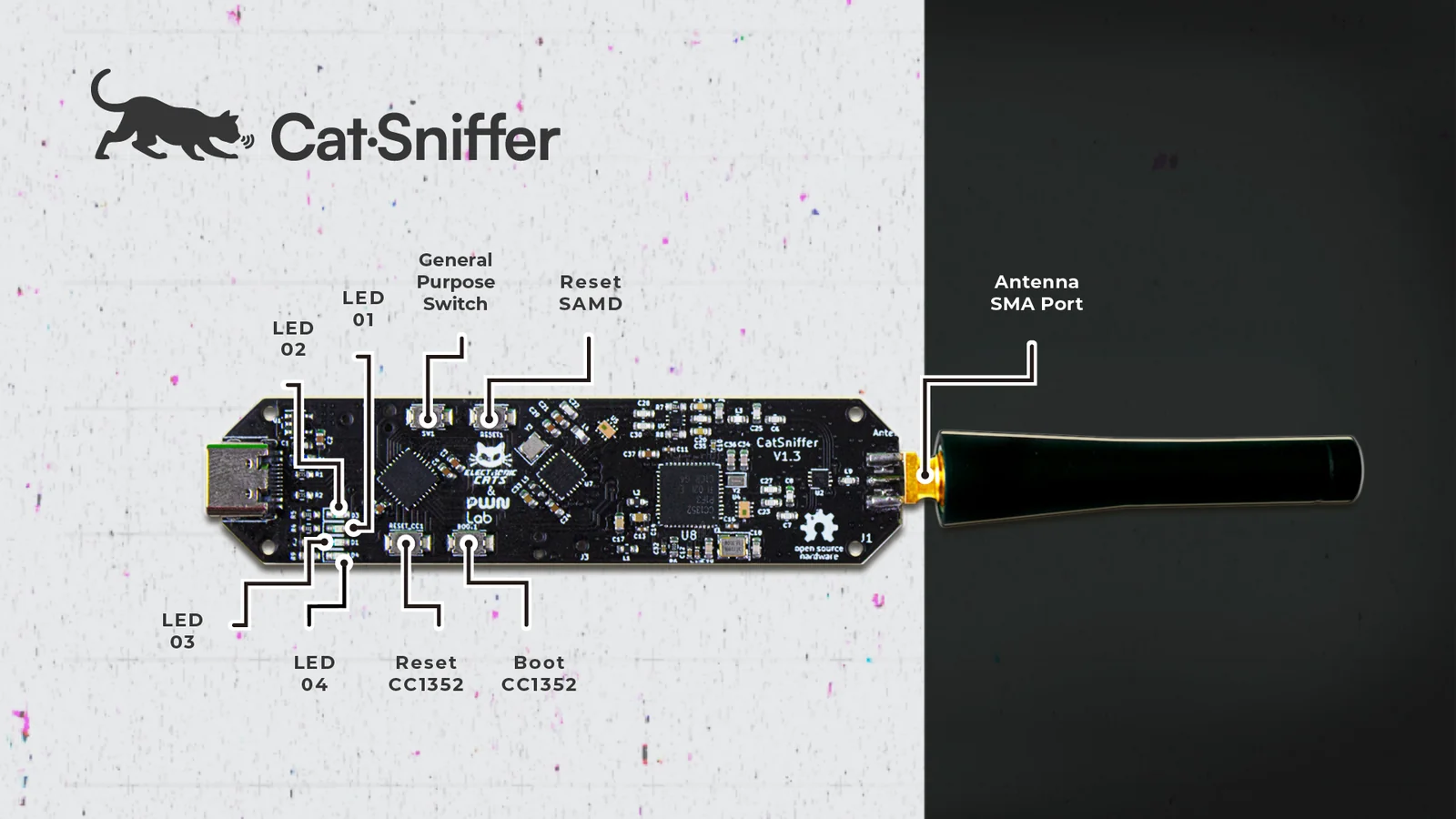 electroniccats/catsniffer-firmware
Firmware repository for CatSniffer, a multi-protocol IoT security research board supporting BLE, Zigbee, Sub-1 GHz, and more, with version-specific…
 cyber-defence-campus/netgear_r6700v3_circled
Demonstrate some functionalities of Morion by generating an exploit for CVE-2022-27646 (stack buffer overflow on Netgear R6700v3 routers).
 themalwareguardian/cve-2025-4275
Analysis and exploitation of CVE-2025-4275 (Hydr0ph0bia), a Secure Boot trust-chain weakness where firmware variables are used to introduce…
 emproof-com/workshop_firmware_reverse_engineering
Workshop on firmware reverse engineering
 wxxsfxyzm/ghostlock-galaxy
Root your Galaxy using CVE-2026-43499
 badchemical/iot-vulnerability-research-public
Independent IoT security research, vulnerability disclosures, and PoCs focusing on firmware analysis, hardware interfaces, and cryptographic flaws.
 themalwareguardian/cve-2025-3052
Research on CVE-2025-3052, an Insyde firmware vulnerability that exposes an arbitrary write primitive capable of modifying security-critical pointers.
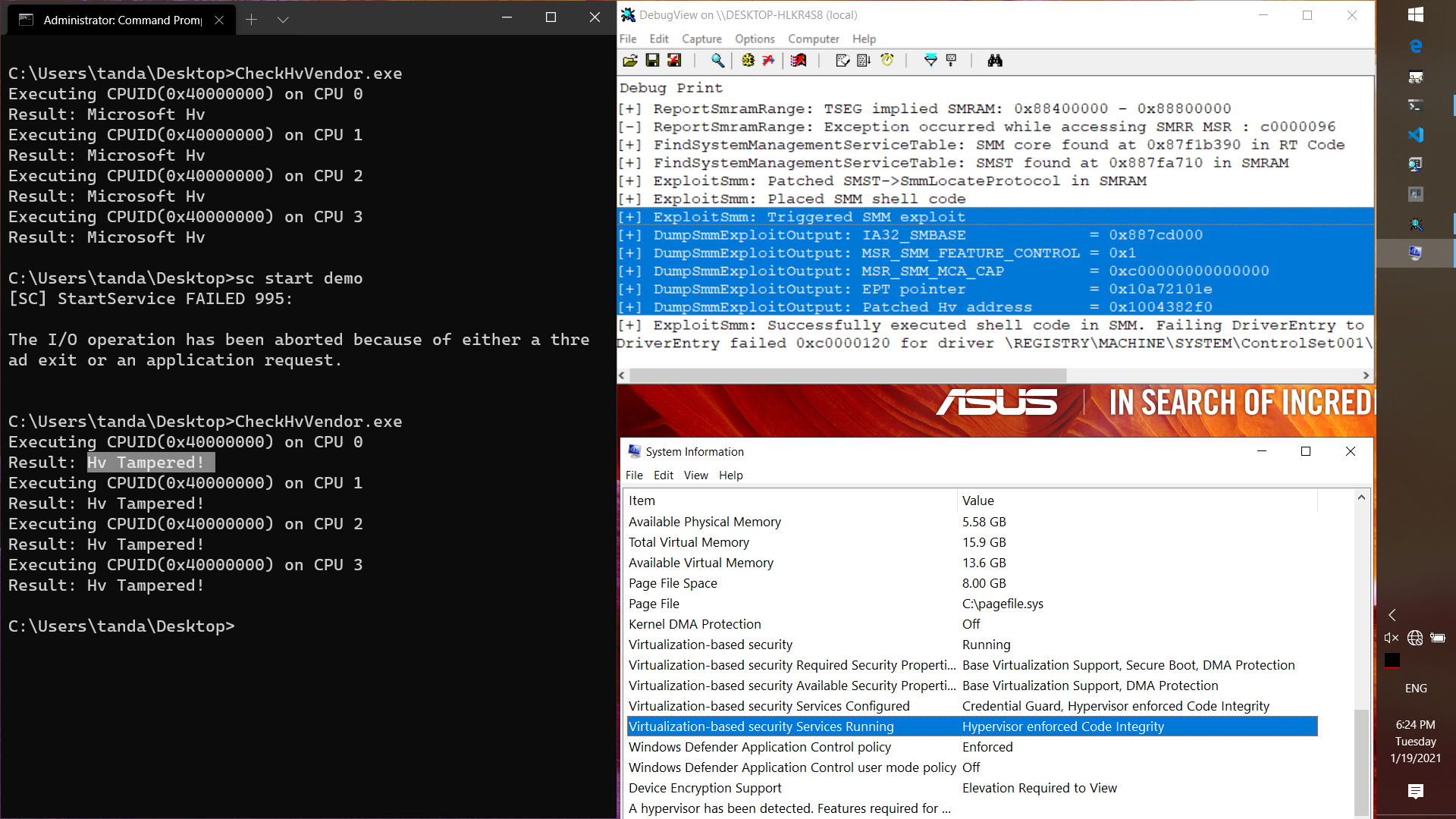 tandasat/smmexploit
The report and the exploit of CVE-2021-26943, the kernel-to-SMM local privilege escalation vulnerability in ASUS UX360CA BIOS version 303.