web_exploit_detector

The Web Exploit Detector is a Node.js application used to detect possible infections, malicious code and suspicious files in web hosting environments

The Web Exploit Detector is a Node.js application used to detect possible infections, malicious code and suspicious files in web hosting environments

Xyntia, the black-box deobfuscator

Reverse bytenode .jsc (V8 code cache) to JavaScript — static, pure Rust, no patched V8/Node. Node 8→26 / V8 5.8–14.6; 25k .jsc tested, 0 fail.

Modular framework to detect and prevent dependency confusion attacks by analyzing package manifests across multiple sources and package management…

Analyze any snippet, file, or repository to detect possible security flaws such as secret in code, open source vulnerability, code security,…

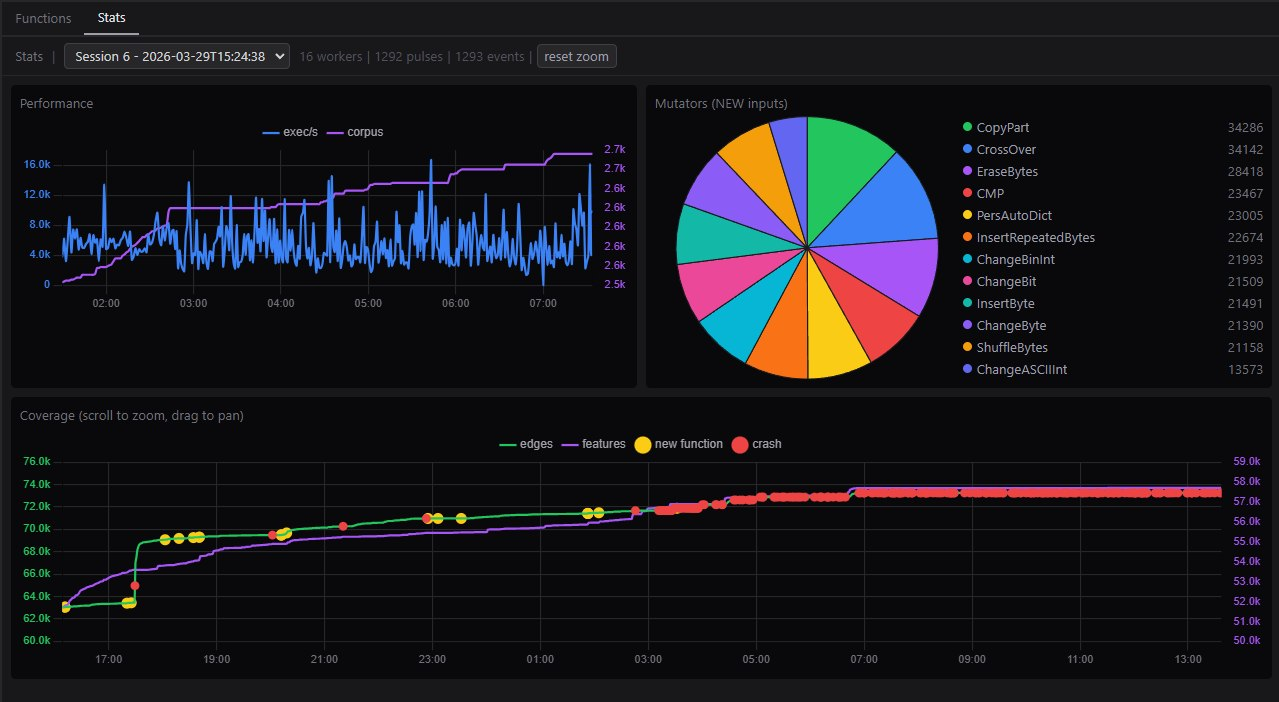
Fuzzing Framework for Modules in Apache HTTPD Server

Detect exposed API keys on GitHub commits.

Deobfuscator for javascript-obfuscator 5.x output (string arrays, control-flow flattening, self-defending, RC4/base64)

(CVE-2017-9841) PHPUnit_eval-stdin_php Remote Code Execution

Scanner di vulnerabilità web in Python: SQL injection, XSS , path traversal, security headers. Crawler, dashboard Flask, report in un PDF

EU AI Act compliance scanner for GitLab CI/CD pipelines — detects AI/ML libraries and posts risk classification as MR comments.

A PHP CVE-2025-1219 SCANNER. In bash no root.

React2Shell Scanner (CVE-2025-55182 & CVE-2025-66478)

Go-based automation tool that scans GitHub repositories for vulnerable Next.js versions (CVE-2025-66478) and automatically creates pull requests with…

CLI scanner that detects whether a target website runs a vulnerable Next.js version affected by CVE-2025-66478 RCE in React Server Components.

Patches CVE-2025-55182 in your repositories

A Python-based security scanner for detecting and exploiting **React Server Components (RSC)** vulnerabilities in Next.js applications. This tool…

Laravel debug mode - Remote Code Execution (RCE)