Yeti aims to bridge the gap between CTI and DFIR practitioners by providing a
Forensics Intelligence platform and pipeline for DFIR teams. It was born out of frustration
of having to answer the question "where have I seen this artifact before?" or
"how do I search for IOCs related to this threat (or all threats?) in my timeline?"
Documentation links:
What is Yeti?
In a nutshell, Yeti allows you to:
- Bulk search observables and get a pretty good guess on the nature of the
threat, and how to find it on a system.
- Inversely, focus on a threat and quickly list all TTPs, malware, and related
DFIR artifacts.
- Let CTI analysts focus on adding intelligence rather than worrying about
machine-readable export formats.
- Incorporate your own data sources, analytics, and logic very easily.
This is done by:
- Storing technical and tactical CTI (observables, TTPs, campagins, etc.) from
internal or external systems.
- Being a backend for DFIR-related queries: Yara signatures, Sigma rules, DFIQ.
- Providing a web API to automate queries (think incident management platform)
and enrichment (think malware sandbox).
- Export the data in user-defined formats so that they can be ingested by
third-party applications (SIEM, DFIR platforms).
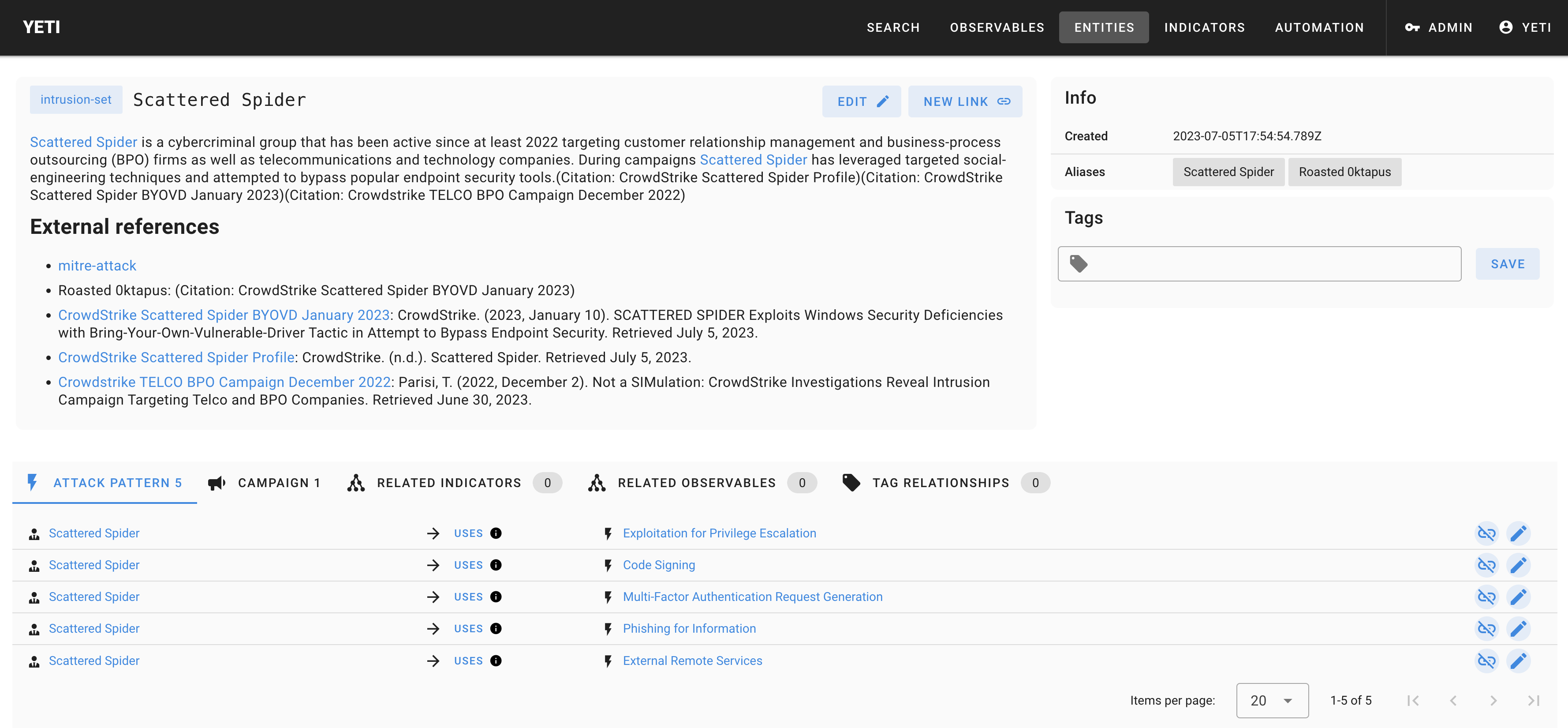
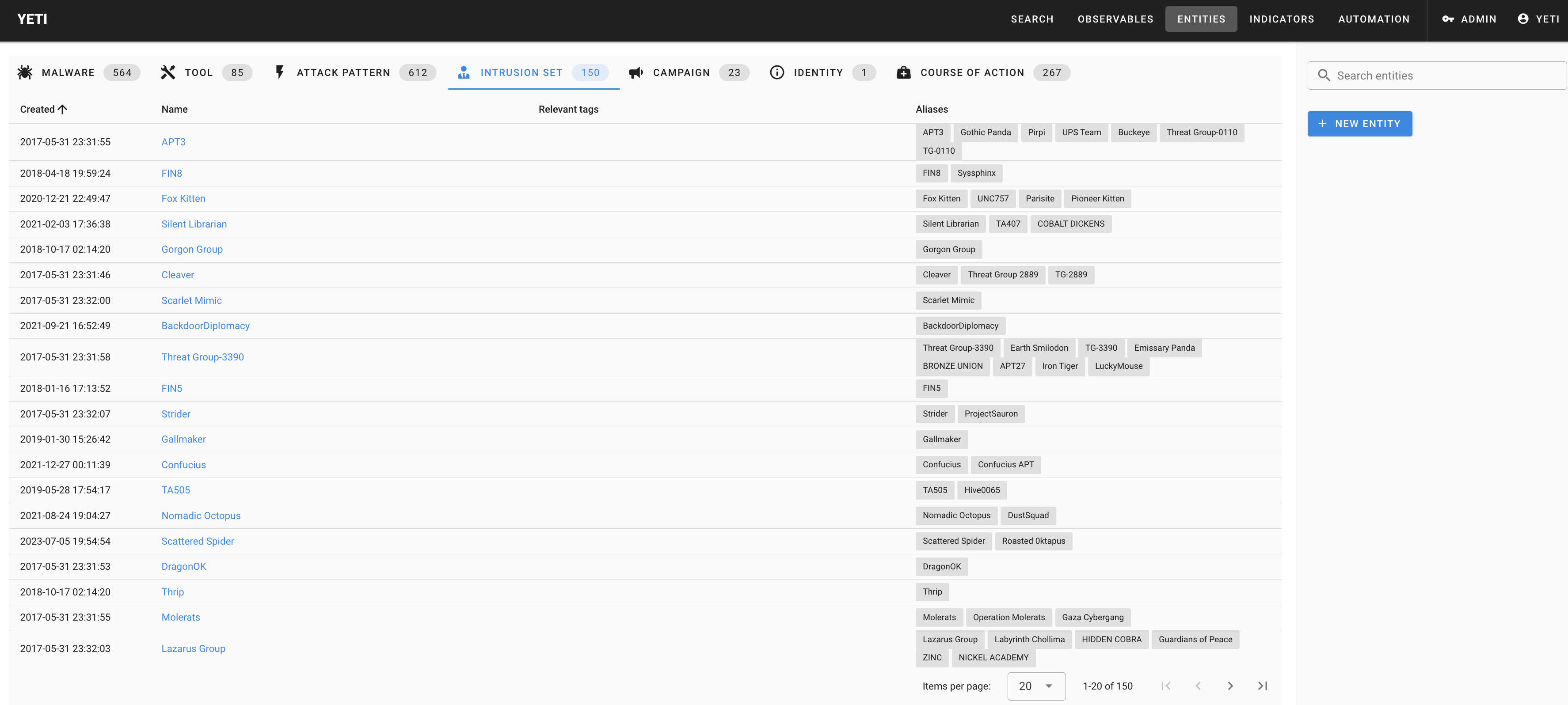
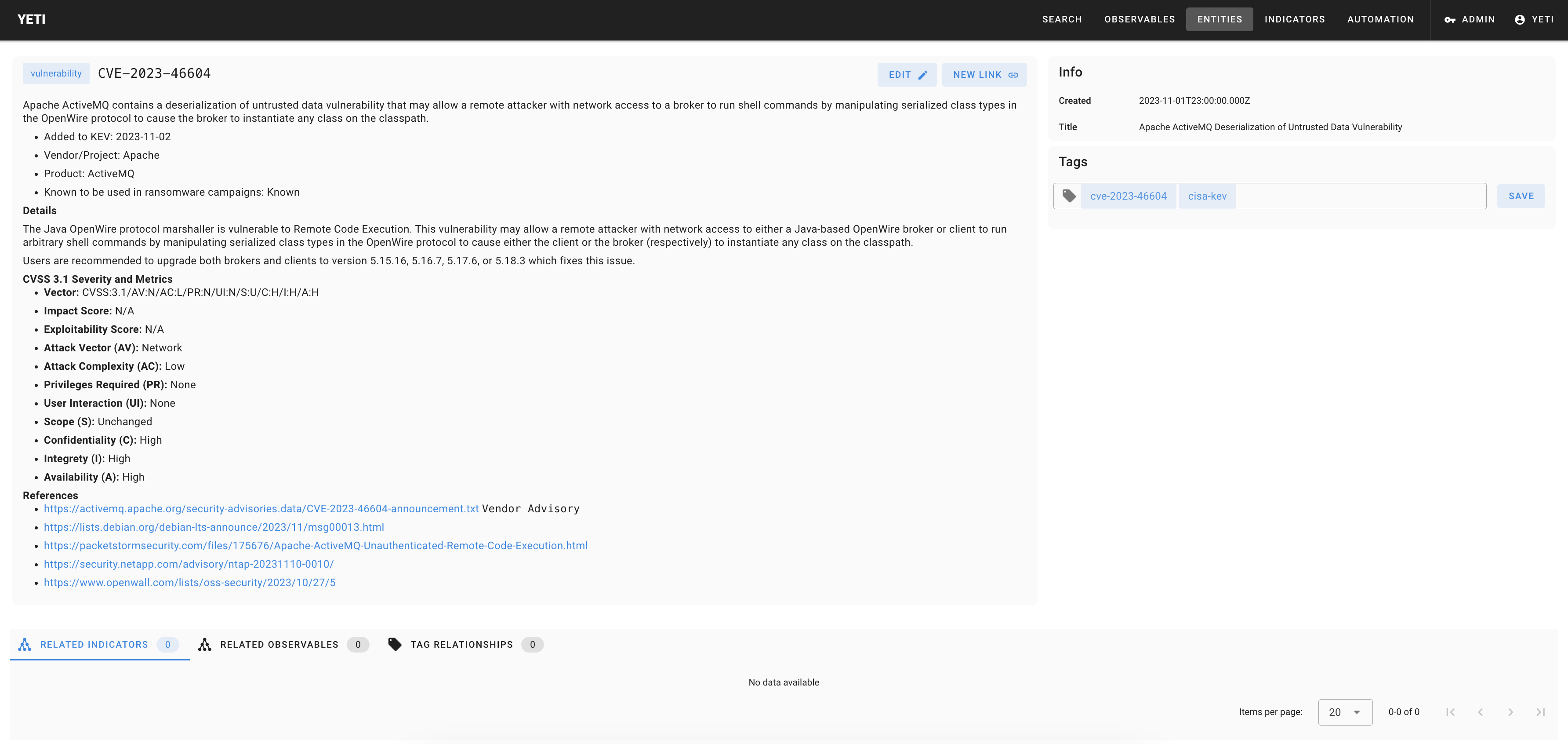
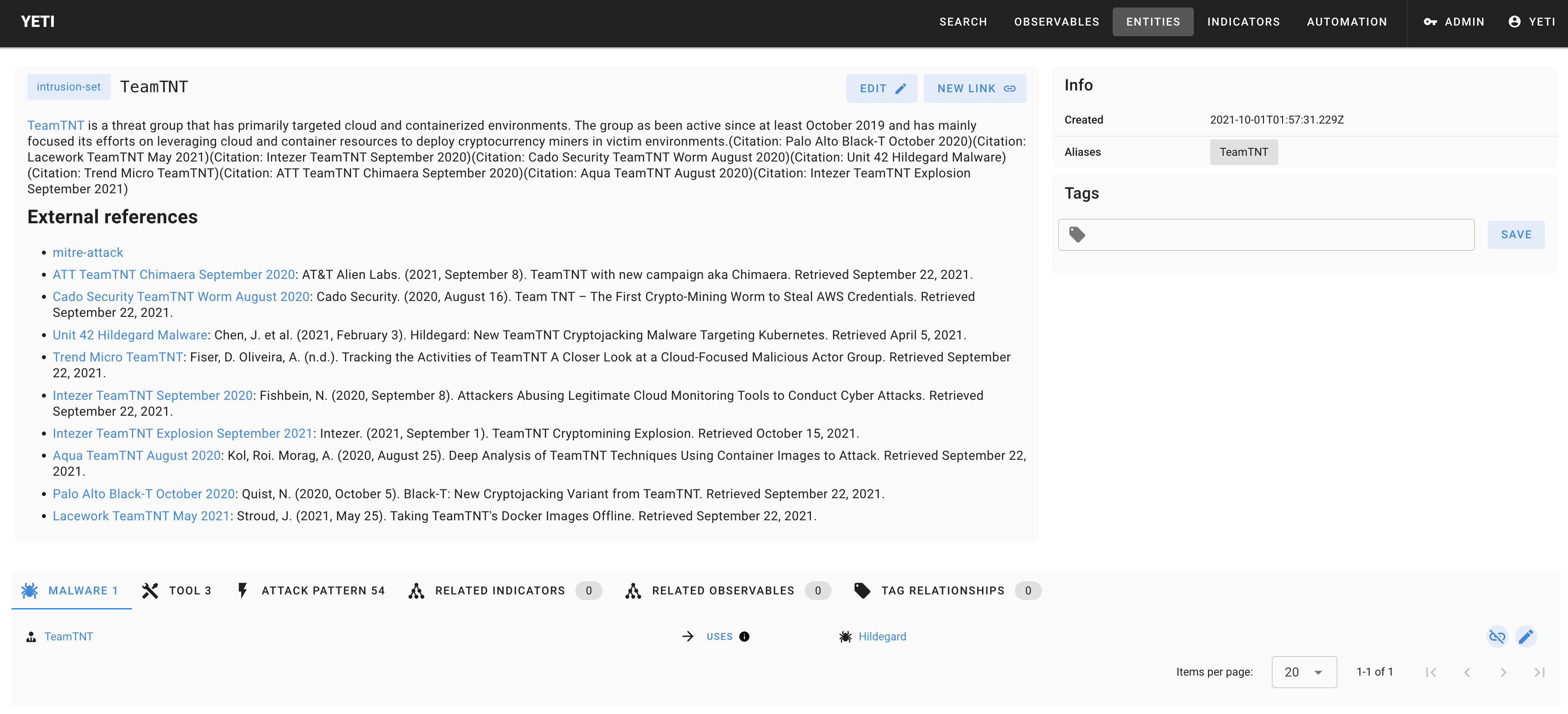
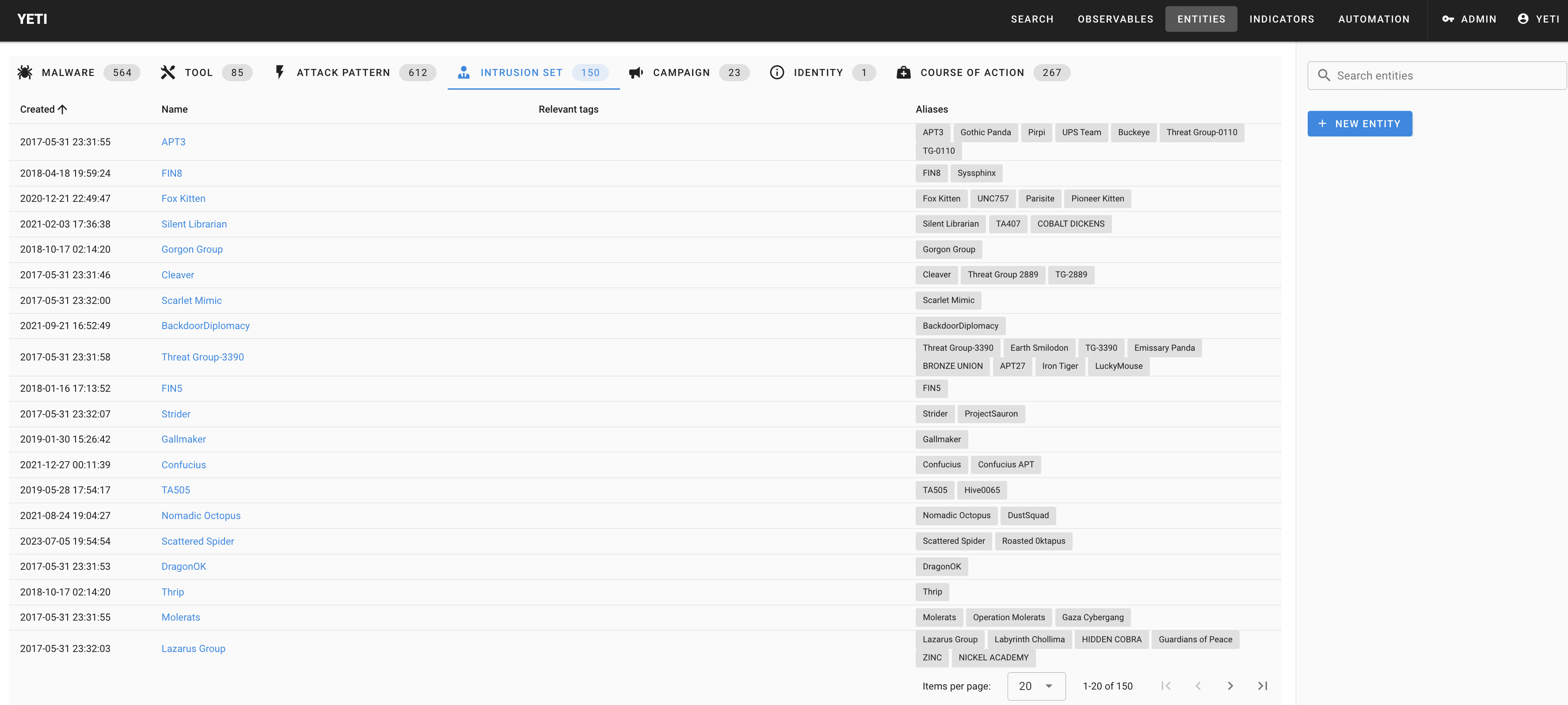
Some screenshots

 yeti-platform/yeti