

Tool for reconstructing SPI flash images via logic analyzer captures
spidump parses logic-analyzer captures of a device reading its SPI/QSPI NOR
flash at boot and reconstructs the flash image from the read traffic — no
direct chip read required. The flash command set is modelled with Scapy, so a
read transaction is the same logical object whether it rode in on one wire or
four.
| Format | Header | Notes |
|---|---|---|
| Saleae Logic 2 "SPI" analyzer table | name,type,start_time,...,mosi,miso | enable/result/disable rows, one result per byte |
| Saleae raw per-byte table | Time [s],Packet ID,MOSI,MISO | one row per byte, grouped by Packet ID |
| QSPI-Analyzer export | Time [s],Packet ID, Transaction State, DATA, Lines Used | state machine: 1=cmd, 2=addr, 3=dummy, 4=data |
The QSPI-Analyzer plugin for Saleae Logic / KingstVIS decodes quad-mode framing
(e.g. 0x6B Fast Read Quad Output, 1-1-4) that a plain SPI analyzer can't.
# Standard single-lane SPI capture (Logic 2 SPI analyzer export)
python main.py examples/bigger-boot.csv -o recovered_flash.bin -v

# Quad SPI capture (QSPI-Analyzer export) — same command, format auto-detected
python main.py big-quad-spi-analyzed-dump.txt -o quad.bin -v

# Merge a single-lane leg (U-Boot) with a quad leg (rootfs) into one image.
# Devices that boot single-lane then switch to QSPI leave each region in a
# different capture; --merge splices them. Reads whose data lane width doesn't
# match the opcode (e.g. quad reads a single-lane analyzer mis-decoded) are
# dropped automatically, so a mixed capture can't poison the result.
python main.py single_lane_boot.csv --merge quad_boot.txt -o full.bin -v

# Raw exports with no chip-select framing (Packet ID constant) are split on
# idle gaps automatically (4x median byte period); override the threshold with
# --gap SECONDS, or --gap 0 to force Packet ID grouping
python main.py raw_boot.csv --gap 2e-6 -o raw.bin -v

# Force a flash size / fill byte if the auto-sizing guesses wrong
python main.py capture.txt --flash-size 0x1000000 --fill 0xFF -o out.bin
-v prints the detected format, a per-opcode transaction histogram, the chosen
flash size, and read coverage. Un-read regions are filled with 0xFF (the
erased-NOR state), so the output is safe to feed straight into binwalk.
A flash read is the same logical transaction regardless of wire width: an
opcode, an address, and a run of data bytes. The two traces below read the
same four bytes (the SquashFS magic hsqs at 0x2D0000, taken from
bigger-boot.csv) in single-lane and quad mode:
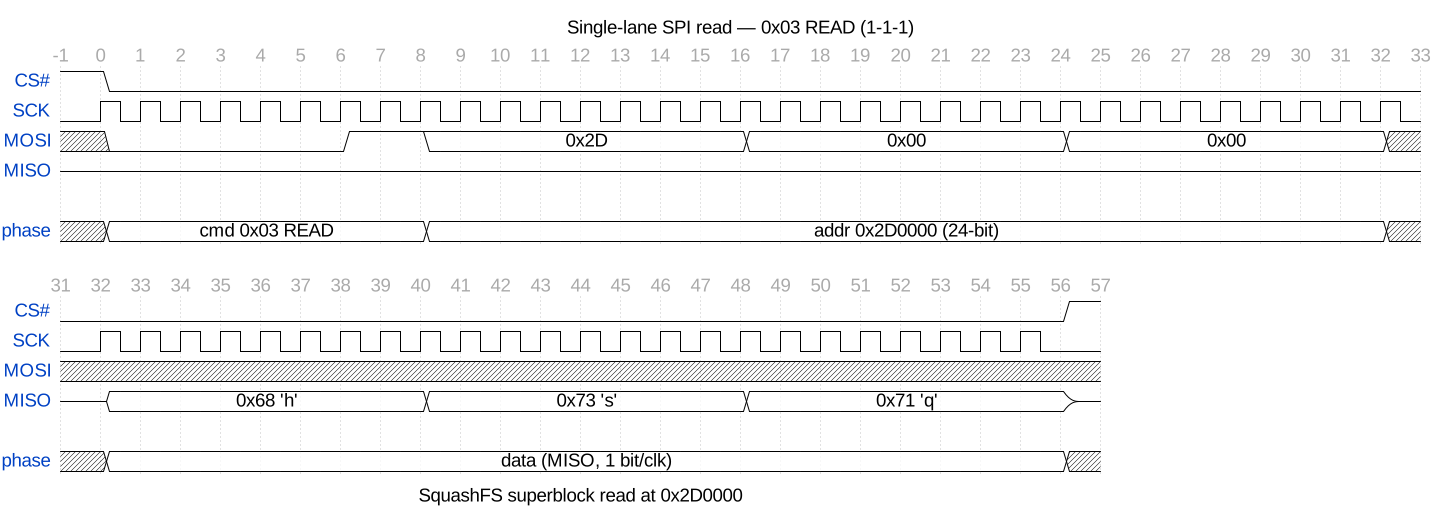
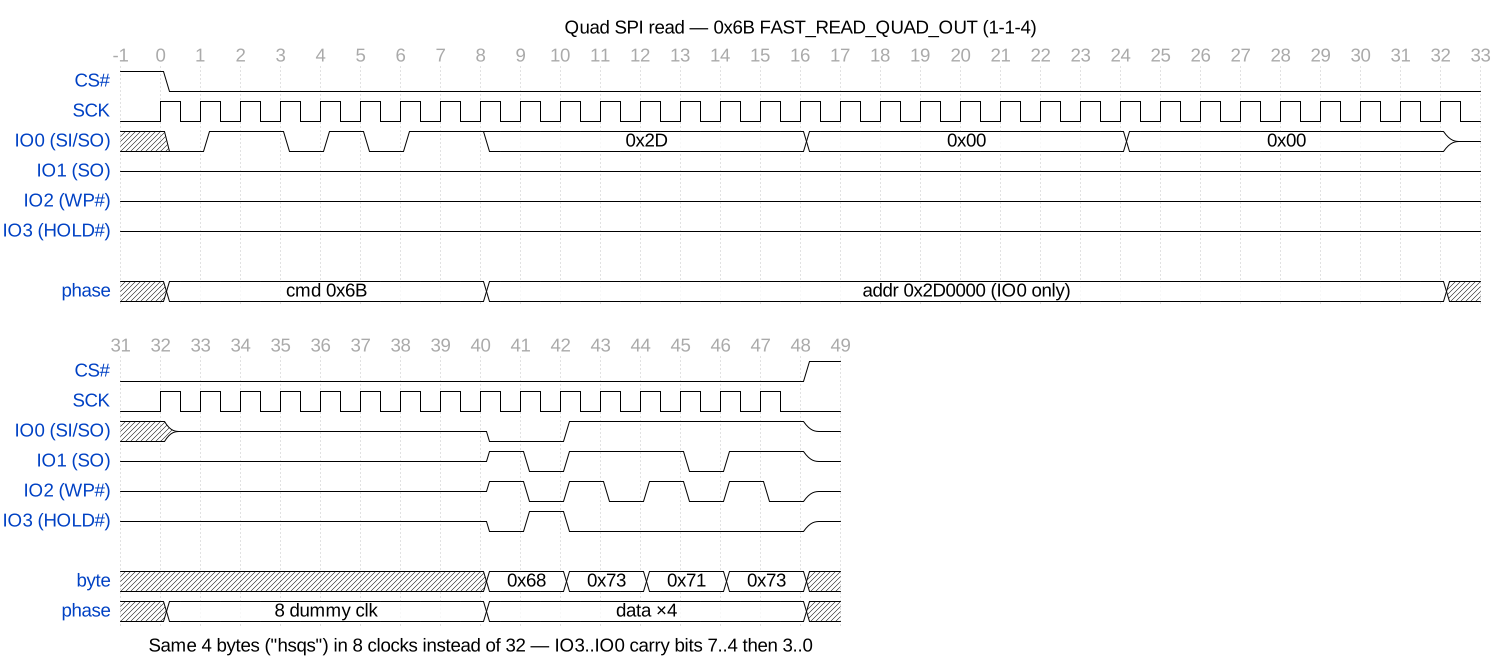
(Regenerate with python docs/diagrams/mkwave.py; needs wavedrom-cli, and rsvg-convert for the PNGs.)
{cmd, addr, data, lines}.SPIFlashCmd (Scapy) models the opcode / address / dummy header; read
opcodes (single and quad: 0x03 0x0B 0x6B 0xEB 0x6C 0x0C …) are all just
entries in READ_COMMANDS.reconstruct_image replays every read into a bytearray, tracking coverage.A boot only reads what it needs, so coverage is partial by design — you recover the regions the device actually touched (bootloader, kernel, mounted rootfs). For a device that boots single-lane then switches to quad, capture both legs and splice them.

