 srlabs/certiception
An ADCS honeypot to catch attackers in your internal network.

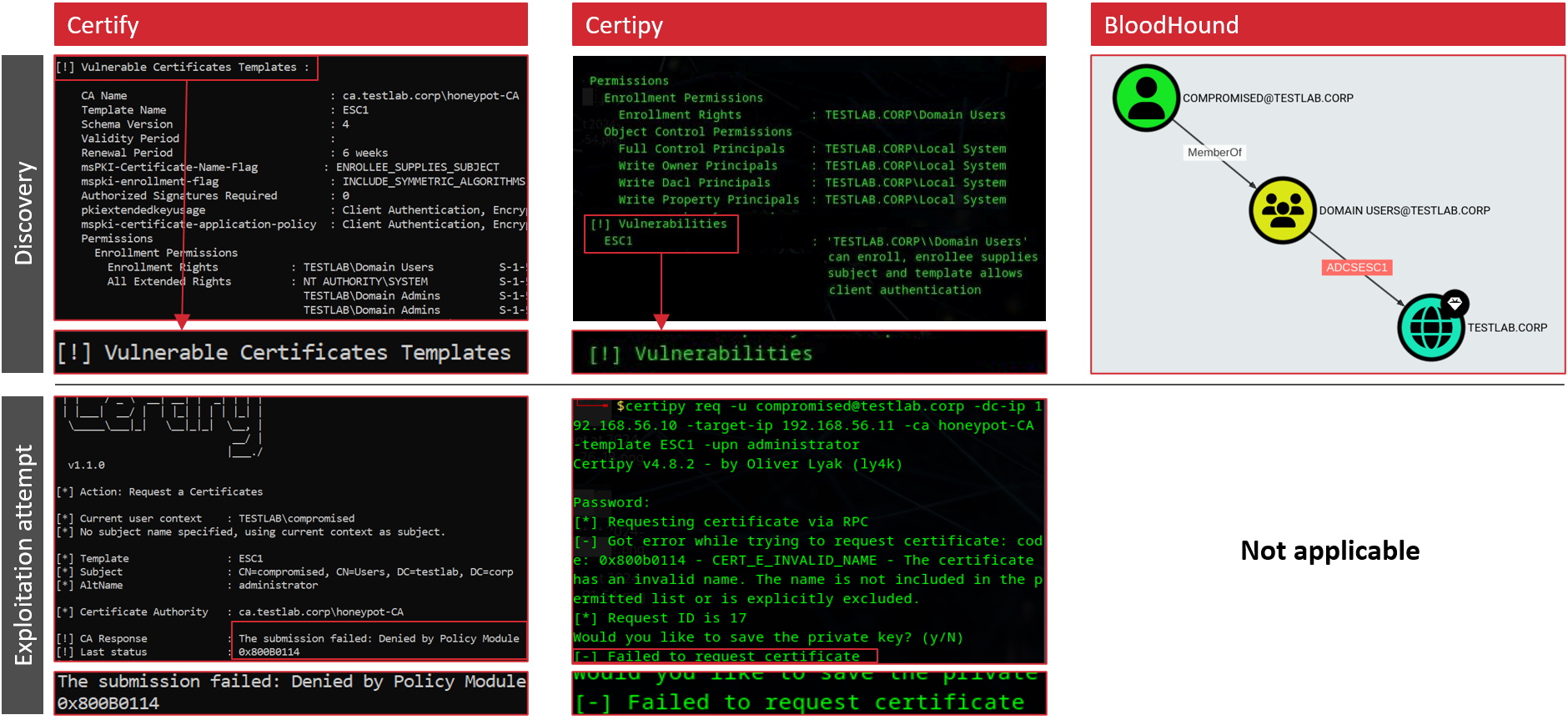
Certiception is a honeypot for Active Directory Certificate Services (ADCS), designed to trap attackers with a realistic and attractive bait that triggers highly relevant alerts.
Developed by the SRLabs Red Team, Certiception creates a vulnerable-looking certificate template in your ADCS environment, sets up restrictions to prevent exploitation, and supports in setting up effective alerting.
Originally released at Troopers24, Certiception comes with a strategic guide to effective deception: The Red Teamers' guide to deception
tl;dr: From an attacker's perspective: Looks vulnerable, Exploitation fails.
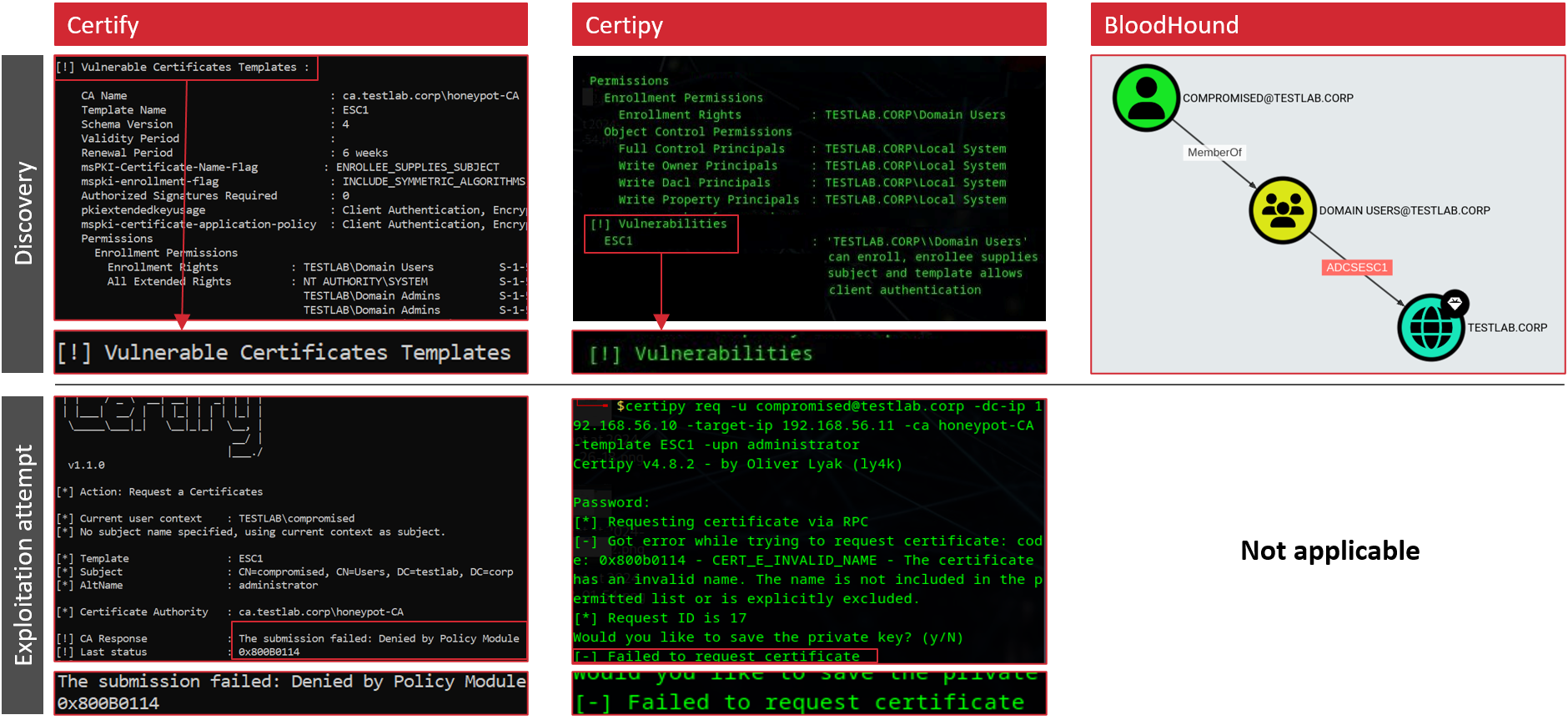
In our Red Team and Incident Management engagements we regularly observe that lateral movement and privilege escalation go undetected. If detections trigger at all, they are not reacted to in a timely manner, because false positives are commonplace. We believe internal honeypots (aka. canaries, aka. deception tech) are an effective way for defenders to catch threats that make it through initial defenses.
Internal honeypots are intentional traps for attackers placed in your network. They look vulnerable but trigger an alert on exploitation. Here's why we think deception has great potential:
Despite their potential, we regularly encounter fundamentally ineffective deception setups. To help defenders create more effective honeypots, Certiception comes with an extensive deception strategy guide.
Active Directory Certificate Services (ADCS) is an ideal location for a honeypot:
This is why we built Certiception.
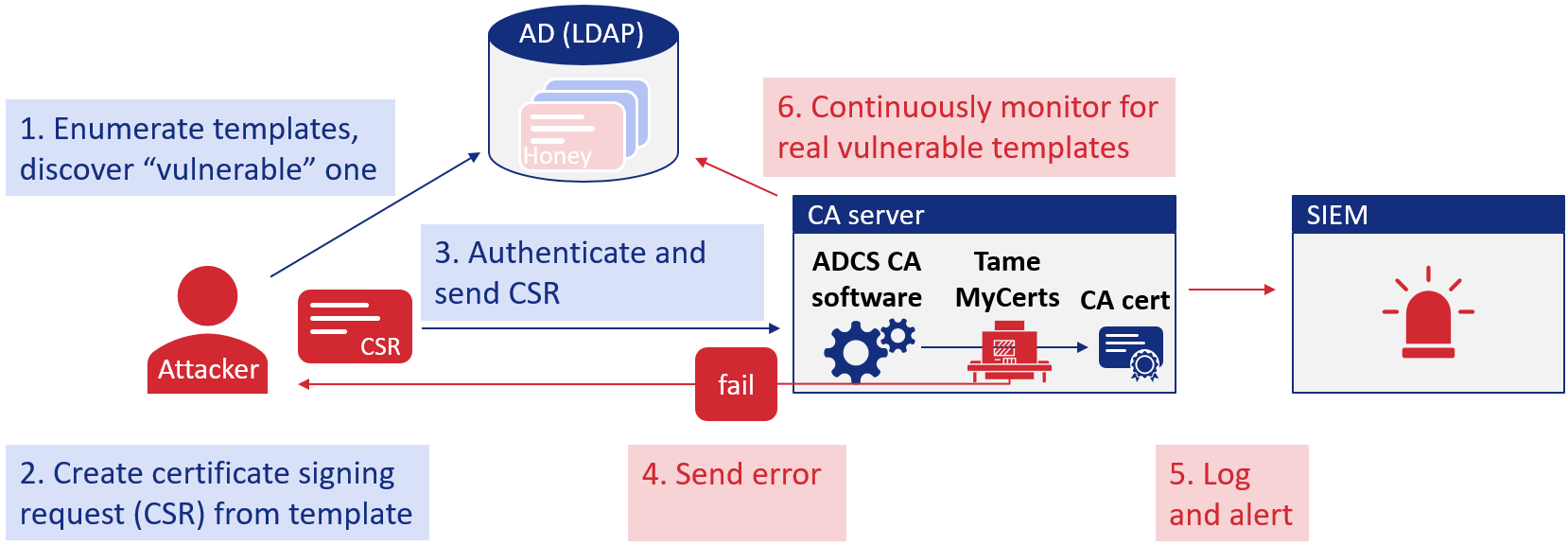
Certiception sets up a new CA in your environment and configures an ESC1 honeypot.
It is implemented as an Ansible playbook calling multiple roles. Overall, the following steps are executed:
Parameters like the CA or template name can be customized to disguise the honeypot.
So this is how Certiception works::
Support for other types of ESC vulnerabilities and the capability to add honey templates to existing CAs are planned for the future.
Certiception uses built-in Windows events from the CA and events generated by the TameMyCerts policy module. To get the built-in CA events with the required information, Certiception enables the extended audit log on the honey CA server.
We suggest alerting on critical and medium events:
| Event source | Event ID | Alert |
|---|---|---|
| TameMyCerts | 6 – CSR denied due to policy violation | CRITICAL - attempted exploitation via SAN |
| Windows Security Log | 4886 – Certificate enrollment requested | MEDIUM - Honey template was used |
| Windows Security Log | 4887 – Certificate issued | Not used, 4886 has more coverage |
| Windows Security Log | 4888 – Certificate request denied | Not used, TameMyCerts 6 is more precise when issuance fails non-malicious |
Certiception outputs ready-to-use SIGMA rules for the two different alerts. You only need to ensure the respective event IDs are onboarded into your SIEM and then setup alerting with the SIGMA rules.
Future releases might introduce new or additional SIGMA rules.
Follow these steps to set up your ADCS honeypot.
Note: we are still improving the stability in different test lab setups with regards to what accounts are used for the setup tasks. If you want try it out, probably best to wait a week more :)
inventoryhost_vars/honeypotCA.ymlansible-playbook -i inventory playbooks/certiception.yml
This tooling is provided without any warranty or guarantees. It combines existing software, automating installation and configuration. You are responsible for all installation and configuration steps performed by Certiception.
If you use this tool, we strongly recommend you read the source code to understand what you configure and verify your setup after installation.
