 srkyn/nginx-map-risk-audit
Defensive NGINX CVE-2026-42533 map regex risk audit with config scanner, Splunk/Defender notes, and lab evidence.

Defensive research note on CVE-2026-42533, a heap buffer overflow in NGINX request processing tied to map directives with regex captures and certain variable evaluation patterns.
In plain English: NGINX is web server and reverse proxy software. It often sits in front of websites and APIs, accepts web requests, and decides where to send them. A map rule is an NGINX config feature that says "if this request value looks like X, set this variable to Y." Regex captures are the pieces of text pulled out of a pattern match.
This CVE matters because some older NGINX versions can handle a specific kind of map and variable-combination pattern incorrectly. That does not mean every NGINX server is exposed. The version matters, but the active config matters too.
This project is intentionally safe: it does not include exploit traffic, crash payloads, or production probing. The goal is to show how I would triage exposure, explain the risk, and hand defenders a repeatable validation path.
NGINX lists the issue as a major security advisory: vulnerable versions are 0.9.6-1.31.2, fixed versions are 1.30.4+ and 1.31.3+. The NGINX changelog describes a heap buffer overflow in a worker process when a map directive uses regex matching and the map variable is included in a string expression after a capture affected by that map.
NVD records the F5 description: an unauthenticated attacker may trigger the issue with crafted HTTP requests, but only when configuration and runtime conditions line up. The expected direct impact is NGINX worker restart and denial of service, with possible code execution if ASLR is disabled or bypassed.
Defenders should answer four questions before treating an NGINX deployment as exposed. Put simply: first confirm the version, then confirm whether the risky config pattern is actually present.
map with regex entries?no buffer space in script copy visible in logs?If those words are new: a worker is the NGINX process handling requests. A crash loop or restart signal means the process may be failing and starting again. A distro backport means Linux vendors sometimes patch an older-looking version without changing the version number to the newest upstream release.
flowchart LR
    advisory["Read advisory and changelog"] --> version["Check NGINX version"]
    version --> config["Review active config"]
    config --> scanner["Run safe map-pattern scanner"]
    scanner --> validate["Validate fixed build or vendor patch"]
    validate --> hunt["Hunt restart and diagnostic signals"]
    hunt --> remediate["Patch, reload, and document"]
scripts/audit_nginx_map_risk.py
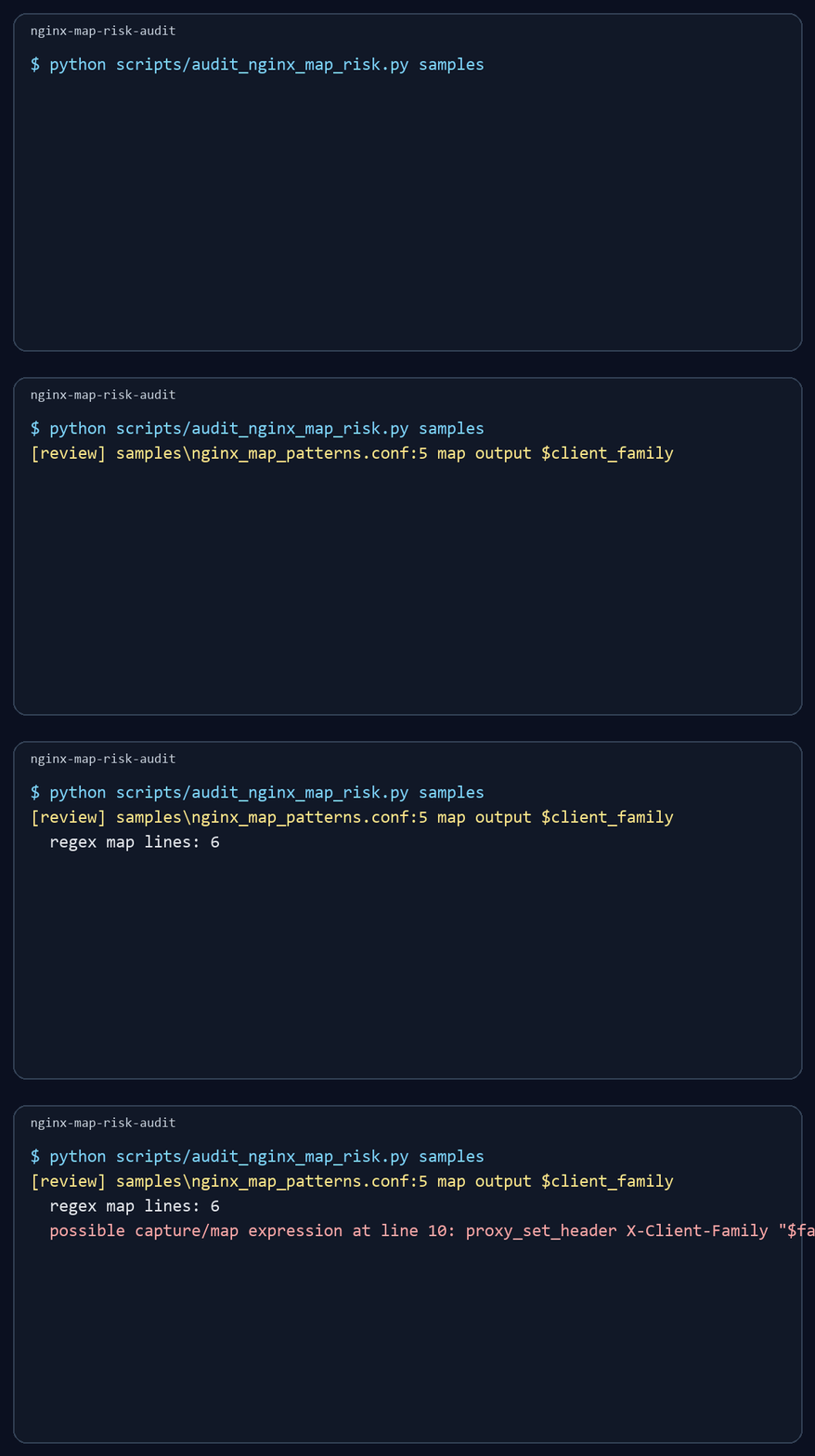
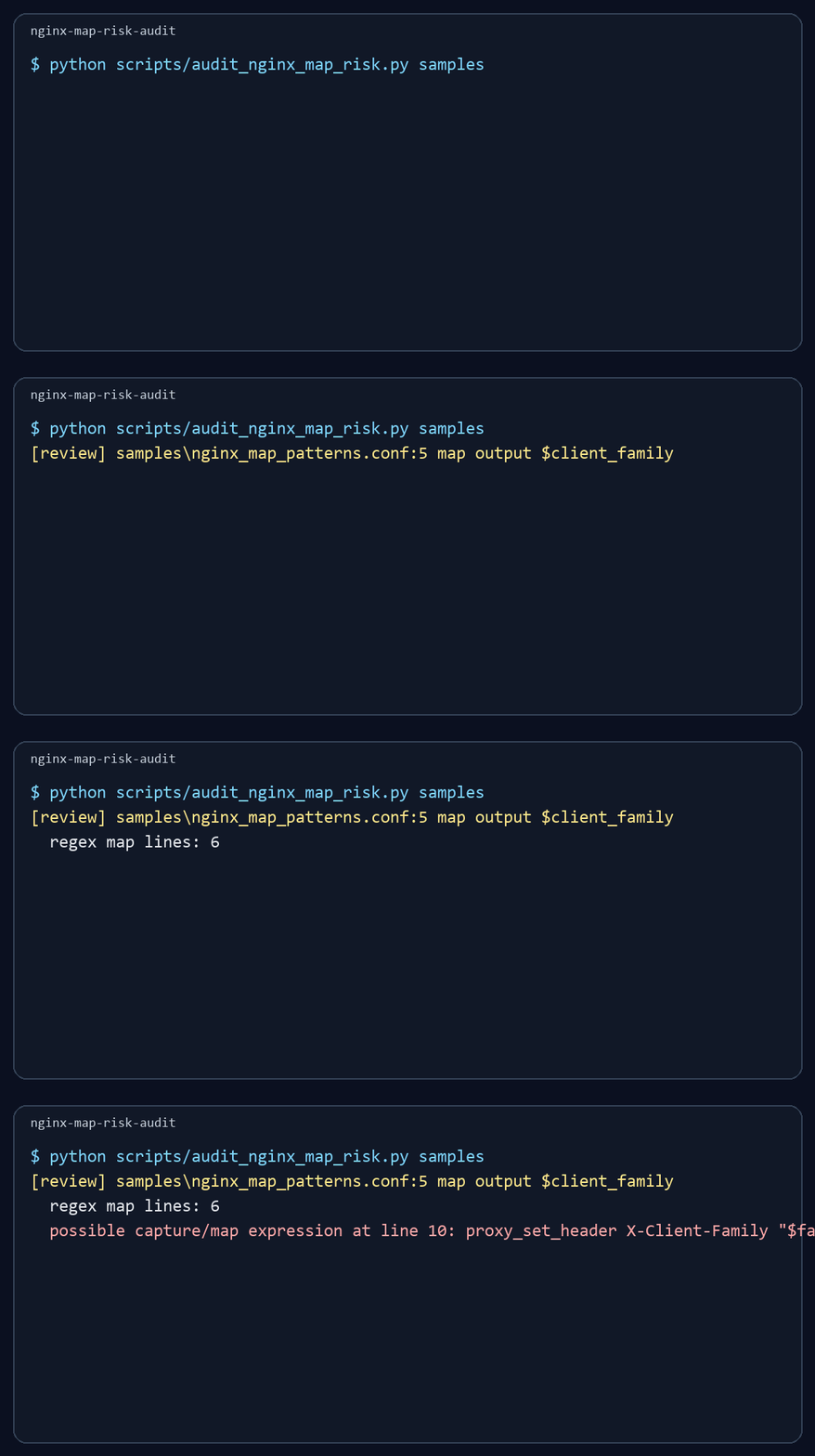
A defensive heuristic scanner for NGINX config files. It looks for regex map blocks, captures, and later string expressions that reference captures and map outputs. It does not prove a server is exploitable. It finds configs worth a human review.
scripts/render_demo_gif.py
Rebuilds the small README demo GIF from real scanner output.
detections/splunk_nginx_cve_2026_42533.spl
Splunk searches for version inventory, crash/restart symptoms, and post-patch diagnostic strings.
detections/defender_hunting_notes.kql
Microsoft Defender hunting notes for Linux hosts where NGINX logs and process activity are collected.
detections/sigma_nginx_worker_restart_symptoms.yml
Sigma hunting rule for NGINX worker restart or crash symptoms. It is a lead for review, not proof of exploitation.
samples/nginx_map_patterns.conf
Safe, schematic config examples for explaining the risk pattern. These are not exploit payloads.
SECURITY.md
Scope note for the repository. This keeps the project clearly defensive and safe to review.
lab/windows-quickstart.ps1
Windows-friendly evidence runner that executes the scanner and saves output under evidence/.
lab/windows-nginx-validation.ps1
Downloads the official fixed NGINX for Windows build, validates a local lab config with nginx -t, runs the scanner, and saves evidence.
lab/vmware-lab-notes.md
Optional fuller lab path for a disposable Linux VM if a screenshot-based walkthrough is needed later.
Current local validation is stored in evidence/. The Windows quickstart runs the scanner against the included sample config and saves the transcript. The Windows NGINX validation downloads the official fixed NGINX build, confirms the lab config with nginx -t, and runs the scanner. The Kali VM validation runs the same scanner inside a disposable Kali VMware guest. This proves the repository is executable and reviewable across Windows and Linux while keeping the project inside a defensive boundary.
powershell -ExecutionPolicy Bypass -File .\lab\windows-quickstart.ps1
powershell -ExecutionPolicy Bypass -File .\lab\windows-nginx-validation.ps1
python .\scripts\self_check.py
map blocks.1.30.4+ or 1.31.3+, or the relevant NGINX Plus fixed release.no buffer space in script copy after patching.