 shakur1314/cve-2022-22965-spring4shell-security-operations-analysis
A comprehensive Security Operations Centre (SOC) incident response simulation demonstrating threat detection, triage, analysis, and mitigation of the Spring4Shell vulnerability (CVE-2022-22965).

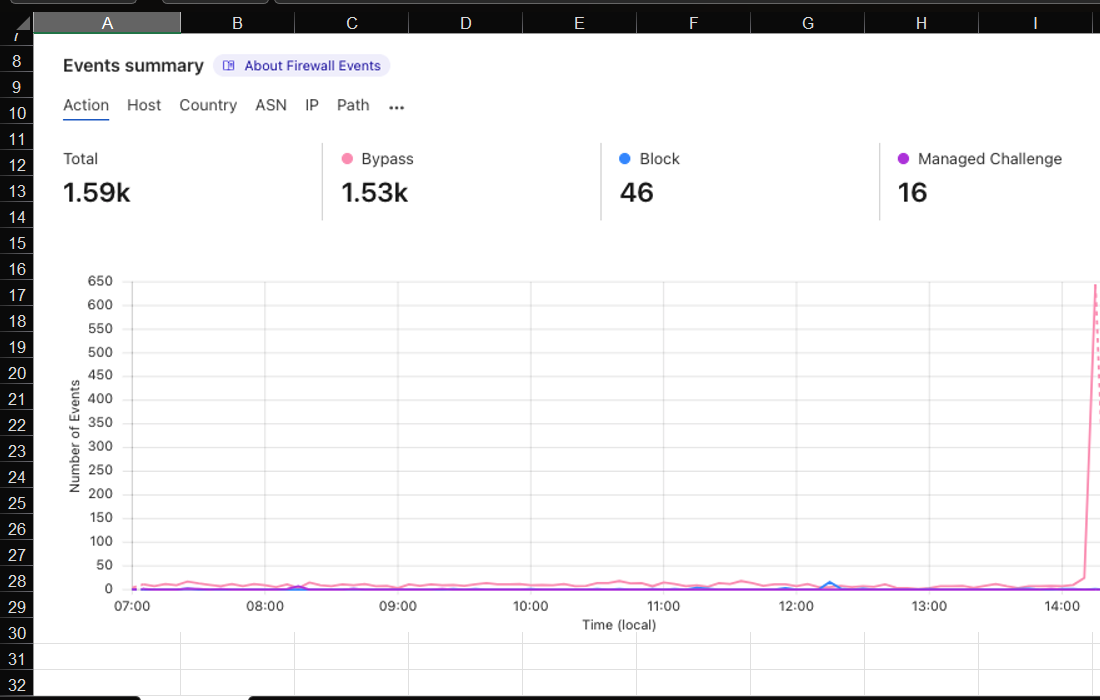
A hands-on Security Operations Centre (SOC) simulation where I performed the role of an Information Security Analyst responding to an active Spring4Shell exploitation attempt. This repository documents the full incident response lifecycle — from initial detection through analysis and mitigation.
Disclaimer: This project was completed as part of a cybersecurity job simulation on Forage for educational purposes. All analysis was conducted in a controlled, simulated environment.
Spring4Shell is a critical remote code execution vulnerability in the Spring Framework. It allows attackers to exploit the parameter binding mechanism to gain unauthorized access to Java class properties, which can lead to full remote code execution.
Objective: Analyze firewall logs to identify compromised infrastructure, assess the severity of the threat, and notify the appropriate team.
Reviewing the firewall logs revealed a pattern of suspicious HTTP/1.1 POST requests targeting /tomcatwar.jsp, all containing class.module.classLoader parameter chains — the signature indicator of Spring4Shell exploitation.
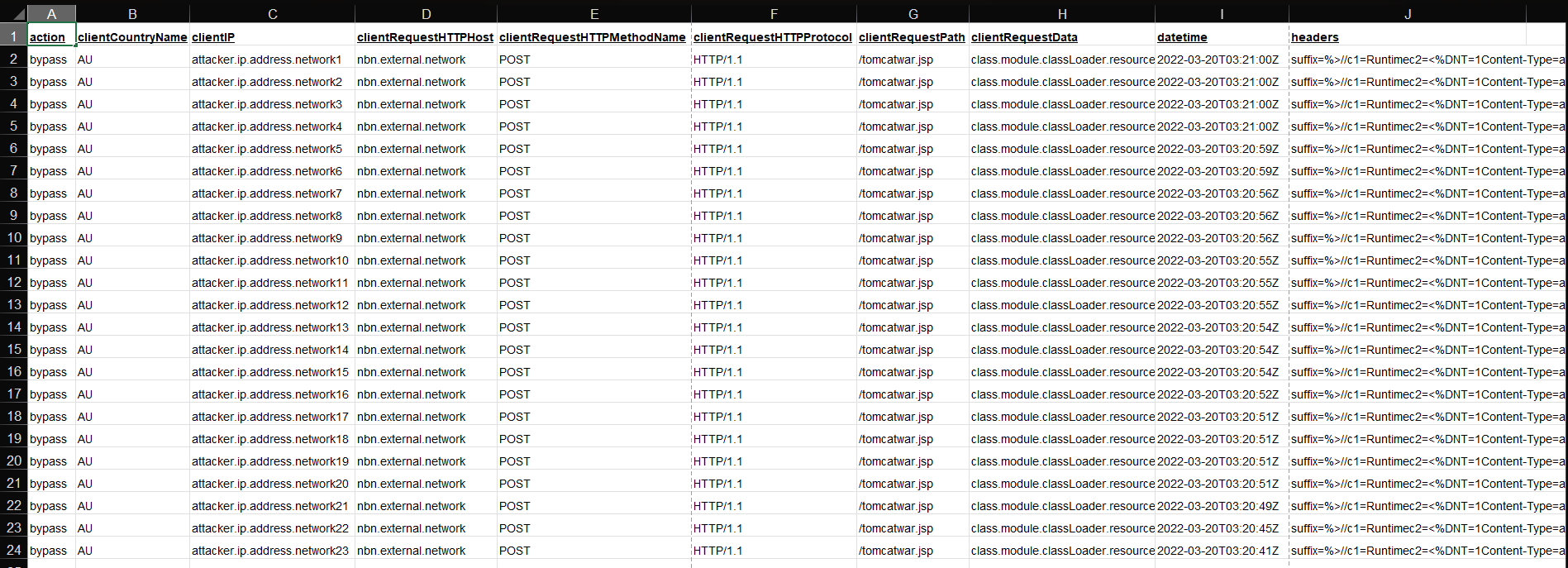
| Field | Detail |
|---|---|
| Affected Infrastructure | NBN critical services |
| Priority Level | P1 — Critical |
| Attack Vector | CVE-2022-22965 (Spring4Shell) |
| Current Status | Service down; functionality impaired |
| Detection Timestamp | 2022-03-20T03:21:00Z |
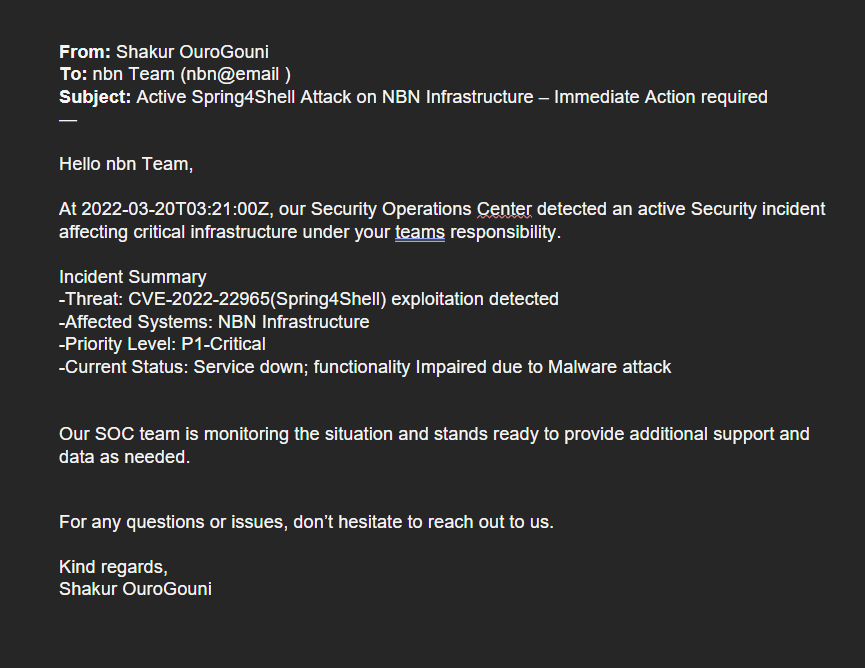
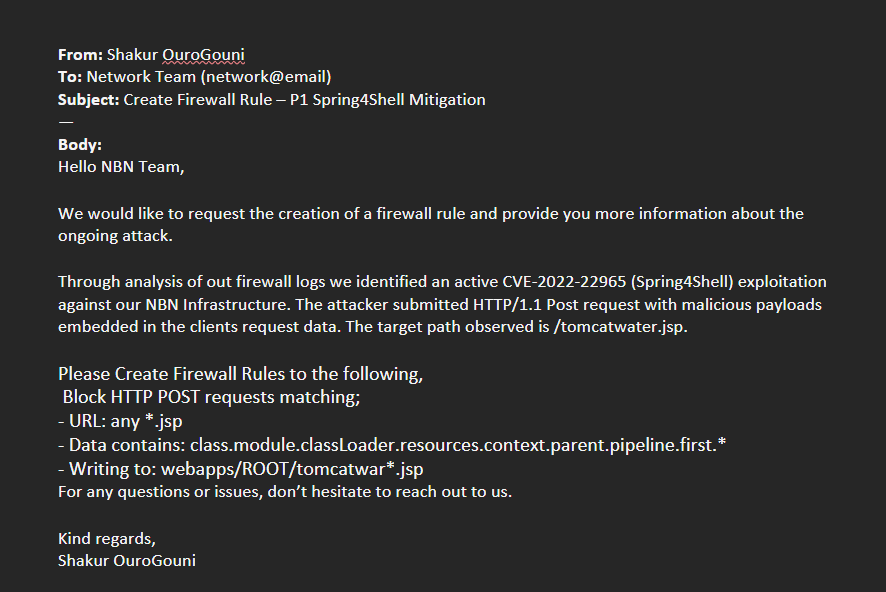
After confirming the threat, I drafted and sent an incident notification to the NBN team with a precise summary of the situation, affected systems, and required immediate actions.
Objective: Conduct a deeper analysis of the attack patterns, understand the exploitation mechanics, and develop firewall rules to contain the threat.
From analyzing the POST request structure in the firewall logs:
/tomcatwar.jspclass.module.classLoader.resources.context.parent.pipeline.first.patternA multi-layered approach was used to block the attack at each stage:
| Rule | Action | Rationale |
|---|---|---|
Block requests to *.jsp endpoints | DROP | Prevents webshell access |
Block POST requests containing class.module.classLoader.resources.context.parent.pipeline.first | DROP | Directly blocks the exploitation mechanism |
Block write operations to webapps/ROOT/tomcatwar*.jsp | DENY | Stops webshell persistence |
After defining the mitigation strategy, I communicated the required firewall rules to the Network team with full technical context on the ongoing attack.
class.module.classLoader parameter chains present in HTTP POST data/tomcatwar.jsppipeline.first.pattern properties