
 punk-security/pwnspoof
Pwnspoof repository





pwnSpoof (from Punk Security) generates realistic spoofed log files for common web servers with customisable attack scenarios.
Every log bundle is unique and completely customisable, making it perfect for generating CTF scenarios and for training serials.
Can you find the attacker session and build the incident picture?
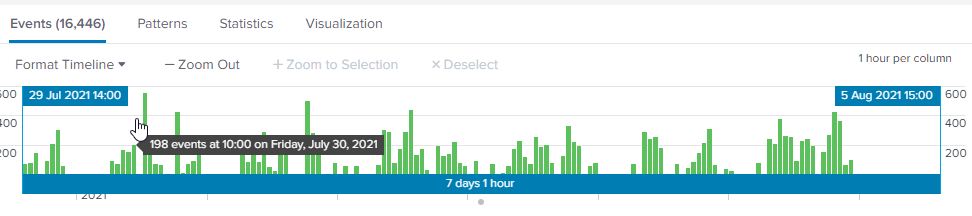
pwnSpoof was created on the back of a threat hunting training exercise Punk Security delivered for a customer. The training exercise was to use a log analytic tool such as Splunk (other log analysing tools are available) and IIS logs to find login brute-force attacks and command injections.
The idea behind the pwnSpoof application is to;
Once you have created a set of logs, the idea is to load them in to Splunk and use various techniques to answer the following questions;
The following will explain how to get started with pwnSpoof
pwnSpoof is written in python and is tested with python3. No extra modules are needed, we only use the standard library.
If you get the following error message, please specifiy python3 when running pwnSpoof. Python2 is not supported.
  File "pwnspoof.py", line 176
    print("{:6.2f}% ".format(y * x), end="\r", flush=True)
                                        ^
SyntaxError: invalid syntax
git clone https://github.com/punk-security/pwnspoof
cd pwnspoof
python pwnspoof.py --help
positional arguments:
  {banking,wordpress,generic}
                        App to emulate

options:
  -h, --help            show this help message and exit
  --out OUT             Output file (default: pwnspoof.log)
  --iocs                Do you want to know the attackers iocs for easier searching? (default: False)

log generator settings:
  --log-start-date LOG_START_DATE
                        Initial start of logs, in the format YYYYMMDD i.e. "20210727"
  --log-end-date LOG_END_DATE
                        End date for logs, in the format YYYYMMDD i.e. "20210727"
  --session-count SESSION_COUNT
                        Number of legitimate sessions to spoof (default: 2000)
  --max-sessions-per-user MAX_SESSIONS_PER_USER
                        Max number of legitimate sessions per user (default: 3)
  --server-fqdn SERVER_FQDN
                        Override the emulated web apps default fqdn
  --server-ip SERVER_IP
                        Override the emulated web apps randomised IP
  --server-type {IIS,NGINX,CLF,CLOUDFLARE,AWS}
                        Server to spoof (default: IIS)
  --uri-file URI_FILE   File containing web uris to override defaults, do not include extensions
  --noise-file NOISE_FILE
                        File containing noise uris to override defaults, include extensions

attack settings:
  --spoofed-attacks SPOOFED_ATTACKS
                        Number of attacker sequences to spoof (default: 1)
  --attack-type {bruteforce,command_injection}
                        Number of attacker sequences to spoof (default: bruteforce)
  --attacker-geo ATTACKER_GEO
                        Set the attackers geo by 2 letter region. Use RD for random (default: RD)
  --attacker-user-agent ATTACKER_USER_AGENT
                        Set the attackers user-agent. Use RD for random (default: RD)
  --additional-attacker-ips ADDITIONAL_ATTACKER_IPS
                        Additional attackers ip addresses, comma separated (default: ). If you wish to exclusively use this list set spoofed-attacks to 0
The following example will create a set of IIS logs for bruteforce against pwnedbank.co.uk.
python pwnspoof.py banking --server-fqdn pwnedbank.co.uk --attack-type bruteforce --server-type IIS --out iis-output.log
The following example will create a set of NGINX logs for command_injection against pwnedbank.co.uk.
python pwnspoof.py banking --server-fqdn pwnedbank.co.uk --attack-type command_injection --server-type NGINX
The following example will create a set of logs with 5000 routine sessions and 3 attack sessions
python pwnspoof.py banking --session-count 5000 --spoofed-attacks 3
The following example will create a set of logs and output the attackers IP addresses
python pwnspoof.py banking --spoofed-attacks 3 --iocs
The following example will create a set of logs and exclusively use the IP addresses specified
python pwnspoof.py banking --spoofed-attacks 0 --additional-attacker-ips 192.168.0.1,192.168.0.2

pwnSpoof is built to produce to authentic web attack logs and it does this really well. Right now we are focused on refactoring the code, building out our testing suite and getting the first push to PyPi but we have huge ambitions for pwnSpoof.
Adding extra webapps beyond banking to provide extra variety to the logs
Adding additional and more dynamic web attacks
Training Videos!
pwnSpoof was built to be a great tool for training the blue team so it only makes sense to produce some training materials to show it off.
Not just weblogs
We would love to see pwnSpoof generating all kinds of threat hunting logs such as Office365 audit logs for Sharepoint, Onedrive and AzureAD
