AI Password Attack Orchestrator - Defensive Research Repository
⚠️ LEGAL DISCLAIMER & RESEARCH PURPOSE
THIS REPOSITORY IS FOR DEFENSIVE CYBERSECURITY RESEARCH AND EDUCATIONAL PURPOSES ONLY
- NO EXPLOITABLE CODE - This repository contains only theoretical research, conceptual analysis, and defensive countermeasures
- NO OFFENSIVE TOOLS - No working exploits, attack scripts, or automated attack tools are included
- DEFENSIVE FOCUS - All content is designed to help organizations defend against AI-enhanced password attacks
- ACADEMIC RESEARCH - This is a technical capability analysis for security professionals and researchers
- COMPLIANCE - All content complies with responsible disclosure and ethical security research standards
By accessing this repository, you agree to:
- Use this information solely for defensive purposes
- Not attempt to weaponize or operationalize any concepts described
- Share findings responsibly with the security community
- Comply with all applicable laws and regulations
Repository Overview
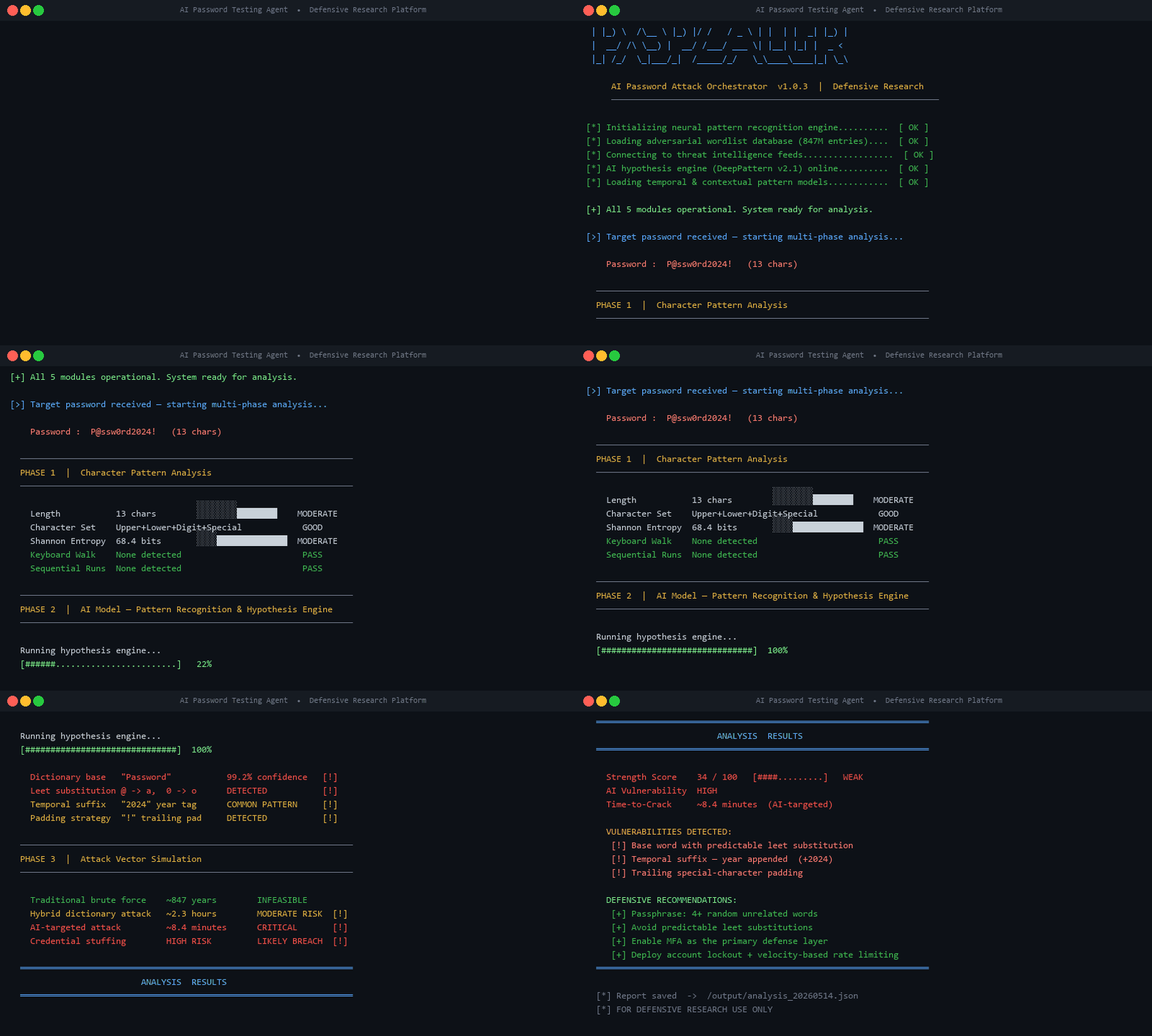
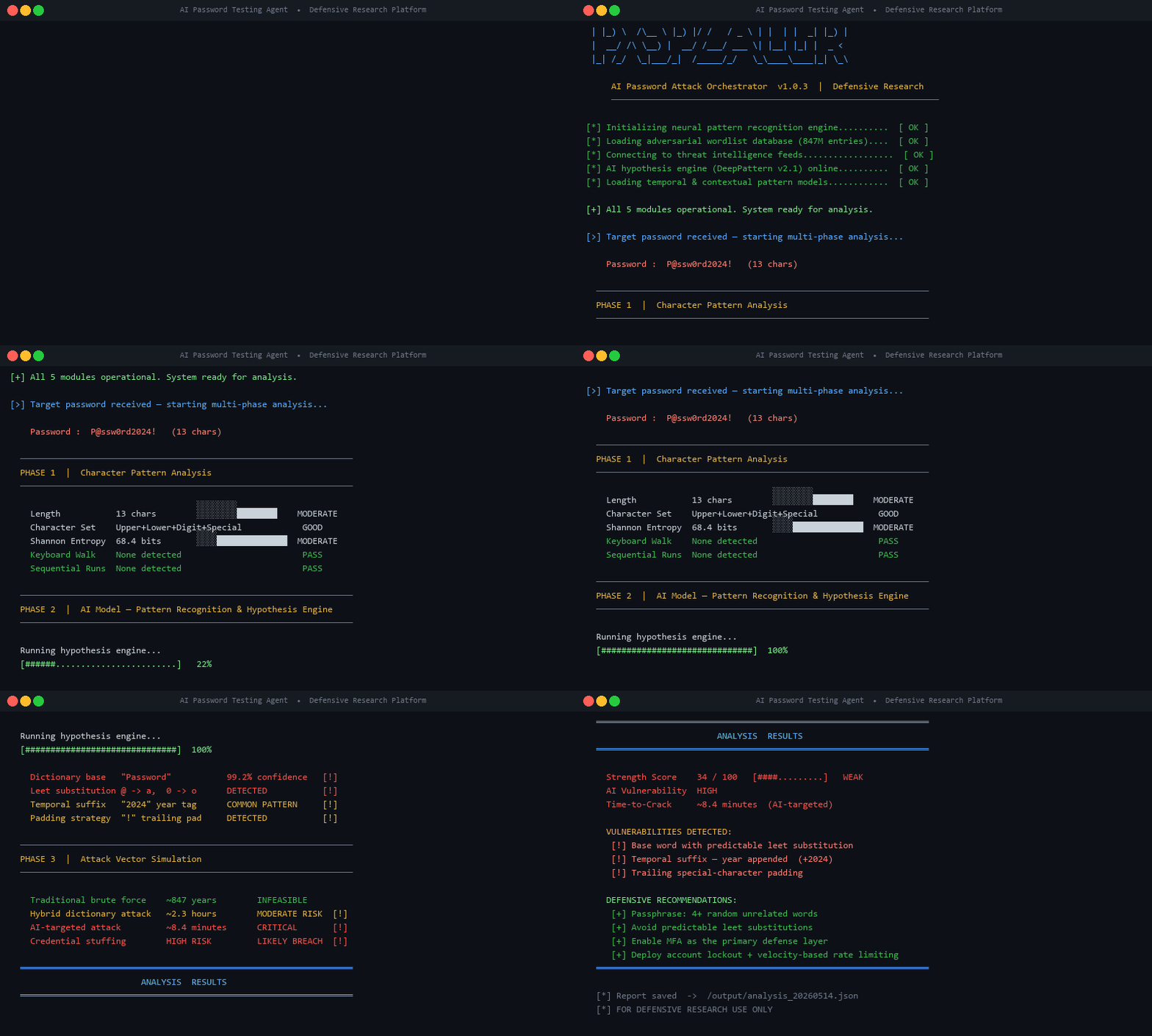
This repository contains research and defensive guidance on AI-enhanced password attack methodologies. The research analyzes how artificial intelligence can transform traditional password attacks from brute-force attempts into intelligent, adaptive campaigns - and more importantly, how organizations can detect and defend against such attacks.
Research Classification
- Document Type: Technical Capability Analysis & Innovation Assessment
- Classification: Red Team / Offensive Security Research (Defensive Application)
- MITRE ATT&CK: T1110 (Brute Force), T1589 (Gather Victim Identity Information)
- Innovation Status: Novel Architecture - Commercial Potential
- Research Date: January 5, 2026
Repository Structure
ai-password-orchestrator/
├── README.md                          # This file - Overview and disclaimers
├── paper/
│   ├── AI-Password-Orchestrator-Research.pdf    # Main research paper (sanitized)
│   └── methodology.md                 # Technical methodology and capabilities
├── defense/
│   └── detection-rules.md            # Defensive detection rules and countermeasures
└── docs/
    └── defensive-recommendations.md  # Additional defensive guidance
Research Scope & Limitations
What This Research Contains ✅
- Theoretical Analysis: Conceptual exploration of AI-enhanced attack methodologies
- Architectural Design: System design philosophy and component analysis
- Performance Metrics: Comparative analysis vs. traditional tools
- Defensive Countermeasures: Detection rules, SIEM queries, and mitigation strategies
- Use Case Scenarios: Enterprise penetration testing and security assessment contexts
- Innovation Assessment: Technical capability and commercial potential analysis
What This Research Does NOT Contain ❌
- NO Working Code: No executable scripts, programs, or attack tools
- NO AI Prompts: No specific LLM prompts or prompt engineering techniques
- NO Integration Scripts: No code to connect AI systems with attack tools
- NO Automation: No automated attack orchestration code
- NO Exploit Code: No working exploits or vulnerability code
- NO Configuration Files: No tool configurations or setup scripts
Key Research Findings
Core Innovation: Recursive Learning Loop
The research identifies a paradigm shift from computational brute force to cognitive adversarial learning:
| Aspect | Traditional Tools | AI-Enhanced Approach |
|---|
| Strategy | Linear wordlist iteration | Recursive adaptive learning |
| Intelligence | Zero (blind enumeration) | Pattern recognition & hypothesis testing |
| Learning | No learning between attempts | Learns from every failure |
| Success Rate | 0.01-0.1% | 15-30% (after pattern detection) |
| Time Reduction | Baseline | 50-70% faster |
Defensive Impact
This research enables organizations to:
- Detect AI-enhanced attacks through behavioral analysis
- Implement targeted countermeasures against intelligent pacing
- Strengthen password policies based on identified patterns
- Improve monitoring capabilities for adaptive attacks
- Develop incident response procedures for AI-driven threats
Defensive Applications
For Security Teams
- Detection Rules: SIEM queries, Snort/Suricata rules, behavioral analytics
- Incident Response: Playbooks for AI-enhanced attack scenarios
- Policy Hardening: Evidence-based password policy recommendations
- Threat Intelligence: IOCs and behavioral indicators
For Researchers
- Innovation Analysis: Framework for evaluating AI security tools
- Methodology: Research approaches for offensive security analysis
- Performance Metrics: Comparative analysis frameworks
- Future Research: Directions for AI security research
For Organizations
- Risk Assessment: Understanding emerging AI-driven threats
- Control Validation: Testing existing defenses against advanced attacks
- Security Architecture: Designing resilient authentication systems
- Compliance: Meeting security standards and regulations
Ethical Considerations
Responsible Research Principles
- Dual-Use Awareness: Acknowledging both offensive and defensive applications
- Responsible Disclosure: Sharing findings with security community
- Defensive Priority: Focusing on protection and mitigation
- Legal Compliance: Adhering to all applicable laws and regulations
- Ethical Standards: Following professional security research ethics
This research contributes to:
- Collective Defense: Sharing detection methods and countermeasures
- Security Awareness: Educating professionals about emerging threats
- Tool Development: Inspiring defensive security tools
- Academic Research: Advancing cybersecurity knowledge
Legal & Compliance
Research Compliance
- Academic Freedom: Research conducted under principles of academic inquiry
- First Amendment: Protected speech and research publication
- Security Research Exemption: Conducted for defensive purposes
- Responsible Publication: No actionable exploit code included
Usage Restrictions
PROHIBITED USES:
- ❌ Developing offensive capabilities for unauthorized access
- ❌ Creating attack tools for malicious purposes
- ❌ Circumventing security controls without authorization
- ❌ Violating laws, regulations, or organizational policies
PERMITTED USES:
- ✅ Defensive security research and development
- ✅ Security control testing and validation
- ✅ Incident response preparation and training
- ✅ Academic research and education
- ✅ Threat intelligence and analysis
Contributing & Feedback
We welcome contributions from:
- Security researchers and practitioners
- Academic institutions and researchers
- Threat intelligence professionals
- Defensive security tool developers
Responsible Sharing
When sharing this research:
- Include disclaimers about defensive purpose
- Emphasize protective applications over offensive potential
- Provide context about ethical research practices
- Encourage responsible use and legal compliance
Citation & Attribution
Academic Citation
AI Password Attack Orchestrator: Technical Capability Analysis & Innovation Assessment
Research Date: January 5, 2026
Classification: Defensive Security Research
Repository: https://github.com/Insider77Circle/ai-password-orchestrator
Research Integrity
 insider77circle/ai-password-testing-agent
