 ibondarenko1/azure-sentinel-detection-engineering
9 MITRE ATT&CK-mapped KQL detections on a live Microsoft Sentinel + Defender XDR environment (control-plane, endpoint, identity), with a PR-gated Detection-as-Code pipeline (GitHub Actions, OIDC), SOAR playbooks, and a SOC 2 control mapping.

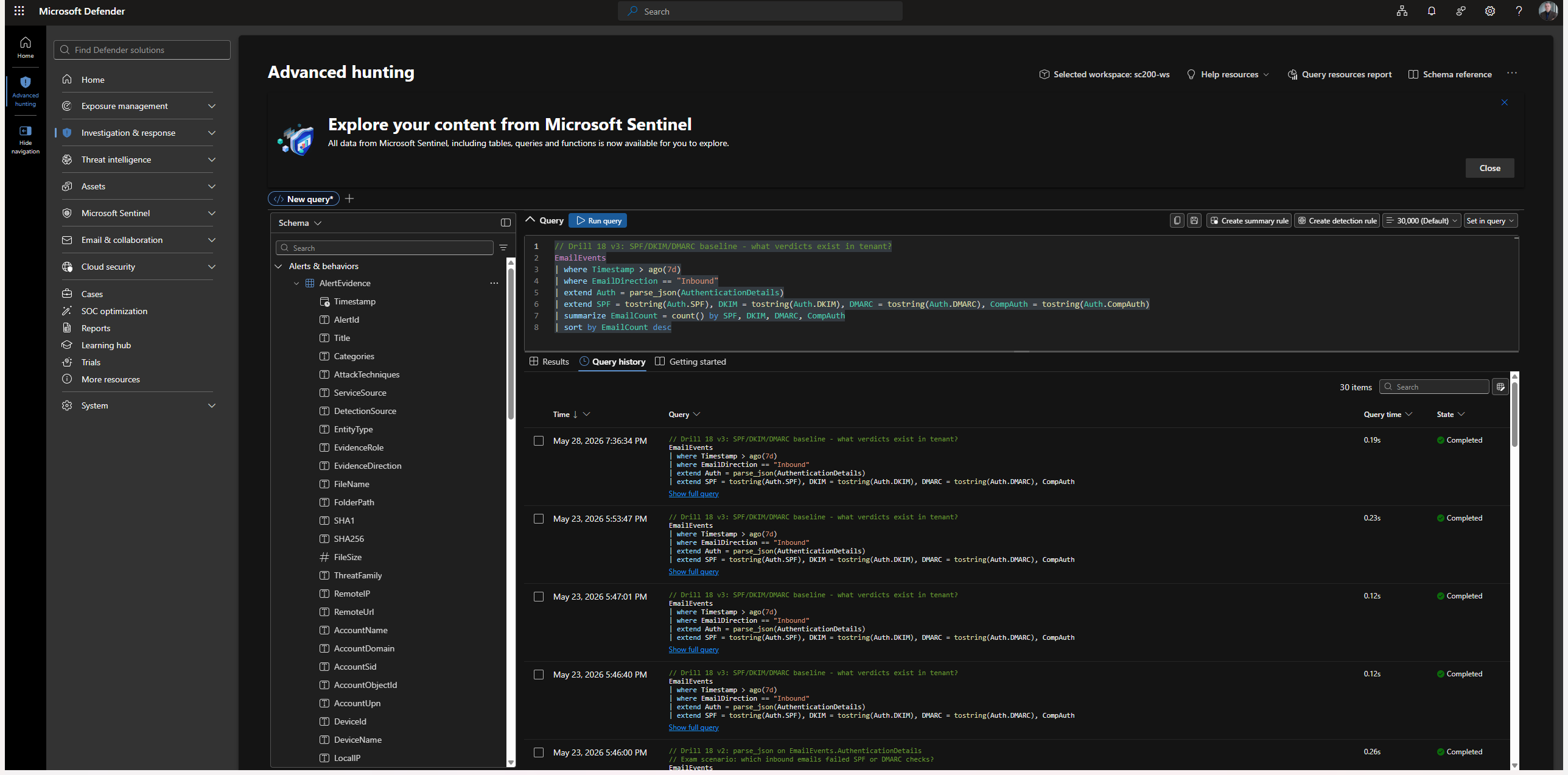
Detection engineering on a live Microsoft Sentinel and Defender XDR environment I operate. Nine custom analytics rules span three planes, each mapped to MITRE ATT&CK and proven end to end: a controlled action triggers the rule, the rule raises an incident, and the incident gets investigated and documented. Seven watch the Azure control plane (AzureActivity), including a multi-stage correlation and an ARG-backed content rule; one watches the endpoint (Defender for Endpoint), with Defender Vulnerability Management feeding a hunting library; one watches identity (Entra ID SigninLogs). All deployed by the same PR-gated pipeline.
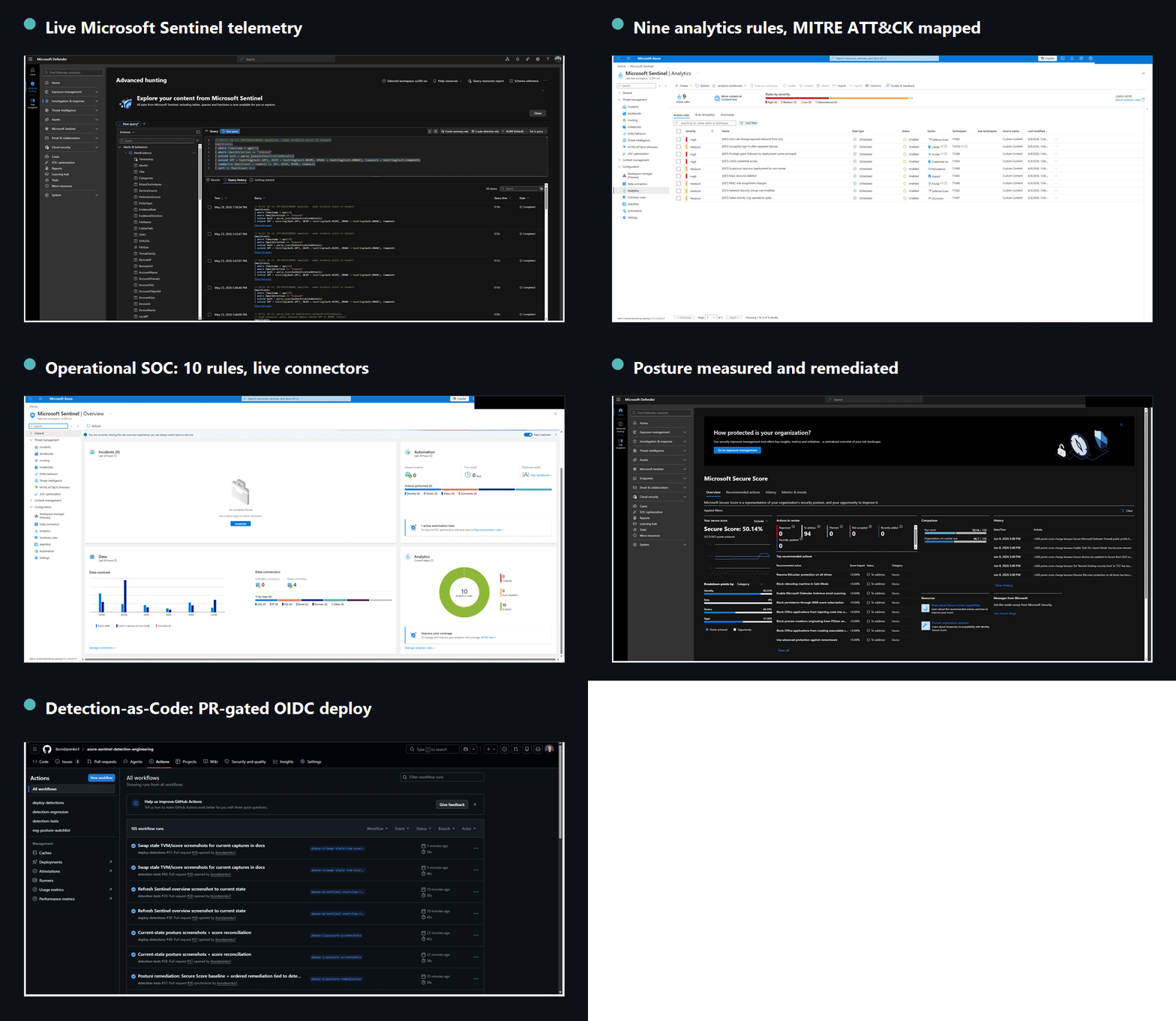
A live single-tenant environment I operate end to end. Tenant and subscription identifiers and any PII are redacted in all screenshots.



Figures are traceable: coverage to the ATT&CK layer, validation to RESULTS.md. There is deliberately no false-positive-rate badge: a single-tenant environment cannot produce a meaningful FP rate, so the repo reports measured false fires over a real benign batch instead of a fabricated percentage (metrics.yaml states this in full).
Run the detection unit tests on a fork, no Azure needed. Each rule's real KQL runs against synthetic fixtures in a local Kusto emulator, so the detection logic is verifiable without my tenant:
git clone https://github.com/ibondarenko1/azure-sentinel-detection-engineering
cd azure-sentinel-detection-engineering
docker run -d --rm -p 8080:8080 -e ACCEPT_EULA=Y mcr.microsoft.com/azuredataexplorer/kustainer-linux:latest
pip install pyyaml
python tests/run-detection-tests.py
This is the exact check CI runs on every pull request (detection-tests): it asserts each rule fires on malicious fixtures and stays silent on benign ones. The live harness in validation/ goes further, driving a real benign and attack batch in a tenant and measuring true positives and false fires, but that one needs your own Azure subscription and az login (see validation/README), so it is not "local". Deployment pipeline: docs/03. Contributing a rule: CONTRIBUTING.
A detection is only credible once you can show it firing. This repo closes that loop across three planes, the Azure control plane, the endpoint, and identity: rule logic, controlled trigger, generated incident, investigation, and MITRE mapping. It goes past single-event rules with a multi-stage correlation (grant then deploy) and a content-aware rule that joins Azure Resource Graph posture to the change event. It is Sentinel analytics rules, KQL, and incident response against real telemetry rather than synthetic samples.
The rules are not clicked into the portal. They are versioned YAML deployed by a PR-gated pipeline. Editing a detection means opening a pull request; CI validates it, a reviewer approves, and merge to main deploys it to Sentinel via OIDC (no stored secrets), idempotently by rule GUID (API 2025-09-01).
flowchart LR
  D[Edit rule YAML] --> PR[Pull request] --> V[CI validate] -->|review| M[Merge main] --> CD[OIDC deploy] --> S[Sentinel sc200-ws]
detections/rules/*.yaml · Pipeline: .github/workflows/deploy-detections.yml · Deployer/validator: cicd/ · Details: docs/03-cicd.md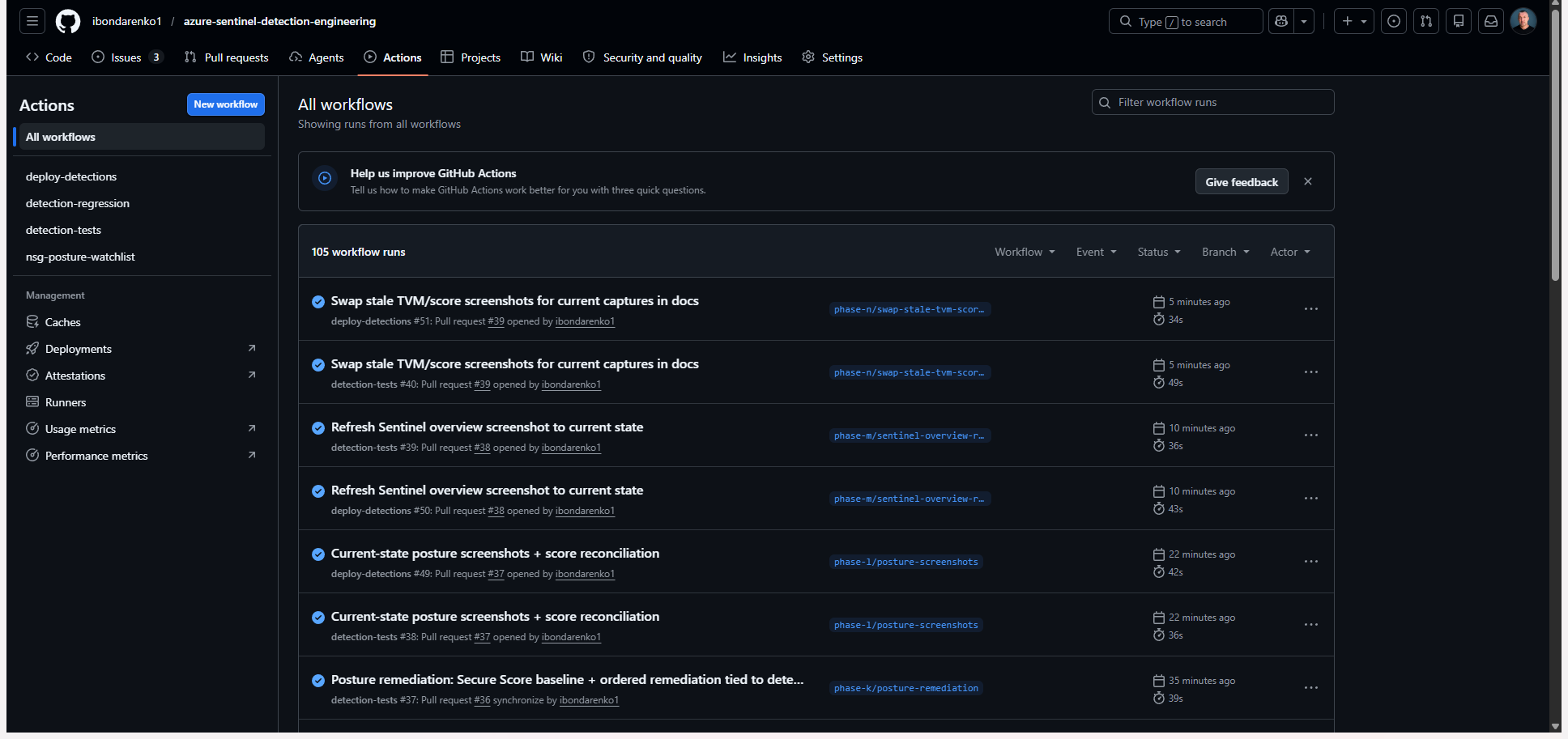
A real change went through it: PR #1 tightened the DET-001 threshold (10 to 8); CI validated it, and the merge deployed it to the live sc200-ws rule. That step, rules deploying automatically from git by reviewed PR, is what separates a detection engineer from an analyst who finished a course.
flowchart LR
  subgraph Sources
    A[Microsoft Defender XDR<br/>Email · Endpoint]
    B[Azure subscription<br/>Activity Log]
    C[Entra ID<br/>sign-ins]
  end
  A --> W[Log Analytics workspace<br/>sc200-ws]
  B --> W
  C --> W
  W --> R[9 scheduled<br/>analytics rules]
  R --> I[Incidents]
  I --> V[Investigation<br/>+ MITRE mapping]