 fujiapple852/trippy
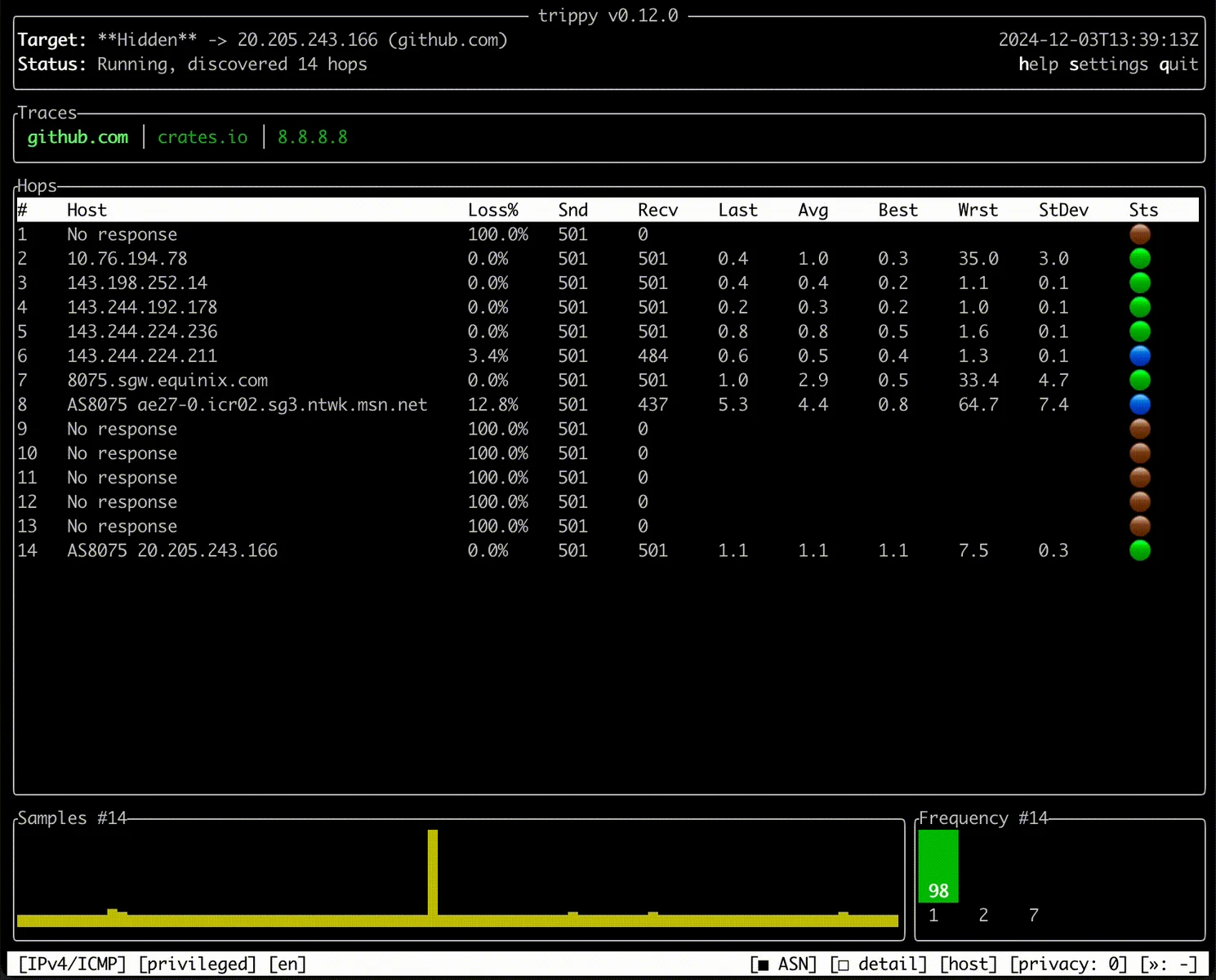
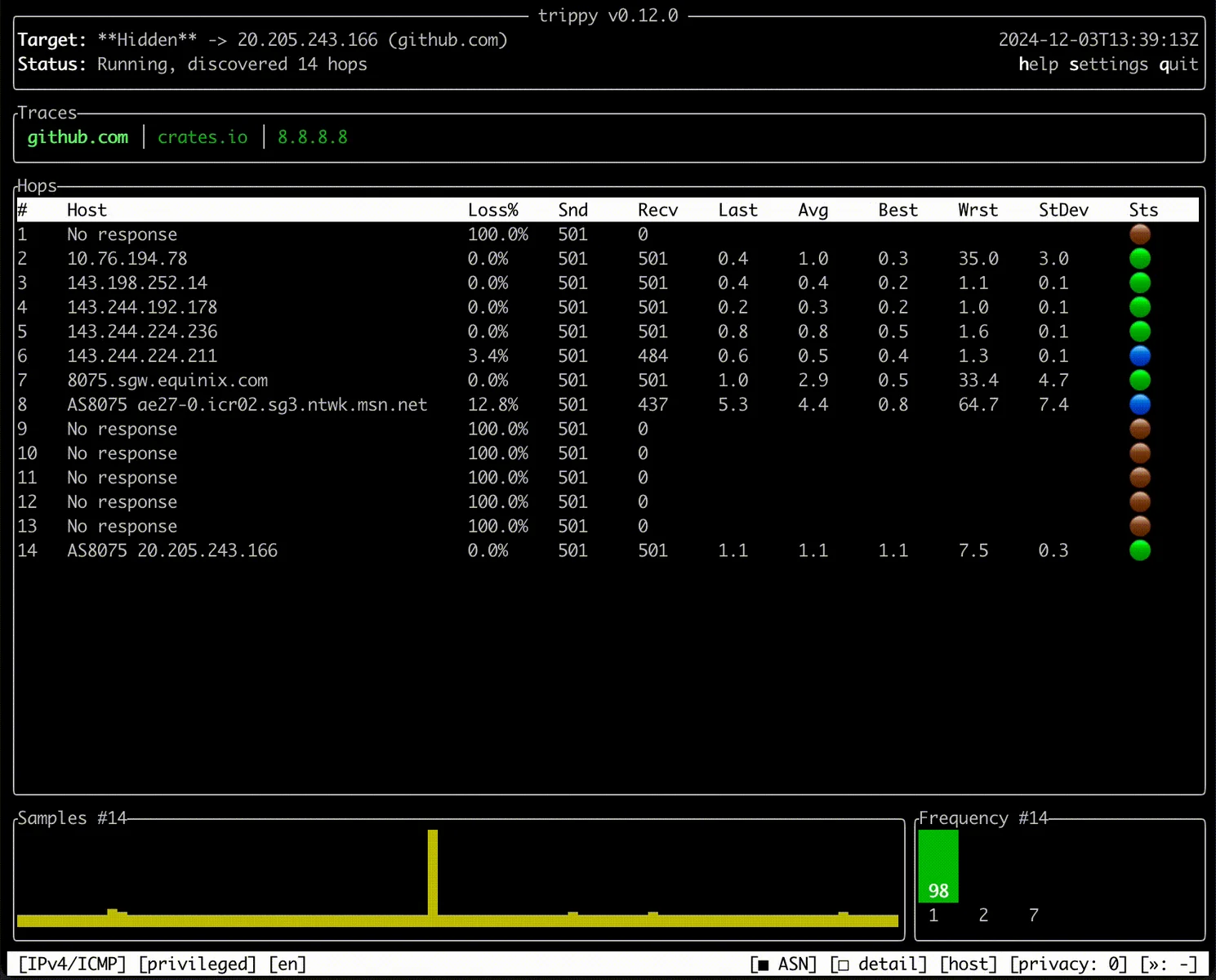
A network diagnostic tool combining traceroute and ping for analyzing network paths, latency, and packet loss with an interactive terminal UI.








Trippy combines the functionality of traceroute and ping and is designed to assist with the analysis of networking
issues.
See the getting started guide.
Trippy runs on Linux, BSD, macOS, and Windows. It can be installed from most package managers, precompiled binaries, or source.
For example, to install Trippy from cargo:
cargo install trippy --locked
cargo install trippy --locked

apt install trippy
ⓘ Note:
Only available for Debian 13 (
trixie) and later.
add-apt-repository ppa:fujiapple/trippy
apt update && apt install trippy
ⓘ Note:
Only available for Ubuntu 24.04 (
Noble) and 22.04 (Jammy).

snap install trippy

brew install trippy
winget install trippy
scoop install trippy

choco install trippy

pkgin install trippy

pkg install trippy

pkg_add trippy

pacman -S trippy

emerge -av net-analyzer/trippy

xbps-install -S trippy

apt-get install trippy

apk add trippy

nix-env -iA trippy
docker run -it fujiapple/trippy

See the installation guide for details of how to install Trippy on your system.
To run a basic trace to example.com with default settings, use the following command:
sudo trip example.com
See the usage examples and CLI reference for details of how to use Trippy. To use Trippy without elevated privileges, see the privileges guide.
Full documentation is available at trippy.rs.
See the Getting Started guide.
See the Features list.
See the Distributions list.
See the Privileges guide.
See the Usage Examples.
See the Command Reference.
See the Theme Reference.
See the Column Reference.
See the Configuration Reference.
See the Locale Reference.
See the Version Reference.
See the Awaiting Data guide.
See the Windows Defender Firewall guide.
See the Recommended Tracing Settings guide.
Trippy is made possible by ratatui ( formerly tui-rs), crossterm as well as several foundational Rust libraries.





