 dominic471/qub-network-security-cve-2023-20198
Analysis, detection, and mitigation of CVE-2023-20198 exploitation in Cisco IOS XE – QUB CSC3064 Network Security Assessment

Analysis, detection, and mitigation of CVE-2023-20198 exploitation in Cisco IOS XE
📘 Queen’s University Belfast – CSC3064 Network Security Assessment
This project involves analyzing PCAP files provided by Fox-IT to:
Slides/ – Presentation slides used in the video submissionIOC Summary/ – Detailed breakdown of all network-level Indicators of CompromiseSnort Rules/ – Alert and drop rules implemented in Snort, with visual proofAssessment PDF/ – Official CSC3064 assessment instructions from QUBVideo/ – Demo presentation video (uploaded separately and linked below)| IOC Type | IOC Observed | What It Confirms |
|---|---|---|
| IP Patterns | Attacker: 10.10.1.1, 10.10.0.1Victims: 10.10.1.69, 10.10.1.42 | Attack source and target devices identified |
| Headers | User-Agent: Mozilla/5.0...Priv-Level: 15 | Browser impersonation and privilege escalation |
| Protocols | TCP, HTTP (port 80), SOAP/XML | Exploitation of WSMA over unencrypted HTTP |
| Payloads | execCLI and username cisco_support | Remote command execution and backdoor creation |
| TCP Behavior | SYN, ACK, FIN (normal sequence) | Indicates stealthy, non-DoS targeted behavior |
| Ports Used | Port 80 (no HTTPS) | Sensitive traffic sent in plaintext |
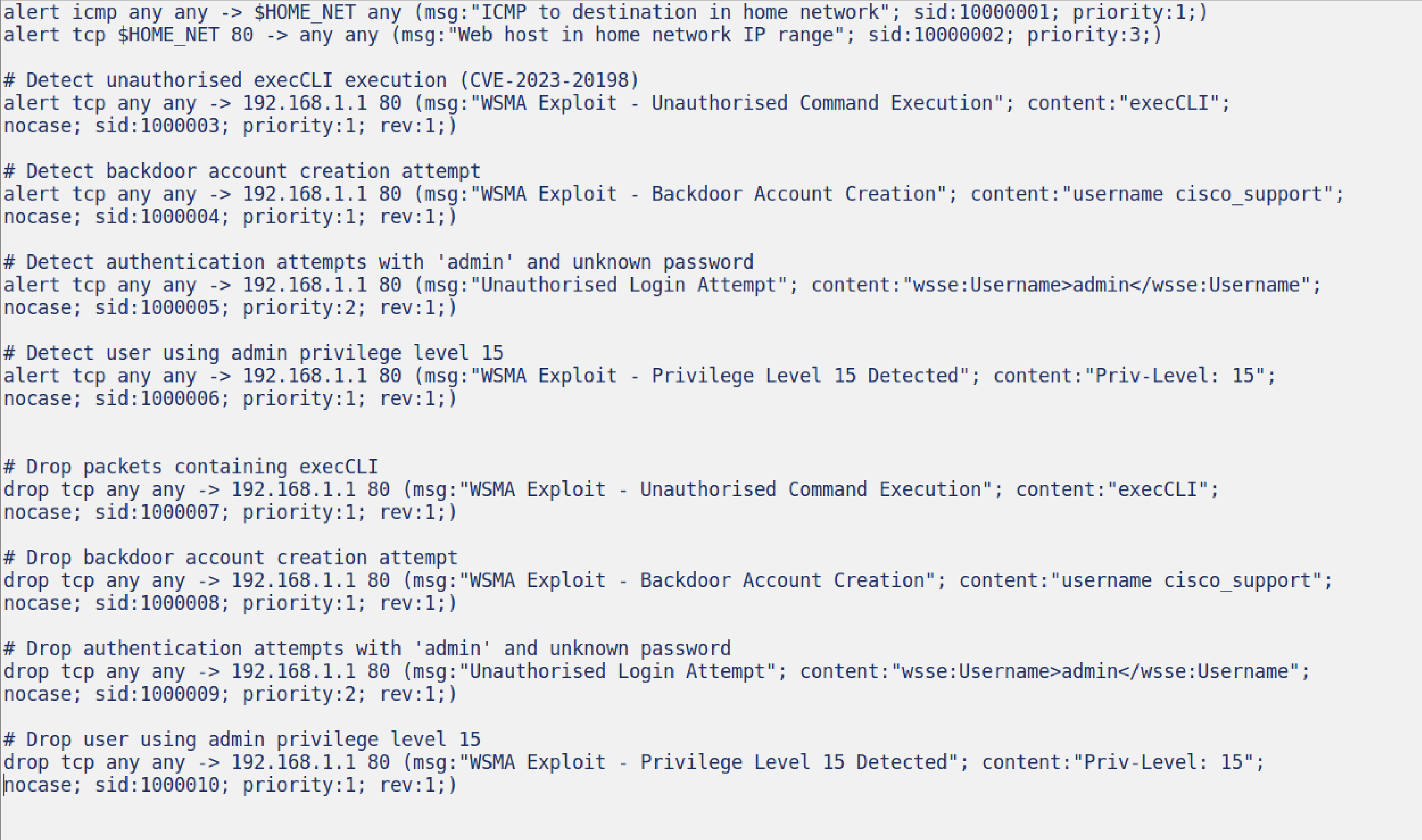
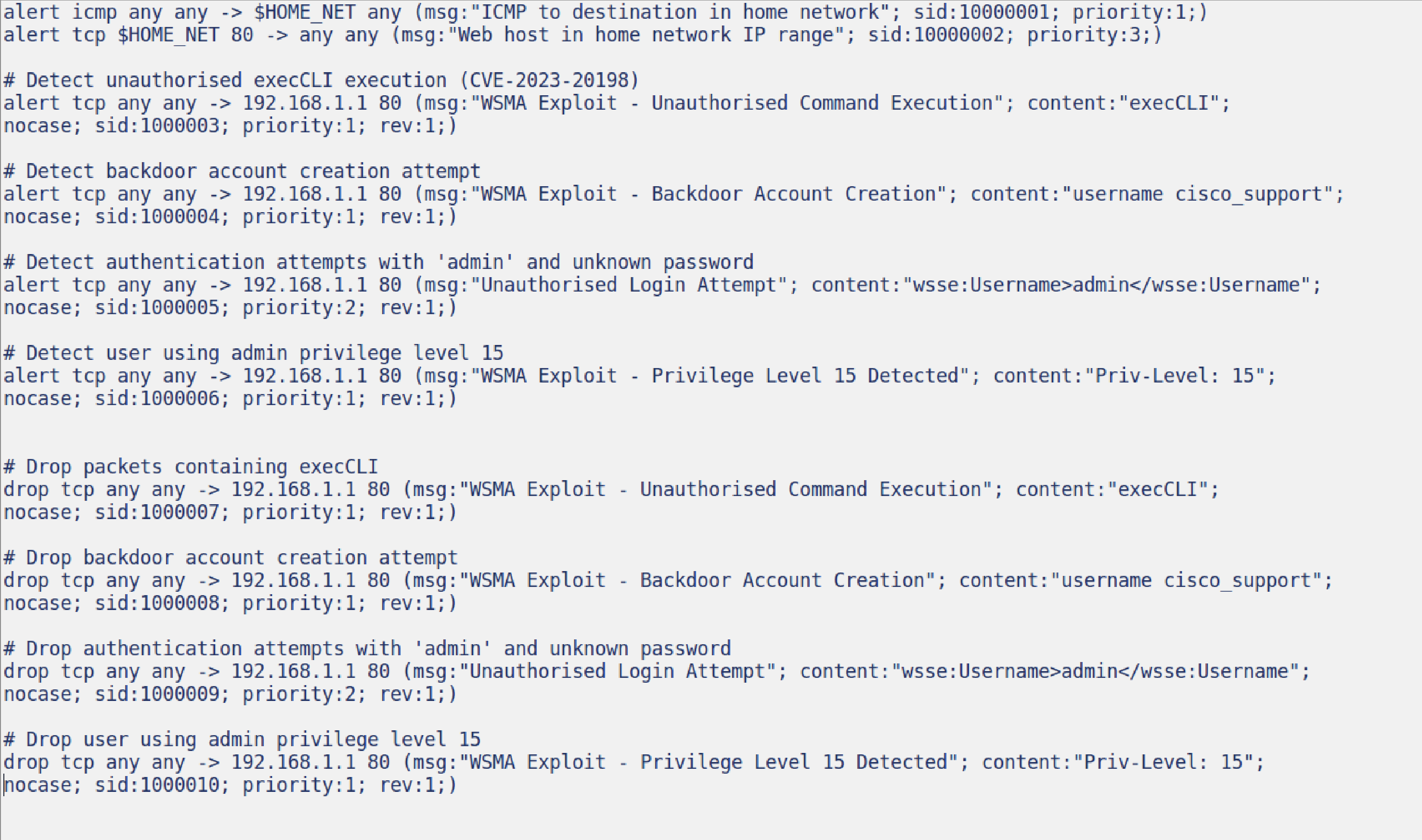
📄 See Snort_Rules.txt for all implemented rules.
Rules cover:
execCLI, backdoor account creation, admin login attempts, and privilege escalation.🖼️ Screenshot:
hping3iptables to allow safe traffic and drop malicious packets📺 Watch the full demo on YouTube
(Unlisted – accessible only via this link)
Dominicus Adjie Wicaksono
Student ID: 40352799
📧 [email protected]
🔗 LinkedIn
