 cyberbibs/event-id-263-arbitrary-file-read-on-checkpoint-security-gateway-cve-2024-24919-
Step-by-step SOC incident response walkthrough for CVE-2024-24919 arbitrary file read on Check Point gateways, covering detection, analysis, containment, and remediation with IOCs.

CVE-2024-24919 is a critical zero-day vulnerability in Check Point Security Gateways that allows unauthenticated remote attackers to read arbitrary files from affected systems. Discovered in May 2024 and actively exploited in the wild, the flaw targets devices with Remote Access VPN or Mobile Access Blade enabled. Attackers can leverage this vulnerability to access sensitive files such as password hashes and SSH keys, potentially leading to full system compromise. Due to its severity and exploitation status, immediate patching and mitigation are strongly advised.
To investigate and remediate the alert, I took the following steps;
These steps are expalined in details below with images.
The Security Operations Center (SOC) ticket queue is a critical component in managing and responding to cybersecurity incidents. The reasons are Incident Tracking and Management, Prioritization and Triage, Accountability, Reporting, Trend Analysis, and Compliance and Audit Readiness.
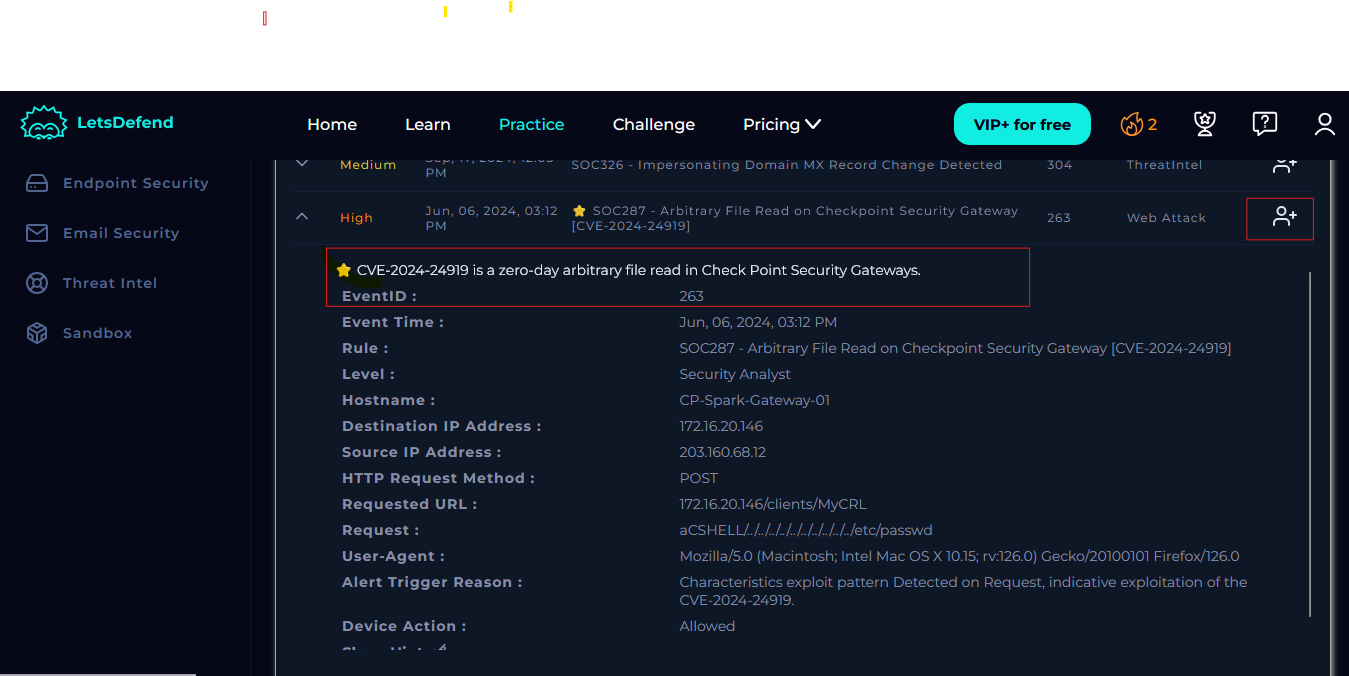
Each ticket in the queue is typically assigned to a specific analyst or team, ensuring clear responsibility and accountability for incident resolution. This fosters a structured and organized approach to incident management. I took ownership of the Alert with EventID: 263
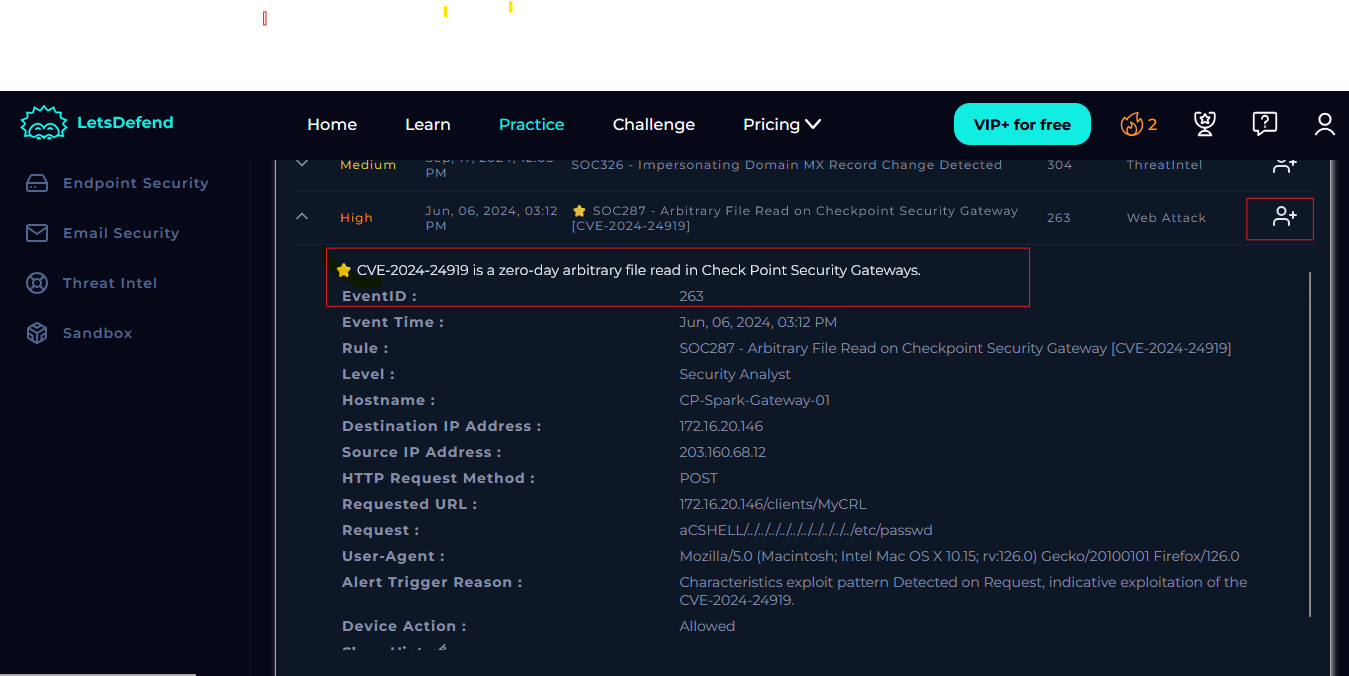
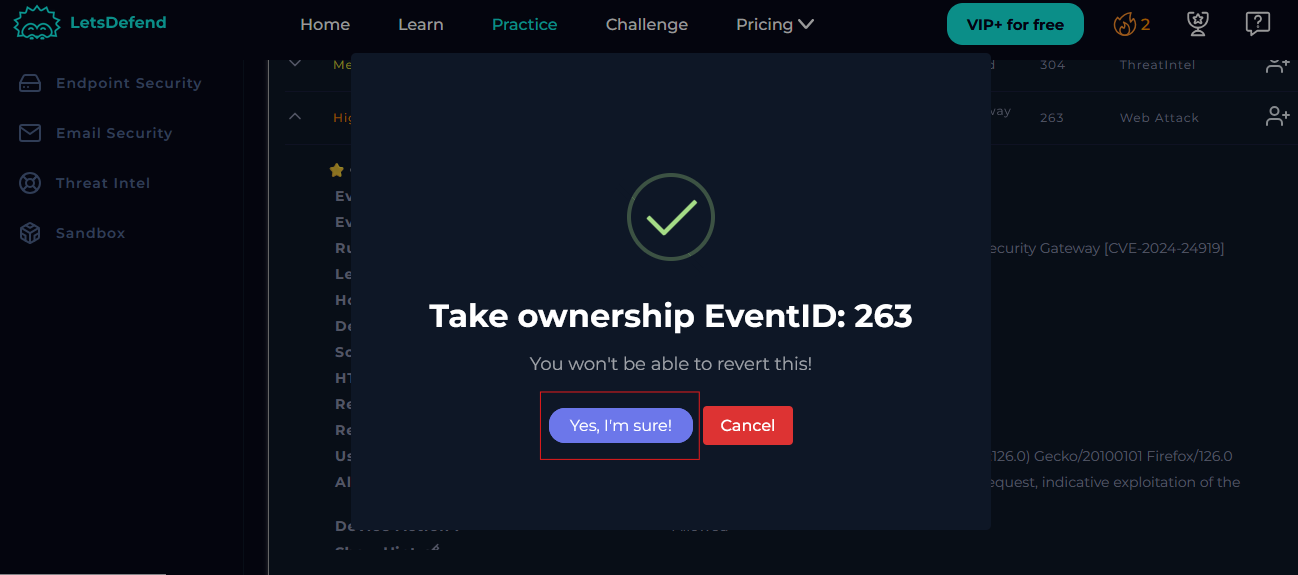
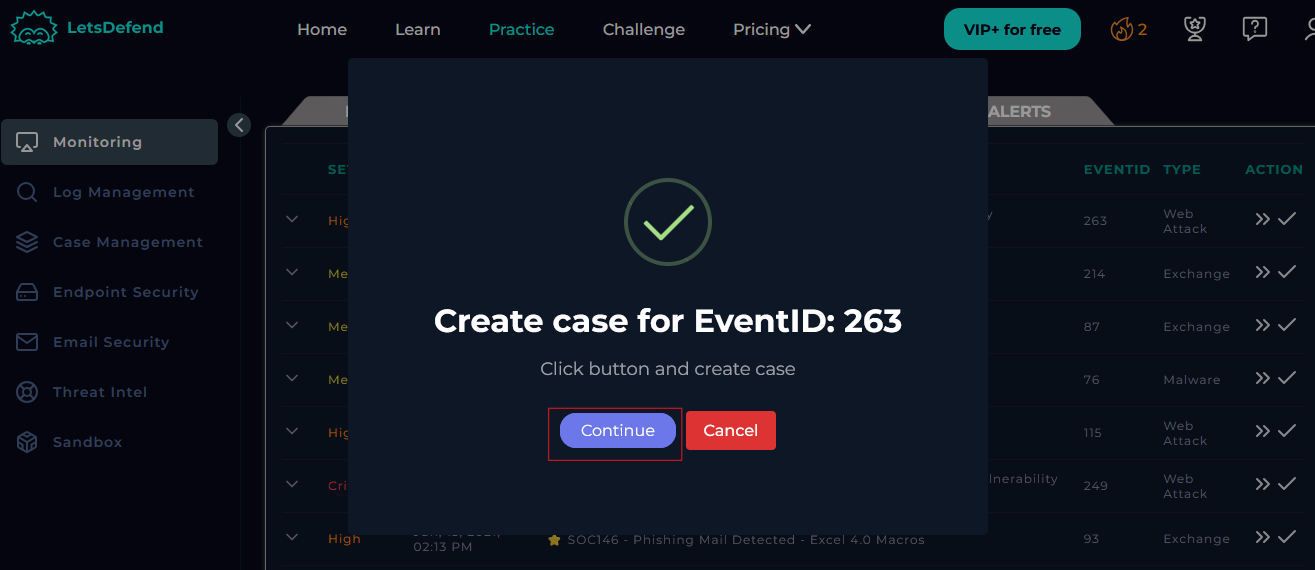
Upon taking ownership of the alert, it is automatically sent to the investigation channel, where I can initiate a case to further analyze and respond to the security incident. I created a case for the alert and was able to veiw details of the incident.
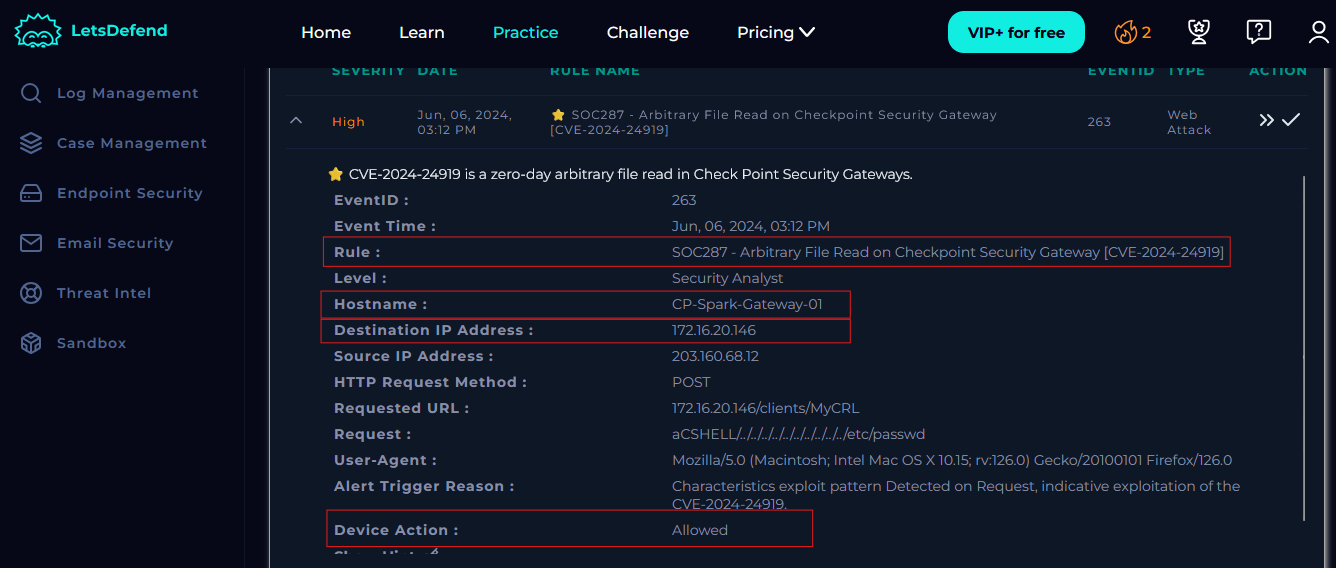
Based on the information that the alert provided, it appears that there is a suspicious Web Attack detected on a server named “CP-Spark-Gateway-01” with an IP address of 172.16.20.146. The Alert is triggered by the SOC287 rule for Arbitrary File Read on Checkpoint Security Gateway [CVE-2024–24919] and device action was allowed.
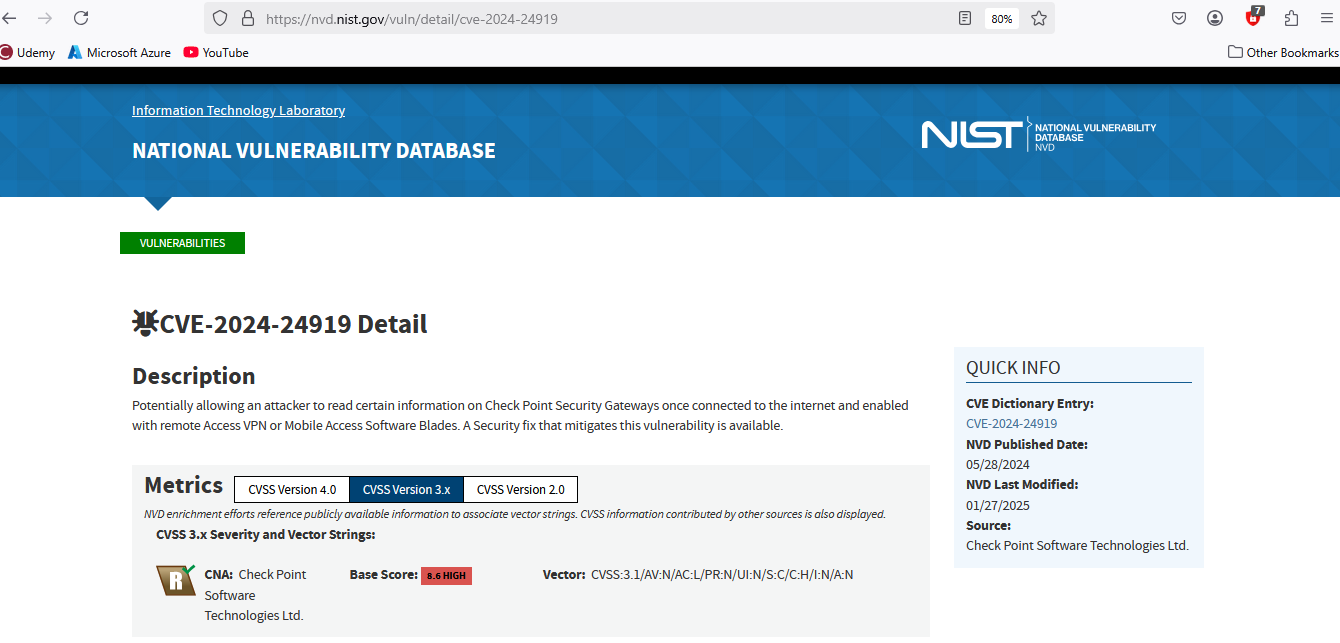
To better understand this alert, I carried out some Open-Source Intelligence (OSINT) as regards the reported CVE-2024–24919 and important information relating to the CVE.
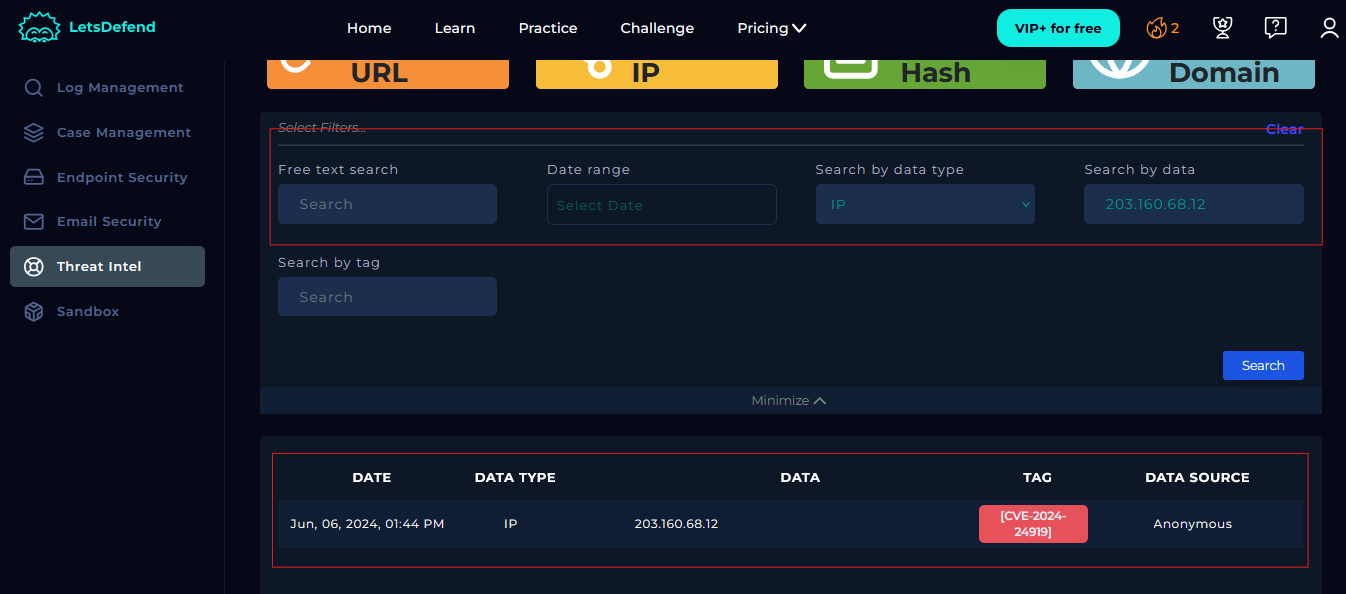
Next, I carried out threat intelligence using the threat Intelligence platform provided by LetsDefend which provides a comprehensive database dedicated to cataloging maliciously used information, such as IP addresses, domains, and other indicators of compromise using the source IP address of 203.160.68.12.
Additionally, I used VirusTotal for threat intelligence on the same IP address and observed that the malware was flaged for malicious activities by 4 security vendors and the Geolocation of the IP is Hong Kong.
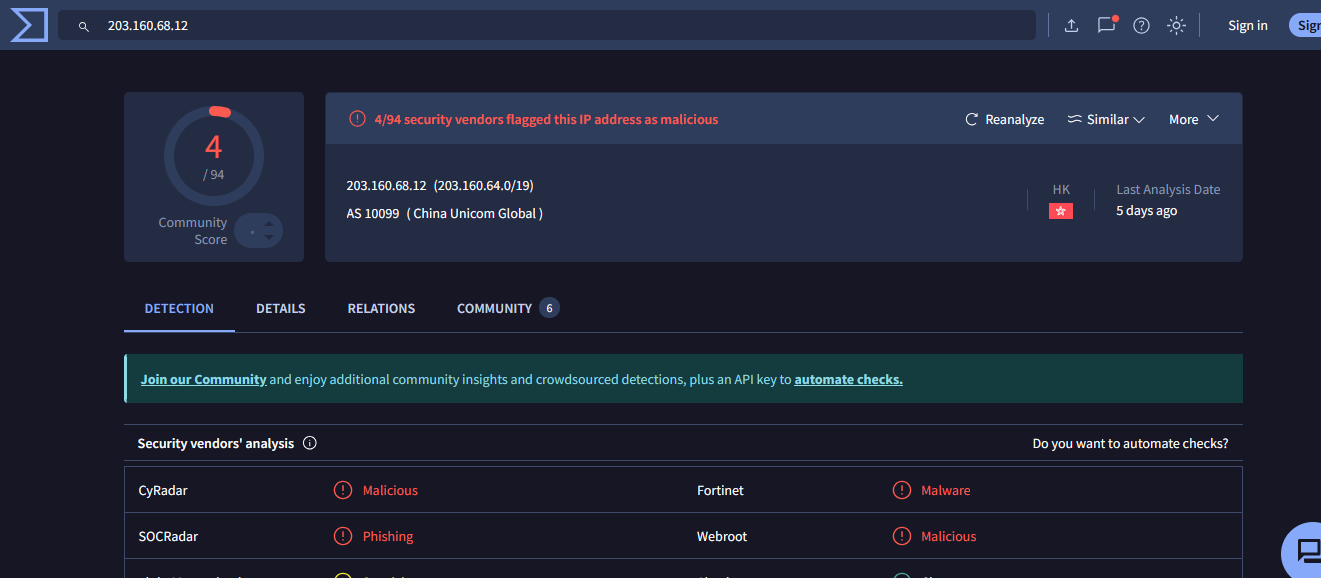
This confirms that the traffic from the IP 203.160.68.12 is Malicious. Hence, the need for me to carry out further investigation by analyzing the logs to see how many hosts in my network have ahd any communication with this malicious IP.
I started my analysis by investigating the access logs. Focusing on IP addresses, user-agents, paths, HTTP status codes, and timestamps to help me identify any suspicious or malicious activity.
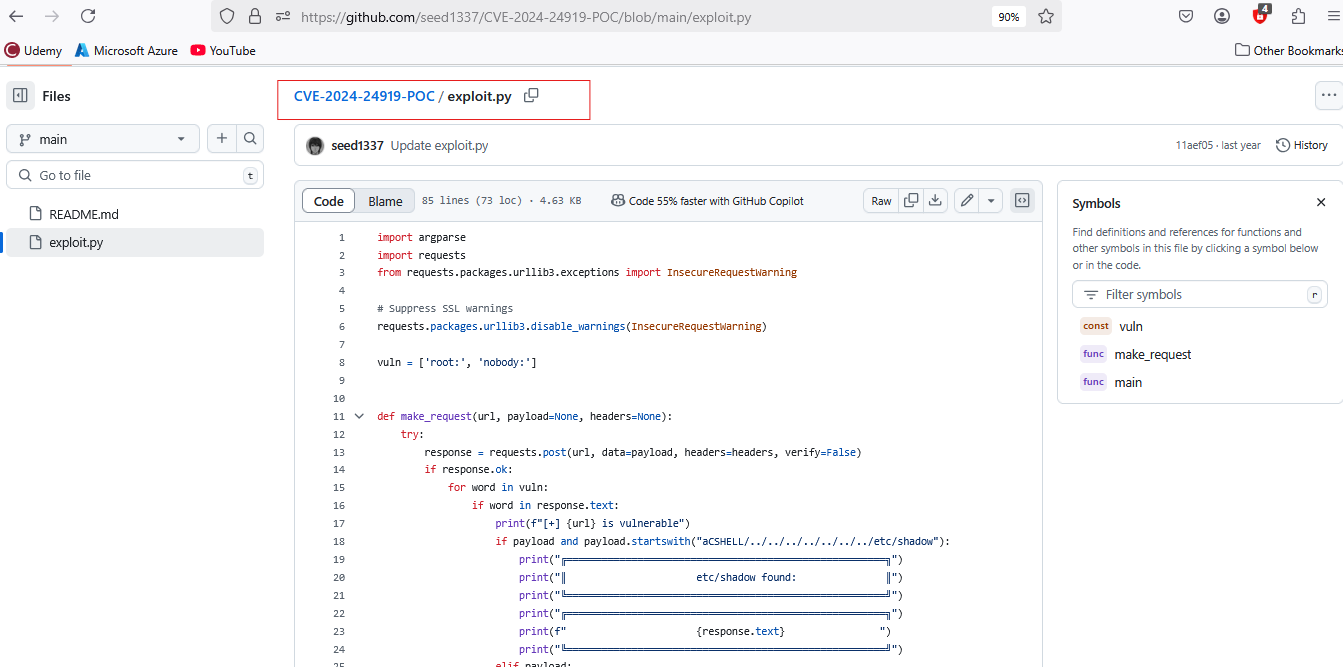
Before examining the HTTP traffic, I investigated the payloads used in exploiting the relevant vulnerability. I found this publicly available POC (Proof of Concept) used by [CVE-2024–24919] in this github repository https://github.com/seed1337/CVE-2024-24919-POC/blob/main/exploit.py
Next, I proceeded to the log management page and filtered by log by the malicious source IP address 203.160.68.12 to see how many host have been in contact with it. Upon searching the network, I discovered only the host named “CP-Spark-Gateway-01” with an IP address of 172.16.20.146 has been in contact the the malicious IP.
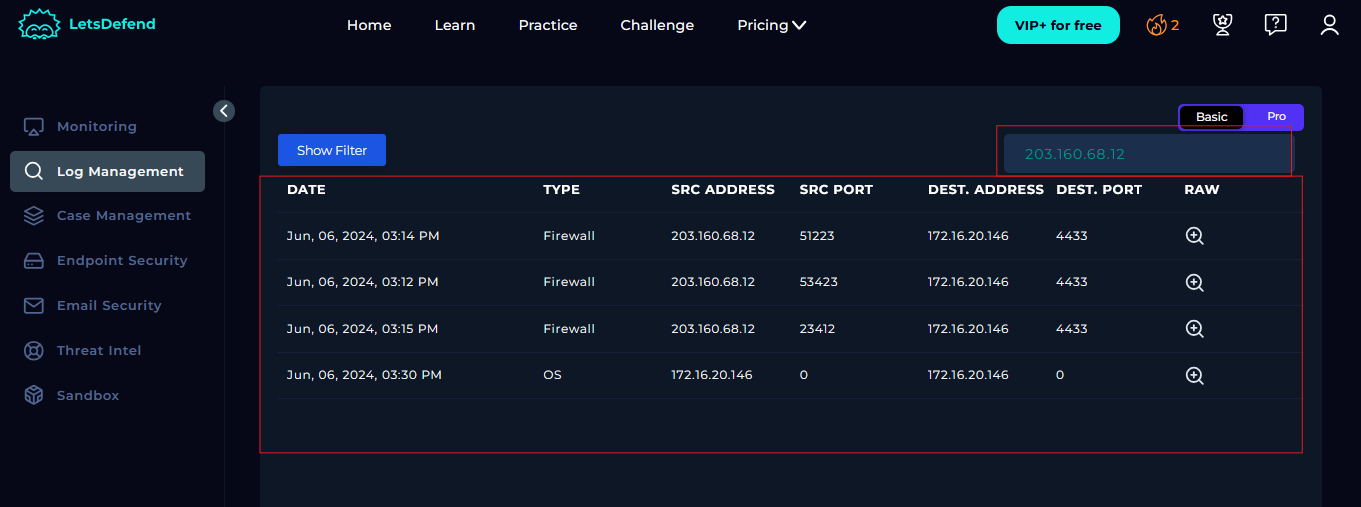
The Log information below, shows that the malicious IP address 172.16.20.146 used the POST method to send the malicious payload aCSHELL/../../../../../../../../../../etc/shadow — which attempts to read the sensitive /etc/shadow file via directory traversal on the host “CP-Spark-Gateway-01” with an IP address of 172.16.20.146 on 06/June/2024.
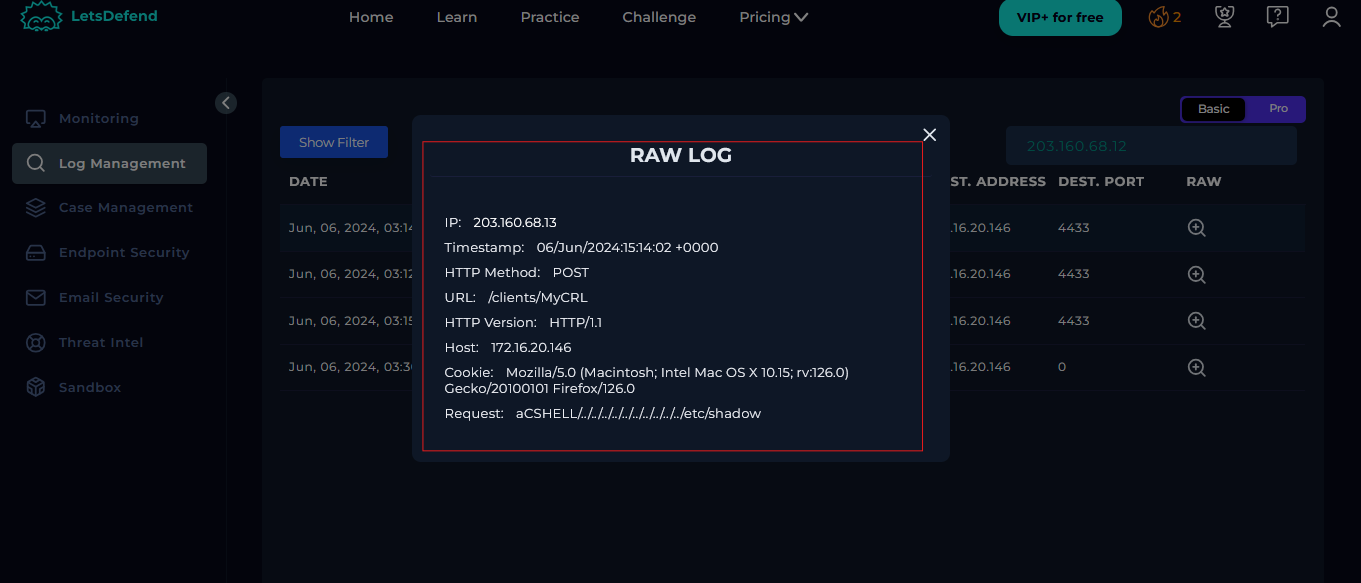
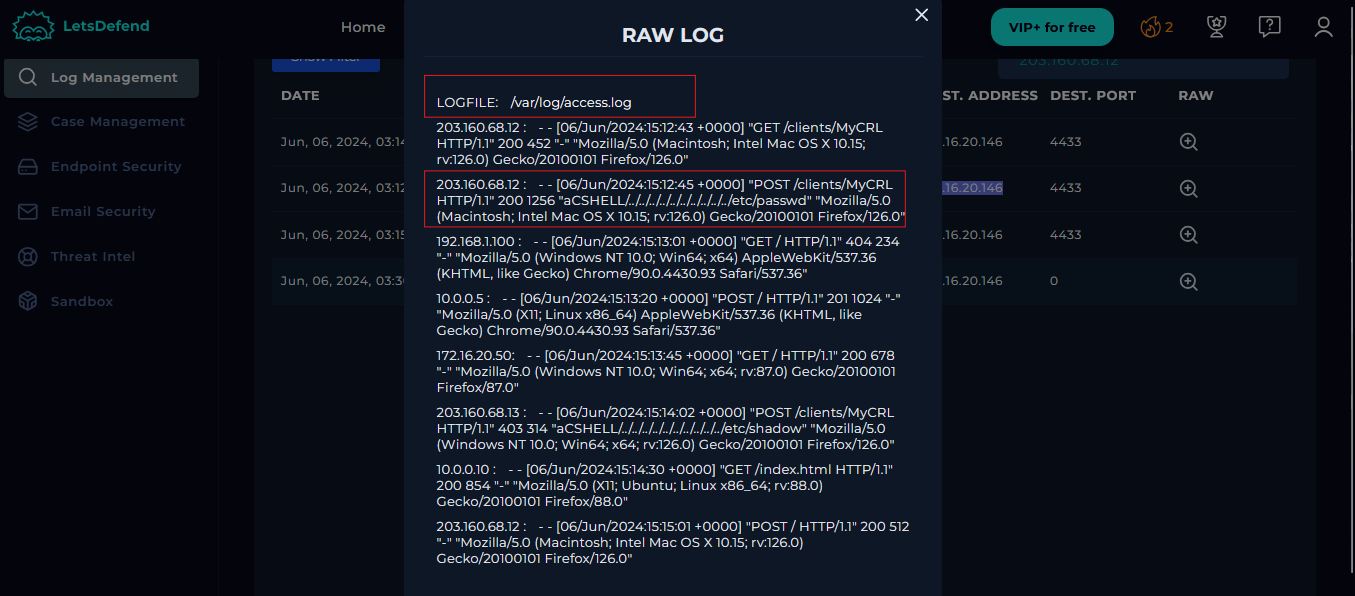
The /etc/shadow file is a critical file in Unix/Linux based operating systems that stores hashed passwords and account expiration details for user accounts. Hence, I can conclude that the attcker is trying to steal user credentials and that the request was granted with 200 status code as noticed in the log above.
This further proves that the attck is malicious.
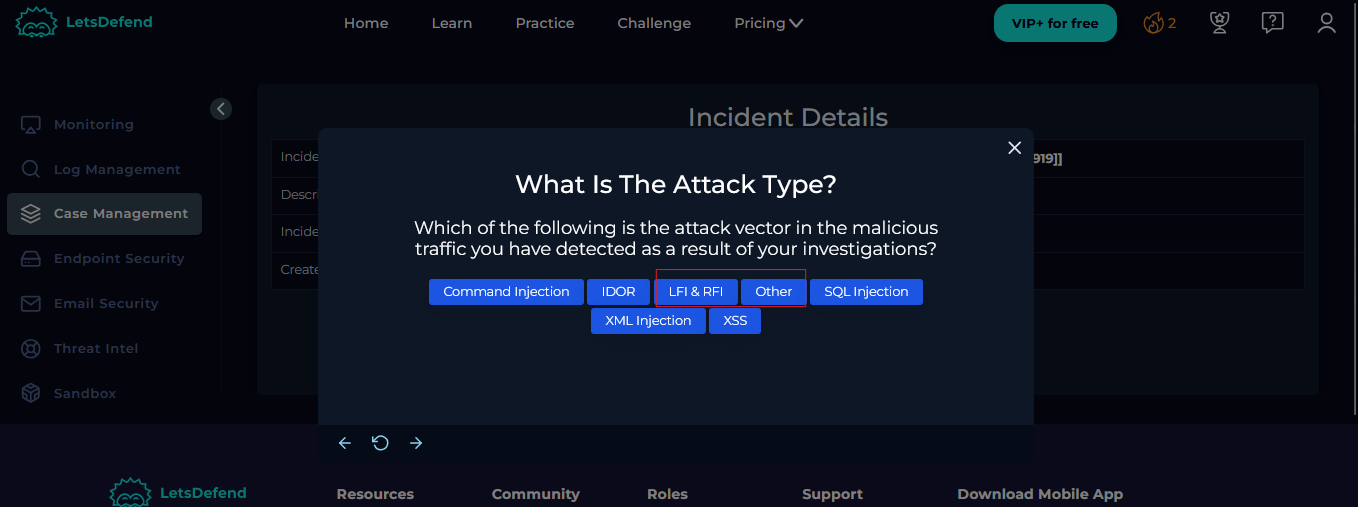
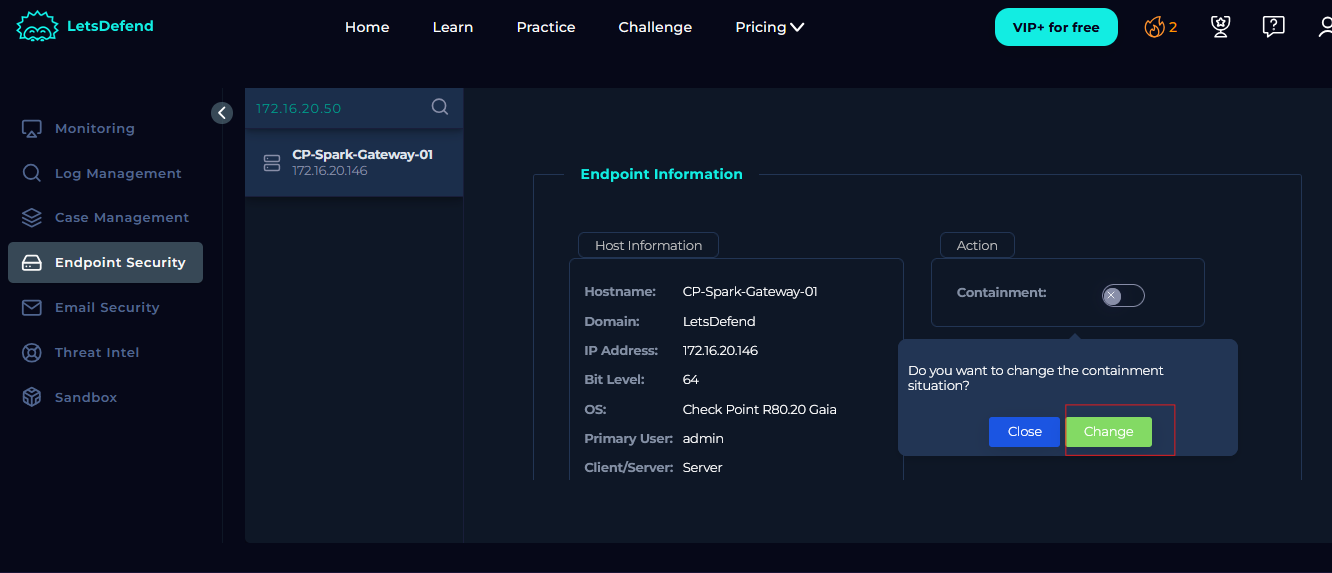
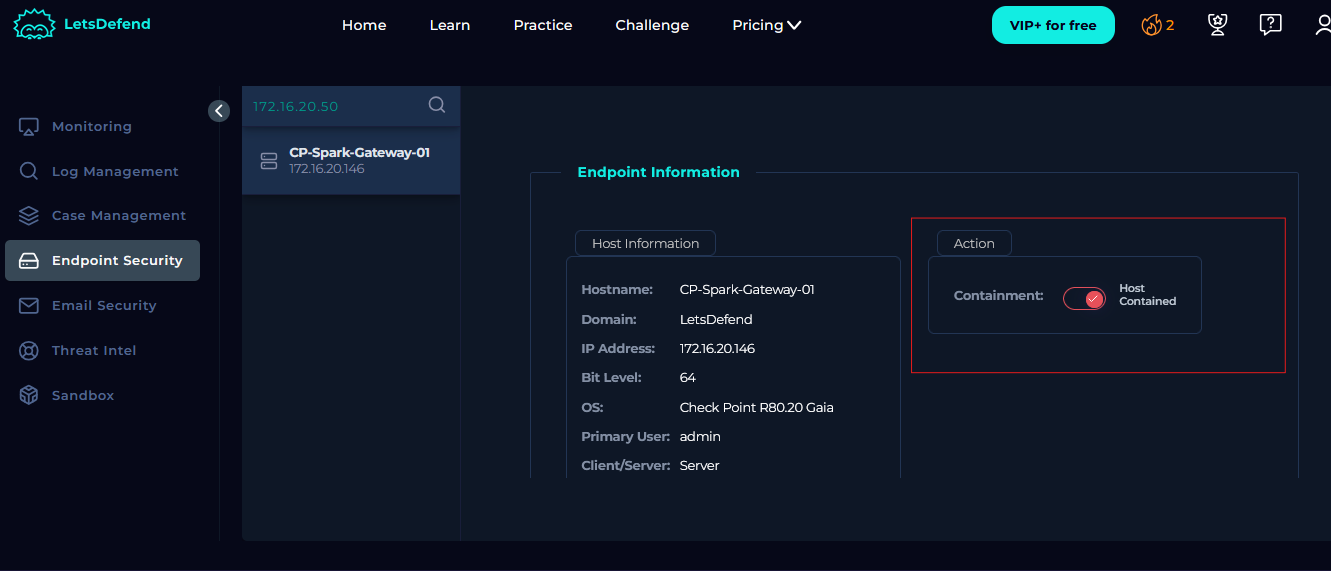
Containment plays a pivotal role in cybersecurity by limiting the impact of security incidents, protecting data and operations, facilitating effective incident response, preserving evidence for forensic analysis, and ensuring compliance with legal and regulatory requirements.
Since I have detected that the device is compromised, I proceeded to isolated the device "CP-Spark-Gateway-01” with an IP address of 172.16.20.146 to prevent further damages.