 blessedrebus/krawl
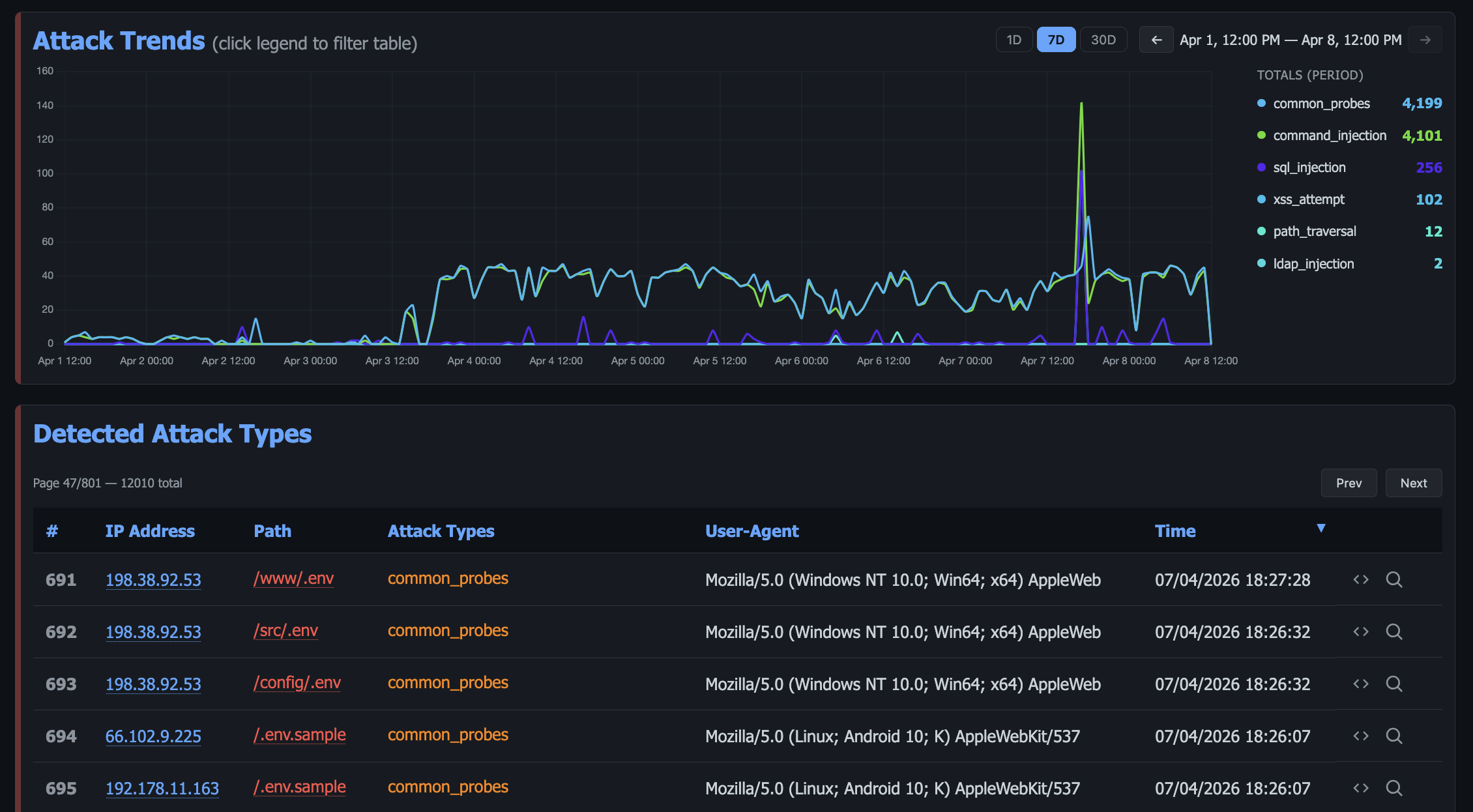
Krawl is a customizable, lightweight, cloud-native web deception server and anti-crawler that creates fake web applications with low-hanging vulnerabilities using realistic, randomly generated decoy data and AI-generated HTML templates.


A modern, customizable web honeypot server designed to detect and track malicious activity from attackers and web crawlers through deceptive web pages, fake credentials, and canary tokens.




Tip: crawl the robots.txt paths for additional fun
Krawl is a cloud‑native deception server designed to detect, delay, and analyze malicious attackers, web crawlers and automated scanners.
It creates realistic fake web applications filled with low‑hanging fruit such as admin panels, configuration files, and exposed fake credentials to attract and identify suspicious activity.
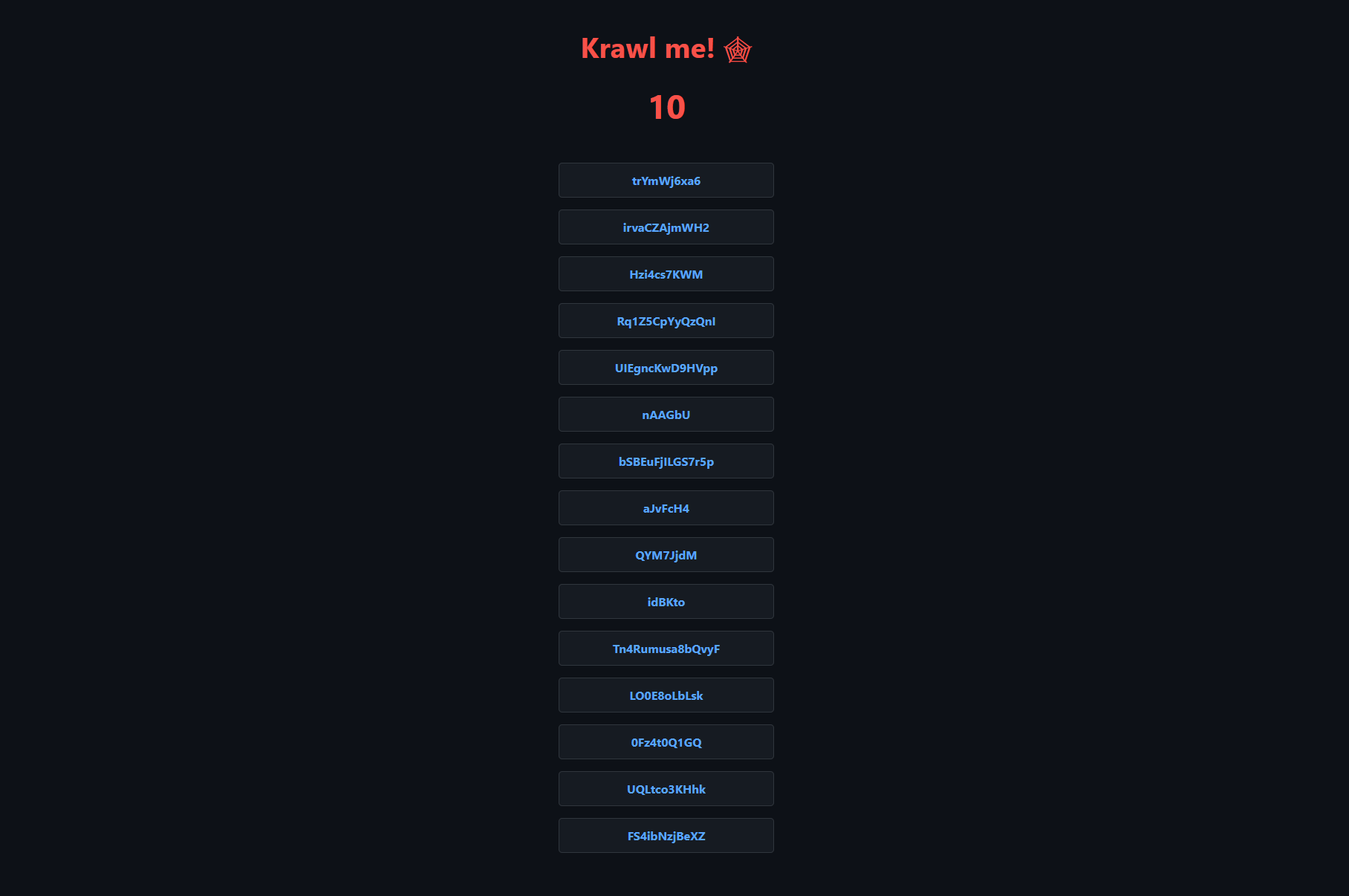
By wasting attacker resources, Krawl helps clearly distinguish malicious behavior from legitimate crawlers.
It features:
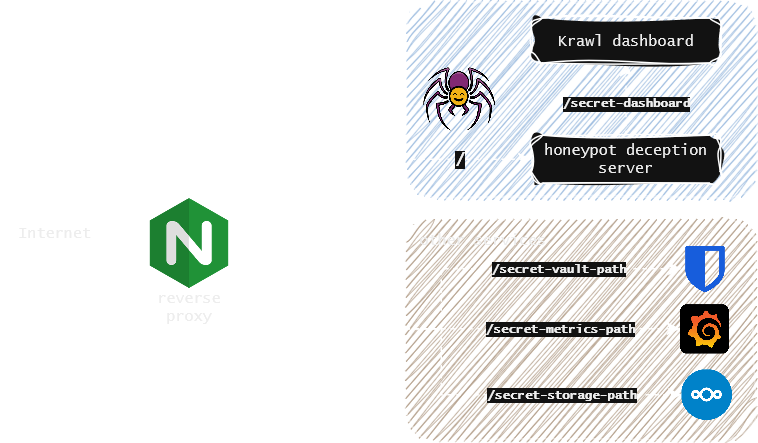
You can easily expose Krawl alongside your other services to shield them from web crawlers and malicious users using a reverse proxy. For more details, see the Reverse Proxy documentation.
Krawl provides a comprehensive dashboard, accessible at a random secret path generated at startup or at a custom path configured via KRAWL_DASHBOARD_SECRET_PATH. This keeps the dashboard hidden from attackers scanning your honeypot.
The dashboard is organized in six tabs:
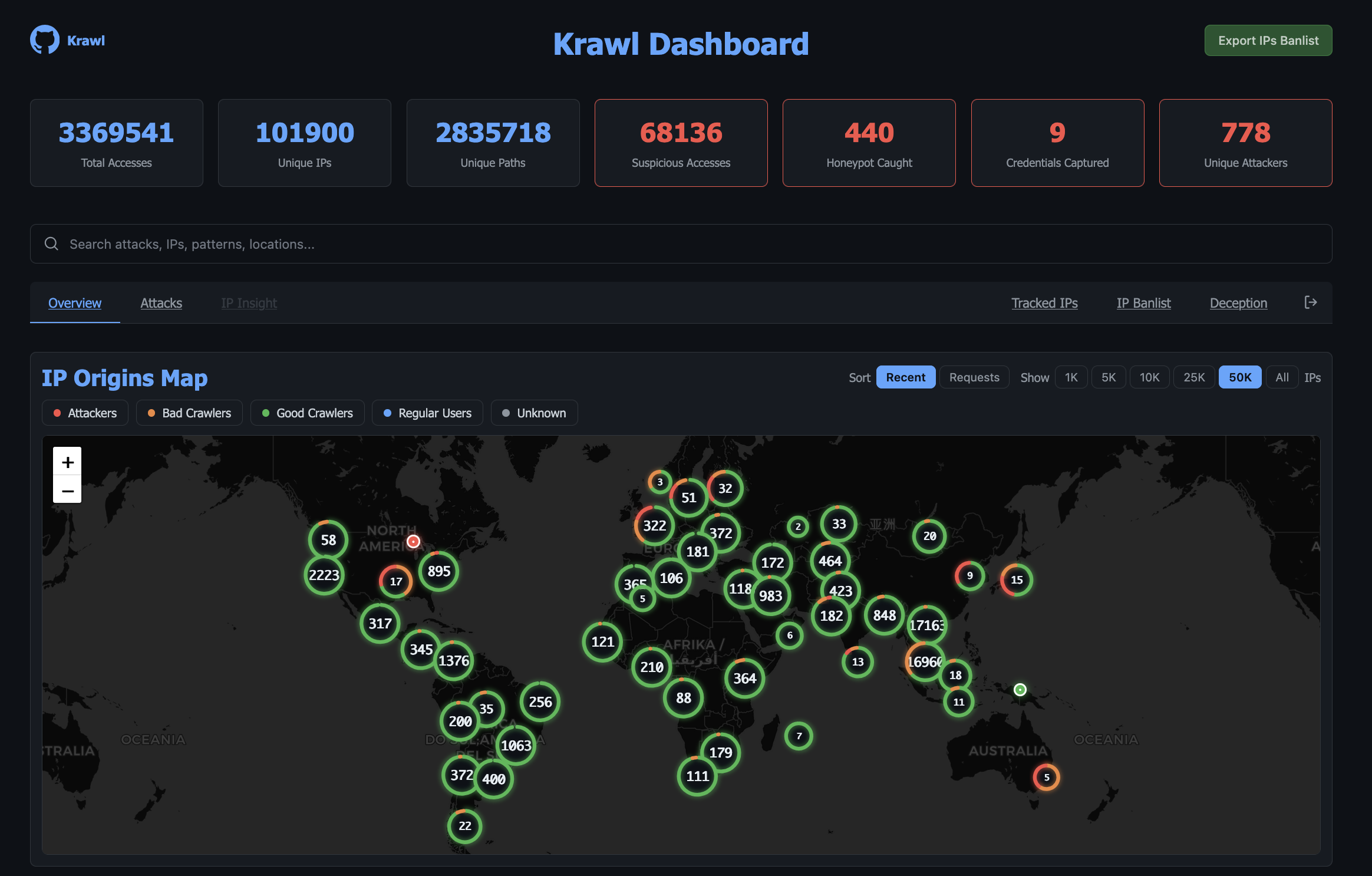
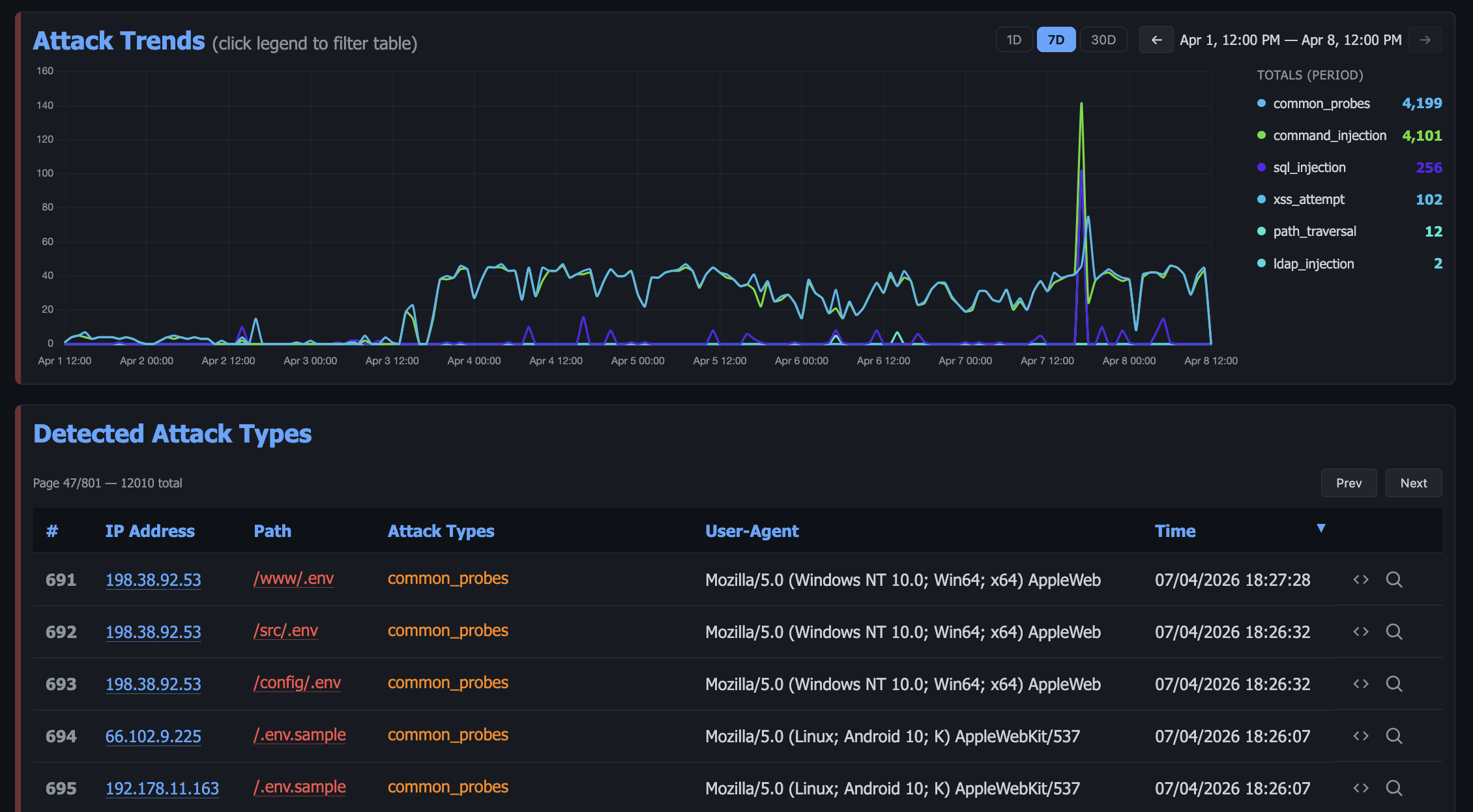
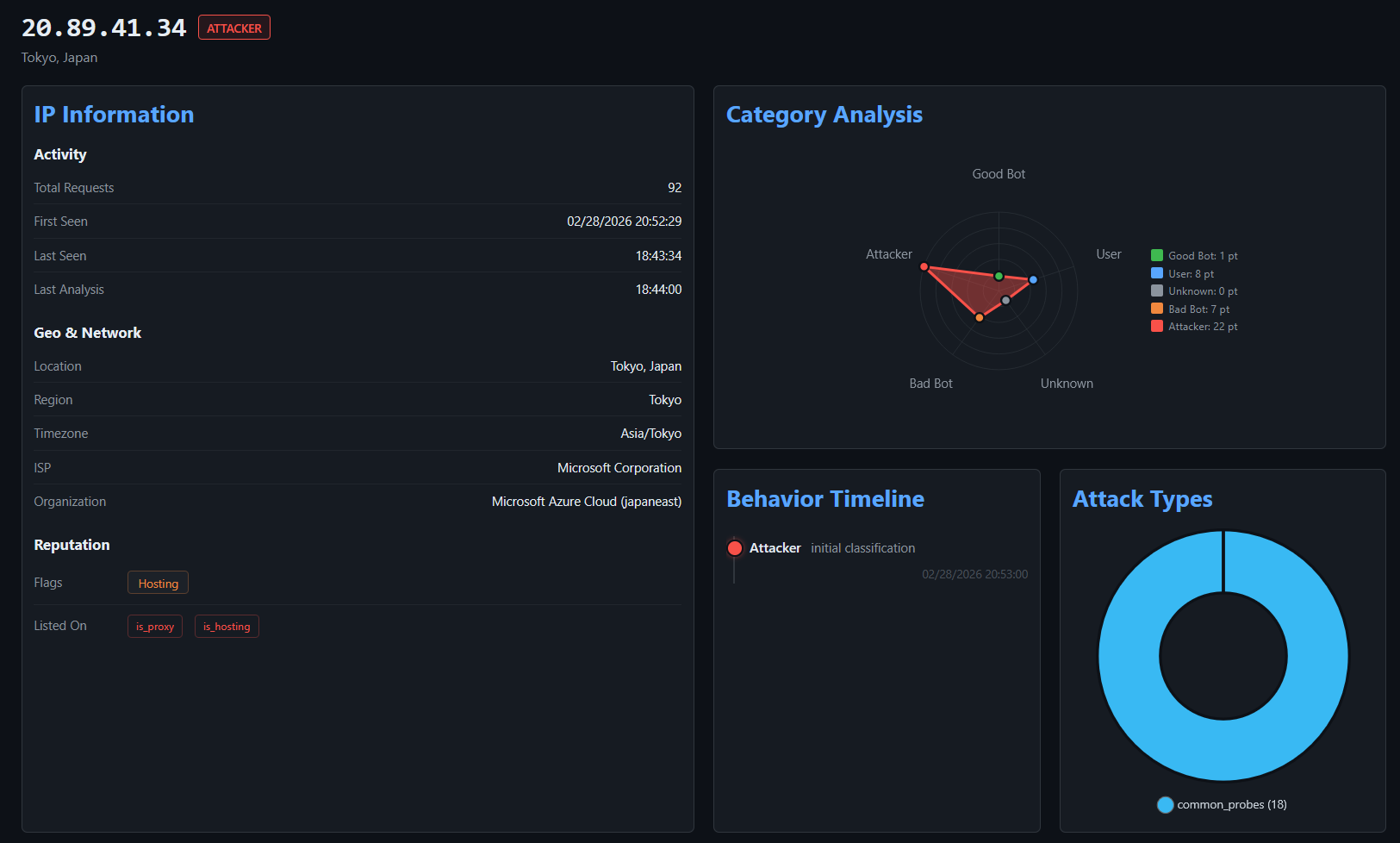
Additionally, after authenticating with the dashboard password, two protected tabs become available:
For more details, see the Dashboard documentation.
Krawl supports two deployment modes, controlled by the mode setting in config.yaml or the KRAWL_MODE environment variable.
Standalone: ideal for development environments or homelabs with low request counts. Zero additional configuration needed, just run Krawl and it works.
Scalable: designed for production environments or high-traffic honeypots. The Helm chart defaults to this mode.
For detailed configuration, Docker Compose examples, Kubernetes/Helm setup, and step-by-step migration instructions, see the Deployment Modes documentation.
Krawl maintains a regularly updated banlist.txt of IP addresses from attackers that triggered its honeypot traps. The banlist is published weekly and available for download, helping the community preemptively block known malicious actors even without using Krawl.
The banlist can also be fetched directly from: https://demo.krawlme.com/das_dashboard/api/export-ips?categories=attacker&fwtype=raw.
Krawl instances can federate their banlists: each one can publish its own list on an unauthenticated path and pull in lists from other instances (or any plain-text IP list). Fetched IPs are merged into the local ban decisions and shown in the dashboard.
banlist:
  # Public, unauthenticated download path for this instance's banlist.
  # Supports the same ?categories= and ?fwtype= parameters as the main API.
  # Empty = disabled.
  export_path: "/public_banlist.txt"

  # Upstream banlists to fetch and merge. Plain ".txt" lists work too.
  sources:
    - "https://demo.krawlme.com/das_dashboard/api/export-ips?categories=attacker&fwtype=raw"
    - "https://krawl.example.com/public_banlist.txt"

  refresh_interval: 3600  # seconds between fetches
Run Krawl in standalone mode with the latest image:
docker run -d \
  -p 5000:5000 \
  -e KRAWL_DASHBOARD_SECRET_PATH="/my-secret-dashboard" \
  -e KRAWL_DASHBOARD_PASSWORD="my-secret-password" \
  -v krawl-data:/app/data \
  --name krawl \
  ghcr.io/blessedrebus/krawl:latest
Access the server at http://localhost:5000
Create a docker-compose.yaml with one of the two deployment modes.
Standalone: just Krawl server with Sqlite storage:
services:
  krawl:
    image: ghcr.io/blessedrebus/krawl:latest
    container_name: krawl-server
    ports:
      - "5000:5000"
    environment:
      - CONFIG_LOCATION=config.yaml
      # - KRAWL_DASHBOARD_PASSWORD=my-secret-password
    volumes:
      - ./config.yaml:/app/config.yaml:ro
      - krawl-data:/app/data
    restart: unless-stopped

volumes:
  krawl-data:
Scalable: with PostgreSQL and Redis:
[!CAUTION] The example below uses default passwords (
krawl/krawl). Change them before deploying to production.
services:
  postgres:
    image: postgres:16-alpine
    environment:
      POSTGRES_DB: krawl
      POSTGRES_USER: krawl
      POSTGRES_PASSWORD: krawl
    volumes:
      - postgres_data:/var/lib/postgresql/data
    restart: unless-stopped
    healthcheck:
      test: ["CMD-SHELL", "pg_isready -U krawl -d krawl"]
      interval: 10s
      timeout: 5s
      retries: 5

  redis:
    image: redis:7-alpine
    volumes:
      - redis_data:/data
    restart: unless-stopped
    healthcheck:
      test: ["CMD", "redis-cli", "ping"]
      interval: 10s
      timeout: 5s
      retries: 5

  krawl:
    image: ghcr.io/blessedrebus/krawl:latest
    container_name: krawl-server
    ports:
      - "5000:5000"
    environment:
      - CONFIG_LOCATION=config.yaml
      - KRAWL_MODE=scalable
      - KRAWL_POSTGRES_HOST=postgres
      - KRAWL_POSTGRES_PORT=5432
      - KRAWL_POSTGRES_USER=krawl
      - KRAWL_POSTGRES_PASSWORD=krawl
      - KRAWL_POSTGRES_DATABASE=krawl
      - KRAWL_REDIS_HOST=redis
      - KRAWL_REDIS_PORT=6379
      # - KRAWL_DASHBOARD_PASSWORD=my-secret-password
    volumes:
      - ./config.yaml:/app/config.yaml:ro
    restart: unless-stopped
    depends_on:
      postgres:
        condition: service_healthy
      redis:
        condition: service_healthy

volumes:
  postgres_data:
  redis_data:
To deploy, just run
docker compose up -d
Production-ready compose files are also available in the docker/ directory. For development (builds from source with hot-reload), use the compose files in docker/dev/.
For more details on both modes, see Deployment Modes.
Krawl is also available natively on Kubernetes. Installation can be done either via manifest or using the Helm chart.
The Helm chart defaults to scalable mode with bundled PostgreSQL and Redis:
helm install krawl oci://ghcr.io/blessedrebus/krawl-chart --version 2.3.0 \
  -n krawl-system --create-namespace \
  --set postgres.password=your-password \
  --set redis.password=your-redis-password \
  --set dashboardPassword=your-dashboard-password \
  --set config.dashboard.secret_path=/my-secret-dashboard
Minimal example values files are provided for both modes:
values-minimal.yaml ---> Scalable (default)values-standalone.yaml ---> StandaloneSee Deployment Modes and Chart documentation for full configuration and migration instructions.
Run Krawl directly with Python 3.13+ and uvicorn for local development or testing:
pip install -r requirements.txt
uvicorn app:app --host 0.0.0.0 --port 5000 --app-dir src --no-server-header
Access the server at http://localhost:5000
Krawl uses a configuration hierarchy in which environment variables take precedence over the configuration file. This approach is recommended for Docker deployments and quick out-of-the-box customization.
You can use the config.yaml file for advanced configurations, such as Docker Compose or Helm chart deployments.
All settings can be supplied as environment variables, which override config.yaml.
The variable name is KRAWL_ plus the setting path in upper case, so dashboard.password
becomes KRAWL_DASHBOARD_PASSWORD.
How Krawl presents itself and shapes the maze of generated pages.
Dashboard access, cache warmup, Prometheus and log level.
Storage location, how long data is kept, and the dump job.
Opt-in traps and the pages served to attackers.
Thresholds that decide how an IP gets classified.
Sharing banlists with other instances, and traffic to never track.
Only used when KRAWL_MODE=scalable. See Deployment Modes.
For example
# Set canary token
export CONFIG_LOCATION="config.yaml"
export KRAWL_CANARY_TOKEN_URL="http://your-canary-token-url"

# Set number of pages range (min,max format)
export KRAWL_LINKS_PER_PAGE_RANGE="5,25"

# Set analyzer thresholds
export KRAWL_HTTP_RISKY_METHODS_THRESHOLD="0.2"
export KRAWL_VIOLATED_ROBOTS_THRESHOLD="0.15"

# Set custom dashboard path and password
export KRAWL_DASHBOARD_SECRET_PATH="/my-secret-dashboard"
export KRAWL_DASHBOARD_PASSWORD="my-secret-password"
Example of a Docker run with env variables (standalone mode):
docker run -d \
  -p 5000:5000 \
  -e KRAWL_MODE=standalone \
  -e KRAWL_PORT=5000 \
  -e KRAWL_DELAY=100 \
  -e KRAWL_DASHBOARD_PASSWORD="my-secret-password" \
  -e KRAWL_CUSTOM_TEMPLATE_PATH="/templates/custom_page.html" \
  -e KRAWL_CANARY_TOKEN_URL="http://your-canary-token-url" \
  --name krawl \
  ghcr.io/blessedrebus/krawl:latest
Krawl uses a reputation-based system to classify attacker IP addresses and provides two ways to export IP lists for firewall integration.
The /api/export-ips endpoint queries the database directly and supports filtering by IP category (attacker, bad_crawler, regular_user, good_crawler) and output format (raw, iptables, nftables):
curl "https://your-krawl-instance/<DASHBOARD-PATH>/api/export-ips?categories=attacker&fwtype=raw"
This enables automatic blocking of malicious traffic across various platforms:
For full API parameters, examples, and adding custom firewall formats, see the Firewall Exporters documentation.
Krawl can also push banned IPs directly to a Cloudflare Account IP List for use in WAF rules. The sync runs as a background task and updates the list by full replacement on a configurable interval. See the Cloudflare Banlist Sync documentation.
Krawl uses tasks that analyze recent traffic to build and continuously update an IP reputation score. It runs periodically and evaluates each active IP address based on multiple behavioral indicators to classify it as an attacker, crawler, or regular user. Thresholds are fully customizable.
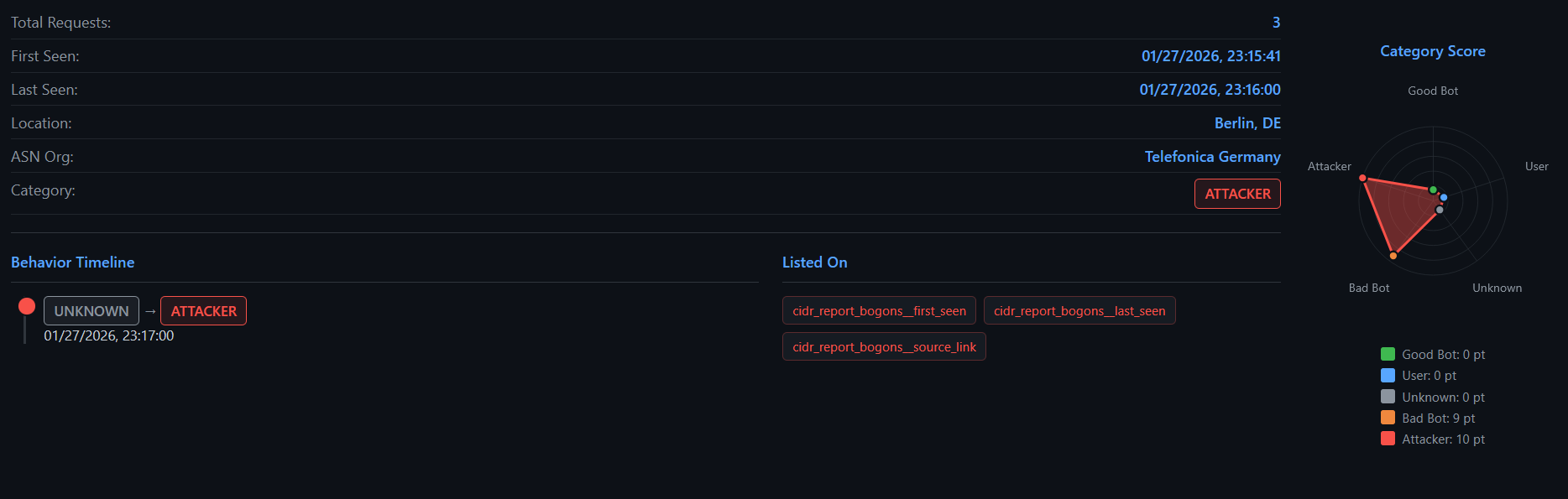
The analysis includes:
Each signal contributes to a weighted scoring model that assigns a reputation category:
attackerbad_crawlergood_crawlerregular_userunknown (for insufficient data)The resulting scores and metrics are stored in the database and used by Krawl to drive dashboards, reputation tracking, and automated mitigation actions such as IP banning or firewall integration.
Krawl can automatically generate realistic deception pages using AI models from OpenRouter or OpenAI APIs. This feature creates unique, plausible honeypot pages on-the-fly to deceive attackers without manual page creation.
Key Features:
Quick Setup:
ai:
  enabled: true
  provider: "openrouter"
  openai_base_url: "your-custom-base-url"
  api_key: "your-api-key"
  model: "nvidia/nemotron-3-super-120b-a12b:free"
  timeout: 60
  max_daily_requests: 10
For detailed configuration and usage, see the AI Generation documentation.
You can also contribute deception templates by opening a PR, see Contributing Deception Templates.
NGINX, Traefik, and other proxies like CloudFlare need header forwarding so Krawl can see the real IP. See the Reverse Proxy documentation for configuration examples and the full header list.
Krawl exposes Prometheus metrics at /<dashboard_secret_path>/metrics (enabled by default) and ships with a ready-to-import Grafana dashboard at grafana-dashboard.json.
See the Monitoring documentation for the full metric list, Grafana import steps, and Prometheus / Kubernetes (ServiceMonitor) scraping setup.
Contributions welcome! Please:
[!CAUTION] This is a deception/honeypot system. Deploy in isolated environments and monitor carefully for security events. Use responsibly and in compliance with applicable laws and regulations.
| Standalone | Scalable |
|---|
| Database | SQLite (WAL mode) | PostgreSQL |
| Cache | In-memory Python dict | Redis (multi-tier TTL) |
| Replicas | 1 (single instance) | 1+ (horizontal scaling) |
| External deps | None | PostgreSQL + Redis |
| Best for | Dev, homelabs, <500k requests | Production, HA, >500k requests |
| Environment Variable | Description | Default |
|---|
CONFIG_LOCATION | Path to yaml config file | config.yaml |
KRAWL_PORT | Server listening port | 5000 |
KRAWL_DELAY | Response delay in milliseconds | 100 |
KRAWL_SERVER_HEADER | HTTP Server header for deception | "" |
KRAWL_LINKS_LENGTH_RANGE | Link length range as min,max | 5,15 |
KRAWL_LINKS_PER_PAGE_RANGE | Links per page as min,max | 10,15 |
KRAWL_CHAR_SPACE | Characters used for link generation | abcdefgh... |
KRAWL_MAX_COUNTER | Initial counter value | 10 |
KRAWL_PROBABILITY_ERROR_CODES | Error response probability (0-100%) | 0 |
KRAWL_INFINITE_PAGES_FOR_MALICIOUS | Serve infinite pages to malicious IPs | true |
KRAWL_MAX_PAGES_LIMIT | Maximum page limit for crawlers | 250 |
KRAWL_BAN_DURATION_SECONDS | Ban duration in seconds for rate-limited IPs | 600 |
| Environment Variable | Description | Default |
|---|
KRAWL_DASHBOARD_SECRET_PATH | Custom dashboard path | Auto-generated |
KRAWL_DASHBOARD_PASSWORD | Password for protected dashboard panels | Auto-generated |
KRAWL_DASHBOARD_CACHE_WARMUP | Pre-compute dashboard data every 5 minutes for instant page loads | true |
KRAWL_DASHBOARD_WARMUP_PAGES | Number of pages to pre-warm per table panel | 10 |
KRAWL_DASHBOARD_WARMUP_AGGREGATION | Pre-compute full top_paths/top_ua aggregations for zero-query serving | false |
KRAWL_DASHBOARD_TOP_N_MIN_COUNT | Minimum access count for top paths/user agents panels (set to 1 to disable) | 5 |
KRAWL_METRICS_ENABLED | Expose Prometheus metrics at /<dashboard_path>/metrics | true |
KRAWL_LOG_LEVEL | Application log level (DEBUG, INFO, WARNING, ERROR) | INFO |
| Environment Variable | Description | Default |
|---|
KRAWL_DATABASE_PATH | Database file location | data/krawl.db |
KRAWL_DATABASE_PERSIST_SUSPICIOUS_ONLY | Only persist suspicious requests to the access log | false |
KRAWL_DATABASE_RETENTION_DAYS | Days to retain data in database | 30 |
KRAWL_BACKUPS_PATH | Path where database dump are saved | backups |
KRAWL_BACKUPS_CRON | cron expression to control backup job schedule | */30 * * * * |
KRAWL_BACKUPS_ENABLED | Boolean to enable db dump job | true |
| Environment Variable | Description | Default |
|---|
KRAWL_TARPIT_ENABLED | Trap AI agents with slow responses and random text | false |
KRAWL_TARPIT_DELAY_SECONDS | Extra delay in seconds added per response when tarpit is active | 5 |
KRAWL_DECEPTION_IMPORT_PAGES | Auto-import deception pages from src/templates/deception/ at startup | true |
KRAWL_CUSTOM_TEMPLATE_PATH | Path inside the container to a custom HTML template. Template must include {counter} and {content} placeholders. | /templates/custom_page.html |
KRAWL_CANARY_TOKEN_URL | External canary token URL | None |
KRAWL_CANARY_TOKEN_TRIES | Requests before showing canary token | 10 |
| Environment Variable | Description | Default |
|---|
KRAWL_HTTP_RISKY_METHODS_THRESHOLD | Threshold for risky HTTP methods detection | 0.1 |
KRAWL_VIOLATED_ROBOTS_THRESHOLD | Threshold for robots.txt violations | 0.1 |
KRAWL_UNEVEN_REQUEST_TIMING_THRESHOLD | Coefficient of variation threshold for timing | 0.5 |
KRAWL_UNEVEN_REQUEST_TIMING_TIME_WINDOW_SECONDS | Time window for request timing analysis in seconds | 300 |
KRAWL_USER_AGENTS_USED_THRESHOLD | Threshold for detecting multiple user agents | 2 |
KRAWL_ATTACK_URLS_THRESHOLD | Threshold for attack URL detection | 1 |
| Environment Variable | Description | Default |
|---|
KRAWL_IGNORED_IPS | Comma-separated IPs/CIDRs never tracked, banned or exported | Loopback, RFC1918, link-local, CGNAT |
KRAWL_BANLIST_EXPORT_PATH | Public banlist download path, e.g. /public_banlist.txt (empty = disabled) | "" |
KRAWL_BANLIST_SOURCES | Comma-separated upstream banlist URLs to fetch and merge | Krawl community banlist |
KRAWL_BANLIST_REFRESH_INTERVAL | Seconds between upstream banlist fetches | 3600 |
| Environment Variable | Description | Default |
|---|
KRAWL_AI_ENABLED | Enable AI-generated deception pages | false |
KRAWL_AI_PROVIDER | AI provider ("openrouter" or "openai") | "openrouter" |
KRAWL_AI_OPENAI_BASE_URL | Optional OpenAI Base URL for custom API endpoints | "https://api.openai.com/v1" |
KRAWL_AI_API_KEY | API key for AI provider | None |
KRAWL_AI_MODEL | AI model to use for page generation | "nvidia/nemotron-3-super-120b-a12b:free" |
KRAWL_AI_TIMEOUT | Request timeout in seconds for AI API calls | 60 |
KRAWL_AI_MAX_DAILY_REQUESTS | Max number of AI-generated pages per day (0 = unlimited) | 0 |
KRAWL_AI_PROMPT | Custom prompt template for AI page generation | Default prompt |
KRAWL_AI_REASONING_ENABLED | Enable reasoning tokens (OpenRouter reasoning models only) | false |
KRAWL_AI_REASONING_EFFORT | Reasoning effort (none, minimal, low, medium, high, xhigh) | "medium" |
| Environment Variable | Description | Default |
|---|
KRAWL_MODE | Deployment mode (standalone or scalable) | standalone |
KRAWL_POSTGRES_HOST | PostgreSQL hostname | localhost |
KRAWL_POSTGRES_PORT | PostgreSQL port | 5432 |
KRAWL_POSTGRES_USER | PostgreSQL username | krawl |
KRAWL_POSTGRES_PASSWORD | PostgreSQL password | krawl |
KRAWL_POSTGRES_DATABASE | PostgreSQL database name | krawl |
KRAWL_REDIS_HOST | Redis hostname | localhost |
KRAWL_REDIS_PORT | Redis port | 6379 |
KRAWL_REDIS_DB | Redis database number | 0 |
KRAWL_REDIS_PASSWORD | Redis password | None |
KRAWL_REDIS_CACHE_TTL | TTL in seconds for dashboard warmup data | 600 |
KRAWL_REDIS_HOT_TTL | TTL in seconds for hot-path data (ban info, IP categories) | 30 |
KRAWL_REDIS_TABLE_TTL | TTL in seconds for paginated dashboard tables | 120 |
| Topic | Description |
|---|
| AI Generation | Configure AI-generated deception pages using OpenRouter or OpenAI |
| Deception Pages | Manage, import, and export deception pages; bulk operations and date-based filtering |
| Deployment Modes | Standalone (SQLite) vs Scalable (PostgreSQL + Redis) mode, configuration, and data migration |
| Honeypot | Full overview of honeypot pages: fake logins, directory listings, credential files, SQLi/XSS/XXE/command injection traps, and more |
| Dashboard | Access and explore the real-time monitoring dashboard |
| Dashboard API | Krawl's own JSON API: endpoint reference, authentication, interactive OpenAPI docs, and attachment downloads |
| External APIs | Third-party APIs Krawl calls out to for IP data, reputation, and geolocation |
| Reverse Proxy | How to deploy Krawl behind NGINX or use decoy subdomains |
| Database Backups | Enable and configure the automatic database dump job |
| Canary Token | Set up external alert triggers via canarytokens.org |
| Wordlist | Customize fake usernames, passwords, and directory listings |
| Architecture | Technical overview of the codebase, request pipeline, database schema, and background tasks |
| Cloudflare Banlist Sync | Pushes banned IPs from Krawl to a Cloudflare Account IP List for use in WAF rules. The sync runs as a background task and updates the list by full replacement. |
| Firewall Exporters | Export IP banlists in raw, iptables, or nftables format via REST API |
| Tarpit | Slow down and poison AI crawlers with delayed, noise-padded responses |
| Metrics & Monitoring | Prometheus metrics endpoint, exposed metrics reference, Grafana dashboard, and ServiceMonitor scraping |
