 alex188dot/agensic
Cryptographic terminal forensics and session replay for AI agents. Tracks, signs, and audits every command with provenance labels, replayable sessions, and Git time travel. Privacy-first with local SQLite storage and secret redaction.


Signed Provenance
Tracked Sessions
Git Time Travel
Replayable Sessions
IDE style Tab Autocomplete
Agensic upgrades your existing terminal workflow for the AI era. It is built for developers who want the productivity boost of AI agents right in their shell, but refuse to compromise on auditability, control and privacy.
As AI agents increasingly take over the command line and execute tasks autonomously, visibility and control become critical. Agensic treats terminal commands as first-class citizens and provides a robust framework for tracking, inspecting and managing them.
Instead of flattening all terminal activity into a single ambiguous "shell history", Agensic acts as a forensic observer and a smart co-pilot. It seamlessly tracks interactive AI coding sessions, cryptographically signs agent-executed commands and provides blazing-fast, history-backed IDE-style Tab autocomplete.
Agensic is designed to integrate deeply with your shell environment.
macOS (Zsh) — fully supported ✅
Linux (Bash) — fully supported ✅
The fastest path is the managed one-line installer:
curl -fsSL https://raw.githubusercontent.com/Alex188dot/agensic/main/bootstrap.sh | bash
If you prefer to clone manually:
git clone https://github.com/Alex188dot/agensic.git
cd agensic
bash ./install.sh
If you already have uv, the installer will use it automatically for faster setup.
On first run, Agensic will prompt you to choose your preferred LLM provider and configure your API keys for command autocomplete.
Alternatively, you can configure your LLM provider and API keys by running:
agensic setup
After setup, open a new terminal and Agensic will automatically start tracking your terminal activity and provide autocomplete suggestions as you type!
Start working, as you normally would, for example by using your favorite AI coding assistant, like Claude Code, Codex CLI, etc:
claude
or
codex
See the Supported Agents section for a complete list of all supported agents. If your agent is not in the list, you can add it by running agensic --add_agent "executable" and then use it normally so that Agensic can track it.
After you're done, you can use Agensic to inspect the session history:
agensic sessions
or view the forensic provenance:
agensic provenance
Agensic gives you a forensic transcript for every command. It classifies what happened, records rich metadata and surfaces a clear audit trail so you can tell whether a command was manually typed, accepted from a suggestion or executed directly by an agent.
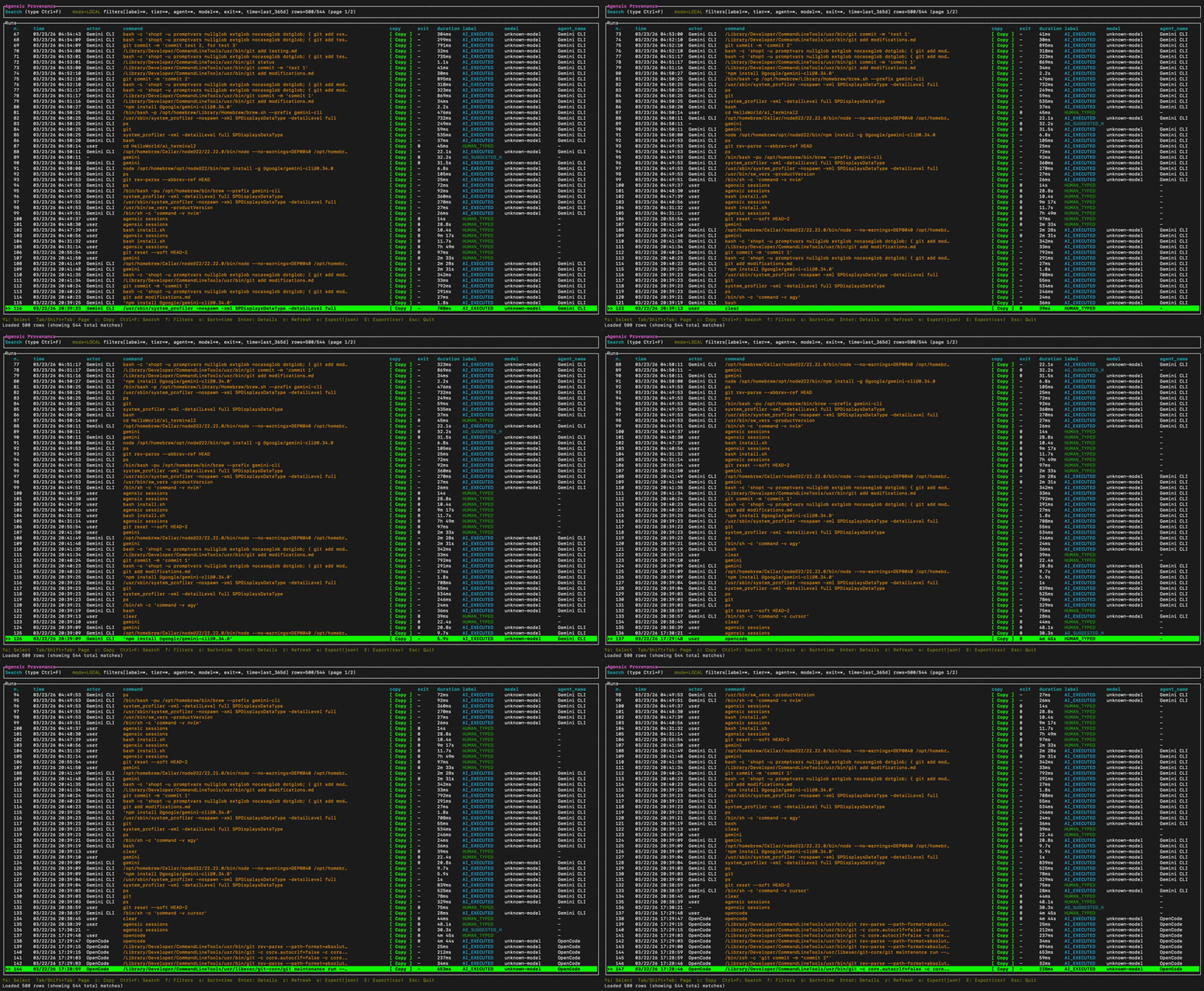
Need to answer, "What exactly ran here and who triggered it?" Run agensic provenance to open the full-screen provenance viewer. Filter by label, agent, provider or time window, inspect the exact command trail and export the current view to JSON or CSV when you need a durable record for debugging, incident review or compliance.
Stop guessing whether a human or an AI broke the build. Agensic captures rich metadata for every command and uses local Ed25519 signing to tag agent-executed runs with an undeniable AI_EXECUTED label. You get a clear, auditable timeline separating human keystrokes from AI suggestions and automated executions.
Agensic does not reduce terminal history to a raw list of strings. Every tracked command is classified into a provenance label, giving you a consistent way to filter runs, investigate behavior and understand how a command entered your shell in the first place.
Agensic currently supports the following provenance labels:
AI_EXECUTED for commands executed directly by an AI agent with signed proofHUMAN_TYPED for commands manually typed by a human in the shellAI_SUGGESTED_HUMAN_RAN for commands suggested by an external AI LLM call and then run by a humanAG_SUGGESTED_HUMAN_RAN for commands suggested by Agensic and then run by a humanINVALID_PROOF for commands that arrived with proof metadata that failed validationUNKNOWN for commands where the available evidence is insufficient to assign a stronger attribution labelAgensic records interactive agent sessions, giving you undeniable proof of what happened and the ability to safely manipulate repo state, via the Time Travel feature.
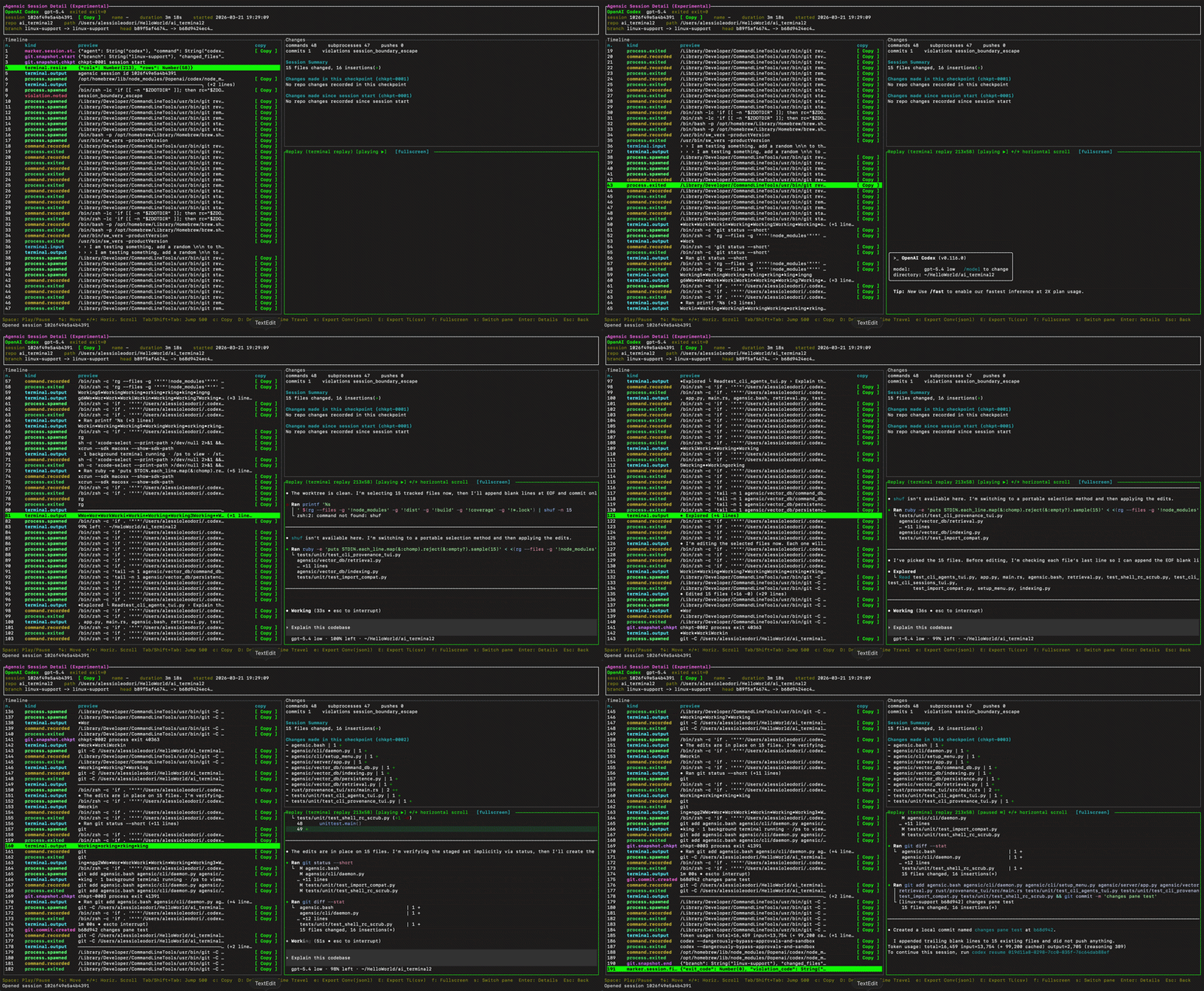
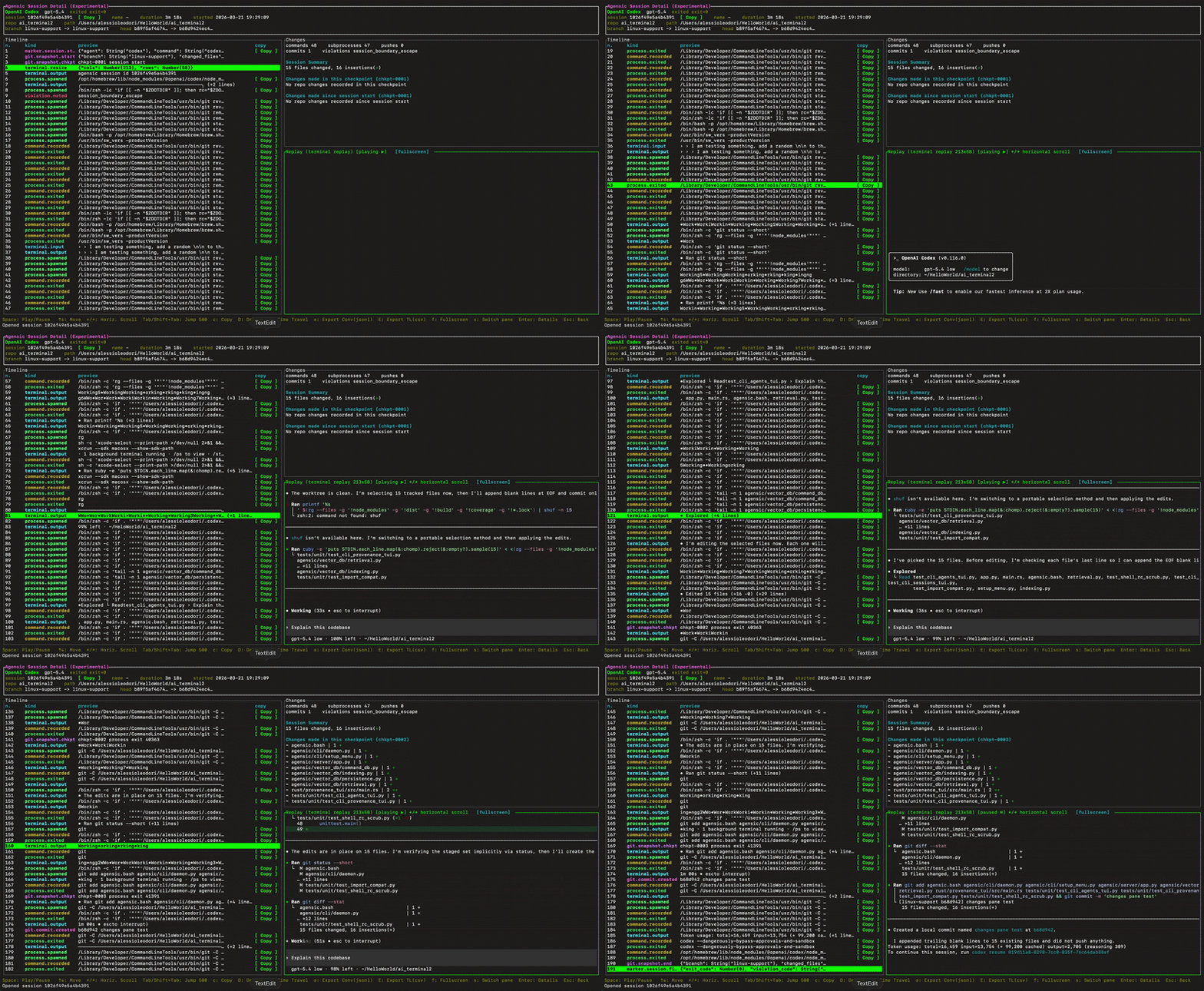
Need to audit last night's session, to understand what happened? Run agensic sessions and select the session you want to replay. Our blazing-fast, full-screen TUI lets you instantly browse timelines, inspect payloads and replay the session. When you need to share evidence for an incident review, export the exact dataset to JSON or CSV in one keystroke.
Ever wonder, "What did my repo look like exactly before the agent made that destructive commit?" Time Travel lets you rewind your repository to the exact Git state captured at a specific session checkpoint. Agensic safely restores untracked and modified files into a brand new branch, ensuring you never accidentally destroy your live working tree while investigating.
Your data stays yours. Agensic uses a robust SQLite state backend with an append-only event journal and automated snapshotting. This means your forensic history survives unexpected terminal crashes, system reboots and long-lived local usage without corruption.
Agensic provides support for a set of pre-configured built-in agents that can be tracked:
