 0xblackash/cve-2026-48908
CVE-2026-48908

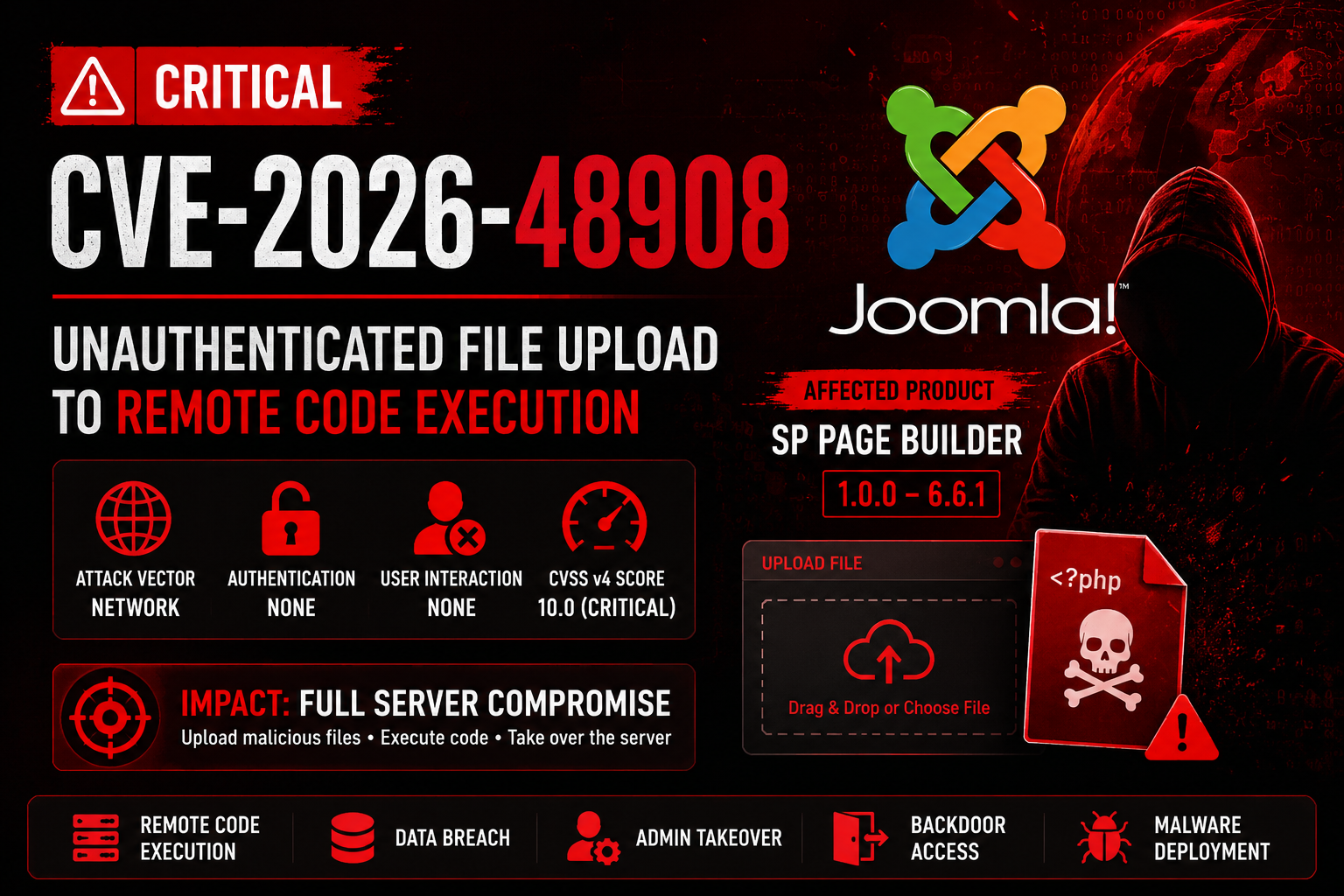



A critical vulnerability in SP Page Builder allows unauthenticated attackers to upload arbitrary files and achieve Remote Code Execution (RCE), potentially leading to full server compromise.
CVE-2026-48908 is a critical security vulnerability affecting SP Page Builder, a popular extension for Joomla.
The flaw stems from improper access control and insufficient validation within the file upload functionality, allowing attackers to upload malicious files without authentication.
Successful exploitation can result in:
| Attribute | Value |
|---|---|
| CVE ID | CVE-2026-48908 |
| Severity | Critical |
| CVSS v4 Score | 10.0 |
| Attack Vector | Network |
| Authentication Required | None |
| User Interaction | None |
| Complexity | Low |
| Impact | Full System Compromise |
Component:
SP Page Builder

Affected Versions:
1.0.0 → 6.6.1

Fixed Version:
6.6.2+
The vulnerability exists within:
asset.uploadCustomIcon
The upload mechanism does not properly enforce:
As a result, attackers can upload executable PHP files directly to the target server.
Watch for:
Unexpected PHP files in upload directories
Unknown administrator accounts
Suspicious POST requests
New scheduled tasks
Outbound connections to unknown hosts
Web shell artifacts
Upgrade SP Page Builder to 6.6.2 or newer
Search upload directories:
find . -type f -name "*.php"
Look for recently created files:
find . -mtime -7
Review web server logs:
grep "POST" access.log
| Category | Rating |
|---|---|
| Exploitability | ⭐⭐⭐⭐⭐ |
| Detection Difficulty | ⭐⭐ |
| Business Impact | ⭐⭐⭐⭐⭐ |
| Privileges Required | None |
| Internet Exposure Risk | Critical |
CVE-2026-48908 is a critical unauthenticated file upload vulnerability affecting SP Page Builder for Joomla. The flaw enables attackers to upload arbitrary executable files and achieve remote code execution, potentially resulting in complete compromise of the affected server.
Organizations using vulnerable versions should patch immediately and conduct a thorough compromise assessment.
Patch Immediately

