 0x36/ghidra_kernelcache
a Ghidra framework for iOS kernelcache reverse engineering

This framework is the end product of my experience in Kernelcache reverse engineering , I usually look for vulnerabilities by manually auditing the kernel and its extensions and have automated most of the things that I really wanted to see in Ghidra to speed up the process of reversing, and this has proven to be effective and saves a lot of time. The framework works on iOS 12/13/14/15 and on macOS 11/12 (both kernelcache and single KEXT) and has been made to the public with the intention to help people to start researching on iOS kernel without the struggle of preparing their own environment. As I believe, this framework (including the toolset it provides and with some basic knowledge of IOKit) is sufficient to start hacking into the Kernelcache.
The framework is entirely written in Python, and can be extended to build other tools, it provides some basic APIs which you can use in almost any project and save time from reading the verbose manual, you're welcome to read the core functionalities in utils/ directory.
Ghidra is good when it comes to analyzing Kernelcaches, but like other RE tools, it requires some manual work, ghidra_kernelcache provides a good entry point to fix things up at the start and even while doing reverse engineering, hence providing a good-looking decompiler output.
There is a similar project made by @_bazad in IDAPro called ida_kernelcache which provides a good entry point for researchers wanting to work with the kernel image in IDA, my framework looks a bit similar to Brandon's work, and goes beyond by providing much more features to make the process of working with the kernelcache less painful.
::externalMethod() and ::getTargetAndMethodForIndex().These features are made as a separated tools which can be executed either by key shortcuts or by clicking on their icons in the toolbar.
Clone the repository :
git clone https://github.com/0x36/ghidra_kernelcache.git
Important note: The project has been tested on Ghidra 10.1_PUBLIC and 10.2_DEV and it is not backward compatible.
Go to Windows → Script Manager, click on script Directory , then add ghidra_kernelcache to the directory path list.
Go to Windows → Script Manager, in scripts listing, go to iOS→kernel category and check the plugins seen there, they will appear in GHIDRA Toolbar .
in logos/ directory, you can put you own logos for each tool.
ghidra_kernelcache requires at the first stage iometa (made by @s1guza), a powerful tool providing C++ class information in the kernel binary, the great thing is that it works as a standalone binary, so the output can be imported to your favorite RE framework by just parsing it. My framework takes iometa's output and parses it to symbolicate and fix virtual tables.
After decompressing the kernel, run the following commands :
$ iometa -n -A /tmp/kernel A10-legacy.txt > /tmp/kernel.txt
# if you want also to symbolicate using jtool2
$ jtool2 --analyze /tmp/kernel
Load the kernelcache in Ghidra, DO NOT USE BATCH import , load it as Mach-O image.
After the Kernelcache being loaded and auto-analyzed, click on the icon shown in the toolbar or just press Meta-Shift-K, then put the full path of iometa output which is /tmp/kernel.txt in our case.
if you want to use jtool2 symbols, you can use jsymbol.py located iOS→kernel category as well.
Full API examples are in ghidra_kernelcache/kc.py
→ Here are some examples of manipulating class objects :
from utils.helpers import *
from utils.class import *
from utils.iometa import ParseIOMeta

ff = "/Users/mg/ghidra_ios/kernel.txt"
iom = ParseIOMeta(ff)
Obj = iom.getObjects()
kc = kernelCache(Obj)


# symbolicate the kernel
kc.process_all_classes()

# symbolicate the classes under com.apple.iokit.IOSurface bundle
kc.process_classes_for_bundle("com.apple.iokit.IOSurface")

# symbolicate the classes under __kernel__ bundle
kc.process_classes_for_bundle("__kernel__")

# Process one class (including its parents)
kc.process_class("IOGraphicsAccelerator2")

# Clears the content of the class structures (vtables are excluded)
kc.clear_class_structures()

# Overwrite the old vtable structure definition and resymbolicate it again
kc.update_classes_vtable()

# Reconstructing function call trees by enumerating all pac references and find their corresponding virtual method call
kc.explore_pac()
As you can see, you can fully or partially symbolicate the kernelcache, if partial symbolication was chosen, ghidra_kernelcache will automatically construct all class dependencies before proceeding.
If you run the script against the whole kernelcache (full symbolication), ghidra_kernelcache will take several minutes to analyze the kernel image.
One finished, Ghidra will provide the following :
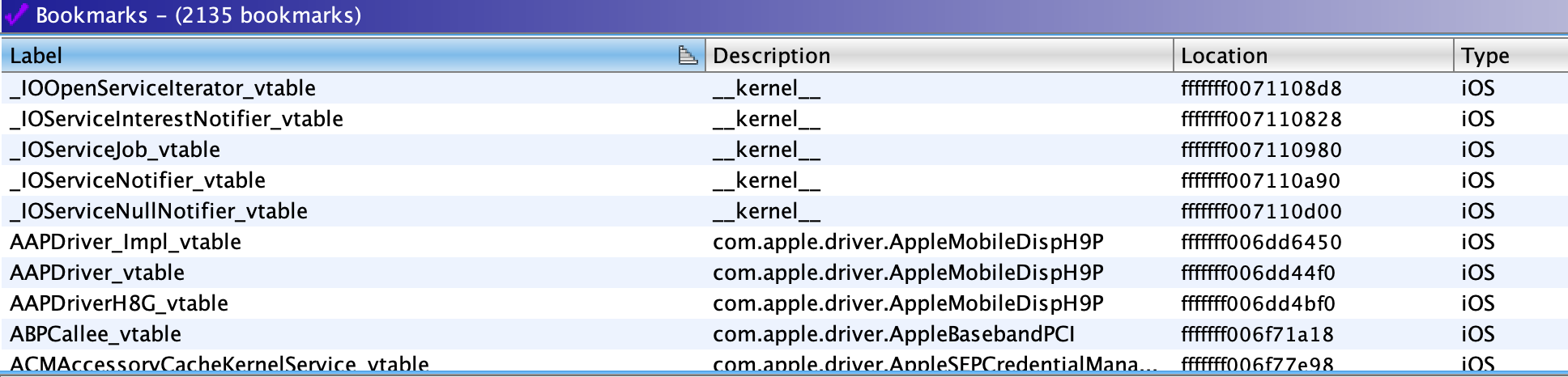
→ A new category has been added in Bookmark Filter called "iOS":
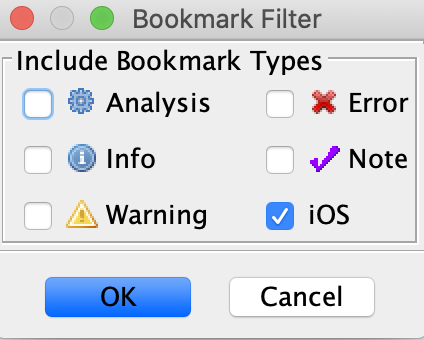
→ IOKit class virtual tables are added to 'iOS' Bookmark for better and faster virtual table lookup, you can just look for a kext or a class by providing letters, words or kext bundle in the search bar.
→ Fixing the virtual table : disassembles/compiles unknown code, fixes namespaces, re-symbolicates the class methods and applies function definition to each method:
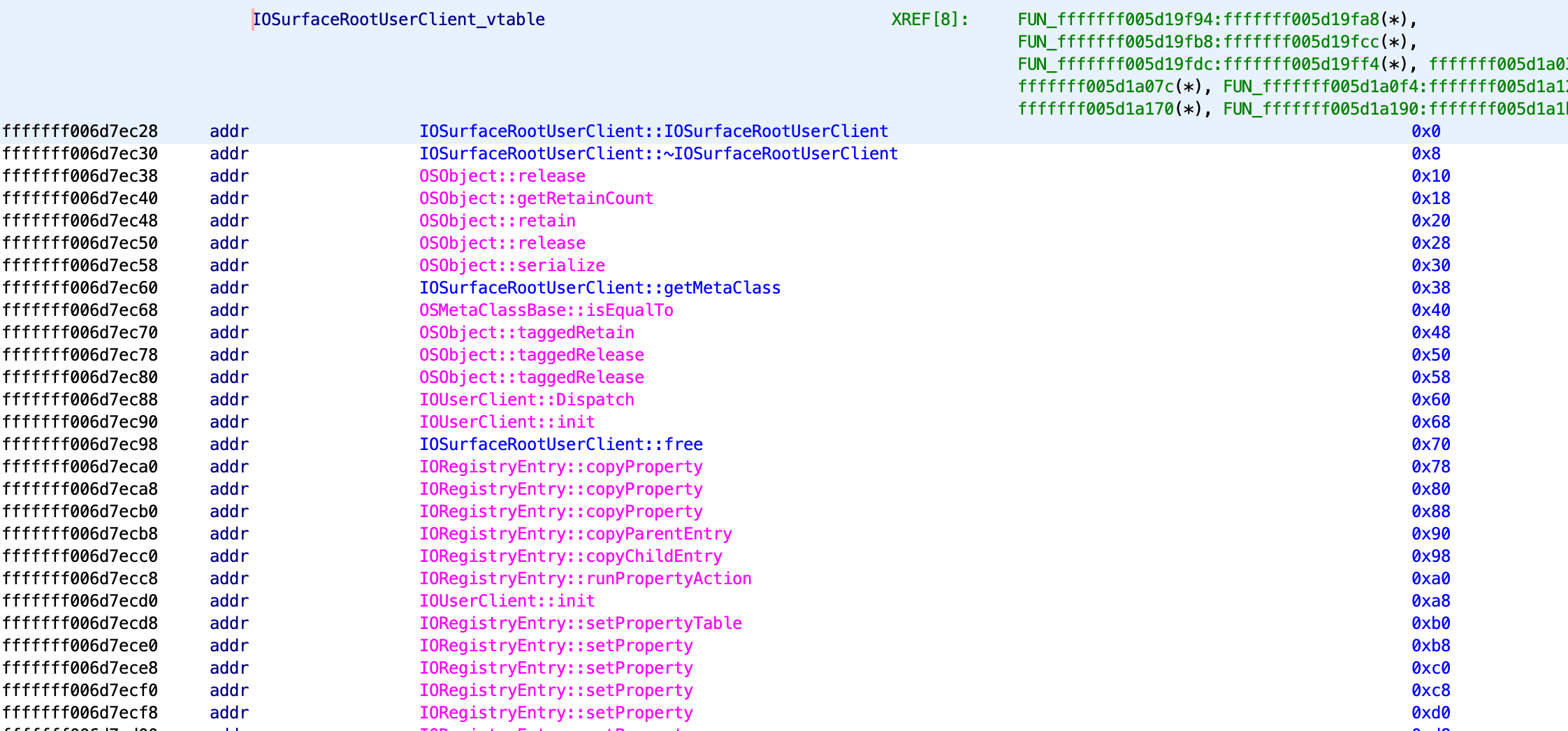
→ Creation of class namespaces and put each method to its own corresponding namespace:

→ Creating class structure with the respect of class hierarchy :

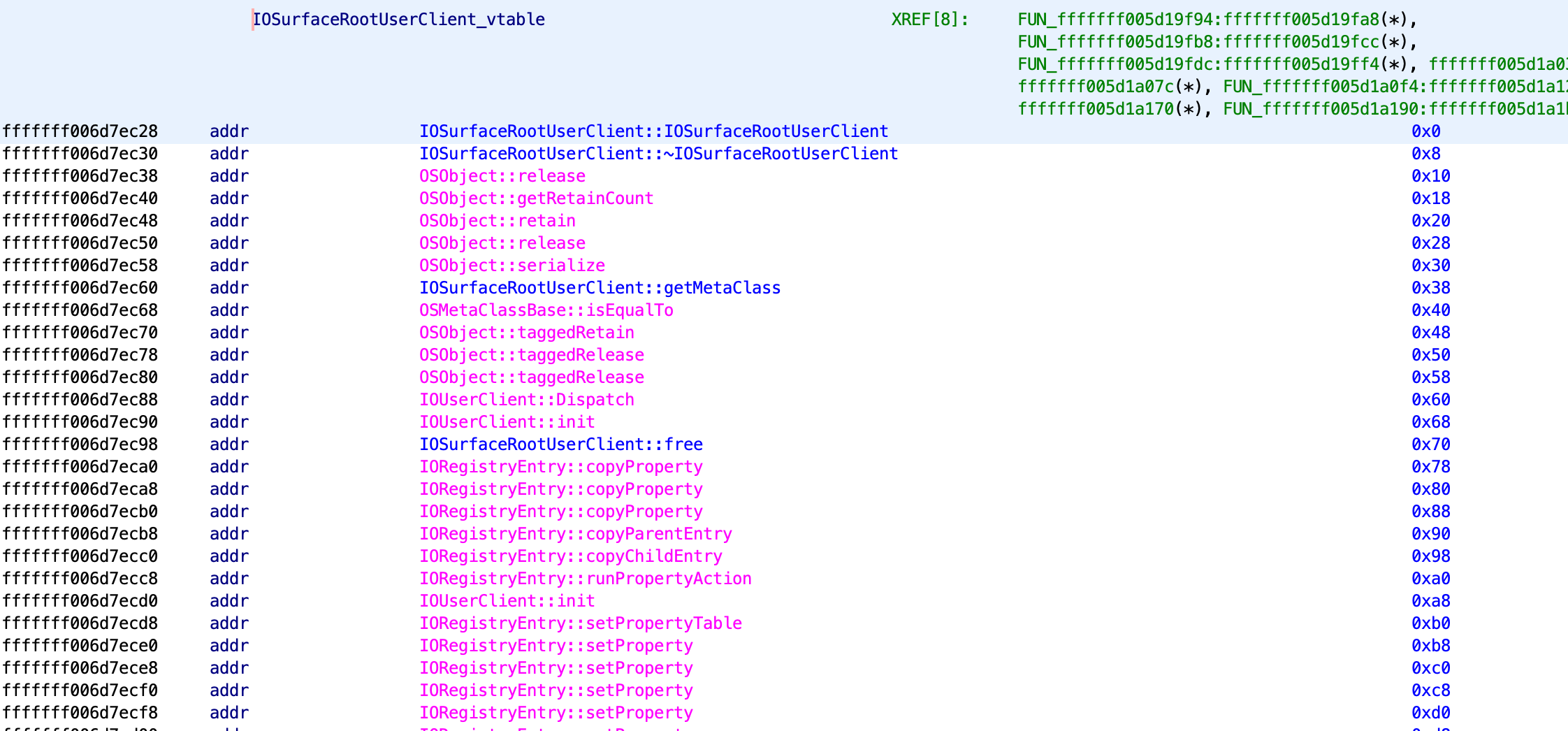
→ Creating class vtables, and each method has its own method definition for better decompilation output:
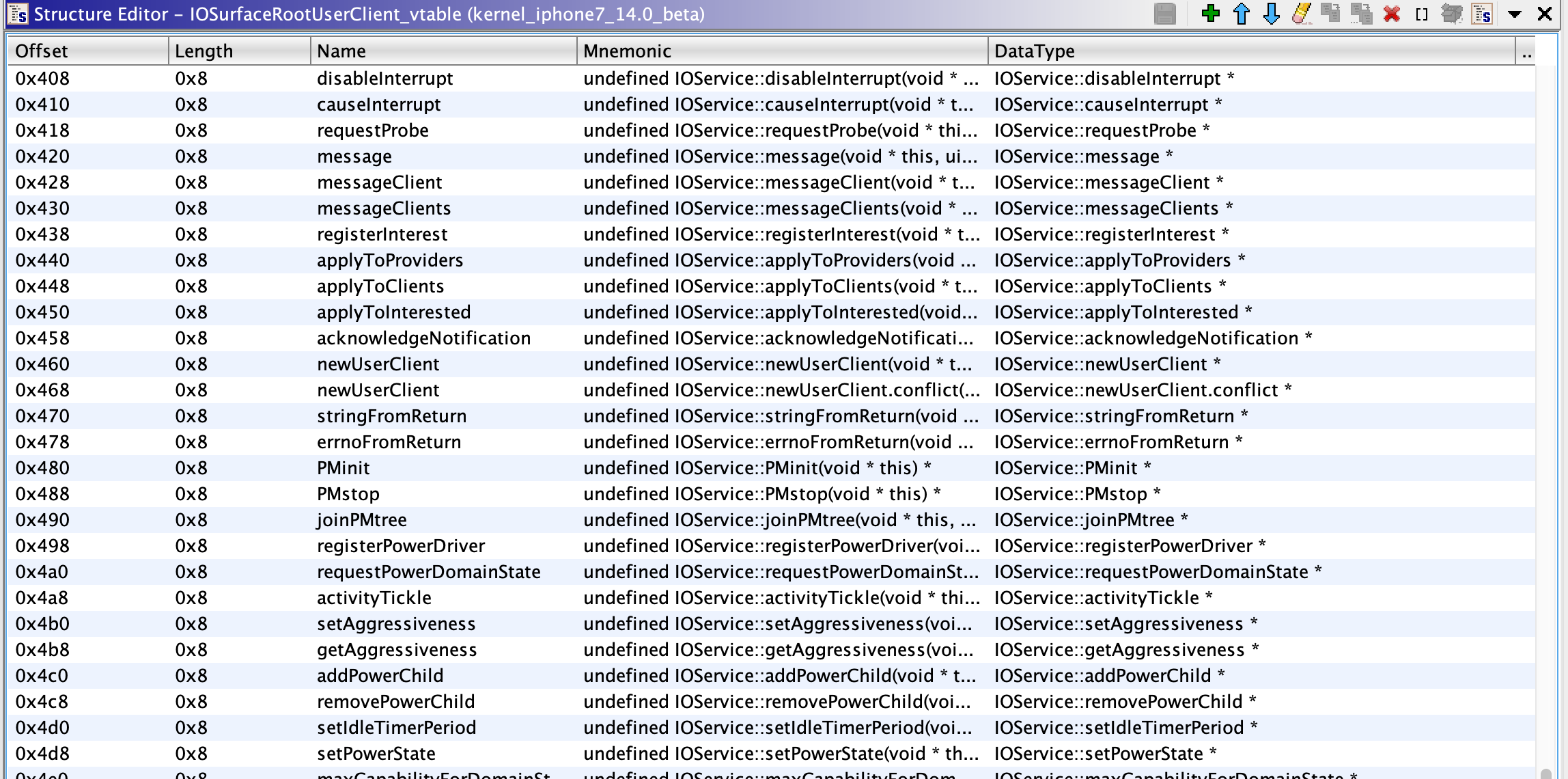
Full implementation can be found in utils/class.py.
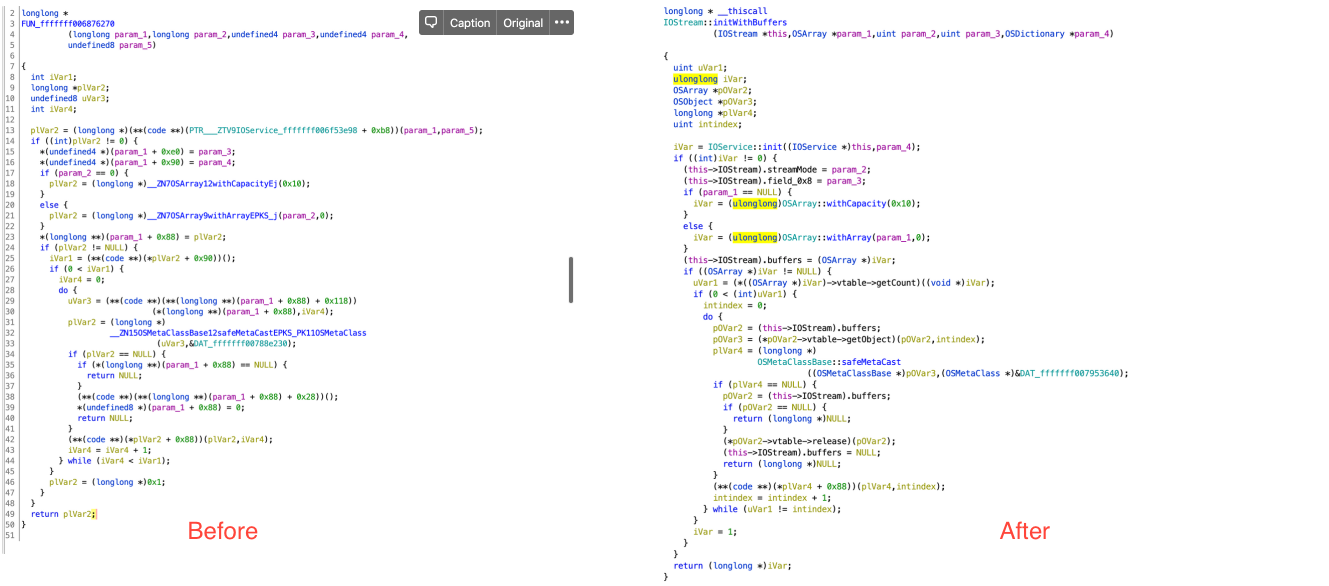
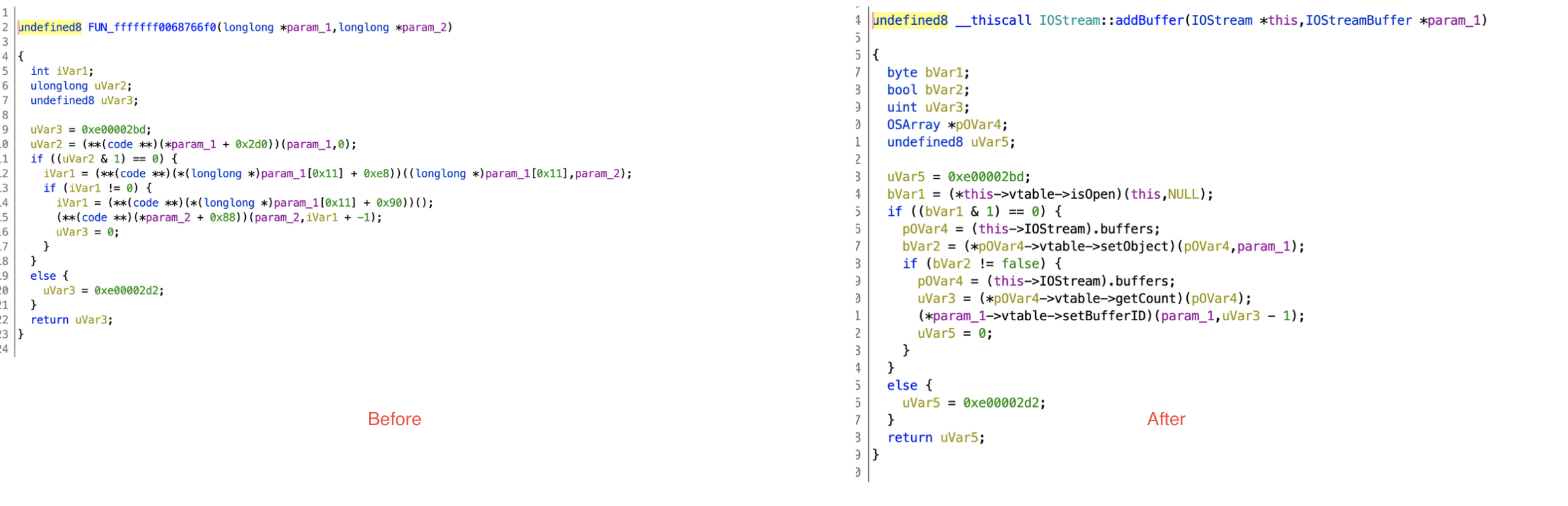
Here are some screenshots of before/after symbolicating using ghidra_kernelcache :