 p0dalirius/extractbitlockerkeys
Ein Systemadministrations- oder Post-Exploitation-Skript zum automatischen Extrahieren der BitLocker-Wiederherstellungsschlüssel aus einer Domäne.


Ein Systemadministrations- oder Post-Exploitation-Skript, um automatisch die BitLocker-Wiederherstellungsschlüssel aus einer Domäne zu extrahieren.



[!WARNING] Bitte speichern Sie dieses Backup nicht in einer Online-SMB-Freigabe der Domäne. Sie sollten es ausdrucken und physisch in einem verschlossenen Safe aufbewahren.
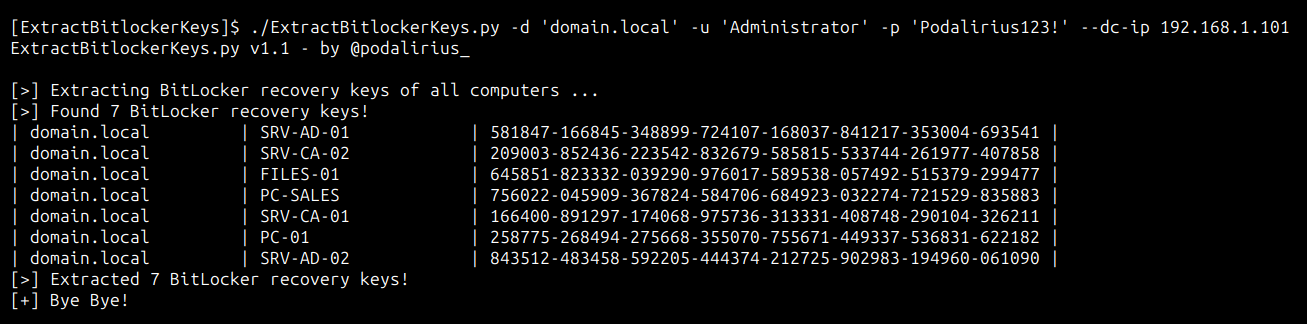
Um BitLocker-Wiederherstellungsschlüssel von allen Computern der Domäne domain.local zu extrahieren, können Sie diesen Befehl verwenden:
./ExtractBitlockerKeys.py -d 'domain.local' -u 'Administrator' -p 'Podalirius123!' --dc-ip 192.168.1.101
Sie erhalten die folgende Ausgabe:
Um BitLocker-Wiederherstellungsschlüssel von allen Computern der Domäne domain.local zu extrahieren, können Sie diesen Befehl verwenden:
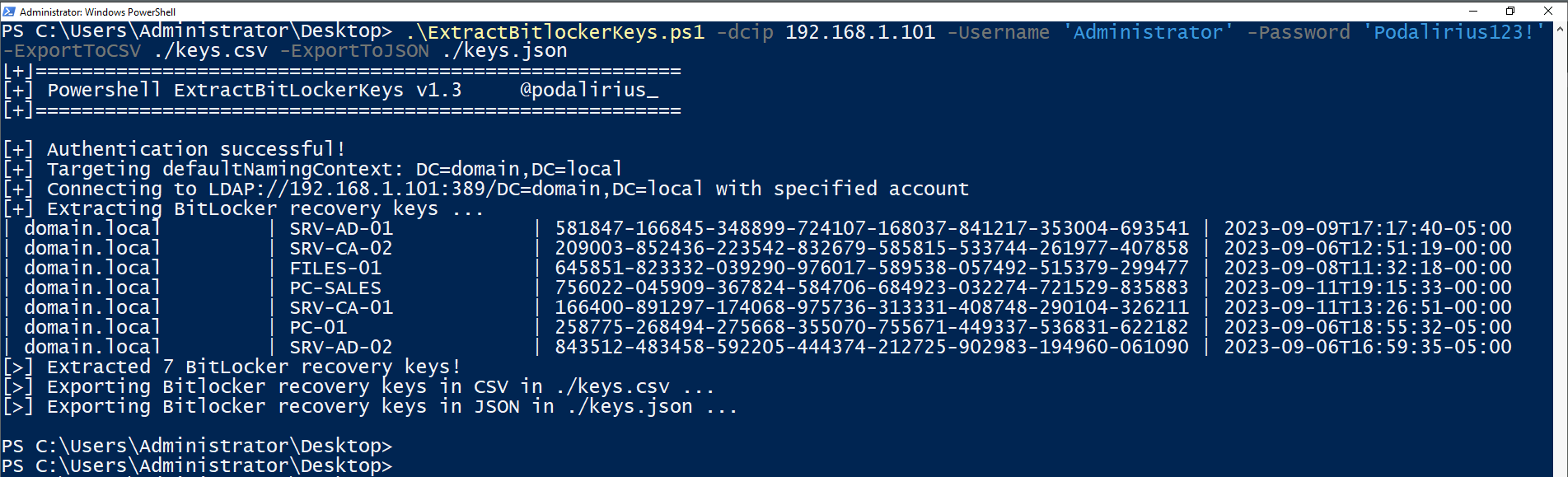
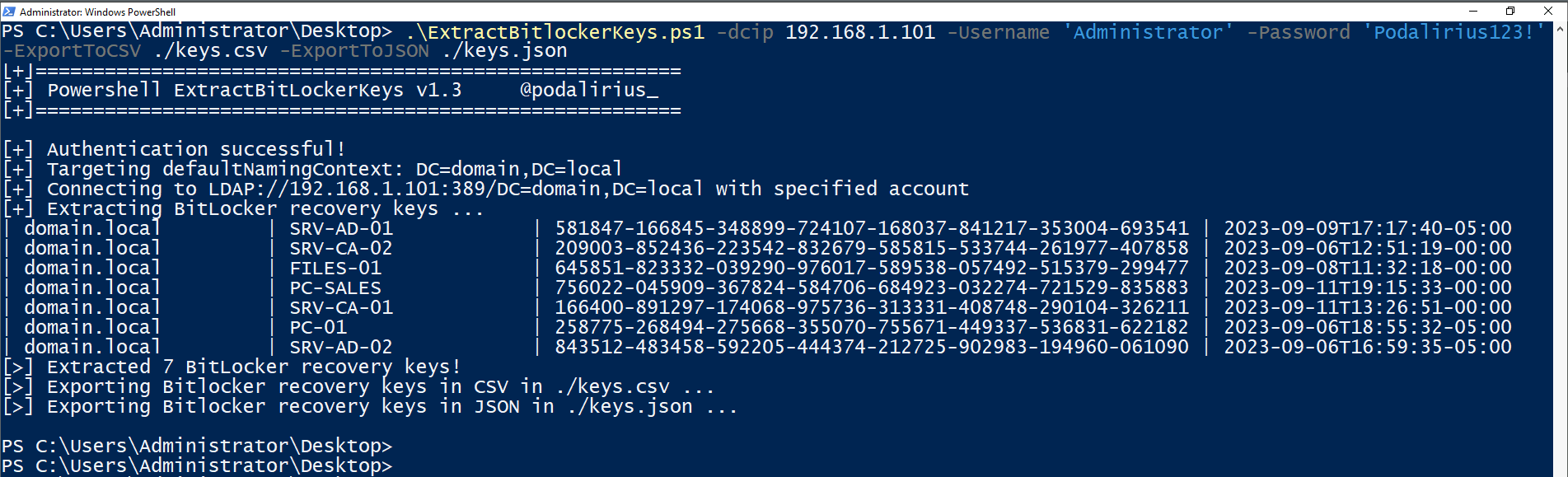
.\ExtractBitlockerKeys.ps1 -dcip 192.168.1.101 -ExportToCSV ./keys.csv -ExportToJSON ./keys.json
Sie erhalten die folgende Ausgabe:
$ ./ExtractBitlockerKeys.py -h
ExtractBitlockerKeys.py v1.1 - by Remi GASCOU (Podalirius)

usage: ExtractBitlockerKeys.py [-h] [-v] [-q] [-t THREADS] [--export-xlsx EXPORT_XLSX] [--export-json EXPORT_JSON] [--export-sqlite EXPORT_SQLITE] --dc-ip ip address [-d DOMAIN] [-u USER]
                               [--no-pass | -p PASSWORD | -H [LMHASH:]NTHASH | --aes-key hex key] [-k]

options:
  -h, --help            show this help message and exit
  -v, --verbose         Verbose mode. (default: False)
  -q, --quiet           Show no information at all.
  -t THREADS, --threads THREADS
                        Number of threads (default: 4).

Output files:
  --export-xlsx EXPORT_XLSX
                        Output XLSX file to store the results in.
  --export-json EXPORT_JSON
                        Output JSON file to store the results in.
  --export-sqlite EXPORT_SQLITE
                        Output SQLITE3 file to store the results in.

Authentication & connection:
  --dc-ip ip address    IP Address of the domain controller or KDC (Key Distribution Center) for Kerberos. If omitted it will use the domain part (FQDN) specified in the identity parameter
  -d DOMAIN, --domain DOMAIN
                        (FQDN) domain to authenticate to
  -u USER, --user USER  user to authenticate with

Credentials:
  --no-pass             Don't ask for password (useful for -k)
  -p PASSWORD, --password PASSWORD
                        Password to authenticate with
  -H [LMHASH:]NTHASH, --hashes [LMHASH:]NTHASH
                        NT/LM hashes, format is LMhash:NThash
  --aes-key hex key     AES key to use for Kerberos Authentication (128 or 256 bits)
  -k, --kerberos        Use Kerberos authentication. Grabs credentials from .ccache file (KRB5CCNAME) based on target parameters. If valid credentials cannot be found, it will use the ones specified in the command line.
Pull Requests sind willkommen. Erstellen Sie gerne ein Issue, wenn Sie weitere Funktionen hinzufügen möchten.
