 p0dalirius/ipsourcebypass
Este script Python pode ser usado para contornar restrições de origem de IP usando cabeçalhos HTTP.


Este script Python pode ser usado para contornar restrições de origem IP usando cabeçalhos HTTP.



--json outputfile.json.$ ./ipsourcebypass.py -h
[~] IP source bypass using HTTP headers, v1.2
usage: ipsourcebypass.py [-h] [-v] -i IP [-t THREADS] [-x PROXY] [-k] [-L] [-j JSONFILE] [-C] [-H HEADERS] [-S] url
This Python script can be used to test for IP source bypass using HTTP headers
positional arguments:
url e.g. https://example.com:port/path
optional arguments:
-h, --help show this help message and exit
-v, --verbose arg1 help message
-i IP, --ip IP IP to spoof.
-t THREADS, --threads THREADS
Number of threads (default: 5)
-x PROXY, --proxy PROXY
Specify a proxy to use for requests (e.g., http://localhost:8080)
-k, --insecure Allow insecure server connections when using SSL (default: False)
-L, --location Follow redirects (default: False)
-j JSONFILE, --jsonfile JSONFILE
Save results to specified JSON file.
-C, --curl Generate curl commands for each request.
-H HEADERS, --header HEADERS
arg1 help message
-S, --save Save all HTML responses.
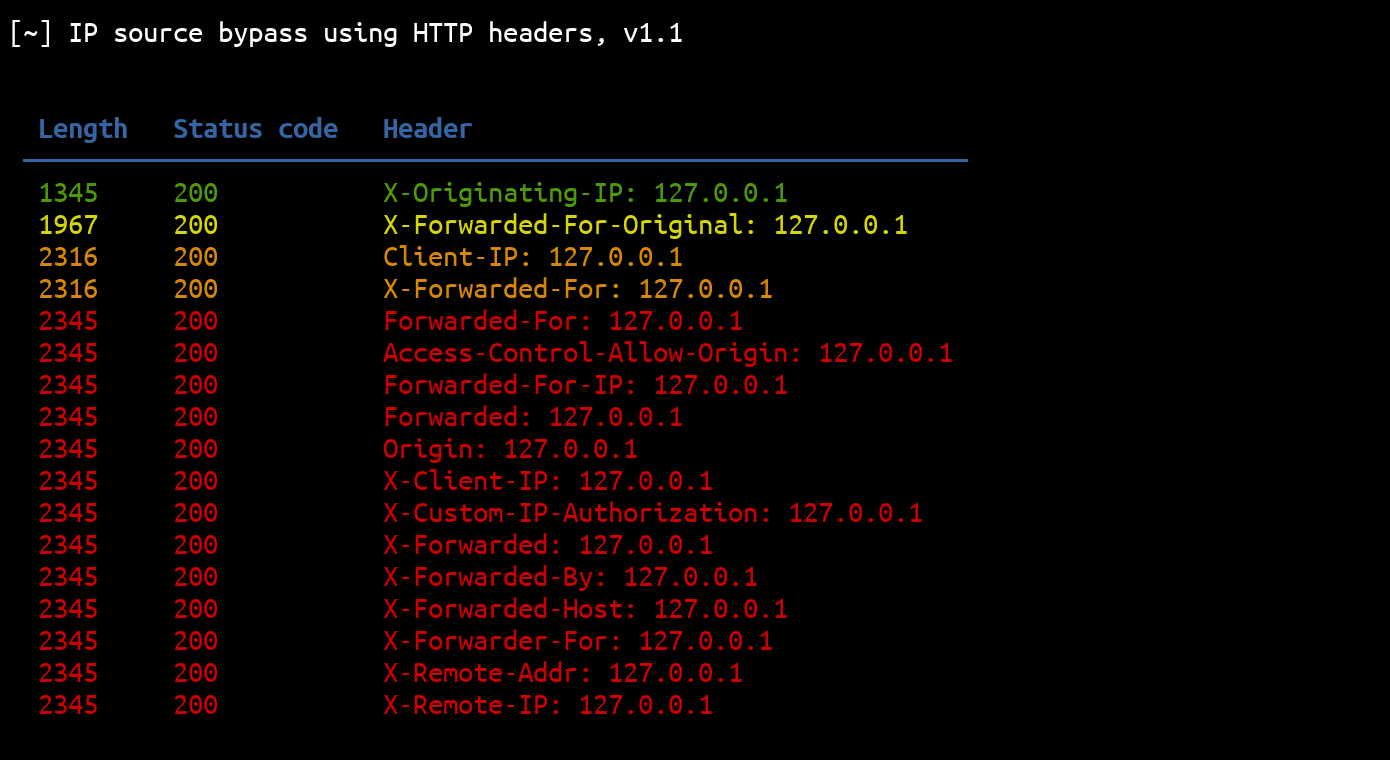
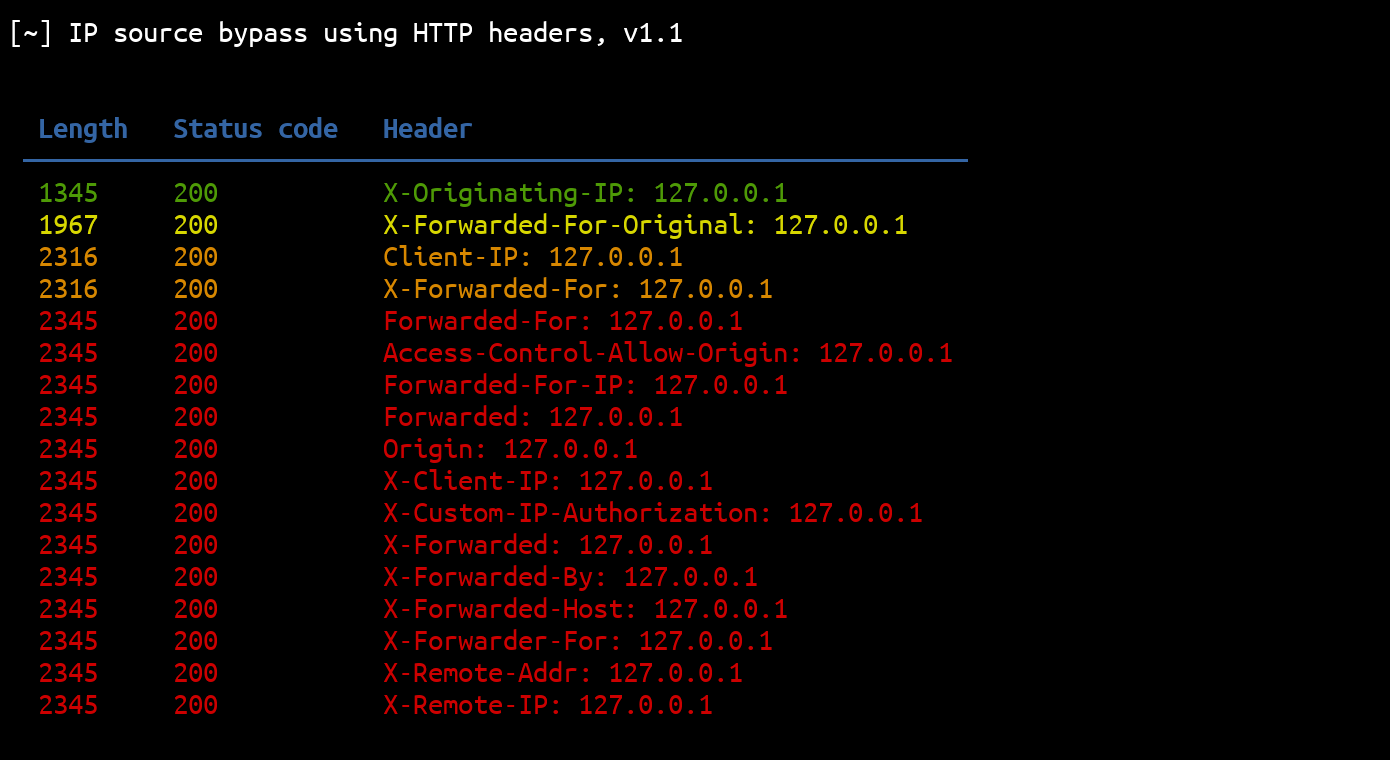
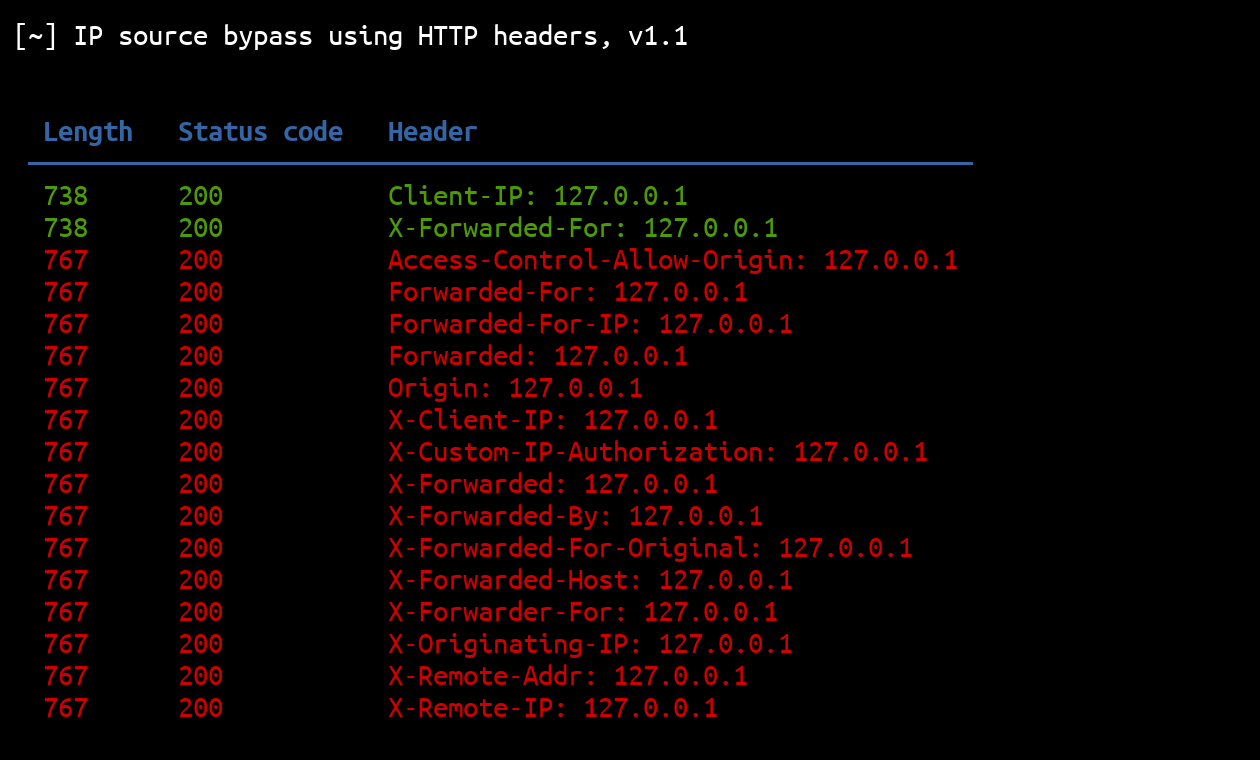
Os resultados são ordenados pela singularidade do comprimento da resposta. Isso significa que os resultados com comprimento de resposta único estarão no topo, e os resultados com comprimento de resposta ocorrendo várias vezes no final:
| Dois comprimentos de resultado diferentes | Quatro comprimentos de resultado diferentes |
|---|---|
 | |
Pull requests são bem-vindos. Sinta-se à vontade para abrir uma issue se quiser adicionar outras funcionalidades.
