
Skip to content
KitploitKITPLOIT
FerramentasBlog
Enviar
FerramentasBlog
Enviar

Ferramentas de Hacking, PenTest e Cibersegurança para o seu Arsenal de Segurança!

Kitploit é um diretório de ferramentas de hacking, cibersegurança e pentesting. Descubra as últimas atualizações de projetos para encontrar vulnerabilidades, analisar sistemas, automatizar testes e fortalecer sua segurança.

··Feeds·Contato·Privacidade·© 2026 Kitploit

Diretório de Ferramentas

Categorias

Ver todas as categorias
Loading categories
telegram-phish-simulator — Educational Telegram phishing simulation for cybersecurity training and awareness. Demonstrates credential harvesting via fake login pages in isolated lab environments. | Kitploit
Ferramentas/GitHubGitHub/maty156/telegram-phish-simulator
Phishing ToolsPassword AttacksInformation GatheringPhishingPenetration TestingSocial EngineeringLearning & EducationRed TeamingLabs & Practice

Mais Populares

Ver todos →

Descubra as ferramentas mais usadas pela nossa comunidade.

Explore todas as ferramentas

Navegue pela nossa coleção de ferramentas

Ver todas as ferramentas →
Compartilhar
GitHubmaty156/telegram-phish-simulator

telegram-phish-simulator

Educational Telegram phishing simulation for cybersecurity training and awareness. Demonstrates credential harvesting via fake login pages in isolated lab environments.

Ver Repositório
24há 13 diasAinda não revisado
Conteúdo não disponível no idioma solicitado. Mostrando versão em inglês.

⚠️ Telegram Phishing Simulator – Educational Security Tool

DO NOT USE THIS CODE FOR ILLEGAL ACTIVITIES. This repository is a simulation built for cybersecurity education, awareness, and authorized lab-based testing only.

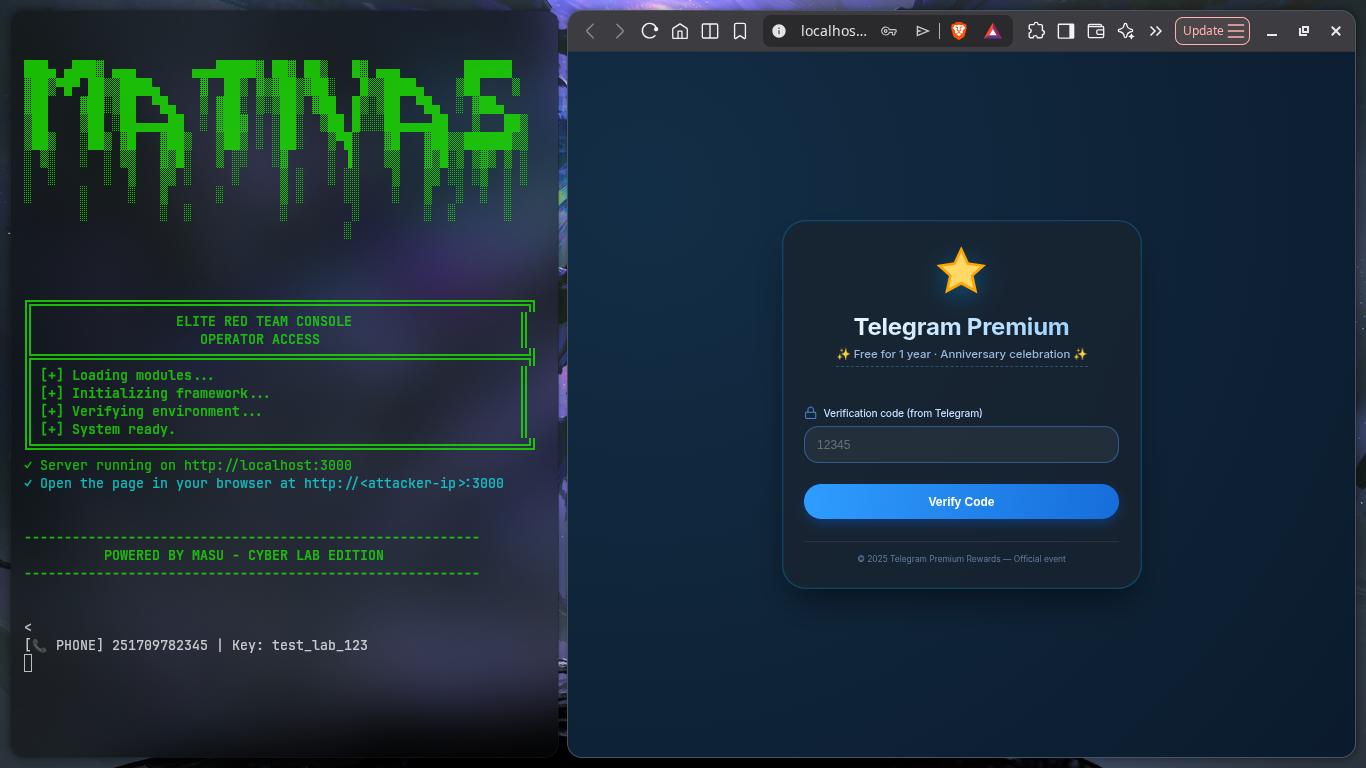
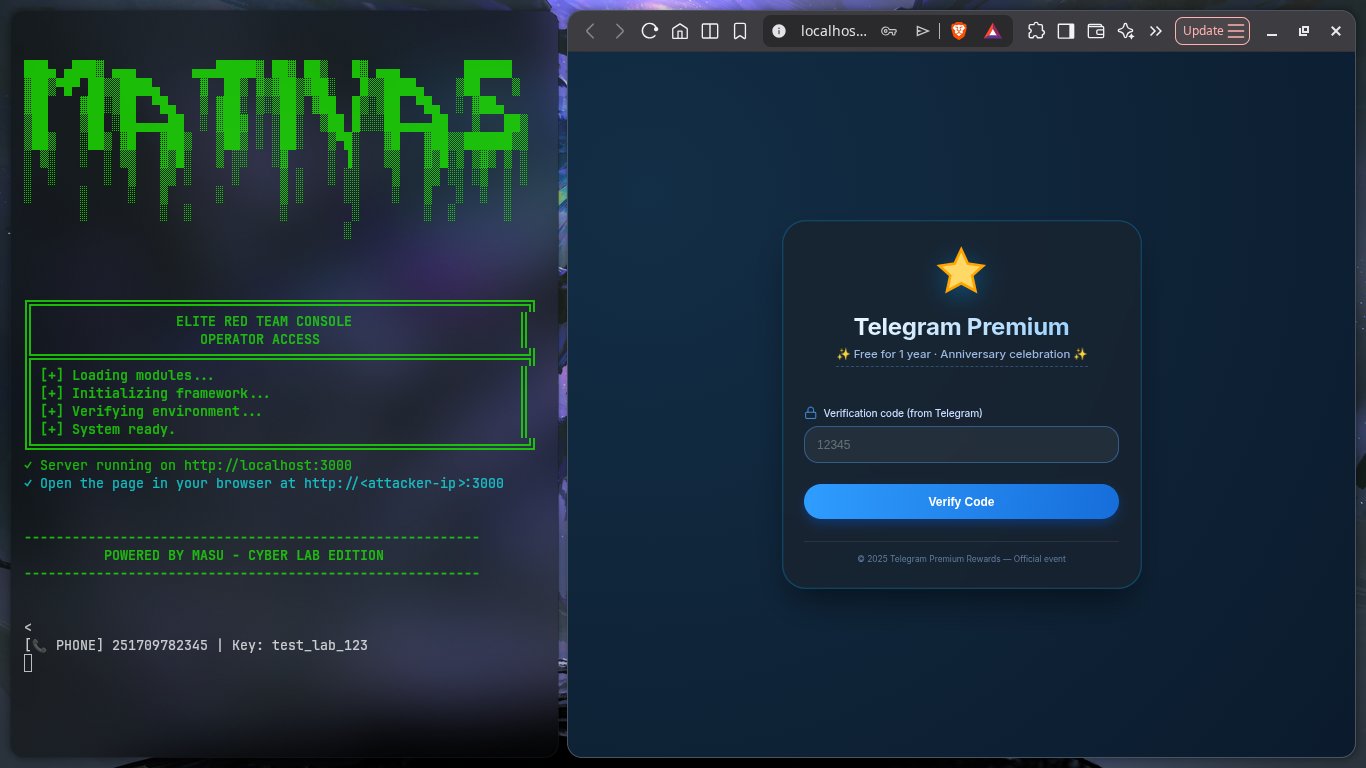
Telegram Phishing Simulation Demo


📚 Table of Contents

  • About
  • Contents
  • Safe Lab Setup
  • How to Run
  • Simulated Attack Flow
  • Defense Guidance
  • Ethical Use
  • License

🎯 About

This project demonstrates a Telegram phishing simulation that is intended for:

  • cybersecurity training,
  • phishing awareness exercises,
  • defensive research,
  • authorized penetration testing in isolated environments.

It shows how attackers can use fake “Free Premium” offers to harvest phone numbers, capture verification codes, and request 2FA passwords.

This repository is not intended for real phishing or account takeover. It does not connect to Telegram’s live API.


📁 Contents


🧰 Safe Lab Setup

Use this tool only in a controlled environment.

Requirements

  • Virtual machine software such as VirtualBox or VMware.
  • Two isolated VMs: one attacker host and one victim host.
  • A private network between the VMs.
  • No public deployment or live user interaction.

Recommended installation

root@kitploit:~
sudo apt update && sudo apt install -y nodejs npm
cd /home/youruser
git clone https://github.com/Maty156/telegram-phish-simulator.git
cd telegram-phish-simulator
npm install

Network guidance

  • Use a host-only or NAT network so traffic stays inside your lab.
  • Confirm the victim VM can reach the attacker VM IP.
  • Do not expose the service to the public internet.

⚡ Quick Start

  1. Install Node.js and npm on the attacker VM.
  2. Clone the repository and install dependencies.
  3. Start server.js on the attacker VM.
  4. Open the victim VM browser to http://<attacker-ip>/.
  5. Submit the test values and observe the output on the attacker VM.

🚀 How to Run

  1. Start the mock server on the attacker VM:

    root@kitploit:~
    npm install
    
    npm start
    
  2. From the victim VM, open the phishing page in a browser:

    root@kitploit:~
    http://<attacker-ip>:3000/
    
  3. Use the page to submit a phone number, verification code, and optional password.

  4. Observe the logged output on the attacker VM and in stolen_credentials.log.

The server is a simulation and does not perform real Telegram authentication.


🧠 Simulated Attack Flow

This simulator models the phishing phases used in credential capture:

  1. Phone number harvesting
    • The victim enters a phone number into the fake page.
    • The number is posted to the attacker-controlled backend.
  2. Verification code interception
    • The victim enters a 6-digit code.
    • The code is posted to the mock backend.
  3. 2FA password capture
    • If enabled, the victim is prompted for a password.
    • The password is captured locally.

The backend records all values to the terminal and stolen_credentials.log.


🛡️ Defense Guidance

Protecting against this type of phishing includes:

  • Enabling Telegram two-step verification.
  • Avoiding unsolicited “free premium” offers.
  • Verifying URLs before entering credentials.
  • Using password managers to prevent autofill on fake sites.
  • Monitoring active Telegram sessions and terminating unknown devices.
  • Educating users about social engineering and phishing techniques.

⚖️ Ethical Use

Use this repository only for defensive, educational, and authorized testing.

  • Do not use it to target real people.
  • Do not deploy it on the public internet.
  • Do not connect it to Telegram’s real APIs.
  • Do not use it without explicit permission from the environment owner.

The author is not responsible for misuse.


📄 License

This project is licensed under the MIT License. See the included LICENSE file for full terms.

  • This license allows reuse, modification, and distribution.
  • It does not provide any warranty.

Use this repository only for educational, defensive, and authorized testing.

Baixar ferramenta
FileDescription
public/index.htmlPhishing page UI used for the simulation.
public/assets/Supporting static assets used by the demo page.
server.jsMock backend that logs submitted values locally.
package.jsonNode project metadata and dependencies.
README.mdProject documentation.
LICENSEProject license terms.
.gitignoreFiles and directories excluded from Git tracking.