 epi052/feroxfuzz
Construa fuzzers HTTP black-box cientes de estrutura em Rust com mutadores, escalonadores, observadores, decisores e processadores componíveis para testes personalizados de web e API.







Relaxa, não é outra ferramenta de linha de comando, essa aqui é uma biblioteca! 😁
Mais especificamente, o FeroxFuzz é uma biblioteca de fuzzing HTTP ciente de estrutura.
O objetivo principal ao escrever o FeroxFuzz foi mover algumas partes centrais do feroxbuster para um lugar onde pudessem ser geralmente úteis para outras pessoas. Ao fazer isso, minha esperança é que qualquer pessoa que queira escrever ferramentas web e/ou fuzzers web de uso único em Rust possa fazê-lo com o mínimo de esforço.
O design geral do FeroxFuzz é derivado do LibAFL. O FeroxFuzz implementa a maioria dos componentes listados em LibAFL: A Framework to Build Modular and Reusable Fuzzers (pre-print). Quando o FeroxFuzz se desvia, normalmente é para dar suporte a código assíncrono.
Semelhante ao LibAFL, o FeroxFuzz é uma biblioteca de fuzzing componível. No entanto, diferente do LibAFL, o FeroxFuzz é focado exclusivamente em fuzzing HTTP de caixa preta.
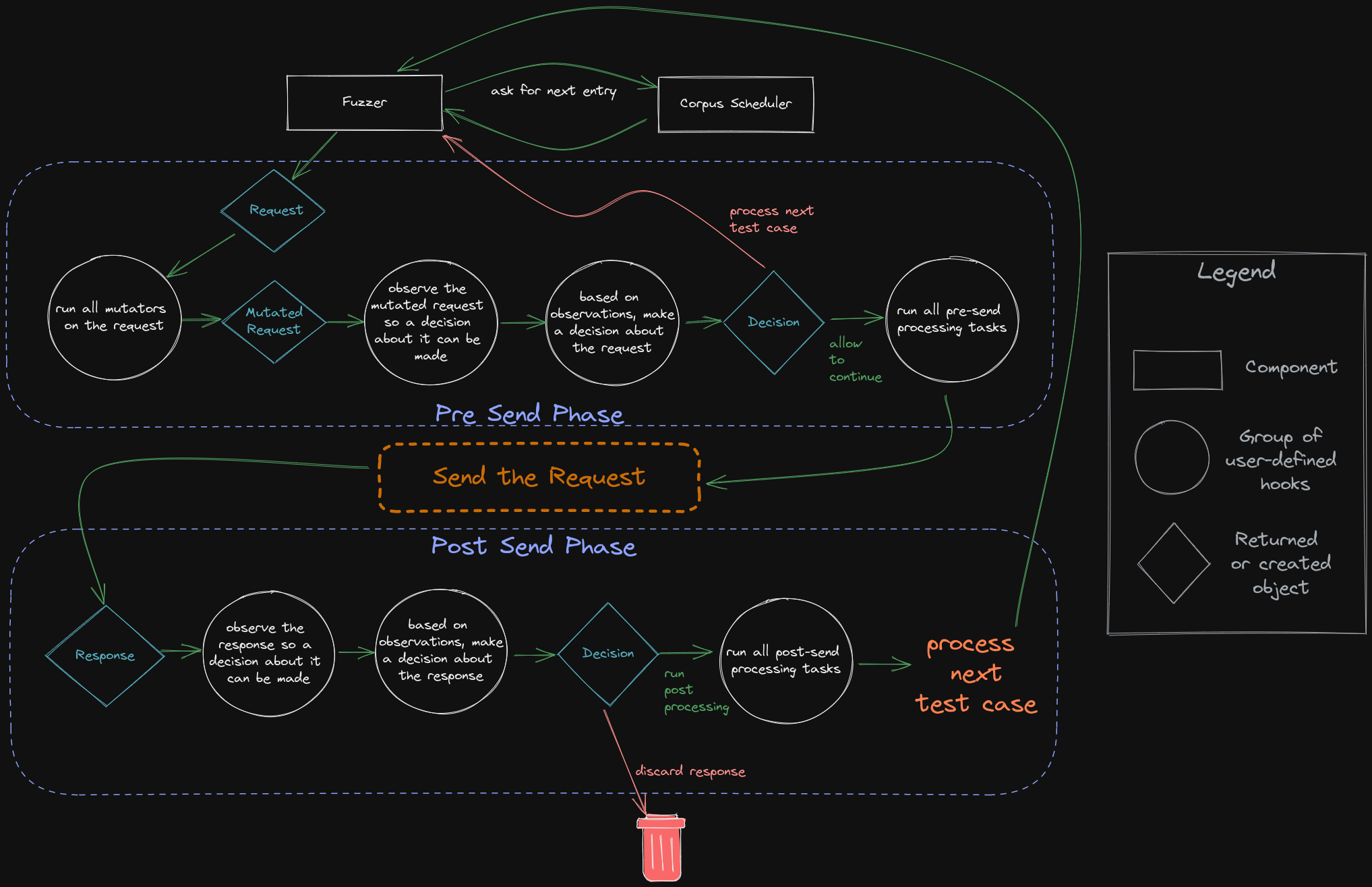
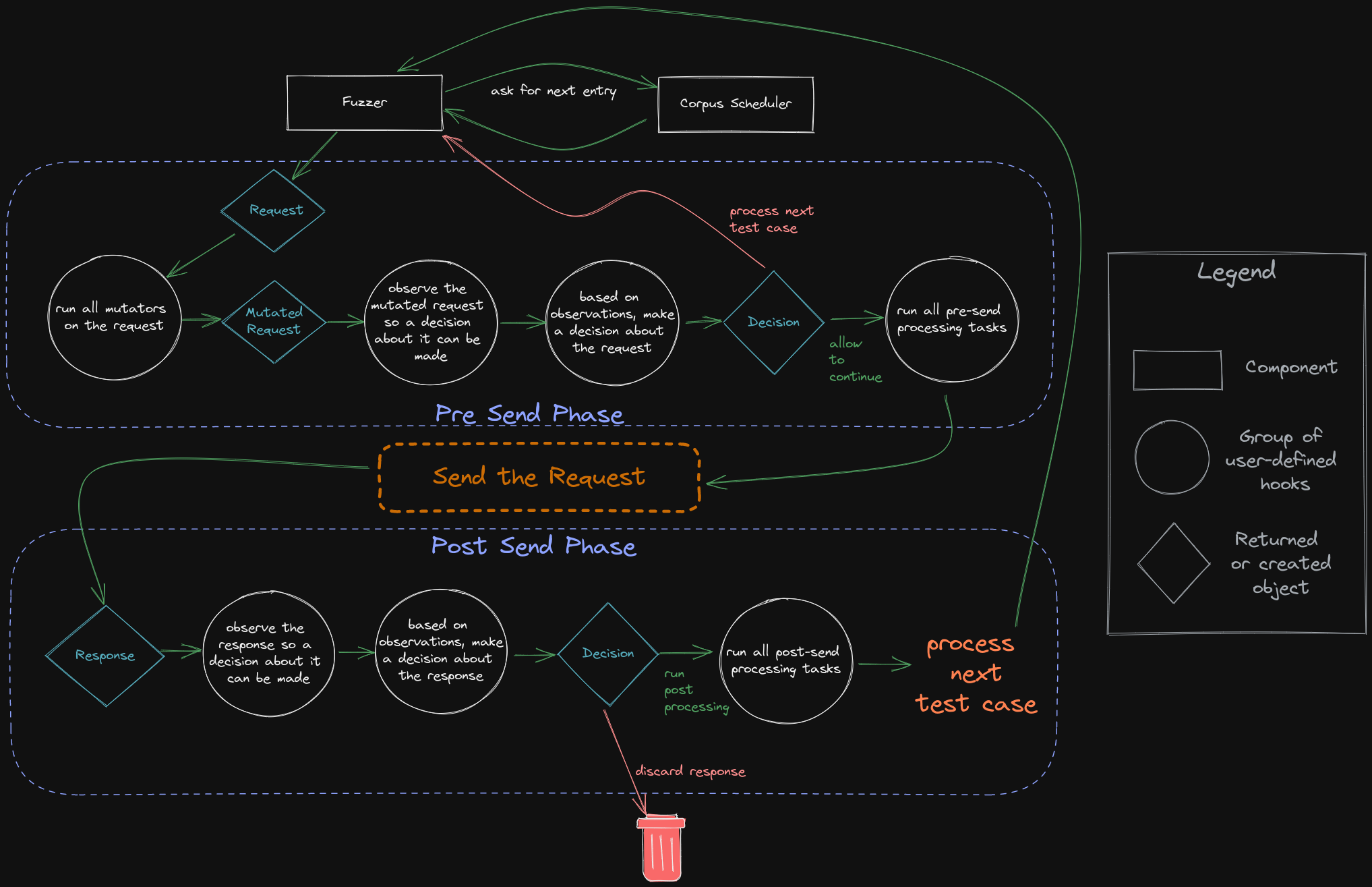
Abaixo está uma representação visual dos diferentes componentes, hooks e fluxo de controle utilizados pelo FeroxFuzz.
O FeroxFuzz é muito capaz e foi feito para atender a todas as minhas necessidades planejadas para um novo feroxbuster. No entanto, ainda espero que a API do FeroxFuzz mude, pelo menos um pouco, à medida que o trabalho na nova versão do feroxbuster começar.
Até que a API se solidifique, mudanças disruptivas podem vão ocorrer.
A maneira mais fácil de começar é incluir o FeroxFuzz no Cargo.toml do seu projeto.
[dependencies]
feroxfuzz = { version = "1.0.0-rc.13" }
Além da pasta examples/, a documentação da API possui documentação extensa dos componentes junto com exemplos de uso.
O exemplo abaixo (examples/async-simple.rs) mostra o mínimo necessário para escrever um fuzzer usando o FeroxFuzz.
Se estiver usando o código-fonte, o exemplo pode ser executado a partir do diretório feroxfuzz/ usando o seguinte comando:
observação: a menos que você tenha um servidor web rodando na sua máquina @ porta 8000, você precisará alterar o alvo passado em
Request::from_url
cargo run --example async-simple
#[tokio::main]
async fn main() -> Result<(), Box<dyn std::error::Error>> {
    // create a new corpus from the given list of words
    let words = Wordlist::from_file("./examples/words")?
        .name("words")
        .build();

    // pass the corpus to the state object, which will be shared between all of the fuzzers and processors
    let mut state = SharedState::with_corpus(words);

    // bring-your-own client, this example uses the reqwest library
    let req_client = reqwest::Client::builder().build()?;

    // with some client that can handle the actual http request/response stuff
    // we can build a feroxfuzz client, specifically an asynchronous client in this
    // instance.
    //
    // feroxfuzz provides both a blocking and an asynchronous client implementation
    // using reqwest.
    let client = AsyncClient::with_client(req_client);

    // ReplaceKeyword mutators operate similar to how ffuf/wfuzz work, in that they'll
    // put the current corpus item wherever the keyword is found, as long as its found
    // in data marked fuzzable (see ShouldFuzz directives below)
    let mutator = ReplaceKeyword::new(&"FUZZ", "words");

    // fuzz directives control which parts of the request should be fuzzed
    // anything not marked fuzzable is considered to be static and won't be mutated
    //
    // ShouldFuzz directives map to the various components of an HTTP request
    let request = Request::from_url(
        "http://localhost:8000/?admin=FUZZ",
        Some(&[ShouldFuzz::URLParameterValues]),
    )?;

    // a `StatusCodeDecider` provides a way to inspect each response's status code and decide upon some Action
    // based on the result of whatever comparison function (closure) is passed to the StatusCodeDecider's
    // constructor
    //
    // in plain english, the `StatusCodeDecider` below will check to see if the request's http response code
    // received is equal to 200/OK. If the response code is 200, then the decider will recommend the `Keep`
    // action be performed. If the response code is anything other than 200, then the recommendation will
    // be to `Discard` the response.
    //
    // `Keep`ing the response means that the response will be allowed to continue on for further processing
    // later in the fuzz loop.
    let decider = StatusCodeDecider::new(200, |status, observed, _state| {
        if status == observed {
            Action::Keep
        } else {
            Action::Discard
        }
    });

    // a `ResponseObserver` is responsible for gathering information from each response and providing
    // that information to later fuzzing components, like Processors. It knows things like the response's
    // status code, content length, the time it took to receive the response, and a bunch of other stuff.
    let response_observer: ResponseObserver<AsyncResponse> = ResponseObserver::new();
