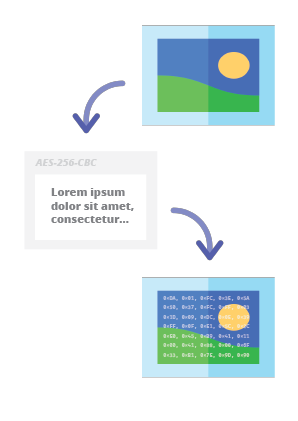
 pelock/steganography-online-codec-javascript
स्टेग्नोग्राफ़िक ऑनलाइन कोडेक आपको AES एन्क्रिप्शन एल्गोरिदम का उपयोग करके 256-बिट PBKDF2 व्युत्पन्न कुंजी के साथ छवियों और फ़ोटो के भीतर पासवर्ड-एन्क्रिप्टेड संदेश छिपाने की अनुमति देता है।

स्टेग्नोग्राफिक ऑनलाइन कोडेक आपको AES एन्क्रिप्शन एल्गोरिदम के साथ 256-बिट PBKDF2 व्युत्पन्न कुंजी का उपयोग करके छवियों और फ़ोटो के भीतर पासवर्ड-एन्क्रिप्टेड संदेश छिपाने की अनुमति देता है।
आप इसे निःशुल्क उपयोग कर सकते हैं:
https://www.pelock.com/products/steganography-online-codec
यह SDK WebAPI इंटरफ़ेस के माध्यम से कोडेक और इसके एन्कोडिंग और डिकोडिंग फ़ंक्शन तक प्रोग्रामिंग पहुंच प्रदान करता है।
स्टेग्नोग्राफी एक शब्द है जो अन्य, प्रतीत होने वाली हानिरहित छवि फ़ाइलों के भीतर संदेशों को एम्बेड करके जानकारी छिपाने की कला और विज्ञान का वर्णन करता है।
इस मामले में, एन्क्रिप्टेड छिपे हुए संदेश के अलग-अलग बिट्स को चयनित छवि के पिक्सेल में RGB रंग घटकों में सबसे कम महत्वपूर्ण (LSB) बिट्स के रूप में सहेजा जाता है।
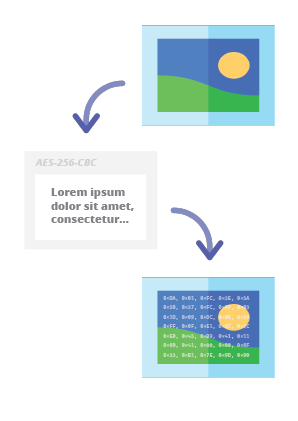
हमारे स्टेग्नोग्राफिक एन्कोडर के साथ आप किसी भी टेक्स्ट संदेश को छवि में सुरक्षित तरीके से छिपा सकेंगे और बिना किसी संदेह के भेज सकेंगे। वैध डिक्रिप्शन पासवर्ड प्रदान करने के बाद ही संदेश को पढ़ना संभव होगा।
Web API SDK स्थापना का पसंदीदा तरीका NPM (Node Package Manager) के माध्यम से है।
चलाएं:
npm i steganography-online-codec
या यह प्रविष्टि जोड़ें:
  "dependencies": {
    "steganography-online-codec": "latest"
  },
सीधे अपने package.json में dependencies अनुभाग में।
स्थापना पैकेज https://www.npmjs.com/package/steganography-online-codec पर उपलब्ध है
स्थापना पैकेज कई लोकप्रिय प्रोग्रामिंग भाषाओं के रिपॉजिटरी में अपलोड किए गए हैं और उनके स्रोत कोड GitHub पर प्रकाशित किए गए हैं:
| रिपॉजिटरी | भाषा | स्थापना | पैकेज | GitHub |
|---|---|---|---|---|
 | Python | चलाएं pip install steganography-online-codec | PyPI | स्रोत |
 | JavaScript, TypeScript | चलाएं npm i steganography-online-codec या package.json में dependencies के अंतर्गत "steganography-online-codec": "latest" जोड़ें | NPM | स्रोत |
 | Rust | चलाएं cargo add steganography-online-codec या Cargo.toml में steganography-online-codec = "1" जोड़ें (वैकल्पिक: अप्रकाशित या वेंडर किए गए बिल्ड के लिए git / path) | crates.io | स्रोत |
यदि आप Python मॉड्यूल का उपयोग नहीं करना चाहते हैं, तो आप सीधे फ़ाइल से आयात कर सकते हैं:
from pelock.steganography_online_codec import *
"use strict";

/******************************************************************************
 *
 * Steganography Online Codec WebApi interface usage example.
 *
 * In this example shows how to hide an encrypted secret message in an image file.
 *
 * Version      : v1.00
 * Language     : JavaScript
 * Author       : Bartosz Wójcik (original example)
 * Project      : https://www.pelock.com/products/steganography-online-codec
 * Homepage     : https://www.pelock.com
 *
 * @link https://www.pelock.com/products/steganography-online-codec
 * @copyright Copyright (c) 2020-2025 PELock LLC
 * @license Apache-2.0
 *
/*****************************************************************************/

// include Steganography Online Codec module
import { SteganographyOnlineCodec, Errors } from 'steganography-online-codec';
// or if tested locally use:
//import { SteganographyOnlineCodec, Errors } from '../src/SteganographyOnlineCodec.mjs';

// create Steganography Online Codec class instance (we are using our activation key)
const mySteganographyOnlineCodec = new SteganographyOnlineCodec('YOUR-WEB-API-KEY');

// encode a hidden message (encrypted with your password) within an image file
(async () => {

	const inputFile = 'input_file.jpg';
	const secretMessage = 'Secret message';
	const password = 'Pa$$word';
	const outputFile = 'output_file_with_hidden_secret_message.png';

	try {
		const result = await mySteganographyOnlineCodec.encode(inputFile, secretMessage, password, outputFile);

		// result object holds the encoding results as well as other information
		console.log('Secret messaged encoded and saved to the output PNG file.');
	} catch (err) {
		console.error('Encoding failed:', err.error_message || err.message || String(err));
	}
})();
"use strict";

/******************************************************************************
 *
 * Steganography Online Codec WebApi interface usage example.
 *
 * In this example, we will see how to hide an encrypted message in an
 * image file using our codec.
 *
 * Version      : v1.00
 * Language     : JavaScript
 * Author       : Bartosz Wójcik
 * Project      : https://www.pelock.com/products/steganography-online-codec
 * Homepage     : https://www.pelock.com
 *
 * @link https://www.pelock.com/products/steganography-online-codec
 * @copyright Copyright (c) 2020-2025 PELock LLC
 * @license Apache-2.0
 *
 /*****************************************************************************/

// include Steganography Online Codec module
import { SteganographyOnlineCodec, Errors } from 'steganography-online-codec';
// or if tested locally use:
//import { SteganographyOnlineCodec, Errors } from '../src/SteganographyOnlineCodec.mjs';


// create Steganography Online Codec class instance (we are using our activation key)
const mySteganographyOnlineCodec = new SteganographyOnlineCodec('YOUR-WEB-API-KEY');

// encode a hidden message within the source image file
(async () => {
	// full version image size limit is set to 10 MB (demo 50 kB max)
	// supported image formats are PNG, JPG, GIF, BMP, WBMP, GD2, AVIF, WEBP (mail me for more)
	const inputFilePath = 'input_file.webp';

	// full version message size is unlimited (demo 16 chars max)
	const secretMessage = 'Secret message';

	// full version password length is 128 characters max (demo 8 chars max)
	const password = 'Pa$$word';

	// where to save encoded image with the secret message
	const outputFilePath = 'output_file_with_hidden_secret_message.png';

	try {
		// encode a hidden message (encrypted with your password) within an image file
		const result = await mySteganographyOnlineCodec.encode(inputFilePath, secretMessage, password, outputFilePath);

		// result object holds the encoding results as well as other information
		const versionType = result.license && result.license.activationStatus ? 'full' : 'demo';
		console.log(`You are running in ${versionType} version`);
