 more-kohii/cve-2022-1015
Analyse et exploitation d'une faille 1 jour du noyau Linux

La fonction nft_parse_register ne valide pas le cas où l'argument arg passe par le défaut, ce qui provoque un OOB dans la pile de la fonction nft_do_chain.
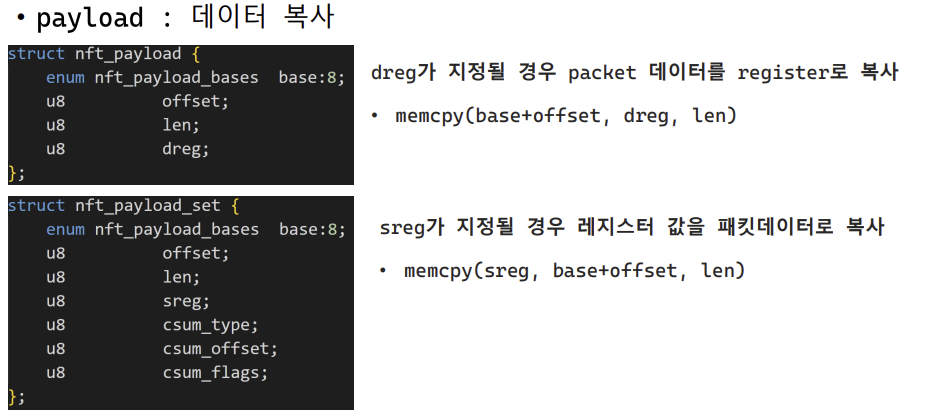
À ce moment, en utilisant l'expression de payload, on peut à la fois lire et écrire.
Le payload effectue les opérations suivantes :
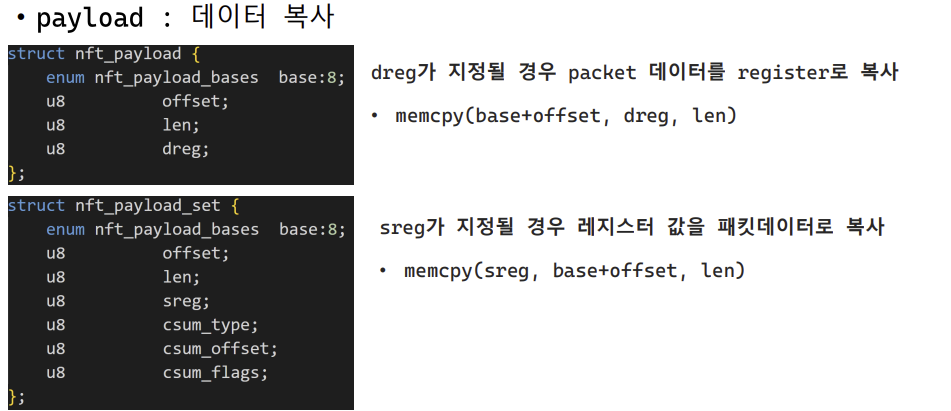
Autrement dit, en ajustant correctement l'index, on peut effectuer une lecture/écriture OOB dans la pile.
Cependant, il existe une fonction de validation pour les regs.
default:
		if (reg < NFT_REG_1 * NFT_REG_SIZE / NFT_REG32_SIZE)
			return -EINVAL;
		if (len == 0)
			return -EINVAL;
		if (reg * NFT_REG32_SIZE + len >
		    sizeof_field(struct nft_regs, data))
			return -ERANGE;

		if (data != NULL && type != NFT_DATA_VALUE)
			return -EINVAL;
		return 0;
Dans le code ci-dessus, il faut satisfaire reg * NFT_REG32_SIZE + len > sizeof_field(struct nft_regs, data).
En insérant les constantes, il suffit de vérifier reg * 4 + len > 80.
C'est-à-dire qu'il faut ajuster len en fonction de reg.
nft_regs
struct nft_regs {
	union {
		u32			data[20];
		struct nft_verdict	verdict;
	};
};
nft_do_chain
unsigned int
nft_do_chain(struct nft_pktinfo *pkt, void *priv)
{
	const struct nft_chain *chain = priv, *basechain = chain;
	const struct net *net = nft_net(pkt);
	struct nft_rule *const *rules;
	const struct nft_rule *rule;
	const struct nft_expr *expr, *last;
	struct nft_regs regs;
	...
}
nft_parse_register
static unsigned int nft_parse_register(const struct nlattr *attr)
{
	unsigned int reg;

	reg = ntohl(nla_get_be32(attr));
	switch (reg) {
	case NFT_REG_VERDICT...NFT_REG_4:
		return reg * NFT_REG_SIZE / NFT_REG32_SIZE;
	default:
		return reg + NFT_REG_SIZE / NFT_REG32_SIZE - NFT_REG32_00;
	}
}
